Yeat ADL Album Review: A “Dangerous Lyfe” That Forgets to Be One



Yeat ADL Album Review: A “Dangerous Lyfe” That Forgets to Be One
Yeat ADL tries to split excess from vulnerability—but Yeat ADL keeps picking pills, Rolls-Royces, and filler over consequences.
A cover concept that’s smarter than the tracklist
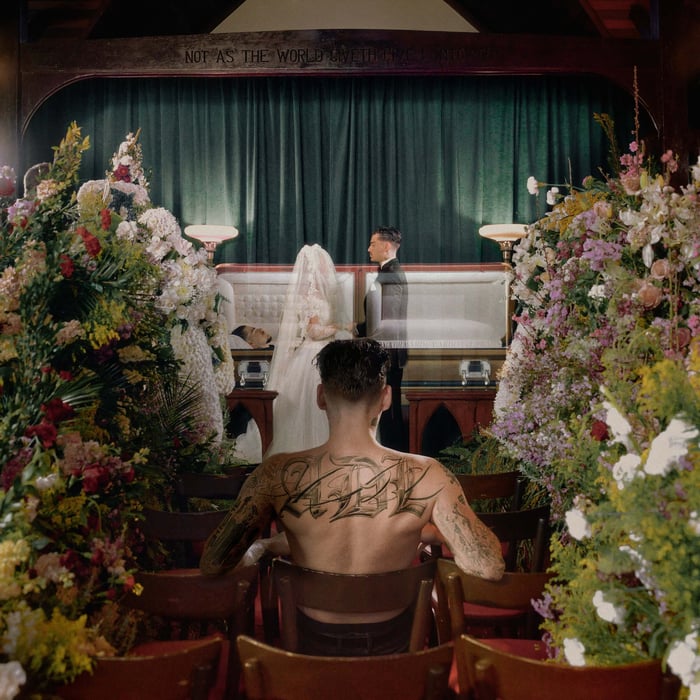
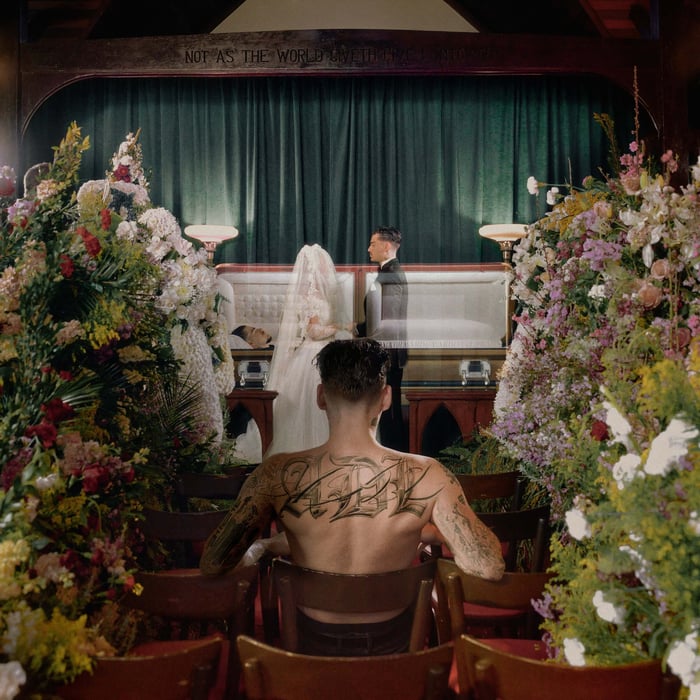
The cover tells you the whole pitch in one gimmick: funeral on one angle, wedding on the other. Then the music spends 21 tracks proving a pitch isn’t the same thing as follow-through.
The lenticular art for ADL flips Yeat between watching his own funeral and watching his own wedding—like he can’t decide whether he’s burying himself or settling down. The album’s split into two discs along that exact axis: “A Dangerous Lyfe” (excess, cost) and “A Dangerous Love” (relationships, vulnerability). Clean concept, clear intent.
And then Yeat goes on record saying he’s “done with the slop.” I went into Yeat ADL expecting the usual chaos but with sharper editing—less empty flexing, more consequence. On first listen I even thought, “Okay, he’s finally going to use the bloat as mood.” On second listen… nah. The album runs twenty-one songs, and it feels like the “slop” wins at least fifteen just by showing up and repeating itself until you stop arguing.
The frustrating part is that the record knows what question it wants to ask. It just keeps answering with the same shopping list.
Disc 1 opens with “purpose”… then immediately forgets it
The first bridge into the album is “Purpose General,” which starts with a spoken bit about opportunity meeting change. It’s the kind of intro that signals reinvention—like Yeat’s about to pivot from cartoon villain luxury-rap into something that actually bleeds.
Then the verse hits and he’s back in familiar territory: Dover Street Market, mafia dinner tables, brushing off chart numbers like they’re beneath him. The next verse goes even colder—he brags about paying the lease on a woman, a line that doesn’t just objectify; it makes affection sound like property management.
A reasonable fan could argue this is the point—that Yeat’s portraying emptiness on purpose. I kept waiting for the portrayal to turn into a confession, or at least a crack in the mask. Mostly it doesn’t.
“What I Want” is even more blunt: he runs through sales numbers like a quarterly report, predicts the next record does 140,000, and says the only person who can top him is “the other me.” That’s not swagger; that’s a guy trapped in a mirror, trying to hype himself up because nobody else is allowed to be real in the room.
And when he repeats, “I just do the fuck I want, when the fuck I want” five times in a row, I don’t hear attitude—I hear a creative habit hardening into a rut. He’s not exaggerating. He’s admitting it.
The real problem: Yeat keeps using the same 12 nouns
Here’s the thing most people won’t say out loud: on a lot of Disc 1, Yeat isn’t writing verses so much as rearranging inventory. The same handful of nouns cycle through slightly different configurations—money, cars, pills, women, status—and the heavy Auto-Tune glaze smears the edges until everything sounds like it’s happening in the same room at the same time.
“Tallër” is a perfect example of the album’s laziness-as-aesthetic. The chorus repeats twice, and the bars underneath barely change. It’s not hypnotic; it’s stalled.
“Griddlë,” with Don Toliver, takes the objectification into full clown mode: a woman is compared to a McGriddle, served like a sandwich, and… that’s basically the whole cut. No twist, no tension, no “this is a character” distance. Just a one-joke premise stretched until it becomes uncomfortable in that dead-eyed way.
I’m not offended so much as bored. There’s a difference. And boredom is harder to defend.
When a feature actually sounds human, the album flinches
The album’s best moments aren’t the biggest flexes—they’re the moments where somebody sounds like they’re describing an actual inner life.
“NO MORE GHOSTS” is the clearest example. Kid Cudi comes in talking about walking in hell, being tired of bleeding, sorting through thoughts, his mom telling him to keep his head strong, being done talking about ghosts. It’s plainspoken and unstyled in a way that makes the surrounding tracks look like they’re wearing costume jewelry.
That contrast is brutal. It’s like someone turned on the lights mid-party and you suddenly see the cups and the mess.
Then “Back Home” pulls the same trick in a different key. Joji turns it into something close to a plea—those lines land because they’re not trying to “win,” they’re trying to be understood. And Yeat, surprisingly, meets him there for once: “Sometimes it’s too hard to stay, and I just gotta go home.”
For a second, Yeat ADL feels like it might actually live up to its own cover art: the wedding/funeral flip as a genuine emotional contradiction, not just an aesthetic.
“Lose Control” samples Elton John… and uses him like furniture
“Lose Control” samples Elton John’s “Someone Saved My Life Tonight,” specifically that butterfly-and-fly passage that practically comes pre-loaded with meaning. You can’t sample that and then pretend you didn’t invite vulnerability into the room.
And yet Yeat mostly lets it float behind another verse about popping pills and sleeping with new women weekly. The sample becomes décor. A prop. Like hanging a painting of a storm in a room where nothing ever gets wet.
Some listeners will say that contrast is the whole idea—salvation in the background while self-destruction keeps talking. Maybe. I’m not totally sure. But if that’s the intent, the track doesn’t push it far enough to feel like a decision. It feels like a cool thing they had clearance for.
“Went Wrong” finally breaks the pattern—and it’s not even Yeat doing it
“Went Wrong” (co-produced by Yeat alongside three other beatmakers) is one of the few tracks that sounds loose, restless, not quite finished—and thank God. The slight mess gives it oxygen.
“How can I see sound and feel these noises?
Moved into my house and just destroyed it
Came inside and ripped up all your posters
And this summer was one of the coldest.”
— 070 Shake
That’s not a flex. That’s a bruise.
The outro leans into it too—asking God for a witness, asking her to come back. That pleading energy is what Yeat keeps circling but rarely commits to. When he does commit, the album suddenly feels like it has stakes.
“Up from Here” gets biographical—and it should hit harder than it does
“Up from Here” contains one of the most direct admissions on the whole record. In the third verse, Yeat gets personal in a way he usually dodges:
He talks about being geeked out of his body for years, how it was hard to reach family, and how drugs still mess with both body and mind. He’s twenty-six and describing chemical dependency like it settled into his bones.
That should be a gut punch.
But it lands softer than it should because of what surrounds it: so many tracks built like inventory lists that the honest lines start to feel like just another item. Not because they’re fake—because the album doesn’t clear enough space around them to let them matter.
That’s the tragedy of Yeat ADL: the emotional content is there, but it’s buried under repetition like it’s embarrassed to be seen.
Production is often the most alive thing here (and that’s not a compliment)
Some of the most interesting decisions on Yeat ADL happen in the beats—often without Yeat rising to meet them.
- “Dangerous House,” built by Shlohmo and Sapjer, has this queasy, slow-drip menace that finally gives Yeat a room where discomfort actually makes sense. The track feels like pacing in a hallway at 3 a.m., not posting receipts on a timeline.
- “Let King Tonka Talk,” produced by Dylan Brady, carries the fidgety, overdriven energy you’d expect from that camp. The beat is wired. It’s twitching. It’s practically begging for someone to do something unpredictable.
Instead, Yeat spends the whole track on extended graphic sex bars, like he heard an interesting instrumental and decided to respond with the least interesting version of himself. Then Kylie Jenner shows up for sixteen lines about money and discretion, and I’m left thinking the same petty thought: the beat deserved a different vocalist. Maybe a different idea, at least.
BNYX® shows up as producer on at least nine cuts, and across many of them the production mirrors Yeat’s vocal approach: it pushes forward without changing direction. Momentum without development. Speed without turns.
Disc 2: the “love” side keeps looping instead of confessing
Disc 2 is supposed to be A Dangerous Love, the vulnerability half. It does get closer, sometimes. But it also doubles down on Yeat’s worst habit: repeating a hook until it stops feeling like language.
“Naked” is basically the chorus on loop for the entire runtime. Some artists can pull off that kind of minimalism if the hook mutates emotionally each time. Here, it just sits there like an unfinished draft that accidentally got uploaded.
“2Planës” contains one of the best couplets on Disc 2… and it’s from a vocal sample:
“What is life if you can’t live your dreams
A life of boredom ain’t no life for me.”
That sentiment could’ve been a thesis for this whole record—especially with the wedding/funeral cover concept. Instead, it gets shoved inside three minutes of listing assets, like the album is allergic to following its own thought.
“My Time” adds a Swizz Beatz ad-lib and then Yeat lists his daily drug intake—molly every day paired with shrooms, jumping out of planes—and I genuinely can’t tell if he thinks this sounds like fun or if he’s admitting he’s spiraling. That confusion is the most interesting thing about the track… and then the song doesn’t stay in it. It just repeats “go through with it” until the phrase loses its shape.
That’s the pattern again: the album brushes against meaning, then covers it up with repetition like it’s repainting a stain.
So what’s ADL actually doing? Dodging its own questions
The cover asks two questions that are worth asking:
- What does a dangerous life cost?
- What does a dangerous love feel like?
But Yeat ADL keeps answering with Rolls-Royces and Percocets, and when a few songs try to do something different (“NO MORE GHOSTS,” “Back Home,” “Went Wrong,” parts of “Up from Here”), they can barely breathe in the runtime Yeat gives them.
I came away thinking the album is, honestly, subpar relative to its own ambitions. Not because Yeat can’t do introspection—because he keeps treating introspection like an accessory he can put on for eight bars and then toss back in the closet.
And yes, I have favorites—because the moments that work really do work:
- “NO MORE GHOSTS”
- “Back Home”
Yeat built Yeat ADL like a two-sided mirror: funeral/wedding, life/love, excess/regret. The problem is he spends most of the runtime admiring the reflection instead of stepping into the room where consequences live. When the album finally stops posturing—when Cudi sounds wrecked, when Joji pleads, when 070 Shake turns a breakup into weather, when Yeat admits what drugs did to his body—it’s suddenly obvious what this record could’ve been.
Our verdict: People who already like Yeat as a vibe-first, meaning-later experience will eat this up and ask for seconds. Anyone hoping Yeat ADL actually pays off the funeral/wedding concept—anyone who wants the “dangerous” part to cost something emotionally—will get impatient fast and start skipping like it’s cardio.
FAQ
- What does the Yeat ADL cover art mean in practice?
It sets up a split between death (the cost of excess) and marriage (the risk of love), and the album tries—sometimes—to follow that emotional axis. - Is Yeat ADL really split into two themes?
Yes: “A Dangerous Lyfe” leans into indulgence and its toll, while “A Dangerous Love” aims at relationships and vulnerability, even if the execution blurs. - Which songs on Yeat ADL feel the most emotionally real?
“NO MORE GHOSTS” and “Back Home” are the clearest because they sound like actual people talking through damage instead of reciting status. - What’s the biggest weakness on Yeat ADL?
Repetition—hooks and phrases loop so long they flatten the songs, and a lot of verses recycle the same imagery without adding new angles. - Is Yeat ADL worth a full front-to-back listen?
If you enjoy Yeat’s sound palette no matter what he’s saying, sure. If you need progress and payoff, you’ll probably cherry-pick the standout tracks and move on.
If the funeral/wedding flip on Yeat ADL lodged in your brain the way it did in mine, an album-cover poster is the one piece of this era that doesn’t talk too much. You can grab a favorite cover print at our store: https://www.architeg-prints.com
 | DISCOUNTGET 30% OFF*Use code on your next order:
|
* This post may contain affiliate links, meaning we earn a commission if you make a purchase through these links, at no additional cost to you.