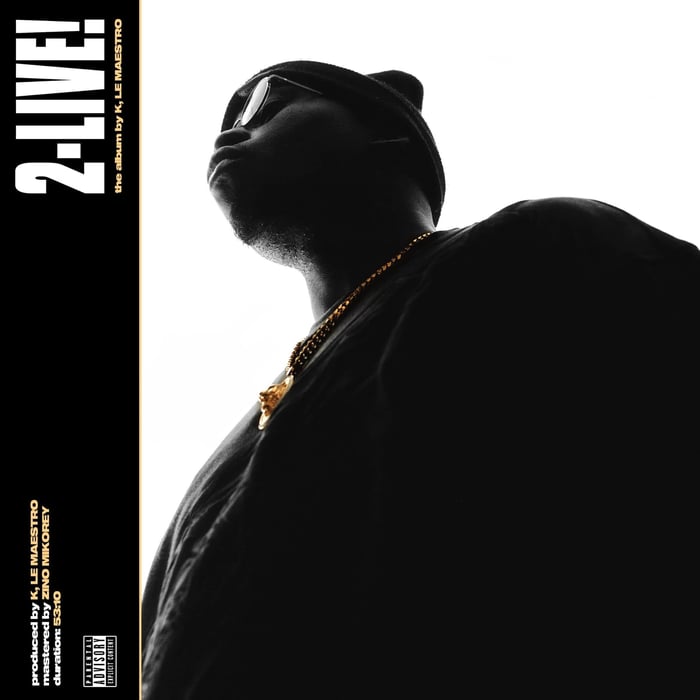
2 LIVE! Review: K, Le Maestro’s “Live” Album That Won’t Stop Flexing

 See more Architeg Prints stories on Google.
2 LIVE! Review: K, Le Maestro’s “Live” Album That Won’t Stop Flexing
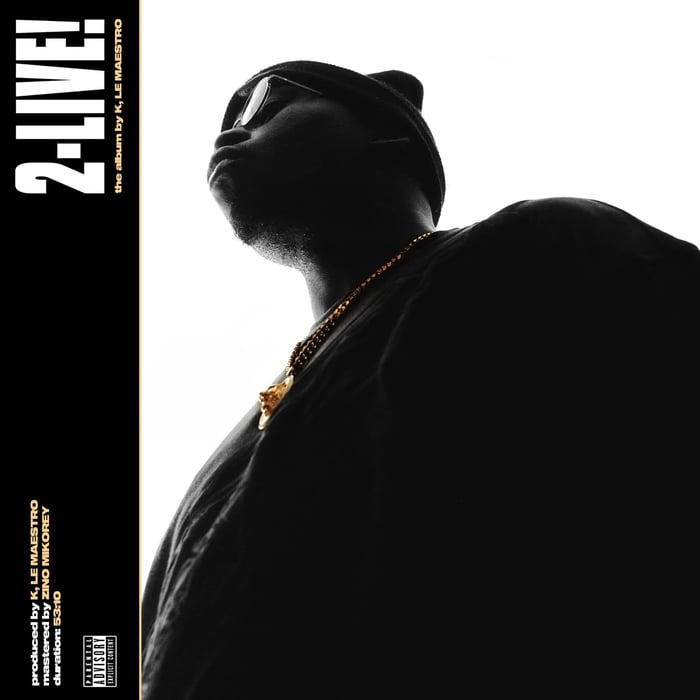
2 LIVE turns a guest-stacked rap showcase into one person’s blueprint—then loudly reminds you who drew it.
Let’s be honest: flipping records is the easy part
Anybody can jack a familiar loop, juice it for clout, and call it culture. The real trick is herding a whole room of rappers and singers—different tones, different egos, different microphones—and making it sound like one mind arranged the furniture.
That’s what 2 LIVE is chasing. Not “here are some beats,” but “here is the world I control.” And K, Le Maestro spends the album proving he can do that… sometimes a little too aggressively, like he’s narrating his own highlight reel while it’s still playing.
The “bandleader” move: one low-end philosophy across every track
Here’s the first thing you notice—actually, you feel it before you notice it: K builds every room with a loud bass element. Not tasteful “supporting” bass. The kind that walks into the mix, sits in your lap, and asks what you’re staring at.
I thought that would get monotonous fast. On first pass, I was already bracing for that same thick bottom end to iron everything flat. But on second listen, the repetition starts to look less like a limitation and more like a stubborn creative rule: the guests can change, the moods can wobble, but the floorboards are always shaking. That’s the whole point—K wants the album to read as a single producer’s stamp, not a playlist of features.
A reasonable person could argue it’s overcommitment. I’d argue it’s the only reason the album hangs together.
“THE RETURN” opens like a warning, not a welcome
The album kicks off with “THE RETURN”, and it doesn’t bother pretending this is a friendly entry point. There’s an admonishment right up top—
This game is meant for a select circle of few—like K is checking wristbands at the door.
Under that, the beat locks into a tight, head-nodding bounce driven by heavy low end. And that kick-drum-dominant punch becomes the blueprint for the whole project. It’s not a “live” album in the concert sense; it’s “live” like a wire—charged, a little dangerous, and definitely not trying to be background music while you answer emails.
If you wanted a soft intro, K basically laughs and turns the subwoofer up.
“RUGGED” is where the bass turns into a blunt instrument
The most intense “bass as personality” moment—outside the opener—might be “RUGGED.” Blue November rides a squared-off stomp that doesn’t so much groove as insist. The loop keeps pounding until your brain either locks into it or taps out.
His verse is all betrayals and people getting exposed, and the beat’s bottom end makes the delivery feel like it’s being rapped at you. Lines about patched stab wounds and dragging “fuck boys” out of rap land harder because the production refuses to blink. This track doesn’t flirt with subtlety; it drags subtlety outside and locks the door.
Hot take: “RUGGED” is K’s clearest argument that heaviness can be a rhythm choice, not just an energy setting.
Topaz Jones on “100 BANDS” proves space matters—even in a bass-first world
Then “100 BANDS” shifts the proportions. The low end still runs the place, but the drums leave Topaz Jones more air than most guests get. And he uses it—this is where the sharpest writing lands.
You can hear him balancing streetwise punchlines with that sly self-mythology thing: cracking eggs to make an omelet, brushing off the “industry plant” idea by claiming he “came up out the garden.” It’s the album’s best pen work, even if the thick bass keeps the brag from fully taking flight. The track wants to levitate; the mix keeps it grounded.
Someone could say that’s a flaw. I’m not sure it is. It feels intentional—like K doesn’t want anyone floating higher than the production.
K won’t stop telling you he’s good… and yes, it kind of works
K, Le Maestro doesn’t just produce the album—he hosts it, and not quietly. He points out his own excellence at basically every opportunity between tracks, like the album comes with commentary enabled by default.
On “MADE ‘EM SAY”, he even puts himself on mic alongside Planet Giza. The vibe is robust and rumbling, and the whole exchange feels like a victory lap performed while the race is still happening. Guests toss him compliments, and he tosses jokes at himself while still making sure you heard the compliments. It’s simultaneously charming and a little exhausting—like watching someone open gifts and read every card out loud.
Then there’s that brief interlude as “4 U 2 CRUISE 2” fades out, where a friend calls him a shape-shifter. And honestly? That’s the most accurate “review” the album gives itself: K keeps changing outfits, but he never changes the posture. He’s always standing center frame.
Mild criticism, since it has to be said: he doesn’t need to present this much evidence. The beats speak. Sometimes he steps on them just to remind you he’s in the room.
“HANDS UP” belongs to Reuben Vincent, and nobody else gets close
No one on the guest list out-raps Reuben Vincent here. On “HANDS UP,” the production rides a keyboard gloss (James Poyser’s touch is all over the feel) with a busier, call-and-response thud underneath. The hook is a room-raiser—
I say fuck it, throw your hands high—but Vincent’s verse is what gives the track weight.
He raps like somebody who’s hungry and already tired of being hungry. He starts from family detail—pops playing pocket, mama praying—then pleads upward for “one more chance,” and then he drops grief into the verse without dressing it up. When he mentions a little brother who died, it doesn’t land like “content.” It lands like air leaving the room.
Arguable claim: this is the moment the album stops being a producer flex and becomes a real record, because Vincent forces the beat to hold something heavier than swagger.
The singers circle desire like it’s a suspicious package
Once Vincent’s gone, the album leans into singers and emotional ambiguity. The recurring theme isn’t romance—it’s wanting something and not trusting it.
The funniest version of that is Devin Morrison on “NEW COUPE.” It plays like a Hollywood pickup attempt that collapses the second it hits reality. He brags about pulling up in a QS60 and then immediately has to backpedal. The woman isn’t impressed by vibes; she wants an S-Class and the money to make it real. And all he’s got is “I don’t drive German” and an interest in weed. It’s hilarious because it’s ordinary—K frames desire not as fantasy, but as an awkward negotiation where someone always shows up underprepared.
Then the mood slows and the doubt starts burrowing:
- Sun on “GIVE IT 2 ME” sounds like she’s trying to convince herself the feeling is safe, admitting she wasn’t ready because she’s in love with how it feels—then asking what the other person is even down for.
- Npoles on “IZ U?” interrogates commitment the same way, owning fear and craving at the same time, basically begging while pretending she isn’t.
- Jaszy Shavers on “WAY 2 CLOSE” goes fully bodily, unraveling in real time while still close enough to smell someone on her skin.
No one resolves it. And I think that’s deliberate. The album keeps putting intimacy on the table and then refusing to serve it hot. If you need closure, you won’t get it here.
When romance turns ugly, K doesn’t soften the lighting
Not all of this album’s desire is cute or cinematic. “SECRETS” (with MAVRYCK) turns jealousy into a standoff that keeps edging toward threat. The hook starts with
Don’t hurt anybody / But I gotta know it, and then it keeps escalating until it’s basically talking chokeholds. It’s one of those tracks where you’re not sure if you’re supposed to be excited or a little concerned—and honestly, I’m not fully sure either. The beat doesn’t moralize; it just keeps the tension taut and lets the words do the damage.
Later, “DANGER” brings that raw suspicion back in a different shape. RM47 rides a taut, angled bounce and basically shrugs at being watched: who cares if they watch, come let me ignite it. It’s lust with the safety off.
Arguable claim: K’s best skill on this album is making the uncomfortable feelings sound expensive.
“SO SERIOUS” is the only love song that feels finished
If you’re looking for one track that actually commits to tenderness, it’s “SO SERIOUS.” This one flips Zakiya’s “My Love Won’t Fade Away” into a slow drag with crisp 808 drums and soft keys. Tracy’s thin, high voice sits right on top—no hiding.
Most of the other “human” voices on the album spend their tracks asking whether love is real or worth the risk. Tracy doesn’t ask. He repeats
Take your time with love in your eyeslike he’s trying to calm someone down, then lands on the line that defines the whole song: he loves how seriously he’s being taken. That’s not a grand romantic speech—it’s a small, honest craving.
By the bridge, he stops sharing the mic emotionally and just sings, nearly wailing
My love won’t fade awayin the original singer’s voice. And for once, the album’s confidence doesn’t feel like a flex; it feels like relief.
Someone could argue it’s too clean compared to the album’s messier emotional tracks. I’d argue that’s why it hits—the album needed one moment that didn’t squirm.
“BOUNCE OUT” is K’s fullest production—and Rae Khalil steals the crown
When you give a collaborator a full, well-lit setup, you get “BOUNCE OUT.” Built with NUMERO13 and Tovv, the track is wide in a way most of the album only hints at—there’s room to move, room to switch gears, room to breathe.
That space lets Rae Khalil do everything: rap, sing, pivot speeds without sounding like she’s proving she can. She plants a West Coast flag, calls herself a star, and somehow makes it feel less like ego and more like a plan. She fits a whole decade into her verse—hardship, God’s will, angels surrounding her—then follows it with that flat, useful cockiness about pressure building diamonds.
This is the first time on a K, Le Maestro record (at least in the way this album presents itself) where the boldest claims belong to the person on the mic, not the person behind it. And K seems to understand that’s the win: his beat is big enough to hold her personality without swallowing it.
She rides out on that chant—
Sit back, watch the whole world get behind this—and for a second, the album stops insisting. It just moves.
Favorite moments (because yes, some tracks clearly run the show)
To keep it simple, the songs that actually define what 2 LIVE is doing are:
- “HANDS UP” — the hungriest rapping, the most gravity in a single verse
- “BOUNCE OUT” — the clearest “bigger canvas” production and the best star turn
- “SO SERIOUS” — the only love song that feels like it knows what it’s saying
Arguable claim: if you cut these three, the album loses its spine and turns into a very stylish demonstration.
Conclusion: this is a producer album that keeps trying to be the main character
2 LIVE succeeds when K, Le Maestro uses his heavy low-end world as a stage—not a mirror. The best tracks let guests bring consequences: Vincent’s grief, Tracy’s certainty, Rae Khalil’s forward motion. The weaker moments are the ones where the album can’t stop winking at its own craft, like it’s afraid you’ll miss the point unless it underlines itself three times.
Still, I walked away thinking K isn’t just flipping sounds anymore—he’s arranging people. And that’s the leap from beatmaker to bandleader, even if he occasionally grabs the mic to remind you who booked the room.
Our verdict: People who love producer-led rap projects with thick bass, rotating voices, and just enough emotional mess will eat this up. If you want humble, background-friendly grooves—or you get annoyed when a record keeps pointing at itself—this album will feel like a talented person talking over their own joke.
FAQ
- What is the core sound of 2 LIVE?
Thick low end, kick-forward drums, and a consistent “room” that keeps every feature living under the same roof. - Does 2 LIVE feel like a compilation or a unified album?
Unified. The bass-first philosophy and the pacing make it feel like one producer shaping multiple voices, not a random stack of sessions. - Which track has the strongest rapping?
“HANDS UP.” Reuben Vincent raps like he’s carrying real history, not just bars. - Is there an actual love song here, not just flirting and doubt?
Yes—“SO SERIOUS.” It’s the one track that stops questioning and actually commits. - What’s the best “big moment” track?
“BOUNCE OUT.” Rae Khalil gets enough space to sound like the main event, and the beat is built to hold her.
If you’re the type who treats album art like part of the music (fair), you can shop a favorite album cover poster at our store here: https://www.architeg-prints.com. It’s a nice way to keep the record’s mood on your wall instead of only in your headphones.
 | DISCOUNTGET 30% OFF*Use code on your next order:
|
* This post may contain affiliate links, meaning we earn a commission if you make a purchase through these links, at no additional cost to you.