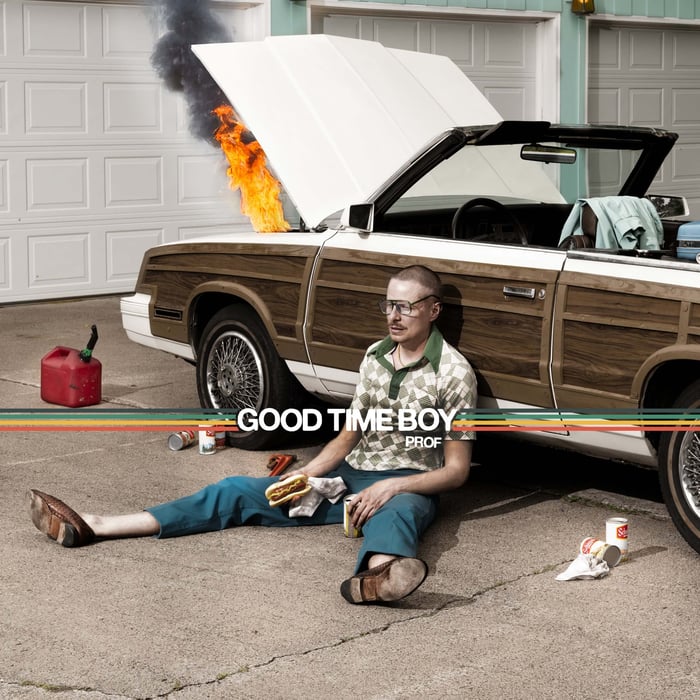
Prof’s Good Time Boy Review: Party Rap That Quietly Asks for Help


 See more Architeg Prints stories on Google.
Prof’s Good Time Boy Review: Party Rap That Quietly Asks for Help
Prof’s Good Time Boy sounds like a joke album until it starts confessing. Big hooks, bigger guests, and a mid-album gut-punch hiding in plain sight.
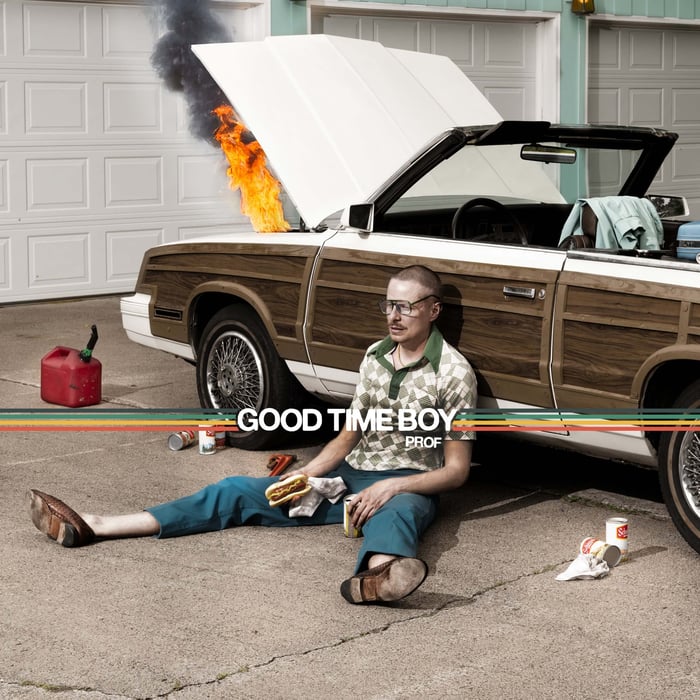
A loud man walks into the room—and dares you to look away
Prof has spent a career being the guy you book to make a Midwest crowd levitate and mildly worry about the building’s foundation. That’s the lane: put the most unhinged performer you can find somewhere on the bill, and watch the venue suddenly “sell better than expected.” It’s not subtle. It’s not polite. It’s the kind of energy that feels like kerosene in the air—flashy, flammable, and a little too eager to prove it can burn.
And here’s the thing: that’s not just the live reputation bleeding into the music. Good Time Boy (his eighth album) sounds like someone finally realized the smirk is the whole point. The record doesn’t try to domesticate him into “serious artist” mode; it just gives his chaos better architecture. Arguably, that’s the most dangerous version of Prof: the same loud cartoon figure, but now the rooms have doors, hallways, and enough space for you to get lost.
I thought I was getting an hour of muscle-flexing party rap—then I noticed how carefully these songs are built, like they’re set up in the middle of a crowded street and still somehow controlling foot traffic.
The beats are built like busy intersections (and that’s deliberate)
This album’s first trick is space. Not “minimalism,” not “vibes”—space like a producer actually planned where your ears should stand.
“Kin (I’m Outside)” lets the sub-bass stretch out while the percussion plays call-and-response. It’s less about being heavy than about being usable: there’s room for guests, ad-libs, and stacked voices without everybody stepping on each other. A reasonable listener could argue it’s just a standard modern low-end flex, but it doesn’t feel lazy—the motion of the drums keeps the floor from turning into sludge.
“Dynamite” is where Prof does his signature thing: he makes something kind of stupid, then makes you admit it works. The kick-and-snare burst into a club-friendly hook that’s silly on purpose. And that’s the point—he’s not “accidentally funny.” He’s building jokes into the percussion. If that sounds like I’m giving him too much credit, listen to how the rhythm itself delivers the punchline.
Then “Kia Boy” shows up like it’s trying to outrun the cops in real time: brass stabs, restless drums, and a low end that pummels instead of grooves. It rips through the speakers like a death-defying car chase—pure velocity. The arguable part: it’s also the moment where Good Time Boy starts flirting with pop structure without admitting it. The choruses get tighter, more radio-sized, more boomerang-shaped—hooks that bounce off the wall and come back louder.
If you came here for the wild Prof circus, don’t worry. He didn’t quit. He just started color-coding the fireworks.
The big-name guests sound like they wandered into Prof’s house party
The feature list has real gravitational pull, and the best part is how slightly confused everyone sounds inside Prof’s world. Not bad confused—more like “wait, what is this room?” confused.
On “Big Dog,” 2 Chainz slides in relaxed and untouchable, delivering lines like they’re draped in jewelry. He’s late on the beat in that confident way—like he knows the song will wait for him. The imagery is pure luxury-object inventory: ice in the cup, in the teeth, in the bezel. Arguably, he doesn’t even try to match Prof’s manic expressionism, and that contrast is exactly why it works: Prof is sprinting; 2 Chainz is reclining.
E-40 shows up on “Brrrr” and twists the whole idea into absurdity. He calls himself the “lingo inventor,” promises money stacked “tall like Jack and the Beanstalk,” then casually walks away from a thought like it wasn’t important enough to finish. That move—bailing mid-idea—is basically an E-40 signature, and here it plays like Prof invited a wizard over just to watch him do small spells in the kitchen.
“Destiny” brings Sauce Walka, rolling in “in a Rolls-Royce,” opening waters “like Moses,” and stretching language until it turns into that “Supercalifragilistic-drippy-alidocious” kind of flex. He’s so committed to the character that he almost becomes the song’s antagonist—like he’s parodying the bravado while still doing it better than most people can.
If you think features are supposed to “elevate” a song, you might miss what’s happening. These guests aren’t here to refine Prof. They’re here to prove the house is weird and the host is in control.
“Dirty Work” is where the jokes get engineered, not tossed off
“Dirty Work” has a kind of monstrous difficulty to it—not in speed-rapping Olympics terms, but in how it keeps tightening screws. It’s stripped enough to leave negative space, and then Prof fills that space with punchlines that land because the room was measured first.
There’s a moment where someone asks about an AirTag on a car back in 2021, and Prof answers with that “I can’t believe we’re talking about this, but also yes” energy. He brags about winning a lawsuit with the same swagger he uses on “Jewelry Duty,” and the way he says it makes victory sound like a prank he pulled on the legal system.
He also does that Prof thing where he promises to “bring fun back” to rap music, then immediately overcommits to the bit—like he’d absolutely rhyme about an avocado being only half good and whether that Parmesan is really Reggiano. The humor isn’t random; it’s crafted. He lingers, arranges the space, then populates it with absurd details like props on a stage.
Mild criticism, though: sometimes the cleverness feels like it’s elbowing you in the ribs a little too often, like he doesn’t trust you to notice the joke unless he underlines it with neon tape. When it hits, it’s electric. When it doesn’t, it can feel like a talented guy trying slightly too hard to be the life of his own party.
Then the album turns into a warning sign, and I wasn’t ready
At some point, someone has to play Cassandra—the person yelling that the parade is also a stampede. Good Time Boy actually does that, and it’s where the record quietly gets teeth.
“There goes the sun, there goes the sun / We had to do it, it was blinding our children.” — Prof
“A Crawl Through a Low Tide” paints Prof as a smiling American monster—guns, war, children watching, the whole bright nightmare. The bass line barely changes, which sounds like a limitation until you realize it’s the point: it’s a march that won’t stop marching. Then the chorus opens up so hard it feels blinding.
“Big Wheels” doubles down on bass dominance, but the chorus blooms with backing vocals and swelling strings. Prof’s voice—often a comic register—tries to climb into sweetness, and then he cracks out something like, “You were born to be a model, Amber.” It’s oddly tender and oddly off, like he’s reaching for sincerity with hands still covered in glitter.
And “Garden of Eden” is the album’s most surreal pivot: falling piano, a curtain of angel voices, the whole thing transposed into something heavenly—until Prof’s internal chatter cuts through trying to sell a smart speaker. It’s funny for half a second, then it turns bleak when he drops what might be the most hopeless idea on the record:
“I see the extinction of experience… we’re all gone and alone, lost in our phones.”
The arguable claim: this is the moment the album admits the party persona is a coping mechanism, not a lifestyle.
The closing run scrapes off the paint and leaves the bruises
By the last three songs, the jokes are basically dust. The mix makes that feel intentional—like the album is turning the lights on while everyone’s still dancing.
“Fighter” rides piano over a high, steady beat, and Prof talks about getting beat up, locking in, dragging himself forward. The detail that the year was 2020 and “less than ideal” is almost comically understated, which makes it hit harder. It’s not inspirational in a clean way; it’s survival told with a tight jaw.
“Reaching for Fire” is where the swagger drains out completely. He looks in the mirror and sees his father. He talks about trying to protect his daughter from his own demons. He admits he’s got drugs he can’t kick, and the beat feels like it’s carrying a thousand pounds—slow, burdened, stubborn. If you wanted the album to keep sprinting, this will frustrate you. If you wanted the truth, this is where he stops performing.
“Imposter” is the most exposed he gets—voice quivering on the hook, straight-up saying he’s not as strong as he pretends. On first listen I brushed it off as “standard vulnerability track,” the kind artists tack on for depth. On second listen, I realized it’s actually the album’s thesis, and everything before it starts sounding like a mask designed with professional precision.
Arguably, the album is more honest here than it is clever anywhere else.
The title track is the coin flip: grinning death vs happy pain
Right in the middle sits “Good Time Boy,” and it’s the point where the frown finally shows up under the grin. It’s anthemic and soaring, built around piano keys and a chanty chorus that feels designed for a roomful of people who want to scream their problems into something that sounds like celebration.
Prof sells it as glee, but the subtext begs for help: “I’m the luckiest man on earth… would you mind if I have a good day?” That’s not a flex. That’s a guy asking permission to feel okay. The “Vegas on a Sunday morning” image nails the album’s vibe: bright lights, stale air, and the unsettling sense that the fun is technically still happening, even if nobody feels good.
And when he raises his glass at the end—“All this bullshit aside, I love you”—it doesn’t feel like a punchline. It feels like the only sincere sentence he trusts himself to say out loud.
Standouts and favorite tracks (the ones that tell on the album)
These are the songs where Good Time Boy most clearly reveals what it’s doing:
- “Kia Boy” — maximal adrenaline, pop-ready hooks hiding inside chaos
- “Good Time Boy” — the emotional center wearing a party hat
- “Imposter” — the mask slips, and the album suddenly makes sense
- “Garden of Eden” — angels, consumer tech, and a bleak little prophecy
Conclusion
Good Time Boy isn’t Prof “growing up.” It’s Prof tightening the bolts on the character, then letting the character confess when the room finally goes quiet. The album’s trick is that it keeps handing you jokes until your hands are full—then it drops a line about loneliness or addiction and makes you realize the laughter was never the whole story.
Our verdict: People who like rap that throws a party and leaves the lights on at the end will actually love this album—especially if you enjoy big hooks, ridiculous swagger, and sudden sincerity. If you want cool, detached minimalism, or you hate when comedy and pain share the same verse, you’ll bounce off this fast (and you’ll probably call it “too much,” which is kind of the point).
FAQ
- Is Good Time Boy more of a fun album or a serious one?
It’s a fun album that keeps interrupting itself with seriousness—like the jokes are there to sneak the real stuff past your defenses. - Do the guest features fit the album’s vibe?
Yes, mostly because they don’t “blend in”—they sound like they’re visiting Prof’s world, which makes the songs feel bigger and stranger. - What’s the most emotional track here?
“Imposter” hits the hardest because it stops dressing the insecurity up as entertainment. - Is there a track where the album’s message becomes obvious?
The title track “Good Time Boy” is the clearest moment where the grin and the dread show up together. - If I’m new to Prof, where should I start on this album?
Start with “Good Time Boy,” then jump to “Kia Boy,” and finish with “Imposter” to understand the full swing from spectacle to confession.
If this album lodged in your head visually as much as it did sonically, you can always shop a favorite album cover poster at our store—tasteful wall proof that you survived the “good time.” https://www.architeg-prints.com
 | DISCOUNTGET 30% OFF*Use code on your next order:
|
* This post may contain affiliate links, meaning we earn a commission if you make a purchase through these links, at no additional cost to you.