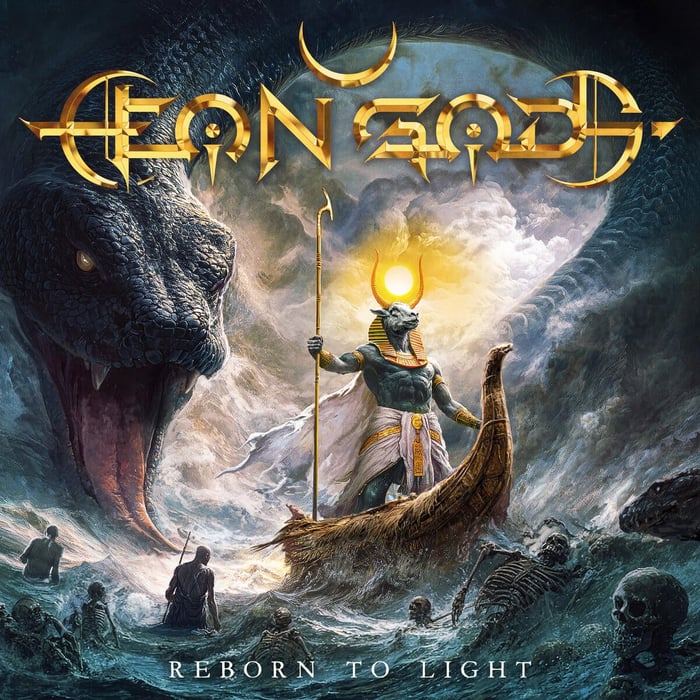
Aeon Gods “Reborn To Light” Review: Mythology-Heavy Symphonic Power Metal


 See more Architeg Prints stories on Google.
Aeon Gods “Reborn To Light” Review: Mythology-Heavy Symphonic Power Metal
Aeon Gods’ Reborn To Light delivers symphonic power metal built on mythology, big choruses, and multi-part narratives set in the Egyptian underworld.
Album context
Aeon Gods are a German symphonic power metal band working with mythology as both subject matter and operating system. Reborn To Light follows their 2024 debut King Of Gods, staying in the same lane: theatrical vocals, busy guitars, and stories that arrive in labeled installments.
A focused niche with deliberate pageantry
This album behaves like genre comfort food with an unusually elaborate ingredient list. The sound is familiar within symphonic power metal—bright keyboards, high-impact drumming, and vocals delivered with a formal, operatic certainty—yet it keeps moving by treating narrative as pacing. Reborn To Light stacks myth references and scene-setting details until the listener stops expecting subtlety and starts accepting that gods, monsters, and afterlife logistics are simply the day’s agenda.
The tone also allows a functional amount of silliness, the kind that tends to show up when a band commits to mythology with a straight face and a full choir setting. The overall effect is less “reinventing the style” and more “executing the style at full volume.” The album stays listenable by keeping the arrangements active and the choruses easy to locate, even when the storyline is busy building a world in the background.
Opening stretch: light arrives on schedule
The album starts quickly with “Birth Of Light”, which enters like a curtain being pulled back with minimal ceremony. Guitars swirl, drums accelerate into blast-heavy emphasis, and the vocals arrive in a polished operatic register that treats intensity as a standard requirement, not a special feature. The track’s main job is to establish the album’s scale, and it does: everything sounds large, everything sounds in motion, and nothing waits around for permission.
The momentum carries into “Flames Of Ember Dawn,” which pushes the album’s Egyptian-inspired imagery into clearer focus. The vocal lines aim for memorability—hooks that linger because they’re written to be repeated, not because they’re trying to be mysterious. The instrumental choices reinforce the setting without turning into a history lesson: the band suggests ancient landscapes through arrangement and texture, then returns to the practical business of driving the song forward.
By this point, Reborn To Light has made its working promise: it will keep the music muscular and the story active, and it will do this for the duration.
The Amduat arc (Parts I–IV): the underworld gets a tracklist
After the opening tracks, the album introduces a four-part narrative set in Amduat, the Ancient Egyptian netherworld. The structure helps the record feel organized even when the arrangements are maximal. Each part functions like a new scene, with different pacing and different shades of menace, while the core sound—operatic vocals, forceful rhythm section, and thick guitars—stays consistent.
“Barque Of Millions (Amduat Part I)”: slow build, heavy steps
“Barque Of Millions (Amduat Part I)” starts slower and more brooding than the earlier material. The guitars lean into chugging patterns, and the atmosphere thickens as the band delays the payoff. The track gradually expands, building toward an “epic” crest in the practical sense: more layers, more volume, more sense of arrival. It’s a controlled escalation, like the album taking a moment to remind everyone it can do pacing, not just speed.
“The Sacred Union (Amduat Part II)”: chanting, movement, and a darker tint
“The Sacred Union (Amduat Part II)” shifts into a more sinister posture. Gang vocals appear with a chanting quality, giving the track a ritualized feel without slowing the forward motion. The guitars keep their chugging insistence, and the song creates the sensation of travel—less “floating peacefully” and more “being carried along because the scene requires it.” The narrative detail lands clearly: the music suggests a passage into the underworld, with the listener effectively drafted into the procession.
“Soldiers Of Re (Amduat Part III)”: the war section does its job
“Soldiers Of Re (Amduat Part III)” “bursts” back into higher-energy movement, bringing a militaristic power metal posture that makes it easy to imagine as a crowd-chorus moment. The track frames itself around joining the army of Re, and the delivery favors directness: big rhythm, straightforward propulsion, and vocals that prioritize declarative statements.
In the context of the four-part arc, this section feels like the most functional rather than the most surprising. It advances the narrative and keeps the album’s engine running, even if the ideas are more familiar than the earlier underworld atmosphere.
“Reborn To Light (Amduat Part IV)”: speed returns, then eases off
“Reborn To Light (Amduat Part IV)” picks up the pace again and leans into battlefield imagery. The track evokes a large conflict and the procedural outcome promised by the title: rebirth after struggle, reset after impact. Midway through, the momentum slightly loosens—less collapse than mild fatigue—where the track’s core ideas have already been stated and the remaining minutes feel like they’re completing the necessary lap.
“Feather Or Heart”: afterlife administration, in chorus form
“Feather Or Heart” follows as a more playful pivot, still tied to Egyptian afterlife framing. The track points to judgment—what determines someone’s experience after death—and handles it in a way this album prefers: not with nuance, but with clear narrative cues and singable phrasing. It’s a change of feel without changing the album’s fundamental approach.
Re’s Dying Reign (Parts I–III): rebellion as a multi-step process
After the Amduat sequence, the album introduces another narrative split into three parts, centered on a cataclysmic event: Re, positioned as the god of all, faces the end of his reign. The trilogy structure helps the album maintain a sense of destination—each track acts like a stage in a process rather than a standalone vignette.
“Rebellion (Re’s Dying Reign Part I)”: uprising with decorative detail
“Rebellion (Re’s Dying Reign Part I)” frames the conflict plainly: people rise against Re to bring about his end. The musicianship stays busy and show-forward, including a wailing guitar solo that cuts through the density. The track also folds in Egyptian-styled flourishes—harp-like textures and melodic choices that gesture toward the setting—giving the song a ceremonial surface even while it functions as a rallying charge.
“Blood and Sand (Re’s Dying Reign Part II)”: the desert battle expands
“Blood and Sand (Re’s Dying Reign Part II)” pushes the conflict into a full-scale desert battle. The track is built to feel huge: thicker layers, broader gestures, and the sense that the band is intentionally stacking “more” onto “already a lot.” The result is physical and continuous, with the rhythm section driving like it has a deadline and the guitars operating as both riff and atmosphere.
“Farewell (Re’s Dying Reign Part III)”: no soft landing, just closure
“Farewell (Re’s Dying Reign Part III)” closes the album without downshifting into restraint. The band opts for a final surge—full vocal commitment, firm percussion, and an ending that treats resolution as something you achieve by pushing through it. The story concludes with a world reborn away from the tyranny of gods, which lands as a surprisingly practical wrap-up for an album that has spent its runtime treating divine politics as a normal workplace dispute.
How the album holds together across a full listen
Across Reborn To Light, Aeon Gods operate inside a specific niche and keep their attention there. The record is not preoccupied with sounding radically new; it is preoccupied with delivering its chosen format consistently:
- Symphonic power metal arrangements that stay dense without turning muddy
- Operatic vocals that remain central and clearly mixed
- Story arcs broken into parts to maintain forward motion
- Moments of battle-pageantry balanced by occasional slower, brooding sections
There are clunky moments where songs slightly outstay their strongest ideas, particularly in the later halves of some narrative chapters. Still, the album’s core function remains intact: it provides structured escapism, with mythology doing the heavy lifting of world-building while the band handles volume, tempo, and chorus placement.
For listeners who engage with the narrative, the record plays like a guided tour through set pieces—underworld travel, recruitment into divine armies, rebellions, and closing ceremonies. For listeners who do not, the same tracks still exist as energetic symphonic power metal with a high tolerance for theatrical framing, and the experience depends on whether that framing feels like useful context or extra paperwork.
Comparable lane within power metal
Within the broader power metal ecosystem, Aeon Gods sit comfortably alongside bands known for emphatic choruses, martial rhythms, and big-scale themes—names like Sabaton, Manowar, and Brothers of Metal come to mind as functional reference points for how this style communicates. The shared trait is not identical sound, but a similar commitment to direct impact and clear imagery, delivered as if this is all standard daily procedure.
Album artwork
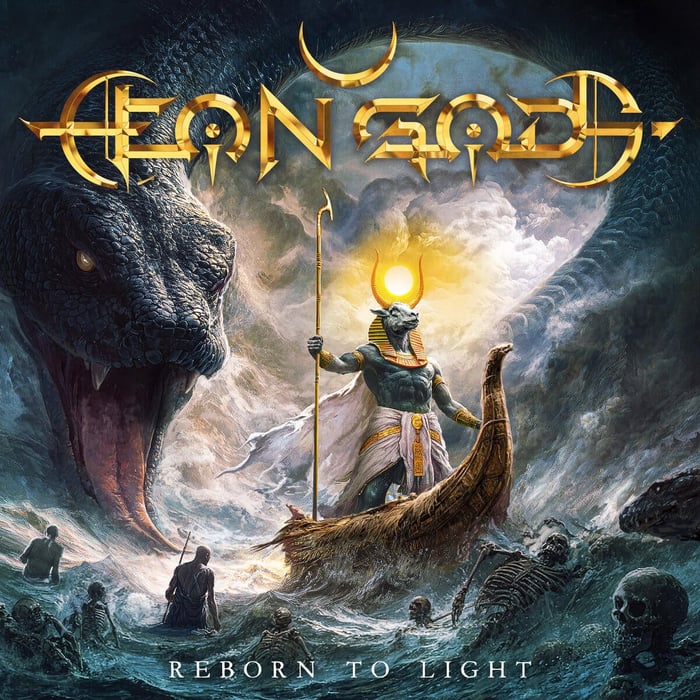
Release note
Reborn To Light is out now via Scarlet Records.
Conclusion
Reborn To Light proceeds as a mythology-driven symphonic power metal album that prioritizes narrative structure, consistent intensity, and big, repeatable vocal lines. It occasionally runs slightly long in the midsections of certain chapters, but it stays committed to its own format and completes its multi-part arcs without drifting into ambiguity.
Our verdict: structured, theatrical, and very efficient at turning ancient cosmology into a steady sequence of loud, organized events.
FAQ
- What kind of album is Reborn To Light?
It’s symphonic power metal with operatic vocals and a heavy focus on mythology-based narratives. - Does Reborn To Light follow a story?
Yes. The album includes a four-part Amduat sequence and a three-part arc about the end of Re’s reign. - Which tracks are part of the Amduat narrative?
“Barque Of Millions (Amduat Part I),” “The Sacred Union (Amduat Part II),” “Soldiers Of Re (Amduat Part III),” and “Reborn To Light (Amduat Part IV).” - Is the album more about atmosphere or speed?
It uses both. Some tracks slow down for brooding build-ups, but much of the record runs on fast, forceful momentum. - Who might this album appeal to?
Listeners who enjoy power metal built around large-scale themes, chant-ready choruses, and clearly labeled narrative chapters.
If you want a visual reminder of this kind of high-functioning fantasy formalwear, you can shop a favorite album cover poster at our store: https://www.architeg-prints.com.
 | DISCOUNTGET 30% OFF*Use code on your next order:
|
* This post may contain affiliate links, meaning we earn a commission if you make a purchase through these links, at no additional cost to you.