B-Movie Millionaires Review: “It Made Sense…” Is Chaos With a Plan


 See more Architeg Prints stories on Google.
B-Movie Millionaires Review: “It Made Sense…” Is Chaos With a Plan
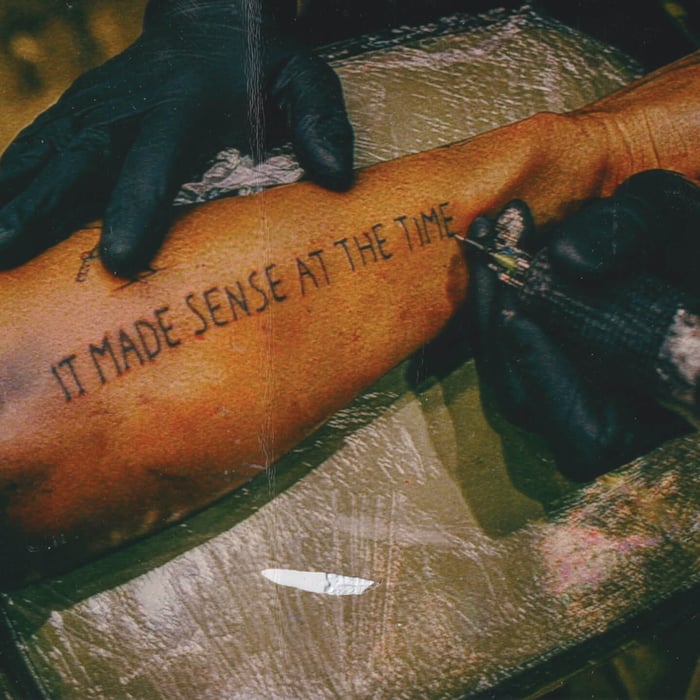
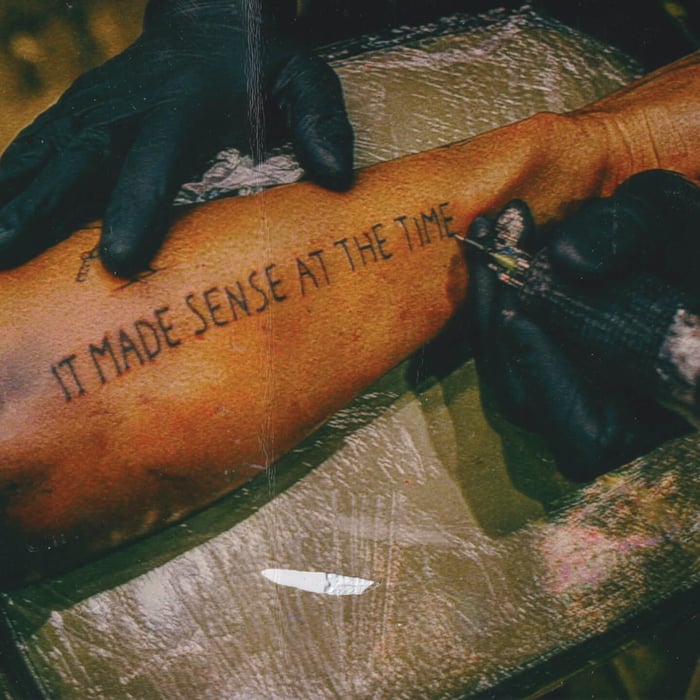
B-Movie Millionaires turn “It Made Sense at the Time” into a gritty two-man ping-pong match about drinks, deals, family damage, and the punchlines we use to survive.
Come for the jokes, stay for the self-snitching
This is the kind of rap record that acts like it’s just messing about—then suddenly you realize it’s been keeping receipts on its own life the whole time. I put it on expecting pure pub-talk and punchlines, and yeah, that’s here, but it’s also doing something sneakier: it’s documenting how a brain talks when it’s both confident and cornered.
And not in a tidy, “character arc” way. More like two guys swapping verses the way people swap excuses—fast, specific, and just honest enough to sting.
Where this thing comes from: a label, a region, and a shared habit of side-eye
You can hear the north-west of England all over this, not as scenery, but as temperament. Blah Records operates out of that area, and it wears the grime like a uniform—no polishing, no trying to “break through,” just a stubborn insistence on sounding like the street you actually live on. Lee Scott’s the anchor here: a rapper/producer from Runcorn with that special talent for making defeat sound like a funny anecdote. Black Josh comes out of Manchester, and together they move like they’ve done this a hundred times in different rooms.
They’re both tied to Cult of the Damned, and as B-Movie Millionaires they’ve already done the self-titled EP (2015) and the beautifully ridiculous Attack of the 50,000ft Sweg Lawds from Outer Space. This album, It Made Sense at the Time, feels like they’re tightening the screws—less “look how weird we can be,” more “here’s exactly what our day looked like, and yeah, it’s ugly.”
Arguable take: the “local” feel isn’t just authenticity—it’s strategy. The more ordinary the setting, the more outrageous the behavior lands without needing theatrics.
The real concept: trading verses like two guilty consciences
This album lives on the back-and-forth. Scott and Josh trade verses about drinking, dealing, football, wrestling, their families, and the constant noise in their own heads. It’s not a “duo album” where each guy politely takes turns. It’s more like you’re stuck between them in a booth while they try to out-confess each other, half for comedy and half to see who flinches first.
The beats help sell that mood: classic, gritty rap textures that don’t glamorize anything. King Kashmere builds the first beat, Spectacular Diagnostics handles most of what follows, and Scott produces four tracks himself. The production lineup matters because the record’s whole trick is control vs. chaos—tight drums under loose mouths.
Arguable take: the production isn’t “grimy” to sound cool; it’s grimy because anything cleaner would feel like lying.
“ICL”: the italicized reply that turns the track into a two-person argument
“ICL” has one of those moments that tells you what kind of album you’re in for: Josh answers Scott halfway through in italics. It’s a formatting gag turned into a narrative move—like he’s interrupting the story from a different angle.
And Josh’s angle is blunt: pushing fentanyl at a woman who wants Fenty, then clocking a guy acting like a good fella who’s really Henry Hill. It’s grim, but it’s tossed off with that casualness that makes it worse. Like the track is saying: this is how normal moral collapse can sound when you’ve rehearsed it long enough.
I’m not totally sure if the italics thing is meant to be funny or meant to feel like intrusive thoughts showing up in a different font. Either way, it works because it makes the song feel like it’s happening in real time.
Arguable take: that italicized switch-up is the most honest “feature” on the album—because it doesn’t feel like a planned collaboration, it feels like being cut off mid-sentence.
“SOZ”: a hangover turns into a road trip, a threat, and a shrug
“SOZ” starts in hangover-land and then slides into a whole chain of events: a drive out to a weed farm in Andover, a blunt “the size of a lamb’s shoulder,” a rival buried “like pavlova,” and a chorus that apologizes and then refuses to explain itself.
“Don’t ask me what I’m doing, I’m doing it just because.”
No author tag is needed; that line tells you exactly who’s speaking: someone who’s tired of motives being questioned, maybe because they don’t like the answer either.
Arguable take: that chorus is stronger than the verses—not because it’s catchier, but because it’s lazier in a revealing way. It’s a shrug that sounds like a confession.
“HEX”: Sly Moon shows up dressed for crime… in a tracksuit
The same road energy spills into “HEX,” and Sly Moon takes it and turns it into a visual: coming out the other end dressed like a mob lord wearing a trackie at a board meeting. That’s the vibe—organized nonsense. Like everyone’s roleplaying power while still smelling faintly of corner-shop snacks.
This is where I revised my first impression. At first I thought the record was just going to lean on surreal images to distract from real stakes. But the longer it goes, the more those images feel like coping mechanisms—cartoonish language wrapped around stuff that’s not cartoonish at all.
Arguable take: the features don’t broaden the album; they sharpen it, because they show how many different flavors of delusion can exist in the same scene.
“316”: the best derailment on the album, kept on purpose
“316” catches up with Josh after he’s been gone for ages—lost in stasis, off his meds, dropping the day shift to sell drugs, losing his main girl because of it. It’s bleak, but it’s delivered with this restless pacing, like he’s thinking faster than he can steer.
Then midway through the verse he stops and asks, “What the fuck was I talking about?”—and starts again, pivoting to the sight of someone’s mother snorting down the Wetherspoons and getting aggy when he won’t “sort her out.”
He leaves the derailment in the take. That decision matters. It’s funnier than whatever punchline he lost, sure—but it’s also the album admitting it’s not always in control of its own story.
Nickelus F takes the last verse steadier, watching cool people go lame and enemies trade fake smiles, then making records about laying each other down while everybody still lives in the same town. That’s the cruelest detail: nobody actually leaves. They just change outfits.
Arguable take: “316” is the album’s most human track because it’s the least polished—like the song itself forgets what it was trying to prove.
“LAA” and “MED”: Lee Scott makes misery sound like household clutter
Scott’s writing is full of these ugly little metaphors that land because they’re not grand. On “LAA,” he dresses for his age in a straitjacket with shades on, calls himself “relatable” as the red letters in your drawer or a plastic bag of rubbish on your kitchen floor, and files other MCs as fads—like Supreme collabs—in one verse. He’s basically saying: you’re seasonal; I’m permanent stains.
Then “MED” has him perambulating through a bland estate, adding color to a permanent gray sky, and he eventually explains he could’ve played for Liverpool but tore his meniscus. It’s one of those claims that’s half-brag, half-eulogy for a version of your life that never happened.
He paints pictures while you pull audible winces, and somehow he moonwalks across thin ice without slipping. The chorus clarifies: “This ain’t dope it’s medicinal drugs,” and in the same breath he wants unconditional love. That contradiction is the whole point—wanting purity while living in mess.
Mild criticism, though: sometimes Scott stacks so many images so quickly that the song starts to feel like a rummage drawer. I like mess, but I still want to find the scissors.
Arguable take: “MED” isn’t about drugs—it’s about insisting your chaos has a prescription label, so nobody can call it self-destruction.
“KEV” and “REX”: self-worth, inflation, and the comedy of not coping
On “KEV,” Scott wishes he could care a little bit more—and he means it as a failure in himself, not a flex. The song throws out a grotesque little cartoon: a fish sprouts legs, peels off its fin, and rushes underground on wheels. That’s the energy of the track—evolution as panic.
He fights through the venue just to sigh into the mic, misses social cues, opens brews with his teeth. It’s funny until it’s not, which is kind of this album’s favorite move.
Then “REX” is worse shape. Scott paces a room, talking to itself like a leader addressing a nation, then hesitates—cripplingly—and wonders why self-worth hasn’t grown to match inflation. That line hits because it’s stupidly practical: even your confidence is supposed to keep up with the cost of living, apparently.
“Yesterday they called me the king, now they call me a clown.”
The verse decides it’s best to repress it until it returns on the edge of the deepest sleep in years. Later, he hears death is around the corner and almost smiles, then states the ambition plainly: eating rather than buying a fleet. The last verse remembers a mother saying not to be a “puppy show.”
Arguable take: “REX” is the album’s real centerpiece—not because it’s the most dramatic, but because it makes failure sound like a daily administrative task.
“BAR”: one evening, two mouths, and the last-minute gut check
“BAR” is basically a whole night condensed: two MCs going back and forth until the room fully appears—dark, no coaster for your drink, bottle nearly breaking a tooth when you crack it open.
One guy’s got the hotel address and doesn’t think he’ll be sleeping “on any shit.” The other can’t afford a cab anyway. It’s grim comedy, but it’s also a class detail that’s not there to teach you anything. It’s there because that’s what happens.
And then, right at the end—just the last minute—someone becomes clear-headed and asks if he’s all right, mate. The other admits he didn’t ask him. That’s the punchline and the tragedy: care arrives late, and even then it’s awkward.
Arguable take: “BAR” is more emotionally accurate than any “heartfelt” track because it only allows sincerity when the night is basically over.
“SMH”: grief, quitting, and the family story you can’t edit
“SMH” turns personal history into a crooked resolution. When Scott’s stepdad passed away, Scott decides to sort his life out. But “sorted” looks like working for a month, quitting, and walking out mid-shift with a lit joint in his mouth—enough money for an ounce and a bus ticket to the city. That’s not a redemption arc; that’s a coping method with a timetable.
Before that, he sketches the household: nan being a bit mad, uncle gone nuts, biological father in and out of prison, stepdad on the pints down the pub. He says he learned how to do this using a pirated program on a dodgy laptop, and his baby ma says he wears his mental problems well. That last detail is brutal in how casual it is—like mental illness is an outfit you can pull off if you style it right.
Josh’s side walks out of a terraced house with blocks in the background, past the flat that got burgled and the corner shop taped off, ending on his auntie splitting an inheritance. Blood doesn’t guarantee trust. And then there’s the cold little timestamp of the outside world: he counted money when the Queen passed away.
I kept waiting for this track to soften itself, to offer a neat “lesson.” It doesn’t. It just reports the damage the way people actually do—half-laughing so they don’t choke.
Arguable take: “SMH” isn’t the emotional climax because it’s sad; it’s the emotional climax because it refuses to act like sadness is special.
Conclusion: this album doesn’t confess—it blurts
It Made Sense at the Time works because B-Movie Millionaires don’t pretend they’re above their own mess. The drinking and dealing talk isn’t there to posture; it’s there because it’s the language they’ve got for stress, boredom, grief, and ego. The funniest moments are usually the ones that sound like accidents kept in—like the record would rather be true than impressive, even if “true” makes the room uncomfortable.
Our verdict: People who like rap that sounds like a late-night conversation outside a venue—half hilarious, half alarming—will get hooked fast. If you need your albums to behave, to offer moral clarity, or to stop making you laugh right before it lands a gut-punch, you’re going to hate this and call it “too much” while secretly remembering a few lines.
FAQ
- What is the core vibe of this B-Movie Millionaires album?
It’s two rappers trading verses like they’re swapping bad ideas and honest thoughts in the same breath, over gritty, classic-leaning beats. - Is It Made Sense at the Time more funny or more dark?
Both, and the point is that it barely separates them—jokes and dread sit on the same barstool. - Which tracks stand out most on repeat?
“REX,” “BAR,” and “SMH” keep pulling attention because they show the clearest snapshots of self-doubt, late-night chaos, and family fallout. - Does the album feel polished or raw?
Intentionally raw in places—derailments and contradictions get left in, like the record values personality over perfection. - Who are the key voices besides the main duo?
Sly Moon and Nickelus F show up and add contrast—one leans into the mob-lord-in-a-tracksuit swagger, the other brings steadier reflection.
If you’re the type who bonds with an album’s atmosphere, it’s not a bad idea to hang that feeling on your wall—shop your favorite album cover poster at our store: https://www.architeg-prints.com.
 | DISCOUNTGET 30% OFF*Use code on your next order:
|
* This post may contain affiliate links, meaning we earn a commission if you make a purchase through these links, at no additional cost to you.