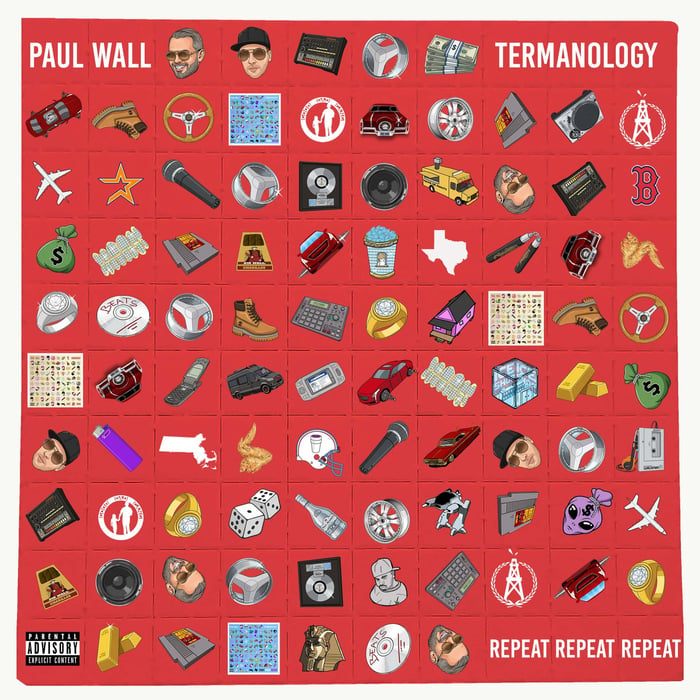
Repeat Repeat Repeat Review: Paul Wall & Termanology Run the Hustle Loop


 See more Architeg Prints stories on Google.
Repeat Repeat Repeat Review: Paul Wall & Termanology Run the Hustle Loop
Repeat Repeat Repeat is two veterans arguing with ambition, money, and God—then rapping anyway. It’s sharp, funny, and occasionally runs long on purpose.
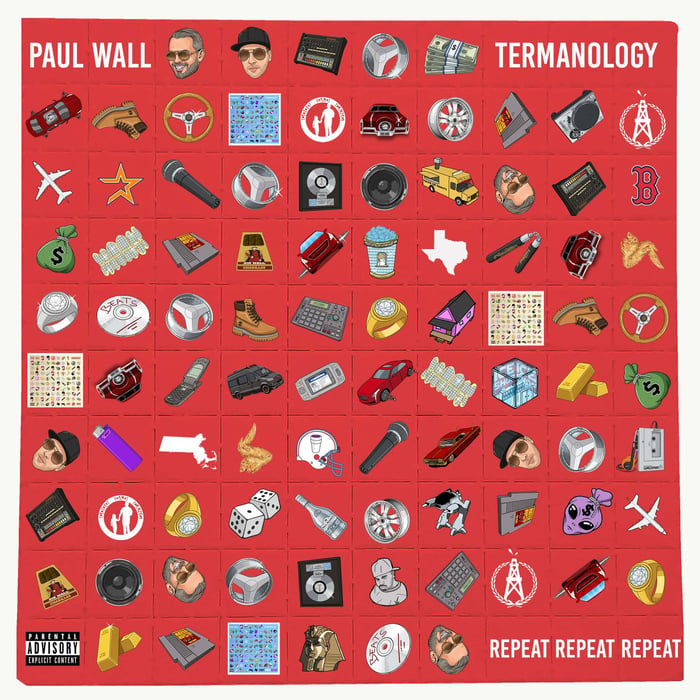
The “Work Never Ends” Thesis (And They’re Not Being Poetic)
This album doesn’t start so much as it clocks in. The first thing I notice is how both Paul Wall and Termanology treat success like a receipt you can’t stop rereading—proof you did what you said you’d do, and a reminder you still owe more.
Paul Wall talks like he’s chasing the kind of money that makes you stare at the ceiling and wonder if your life choices were preloaded at birth. One minute he’s talking about wealth in a way that sounds almost cosmic, the next he’s focused on practical legacy—like taking care of his mother’s rewards with the cold focus of an asset manager. Termanology comes at it from the opposite angle: he insists he didn’t sell his soul, he just got paid because the writing was too good to ignore. And hanging over both of them is a blunt idea they keep returning to: you can plan and grind, but God still picks the ending. That’s not comfort here—it’s pressure.
An arguable take: this isn’t an album about “the hustle.” It’s an album about the bill that arrives after the hustle, when the work is still owed and the victory still feels provisional.
Paul Wall’s Gift: Stretching a Rhyme Until It Starts Breathing
The next pivot is Wall’s obsession with the details people pretend not to see. On “Catch Me If You Can,” he’s basically rummaging through trash looking for treasure, which sounds heroic until you realize he’s also saying: being “the boss” is getting too expensive, and most folks can’t afford the costume.
He drops lines that aren’t designed to be framed; they’re designed to be used. On “Back In Paris,” he boils down the entire transactional logic of the record into two clenched-fist images: closed fists don’t get bread, closed mouths don’t get fed. It’s not motivational—it’s a warning with a grin.
And when Wall locks into a rhyme pocket, he doesn’t just ride it—he refuses to get off. On “Feeling,” he holds down a single sonic rhyme bar after bar, stacking work images (wheel, grill, kale) like he’s daring the beat to blink first. Those are the moments where the verses don’t “build” so much as expand outward. When he’s chasing the rhyme instead of chasing a neat endpoint, the bars dilate and the song starts to feel bigger than its own hook.
An arguable take: Wall sounds most alive when he stops trying to “say the thing” and just commits to the mechanical pleasure of saying it well for four more bars than necessary.
Termanology’s Luxury Inventory (Fresh Paint, Plaques, and a Price Tag)
Now the album turns into a guided tour, and Termanology is the guy who tells you the square footage and what it cost. On “Chasing Gold,” he lays out the new crib like a flexing real estate listing: fresh paint, fireplace, plaques mounted over doors, an enormous screen—and then, of course, the number he paid. It’s not subtle. It’s meant to feel like he’s daring you to judge him for keeping receipts.
His origin story is blunt and industrial: sold dro young, sold lean, sold white, sold green—everything stronger than caffeine, he says—and that money turned into a Benz at eighteen. He claims he always knew he’d make it, even as a teenager. It’s not presented as inspiration; it’s presented as inevitability.
Then he gets extra about it. On “Stoned Island,” he flips “Stone Island” into an island of stone, bragging in a way that’s almost deliberately corny because he knows he can rap his way out of it. He tosses sports-stat talk like Jeter, throws in “gat” lines like Peter, promises no filler in a verse—then immediately floods the song with proof he can overstuff it and still land on his feet.
And “Back In Paris” is where he turns excess into theater: three suppositories filled with champagne (yes, really), wandering from the flute to the Louvre, an edible from Amsterdam messing him up, the Mona Lisa staring him down, and then—snap—he’s back on the block planning another trip for Fashion Week. It’s ridiculous, but it’s purposeful ridiculousness, like he’s testing how much absurd imagery you’ll accept as long as the cadence stays confident.
I’m not totally sure whether that’s swagger or self-parody… but the album doesn’t seem interested in clearing it up.
An arguable take: Termanology uses luxury as a distraction tactic—if you’re busy picturing the Louvre, you’re not asking whether the flex is filling a hole.
Features That Don’t “Help”—They Hijack
The record’s next move is letting guests walk in and mess up the furniture. Bun B shows up on “Feeling” like he’s been waiting patiently to remind everyone what grown-man rap actually sounds like. He’s still paying dues in a business that keeps changing its rules, and he’s not here to take an “L” (loss). The verse is full of the kind of imagery that feels casually impossible—Air Maxes on a mountaintop the size of your salad, the “gun gift” you definitely won’t receive on December 25th. It’s funny without trying to be funny.
Here’s the thing I didn’t expect to say: it’s the best moment on the album, and neither Wall nor Termanology top it on that track. Not because they’re weak—because Bun B makes “Feeling” feel like a standard the whole album has to answer to.
Le$ shows up on “Catch Me If You Can” and takes a different angle. He raps like a patient craftsman, rebuilding a car piece by piece—down to bolts and washers—then putting it back on wheels as a one-of-a-kind sculpture. It’s restoration as flex, which is a much cooler brag than just yelling about money. He even frames his rise like a geographic climb—from 84th to triple golds—turning neighborhood math into mythology.
An arguable take: the guests aren’t “features” here; they’re quality control, showing the two leads what the songs could sound like if they cut the fat.
“Blessings” Isn’t a Hug—It’s a Grip Test
From there, the album slides into something that looks like gratitude but feels more like survival coaching. On “Blessings,” Wall describes happiness as a slippery fish—something you can hold for a second and then it wriggles out, leaving you weirdly angry at your own hands. He tells you to make your money and stop moaning about the crust. He warns that taking your eyes off your brother can flip your life into self-destruction with no warning. Then he admits the obvious: life is hard.
But he refuses to end on empathy. He pivots to that harsh little consolation people use when they don’t want to sit with pain: somebody out there has it worse, so dust yourself off and adapt. It’s not tender. It’s functional.
Termanology, meanwhile, declares full devotion to his style—his clothes aren’t an accessory, they’re religion. But he also refuses to let money slow his momentum, like he’s scared comfort will make him soft. He talks about how everything exists in the dark until it’s dragged into the light, which sounds profound until you realize he’s also describing how he prefers to live: half-confession, half-performance.
Masspike Miles sells the hook with a face that’s smiling in front while the hurt still sits in the corners of the eyes. That contrast is the real hook—pain disguised as catchiness.
An arguable take: “Blessings” works because it doesn’t comfort you; it tells you to stop expecting comfort.
When the Hooks Hit Empty, the Album Keeps Talking Anyway
Here’s where I initially got a little impatient—then, on second listen, I understood the choice even if I don’t fully like it. On “Make Me Feel,” Termanology’s hook is basically just the drink and the dank and not much beyond that. It’s a vibe hook, and it runs out of meaning fast. The problem is Paul Wall’s verse underneath keeps going after the idea is already spent, like watching somebody keep jogging after the treadmill turns off.
“You Believe In You” is the closest thing here to a lull, and not the good kind. Kim Davis sings about rainy days with uplifting praise that feels… generic. Not bad, just oddly prepackaged, like the song ordered its inspiration in bulk. Even Termanology seems to sense it, admitting outright that this isn’t his most complex lyrical moment.
Then he saves himself by getting specific. The verse perks up when he starts remembering 1999, cassette tapes, and buying records before iTunes and streaming platforms turned music into an endless scroll. That’s the first time the song sounds like it has fingerprints on it instead of motivational wallpaper.
Wais P moves through “Chasing Gold” like a chess piece, summarizing the chemistry set: coke, baking soda, water. Then he stacks credentials—Grammy-nominated—brings the Glock energy, pulls up in an ’84 with bucket seats, talks first-ballot unanimous status, while Termanology flashes gold rings spread across his hand and wrists. It’s almost absurd how many status markers they squeeze into one stretch, but that’s the point: they’re showing you what they think “proof” looks like.
An arguable take: the album confuses “more detail” with “more depth” sometimes, and it gets away with it because the rappers sound so sure of themselves.
The Title Track: Plaques Don’t Fix the Offstage Version of You
The bridge into the title track feels like the album catching itself in the mirror. Termanology takes Repeat Repeat Repeat and says another plaque doesn’t do much for him anymore. Recognition is nice, sure—but offstage, fearlessness doesn’t pay rent in emotional currency. He admits it plainly: it’s not like he’s celebrating his hard work. He calls himself a functioning alcoholic who still receives the dollars anyway, which lands less like a confession and more like a shrug he’s practiced.
Then Wall takes the back half like a late-night drive scene. He’s cruising down 249 with the voices in his head telling him to do more. And he draws a hard boundary that’s almost sweet in a tough-love way: if you’re broke, you’re alright—but if you’re lazy, he’s gone. That line tells you exactly what kind of morality this album believes in: poverty isn’t sin; stagnation is.
He frames his own arc simply: he used to play on the bench, now he’s at the forefront in prime time. No metaphors needed. He’s telling you the scoreboard.
An arguable take: the title track is the album’s most honest moment because it admits success didn’t solve the internal noise—it just gave it better speakers.
“Trill On Top” Turns Paranoia Into a Punchline (And Then Stops Laughing)
The closing stretch gets personal, and not in a “therapy rap” way—more like a streetlight confession you weren’t supposed to overhear. On “Trill On Top,” Wall says his best friend stole from him and denied it, even with video proof sitting right there. The fake ones call themselves real until it’s time to show up, then they vanish. Whenever the crew was rolling, somebody else was doing time. He finally figures out what they all had in common, and it’s not flattering.
He asks that grim little question—who came first, the snake or the rat?—and answers it with the kind of exhausted clarity you only get after betrayal repeats itself: they were both. The biggest enemy came from his own block, and he says he never saw it coming. That’s probably the most believable line on the record. Nobody ever “sees it coming,” even when the warning signs are basically yelling.
Termanology matches the energy: some friends told him lies, others told him the truth. Looking back like it’s Roman times, he imagines consequences for the liars—hung, persecuted, prosecuted, hogtied, muffled—the whole cinematic punishment fantasy. Then he lands the simplest insult on the album: they dug their grave and brought the shovel. It’s not poetic. It’s final.
An arguable take: “Trill On Top” is less about betrayal and more about ego—because the real wound isn’t being robbed, it’s realizing you misread your own circle.
Where It Lands (Yeah, It’s “Great,” but Not Always Graceful)
I walked into this expecting a straight veteran-rap victory lap. What surprised me is how often the album sounds like it’s arguing with itself: gratitude vs hunger, luxury vs paranoia, faith vs control. It’s “great” in the sense that it keeps pulling you back into that argument, even when a hook under-delivers or a verse runs one lap too long.
My favorites ended up being:
- “Feeling” (mostly because Bun B turns it into a measuring stick)
- “Chasing Gold” (because the flexing is so detailed it becomes character writing)
- “Trill On Top” (because they stop posturing and start naming names—without naming names)
I’m still unsure whether the album wants to be a testimonial or a warning label. Maybe it’s both. Either way, it keeps repeating for a reason.
After all that talk about money, loyalty, faith, and the cost of staying sharp, the album’s real message feels annoyingly simple: the loop doesn’t end—you just get better at running it.
Our verdict: People who like grown, detail-heavy rap about work, temptation, and trust issues will eat this up. If you need big melodic hooks or “one clear theme” delivered politely, this album will feel like two guys lecturing you from a very nice car.
FAQ
- What is the core idea behind Repeat Repeat Repeat?
It treats ambition like a never-ending shift: you win, you pay, you keep moving, and God gets the last word. - Which track is the best showcase of rapping on the album?
“Feeling,” because the feature verse raises the bar and forces the whole song to perform. - Does the album have any weaker moments?
“You Believe In You” drifts a bit, especially in the hook, until the verse gets specific about memories like 1999 and cassette tapes. - What’s the most personal song here?
“Trill On Top,” where betrayal and suspicion stop being abstract and start sounding like lived experience. - Is Repeat Repeat Repeat more reflective or more flashy?
Both—flash is the wrapper, but the reflections slip out in lines about plaques, alcohol, and hearing voices that demand more.
If you want to freeze this album’s vibe on your wall—the luxury, the paranoia, the grind—consider grabbing a favorite album cover poster from our store.
 | DISCOUNTGET 30% OFF*Use code on your next order:
|
* This post may contain affiliate links, meaning we earn a commission if you make a purchase through these links, at no additional cost to you.