PROLIFIC Album: Nipsey & Bino’s “Success” Story That Won’t Sit Still


 See more Architeg Prints stories on Google.
PROLIFIC Album: Nipsey & Bino’s “Success” Story That Won’t Sit Still
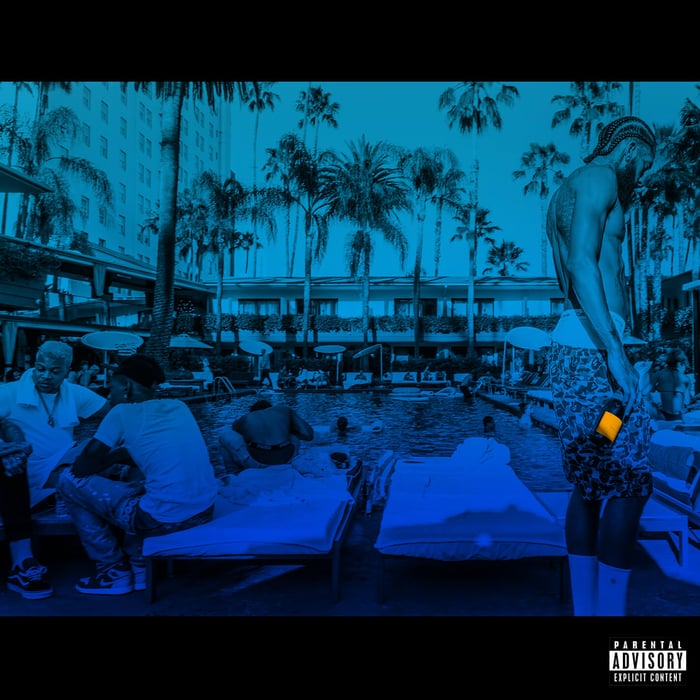
PROLIFIC album turns LA ambition into a two-voice argument—half stone-faced legend talk, half late-night confession, both daring you to believe it.
A record that sounds like two guys staring at the same street
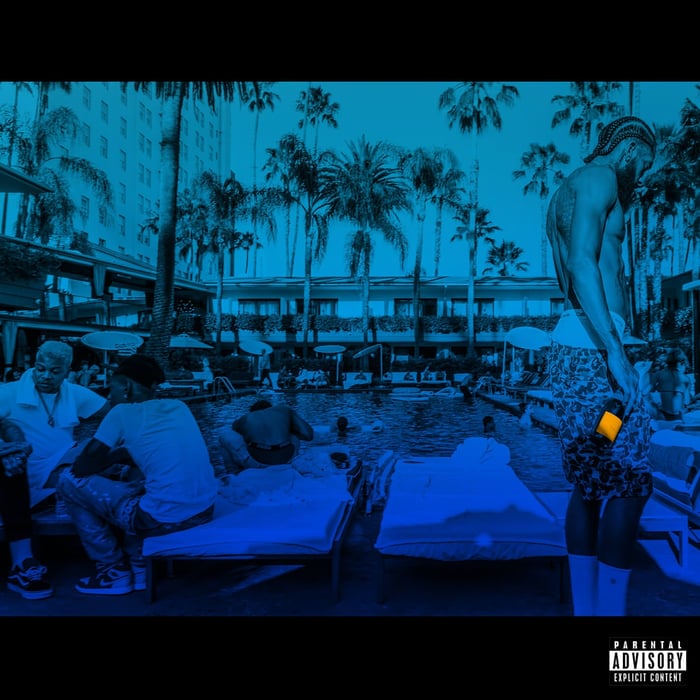
This is what PROLIFIC album feels like in the headphones: two LA rappers describing the same dream—foreign car outside the house you were born into—but arguing about what that dream costs while they’re still inside it.
Nipsey Hussle moves like a leader because he decided he is one. You can hear the “pulling younger artists up behind him” energy in how he takes up space on songs—he doesn’t just rap, he claims territory. Bino Rideaux, on the other hand, sounds like he’s still checking the locks. That contrast isn’t accidental; the whole album is built to split down the middle, each voice answering the other like they’re trading notes in the same trap notebook.
And yeah, knowing this project dropped right before Nipsey’s 41st birthday hits weird now. I’m not going to pretend I didn’t listen with that in the back of my mind.
Two writing styles: one carves stone, the other bleeds
Here’s the real trick: Nipsey writes like he’s trying to outlive the beat. He stacks couplets that sound designed for murals, captions, and the part of your brain that likes firm conclusions.
On “Sacrifices,” he throws out lines like warnings with fine print—“Don’t fall in love with no hustler, you know that come with conditions,” then flips it into “Love ain’t ‘posed to be prison.” He builds and builds until the whole thing feels ready to be engraved.
Bino doesn’t do that. He leaks. On “Reckless,” he drops, “Off a pill, I ain’t got it in me trying to tell a lie,” and it doesn’t land like a punchline—it lands like he surprised himself admitting it. It’s halfway between a confession and a shrug, which is exactly why it sticks.
Putting both on the same track is the point. “Reckless” makes the contrast almost rude: Nipsey’s “Fuck if I crash, don’t save me,” shoved right up against Bino’s 4 a.m. “Why do you pick up, baby?” It’s bravado versus pleading, and I’ll make an arguable claim here: the song works because Bino makes Nipsey’s toughness sound lonely, not heroic.
“500 Horses” and the luxury that still smells like the street
Moving into “500 Horses,” the album stops pretending luxury is just flexing. The Versace and silk aren’t there to say “I’m above this.” They’re evidence, like receipts slammed on a table: I escaped, barely.
What I hear is this constant proximity—first million talk right next to charges talk, “made it out” right next to yellow tape imagery. Nipsey says it straight: “My success was symbolic/My finesse was iconic/How I glowed up out the darkness.” The line isn’t subtle, but subtle isn’t the job here. The job is to make the glow-up sound like a survival story, not a shopping spree.
Bino handles the same theme colder and more paranoid—demanding a hundred thousand before anyone even thinks about a deal, hiding property behind a lawyer, pivoting hard when he mentions the people he protects. There’s a moment where he basically admits he can’t eat when his brother goes hungry, and that’s the difference: Nipsey talks like the burden is fuel; Bino talks like the burden is a weight you don’t get to set down.
And “Miami Off the Plane”—dancehall-produced, breezy on paper—still can’t escape that weight. Nipsey rolls bragging and preaching into one breath: “No record label advances, got millions from grams.” It’s motivational… but also sounds like a man describing a situation that could either crown him or crush him. If you think this album is only victory laps, you’re not listening close enough.
“Count On You” is where the armor actually falls off
Then the record hits “Count On You,” and for once nobody is selling anything.
Nipsey opens blunt: “Family broken, so I stand with my niggas/Showed up to every shootout, but I ran from my feelings,” and that second line is the one. It isn’t poetic—it’s painfully plain. He even drags the metaphor into body horror: “Heart broken like my artery missing.” It’s not graceful, but it’s honest in a way the album rarely allows.
Bino answers with something quieter but heavier: “Pray my son never face what I go through,” then follows it with, “I been tryna relate with some of these songs in case I die today.” No wink, no swagger. Just a man leaving breadcrumbs for the people who’ll have to live with his absence.
This is the only spot where neither of them keeps their guard up—and I’m going to say something some fans might hate: this track is the album’s emotional center, and the rest of the record kind of avoids being this real again. Not because they can’t, but because they don’t want to live there.
The love-song stretch: when two voices blur into one complaint
After that openness, the album clamps down again—especially in the love songs, where Nipsey and Bino start sounding like the same guy wearing different jackets.
You get the same story run three times across “Make Believe,” “Just Like Me,” and Bino’s verse on “Vibe With Me.” It’s the familiar script: he teaches her “the game,” sets “the rules,” then finds out she was make-believe. Bino’s send-off on “Make Believe” is clean and cold—“Can’t turn a bitch into a stan”—while Nipsey spends the same song enjoying how well he ignored her: “I get a kick when you call me, and I don’t pick up for some days.” Different flavors, same wounded-narrator posture.
Here’s my mild criticism: this stretch starts to feel padded, like the album is stalling in a familiar emotional parking lot. The writing is competent, but the perspective doesn’t evolve. I kept waiting for one of them to admit they were the problem, even a little. It never really happens.
Still, “Super Real” snaps the sequence back into focus with the sharpest writing on the project. Nipsey turns a woman into a consultant—“Body language speaking Mandarin/Talking to you like an analyst/Rearranging your establishment”—and it’s ridiculous in a way that strangely works, like he’s trying to intellectualize desire because raw feeling makes him itch. Then he hands her power too: “I put my life in between these lines/I got you breaking my music down.” That’s the album in miniature: control, then the admission that control doesn’t fully work.
And on “Vibe With Me,” Nipsey drops that grand, almost spiritual distance marker—putting Heaven only a mile or two away—and for a second, he actually sounds like he believes his own myth.
Guest features: Cardi shows up and refuses to be wallpaper
Features on albums like this often act like decorations—extra shine, no real narrative effect. Not here, at least not on “I Just Wanna Know.”
That song is a West Coast sex record built entirely out of questions. For two verses it’s Nipsey and Ty Dolla $ign doing the asking, circling the tension, keeping it playful. Then Cardi B shows up and starts answering everything—and she’s the only guest here who flips the whole dynamic instead of just posing on it.
Nipsey wonders if a Blood woman could deal with a Crip, and Cardi volleys it back: “Could a Crip nigga fuck with a Blood bitch,” then tops it off with “Would you hit still if I was a bum bitch?” She doesn’t flirt around the premise—she challenges it, tests it, makes it a conversation instead of a fantasy. Arguably, she’s the only person on the whole album who sounds like she’s having fun without needing to look invincible.
On “Vibe With Me,” Leon Thomas slides in over the 112-sampled vibe and drops one line that actually stays with you: “Your body belongs in a museum.” It’s corny if you say it out loud, but in the song it lands like a smooth compliment you pretend you didn’t practice.
Ty Dolla $ign does what he does best—smoothing hooks on “Mean It” and “I Just Wanna Know”—making them pleasant and, honestly, a little easy to forget. And I wasn’t sure at first whether that was a flaw or the point. On second listen, I think it’s the point: those hooks are meant to slide by like tinted windows, not like billboards.
“Situations” is the real pressure point—fear with a pulse
If you want the album’s hardest moment, it’s “Situations.” This is where the patience runs out.
Nipsey sounds ready to “speak with demonstrations,” and the way he jumps from “three hundred to a million” in one breath to “closed casket on him” in the next is the whole emotional math of the album: money and mortality sitting in the same sentence like they’re cousins.
Bino’s half is worse—not in quality, in feeling. It’s demons he’s learned to live with, the kind you don’t dramatize because dramatizing them gives them power. The dread bleeds outward, too. It isn’t boxed into only the “dark” tracks.
On “All Summer,” with blue rags and rubber burning in the background, Bino drops a line that turns the song from vibey to sickly: “I don’t know if I’ma wake up in the morning.” Then: “I can’t lose no more, my nigga, I can’t afford it.” That’s not poetic despair. That’s a man doing accounting on his own survival.
And here’s an arguable take: the album’s real flex isn’t the cars or the cash—it’s how casually it admits any of it can vanish by morning. That’s the part that feels true.
That bus interlude and the album’s quiet thesis
The interlude for “Just Like Me” is two people watching a bus go by, not sure where it’s headed. It’s simple, almost throwaway… which is why it stings. It’s a tiny scene about uncertainty—movement without clarity.
It also makes the album’s obsession with “plottin’ on millions” feel less like empty hustle talk and more like a response to chaos. This isn’t just bluster about turning mail runs into mail tables. Nipsey has always sounded like someone who believes the choice is real, but also knows the numbers don’t lie and life can flip fast.
I’ll admit I’m not totally sure the album knows how to reconcile those two ideas: control versus randomness. Sometimes it sounds like it’s preaching destiny; sometimes it’s whispering that destiny is just a story you tell yourself so you can sleep.
Still, the destination feels clearer by the end—not because they explain it, but because you hear the urge to share the ride while it’s still happening. The Marathon mentality sits over the whole record like a stubborn engine that refuses to shut off.
Conclusion: what PROLIFIC really does when you stop expecting comfort
PROLIFIC album isn’t trying to be a balanced conversation between two artists. It’s a split-screen: one man speaking in quotes built to last, the other slipping truths out like he didn’t mean to. When it works, it’s because the contrast creates friction—bravado scraping against dread until sparks show. When it drags, it’s because the love-song loop retreats into familiar complaints instead of pushing the story forward.
Our verdict: This album will hit listeners who like ambition with fingerprints on it—people who want rap that admits fear without begging for pity. If you need every track to be “uplifting” or every flex to sound carefree, you’ll bounce off this and call it cold. And honestly, the album might agree with you… then keep driving anyway.
FAQ
- What is the core vibe of the PROLIFIC album?
Two voices from the same city arguing about success: Nipsey sounds carved-in-stone, Bino sounds like he’s talking through consequences. - Which song feels the most emotionally unguarded?
“Count On You.” Both of them drop the performance and talk like the room is empty. - Where does the album get the darkest without turning melodramatic?
“Situations,” and also the anxiety threaded into “All Summer.” - Do the guest features matter or just decorate the tracklist?
Cardi B matters—she changes the power dynamic on “I Just Wanna Know.” The others mostly enhance the atmosphere. - What’s the one stretch that might lose some listeners?
The run of love songs (“Make Believe,” “Just Like Me,” parts of “Vibe With Me”) can feel repetitive if you’re waiting for emotional evolution.
If you’re the kind of person who remembers albums by their cover as much as their hooks, you can grab a favorite album-cover poster over at our shop: https://www.architeg-prints.com. It fits this record’s whole “proof of work” energy without trying too hard.
 | DISCOUNTGET 30% OFF*Use code on your next order:
|
* This post may contain affiliate links, meaning we earn a commission if you make a purchase through these links, at no additional cost to you.