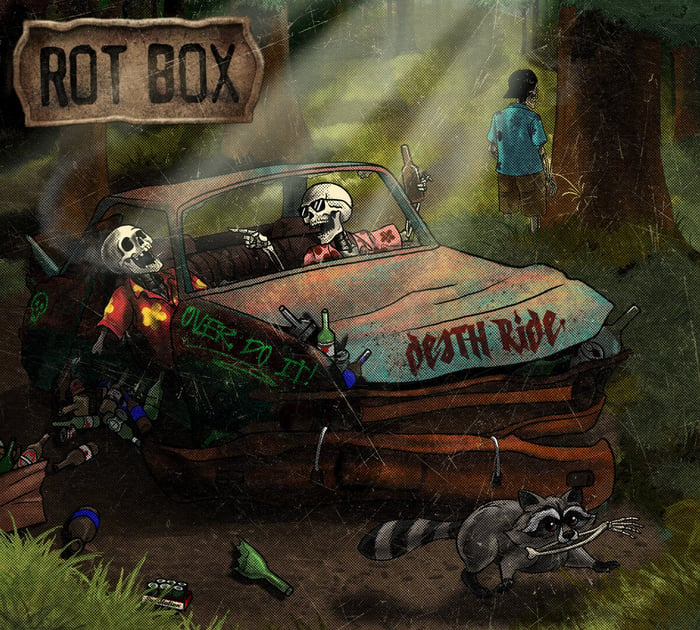
Death Ride Review: Rot Box’s Thrash Party in a Rusted Lunchbox


 See more Architeg Prints stories on Google.
Death Ride Review: Rot Box’s Thrash Party in a Rusted Lunchbox
Death Ride is Rot Box stripping thrash to the studs—workday misery, dumb jokes, and neck-snapping riffs that refuse to act “important.”
First, here’s the vibe: three people, zero padding
You can tell within minutes when a band is hiding behind layers. Death Ride doesn’t do that. It’s a three-musician brawl—drums, bass, guitars—set up to hit you fast and then laugh while you’re still trying to stand up straight.
Rot Box is clearly built from people who’ve already played heavier, nastier corners of the underground (the member-name-dropping matters less than the outcome): they show up with a specific obsession—old-school, stripped-back thrash—and they treat it like a tool, not a museum exhibit. The intent feels blunt on purpose: make it frantic, make it loud, tell stories that belong to regular life (working, scraping by, going out), and keep it moving.
And yeah, “on paper” that’s a great ethos. In practice, it usually collapses into cosplay. Here, it mostly doesn’t.
Arguable claim: this album’s biggest “innovation” is refusing to pretend thrash needs innovation to be fun.
“Old Poor” kicks the door in, and the album doesn’t apologize
The opening attack, “Old Poor,” doesn’t warm up. It barges in like the band is worried you’ll leave if they take a breath. The riffs come in scorching, the drums are pummeling without getting fancy, and the melodies slice through just enough to keep it from becoming a pure blur.
It also lands as a down-trodden anthem without turning into a speech. That’s the trick: it’s angry, but it’s not theatrical about being angry. The frustration feels lived-in, like somebody muttering under their breath at work and then turning that mutter into a hook.
At first, I thought the mix might be too eager—like everything was fighting for the same space. On second listen, I realized that’s part of the point: Death Ride wants to sound like it’s cornering you, not presenting itself neatly across a stage.
Arguable claim: “Old Poor” is the thesis statement, and the rest of the record mostly just tries to keep up with it.
The “everyday life” lyrics are the secret weapon (even when they’re stupid)
Once the album gets rolling, it turns into a tight run of short, uninterrupted fun—old-school thrash speed backing lyrics that swing between daily grind lows and party highs without acting like those are two separate universes.
It’s the kind of record where one moment feels like working-class struggle and the next is basically: “We’re out, we’re loud, we’re making bad decisions.” And then—because they’re clearly not interested in being precious about it—you get a left-field subject like the gastric consequences of suspect sushi. That detail alone tells you what Rot Box is doing: they’re sanding off the self-importance that makes a lot of modern heavy music feel like homework.
If you want your thrash to be “serious,” this album will probably annoy you. It keeps winking—not with comedy riffs, but with choices that say,
we’re not building a monument here.
Arguable claim: the humor doesn’t dilute the heaviness; it makes the heavier moments hit harder because the band isn’t constantly posing.
“Crankin’ Hoons” is entertainment with a blade hidden in it
Tracks like “Crankin’ Hoons” make the trio’s priorities obvious: precision, speed, and a good time. The musicianship is razor-sharp, but it doesn’t come off like they’re trying to impress other guitar players in the crowd. It’s tight in a way that reads as discipline, not flexing.
And that’s the part some listeners might miss: not taking yourself seriously doesn’t mean the music is sloppy. Rot Box plays like they’ve rehearsed the jokes as hard as the riffs.
I kept waiting for a “clever” twist—some progressive detour, some mood change, something that screams we’re different. It never really arrives, and that’s kind of the point. The album’s identity is that it doesn’t beg for one.
Arguable claim: the discipline is the personality; the lack of embellishment is the statement.
“Even If I Did” hits like a sledgehammer (and doesn’t linger)
Then there’s “Even If I Did,” which is where the album stops smirking and actually swings. This track is pure thrash anger—unrelenting, aggressive, and executed with the kind of confidence that makes it feel effortless.
The band tears through it like they don’t even need to prove they can. No extended build, no dramatic pause to let you know something “big” is happening—just impact, repeated until you get the message.
If you’re collecting “hardest tracks of the year so far,” this is an easy candidate. It’s not because it’s the fastest or most complex; it’s because it commits. It doesn’t negotiate with you.
Arguable claim: this song works precisely because it refuses to be memorable in a sing-along way—it’s memorable as a physical feeling.
The genre-trap Rot Box avoids: “paint-by-numbers” nostalgia
Here’s the pitfall: when bands build inside a strict old-school structure, they can end up sounding like a well-played tribute band. The riffs are “correct,” the pacing is “correct,” the tone is “correct,” and the end result is… bland. You’ve heard it a hundred times, and you don’t need the hundred-and-first.
Death Ride mostly sidesteps that trap. Right from the start, it sounds fresh—not because it invents new thrash vocabulary, but because it plays the old language like it still matters. The energy isn’t archived; it’s current.
There are obvious nods to thrash’s big foundational names (you can hear the shapes in the riffs and the classic structural habits), and Rot Box doesn’t pretend otherwise. The difference is they don’t treat those nods like sacred artifacts. They use them like tools.
The interlude “To Drink Is To Drive” is a prime example of that old-school structural move: drop in a quick left-turn moment that resets the room before the next burst. It’s simple, almost blunt, and that’s why it works. No cinematic padding—just a pivot.
Arguable claim: the album’s “freshness” comes less from originality and more from refusing the polite, over-produced version of retro thrash.
Raw production on purpose: “The Devil Cast His Line” and the time-machine effect
Moments like “The Devil Cast His Line” make it clear the production choice is part of the concept. This record has that raw intensity that’s basically mandatory for the style—like it’s coming from a time when thrash still felt like a half-illegal activity.
It doesn’t sound glossy. It doesn’t sound “fixed.” The edge is left on. And that choice matters because Death Ride isn’t trying to charm you with perfection. It wants to sound like it might fall apart at any second, even though it rarely does.
Now, mild complaint: there are spots where that raw wall-of-sound approach can flatten the details a bit—moments where I’d love the riffs to separate just slightly more so you can savor the shapes. But the second you clean it up too much, you’d lose the whole nasty spirit they’re chasing.
So yeah, it’s a trade.
Arguable claim: the production isn’t “lo-fi”—it’s weaponized mess, and cleaning it up would weaken the record.
The real test: does it leave you wanting another run?
Good thrash leaves you smiling and sore. Great thrash does that and makes you want to immediately run it back, like your neck didn’t just file a complaint.
Death Ride lands in that “come back for more” category for me. It’s gloriously uncivilized, exuberant, and it closes out with the title track “Death Ride” like a final shove—no victory lap, no sentimental fade-out.
The record takes direct inspiration from the genre’s heyday, but it doesn’t dissolve into identity theft. It stays unadorned—no pretentious decoration, no fake depth painted on top. It hits hard, it hits fast, and it sounds like three people who genuinely love doing this.
I’m not saying every second is flawless. I’m honestly not even sure every listener will catch the difference between “raw and exciting” versus “raw and samey.” But I do think Rot Box earns the right to play this straight because the album doesn’t feel bored for even a minute.
Arguable claim: the title track doesn’t “wrap things up”—it doubles down, which is the only honest way to end a record like this.
Release note + where I land
Death Ride is out now as a self-release, which fits the whole vibe: no polish, no permission, no waiting around for someone to approve the fun.
And if you want a neat number: I land around an 8/10 experience here—high replay value, strong execution, and a clear point of view without trying to reinvent the wheel.
There’s also an Instagram presence for Rot Box if you’re the type who likes to keep tabs on bands between releases.
Arguable claim: self-releasing suits this album because any bigger “industry” gloss would just sand off what makes it bite.
Conclusion
Death Ride is thrash stripped to muscle and impulse: work, chaos, cheap laughs, and riffs that don’t ask permission. It’s not trying to be timeless—it’s trying to be loud right now, and that’s why it actually sticks.
Our verdict: People who genuinely like Death Ride are the ones who want thrash to feel like a cramped room and a bad decision—fast, raw, and grinning through the bruises. People who won’t like it are the ones waiting for sophistication, polish, or a grand emotional arc. This record would rather throw a chair than write a thesis.
FAQ
- What kind of thrash is Death Ride, exactly?
Old-school, stripped-back thrash—built around speed, riffs, and punchy structures rather than modern studio shine. - Does the album take itself seriously?
Not much, lyrically. The playing is tight, but the attitude is intentionally rowdy and unpretentious. - What’s a standout track moment?
“Even If I Did” hits with pure, sustained aggression—no fluff, just impact. - Is the production clean or raw?
Raw on purpose. It leans into a wall-of-sound feel that can blur some detail, but it keeps the intensity intact. - Will Death Ride feel repetitive if I’ve heard a lot of classic thrash?
You’ll hear familiar shapes, but the energy and commitment keep it from feeling like a lifeless copy—assuming you still want your thrash straightforward.
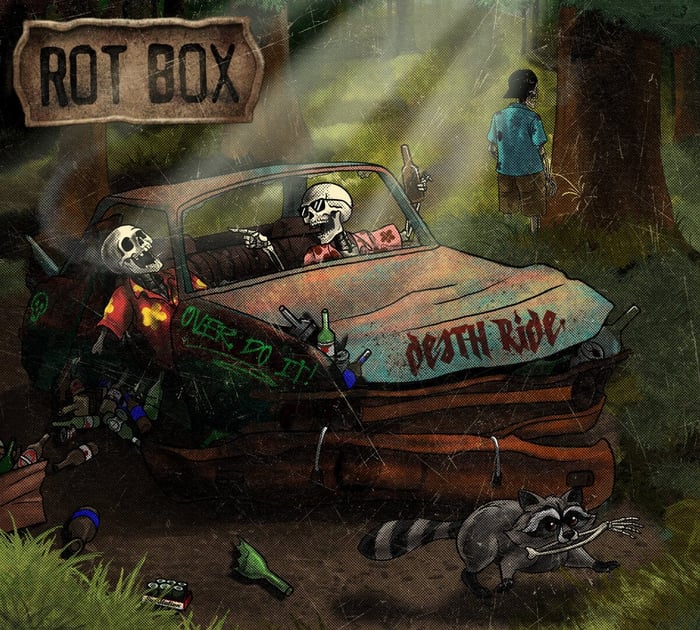
If the cover art’s grime-and-speed mood is your thing, you can always grab a favorite album cover poster for your wall over at https://www.architeg-prints.com — it’s a nice way to let your room argue with your neighbors.
 | DISCOUNTGET 30% OFF*Use code on your next order:
|
* This post may contain affiliate links, meaning we earn a commission if you make a purchase through these links, at no additional cost to you.