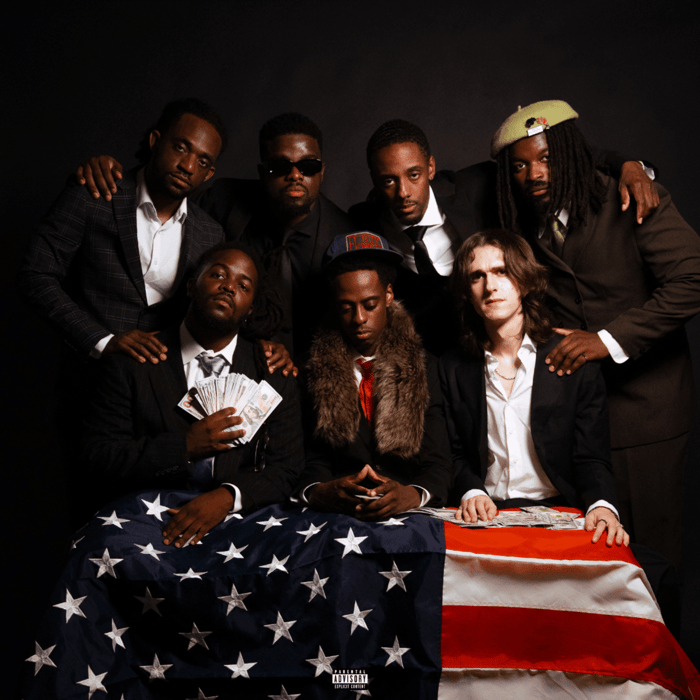
Dream for Dollar Album Review: Clark D Tries to Outsmart the Label Gods

 See more Architeg Prints stories on Google.
Dream for Dollar Album Review: Clark D Tries to Outsmart the Label Gods
Clark D’s Dream for Dollar plays like a hustle diary with receipts—funny, bitter, and weirdly tender when it counts. It’s not here to charm you.
First, here’s the trick this album is pulling
This isn’t an album that “tells a story” in the cute, cinematic way. It’s closer to someone putting their phone on the table and sliding you a stack of voice notes: label meetings, friend funerals, dates that turn into financial audits, and a constant argument with your own shadow.
Clark D raps like he’s determined to be the last word in every conversation—and then spends a whole record showing you how easily words get traded away. That tension is the whole point of Dream for Dollar. It’s confident on the surface, but underneath it’s jittery, moral, and a little paranoid in a way that feels earned.
And yeah, it’s personal in a very unromantic way: hometown named, crew shouted, the day-to-day math of survival kept on the page.
Here’s one of the few straightforward facts that actually matters to the listening experience: he produces most of this thing himself, and you can hear it. The beats don’t behave like they were outsourced to impress strangers. They behave like they were built to hold specific sentences.
Clark D’s world-building starts with place—and refuses to apologize
You don’t get five minutes into this record without realizing Mattapan isn’t being used as scenery. It’s leverage. He keeps bringing it up the way people repeat a name when they’re making sure you understand this isn’t negotiable.
Same with MATTAPARK—there’s a crew identity running through the lyrics that functions like a stamp: not branding, more like proof-of-origin. A lot of rappers name-check their home like it’s a sponsor. Here it comes off like a reminder to himself: don’t start talking like somebody else just because the room changes.
That stubbornness is also the album’s first quiet theme: Clark D sounds like someone who’s already been invited into spaces that want to sand him down. He’s not here for the sanding.
Arguable take: the album’s strongest flex isn’t the punchlines—it’s how often he refuses to “translate” himself for outsiders.
“MR. LABELMAN” is where the album stops being polite
The second verse on “MR. LABELMAN” is basically the label speaking—except it doesn’t sound like a business, it sounds like a suspicious person trying to buy your life with accessories. They want the social followers before they want the song. They ask about dropping out, tattoos, battle scars—like suffering is a résumé and talent is just a background detail.
Then comes the gross part: the casual
“Just sign your life to me so all the playlists enjoy ya.”The label offers the standard cartoon bribes—gold chain, Range Rover, the kind of “gift” that somehow ends up on your back like a shackle. Even the money is framed like a trap: if you don’t earn it back, you’d better hope the machine “holds out.”
Clark D’s opening verse makes that corporate hunger feel even uglier because he doesn’t pretend he’s above the fantasy. He wonders if owning a Draco would make him Bobby Shmurda—an intrusive thought that lands like an accusation against the entire culture. He also points out something sharper: the kids where he grew up are blessed with skills that don’t match the material conditions around them. The world doesn’t reward the skill; it rewards the spectacle.
I thought this track was going to be the usual “labels are evil” sermon, but it’s nastier than that. It’s Clark admitting he understands the appeal of the trap while still calling it a trap. That’s a harder listen, and a more honest one.
Arguable take: “MR. LABELMAN” isn’t anti-industry—it’s anti-humiliation, which is a different fight.
Money ruins romance here, and the jokes are doing self-defense
“PINEAPPLE EXPRESS” drifts into relationship comedy, except the comedy is a disguise for embarrassment. Novian Wright’s guest verse is all financial strain and emotional dodging: he’s talking his way out of the relationship while the bill keeps growing. He takes her to Bojangles; she wants Bottega. Ever since they met, he can’t afford weed. His friend is trying to put him onto playing cards and he’s not interested—because when you’re broke-broke, even “new ways to make money” sound like extra homework.
Then he lands the line that tells you exactly how cornered he feels:
maybe they should downgrade to a friendship, and she can find another guy to cover her needs.It’s brutal, but it’s also the kind of “solution” people offer when they’ve run out of dignity.
Clark D keeps his part lighter, but it’s still a quiet panic. He can’t even buy the right bag—wrong style—because she prefers Prada over Telfar. She won’t let him pay by credit card unless it’s one in his name, which is hilarious until you realize it’s about control and status, not payment methods. And she won’t agree to dates in Mattapan. The geography becomes a dealbreaker. That’s not romance; that’s social sorting.
Arguable take: this song isn’t about dating—it’s about class anxiety wearing cologne.
“HUSTLENOMICS” and “PUBLIC ENEMY #1” treat hustling like a haunted house
LIFEOFTHOM comes in on “HUSTLENOMICS” with a different kind of intensity: a long internal rhyme run that feels like watching someone’s mind sprint in place. He describes creeping out to a spot, needing a pot to mix something in, hearing the door creak when buyers show up. It’s procedural and claustrophobic, like the room itself is an accomplice.
Then “PUBLIC ENEMY #1” flips the mood again. The vocal belongs to a friend who’s basically done with the big-picture doom talk:
“We already know the world fucked up.”What’s bothering him isn’t the abstract collapse of society—it’s that he can’t take a girl out on a date. That’s the point where this album gets uncomfortably real: the apocalypse is background noise; the immediate shame is foreground.
I’m not totally sure the sequencing between these two moments is meant to be funny, but it kind of is. The album keeps dragging grand narratives back down to the cost of dinner.
Arguable take: the record’s most radical move is treating “going on a date” like a legitimate crisis—not because it’s romantic, but because it’s proof you can’t even participate in normal life.
“OFFERING PLATE” is where Clark D admits he might be guilty too
Halfway through the first verse of “OFFERING PLATE,” Clark gives the dope man the benefit of the doubt, and the shift matters. He starts out judging him—why sell poison to your own people?—then turns the question on himself: would I really do anything different?
That’s the moral hinge of the album. Not “I’m better than them,” but “what if I’m just them with different timing?”
The verse pulls in King David too—specifically betrayal, somebody taking a woman from the number one man. Then he swings to tithes: ten percent goes toward church, but what’s being done with it? He remembers seeing a poor man asking for change and doing nothing. And he actually says the line most rappers avoid because it ruins the pose: he’s part of the problem.
He even goes after the pastor directly, asking how many souls he’s trying to “get,” and drops an image that’s so absurd it lands like a dare—asking about a golden statue of Donald Trump. And then he goes for the question that sticks: would the pastor provide safe passage to an immigrant in life?
This track isn’t “spiritual.” It’s suspicious. It treats religion like another institution that can either protect you or sell you.
Arguable take: “OFFERING PLATE” works because it doesn’t pretend faith makes you clean—it shows faith as another place people launder their mess.
“877-CASH NOW” is the album’s bluntest tragedy
The opening verse of “877-CASH NOW” is about someone Clark knew—someone trying to live right, no shortcuts. And then the song lays out the ugly math of how life still corners you.
The guy is 6’4” with college potential, but he’s stuck selling small bags of marijuana and drinking Hennessy straight from the bottle. That detail matters: it’s not glamorous. It’s not the fantasy hustle. It’s the “I’m still here” hustle.
The song hits on something a lot of people don’t want to admit: after you finish school, things can actually get worse. Ten years working on a big boat can still land you back in the same spiral, watching it slip away. Clark drops the line that feels like the emotional thesis:
the weight of life is a feather, but it’s a thousand pounds.The friend has vices he doesn’t want to give up, and the verse closes with his words—and then what happened to him.
Latrell James follows later with a detail that makes your stomach drop: the ambulance took forever and a day to arrive. It makes you wonder if pressing 911 is even worth it. That’s not lyrical flourish. That’s a broken-social-contract moment.
I’ll admit, on my first pass I assumed the title and the hustle framing meant this track would be more “grindset.” On second listen, it’s basically an elegy with paperwork.
Mild criticism, because the album earns honesty: the hook-writing across the project can be spotty, and when a hook doesn’t land, the heaviness has nowhere to “rest.” On a track like this, it’s fine—silence almost works better. But elsewhere, the album occasionally needs a stronger chorus to keep the emotional pacing from feeling like one long exhale.
Arguable take: “877-CASH NOW” is the best-written song here because it refuses catharsis; it just shows the cost and walks away.
“ALL THE WAY BIG” and “757” show the album’s appetite for scale—and its limits
“ALL THE WAY BIG” is the lone song not produced by Clark D, and you can feel the slight shift. The subject is celebrity idols coming and going, and the paranoia of figuring out who’s friend or foe. He leans on “God is good” like it’s a railing.
There’s a quick joke that actually lands because it’s tossed off, not underlined:
“You ever wonder what happened to what’s his name?”It’s funny in that tired, human way—fame as a revolving door.
The second verse shoots above the clouds, but comes back down with nothing better than a gold digger and a grave digger. That’s the album in miniature: aspiration, then a hard landing.
“757” is where the cracks show a bit more. The hook isn’t strong—money is on its way, everyone is outside—and it feels like a placeholder for a bigger idea. Kai Banks helps by bringing it back to specifics: wanting to drive his mom around in a Porsche, get his sister a Corvette, dreaming of having a dollar in his pocket at all times. The dream shrinks from luxury to security, which is the only honest way to talk about money.
Arguable take: “757” proves the album is better at verses than hooks—Clark D’s writing is too detailed to be convincingly vague.
The superhero section is not cosplay—it’s self-interrogation
Clark D starts playing with duality more directly in “YIN AND YANG.” He frames his twin like an internal opponent: when he wants peace, the twin wants war. He’s shadowboxing, saying they’re synchronized, warning you not to find out what happens when it’s dim. And then the line that gives away what’s really being fought:
his shadow’s tired of fake shit.
That isn’t just posturing. It’s the record admitting that “authenticity” is exhausting to perform, especially when people keep asking you to audition for your own life.
He keeps that thread in “SUPERPOWERS,” where he says he feels uncomfortable sitting with his idols and thinks they’re traitors. That’s an ugly feeling, and he doesn’t dress it up. He even drags Batman into it, suggesting Batman’s logic is misguided: behead the snake and it grows back. In other words, you can’t solve systemic problems with comic-book violence.
“KOUPÈ TET” sharpens the image with a Superman pun—Clark Kent, missing only the cape—and folds in the idea of labels being laid on him, plus an offer that lacked M’s. The money isn’t just money; it’s a measure of how seriously they take you.
Arguable take: the superhero talk isn’t “nerd reference”—it’s a way to admit he wants moral clarity in a world that won’t give it.
“I’LL BE YOUR SUPERMAN” is the album’s final confession—and it bites
He confesses to idealizing being a hero and everyone’s favorite person, then admits he can’t have both. That’s the kind of sentence people learn the hard way. He drops a grim truth:
save a person from drowning and they’ll try to drown again.The “crown” he claims weighs on him—being self-proclaimed doesn’t make it lighter; it makes it lonelier.
Then he says something that flips the whole hero fantasy inside out:
to be a hero means to remain forgotten.That’s not triumphant. That’s resignation wearing a cape.
The second verse turns toward Blackness—his own and his immigrant parents’. They only knew “Black” after arriving in America. He ties marijuana possession to slavery, then points at the hypocrisy: it gets legalized, everyone gets paid, and you don’t. He asks what Superman would do—would he fly over Haiti with any regard for it? The answer he gives is no.
And from there the album stops pretending anyone is coming to save anyone. He doesn’t rely on any white man to protect his children. He says his own name out loud and swears he’ll kill this shit. That last bit doesn’t sound like a threat to others—it sounds like a vow to himself not to fold.
Arguable take: the album’s “hope” is basically just stubbornness, and honestly, that’s more believable than inspiration.
Conclusion: what Dream for Dollar is really doing
Clark D made Dream for Dollar like a person negotiating contracts with every institution in sight—labels, church, fame, masculinity, romance, even heroism—and refusing to sign cleanly. It’s messy on purpose. It keeps receipts. It shows how often survival turns you into someone you don’t fully respect, then makes you sit with that.
If you want neat arcs, you’ll get annoyed. If you want the sound of someone thinking in real time, this thing sticks.
Our verdict: People who like rap that actually argues with itself will love this—especially if you care more about verses than choruses. If you need every hook to hit like a slogan, you’ll bounce off Dream for Dollar and call it “too talky,” which is fine, go enjoy your motivational posters.
FAQ
- Is Dream for Dollar mostly about the music industry?
It takes shots at labels (“MR. LABELMAN”), but it’s broader—money, morality, and loyalty show up in almost every track. - Does Clark D produce the whole album?
He produces most of it, and you can hear the consistency that comes from one brain steering the sound. “ALL THE WAY BIG” is the exception. - What’s the most emotionally heavy track?
“877-CASH NOW” hits hardest because it’s grounded in a real person’s downward turn and doesn’t try to glamorize it. - Is this album political or personal?
Personal first, and that’s why the political parts sting. “I’LL BE YOUR SUPERMAN” makes the systemic stuff feel immediate instead of theoretical. - If I only play three songs, which ones carry the point?
“877-CASH NOW,” “OFFERING PLATE,” and “I’LL BE YOUR SUPERMAN” feel like the spine: survival, guilt, and the final vow.
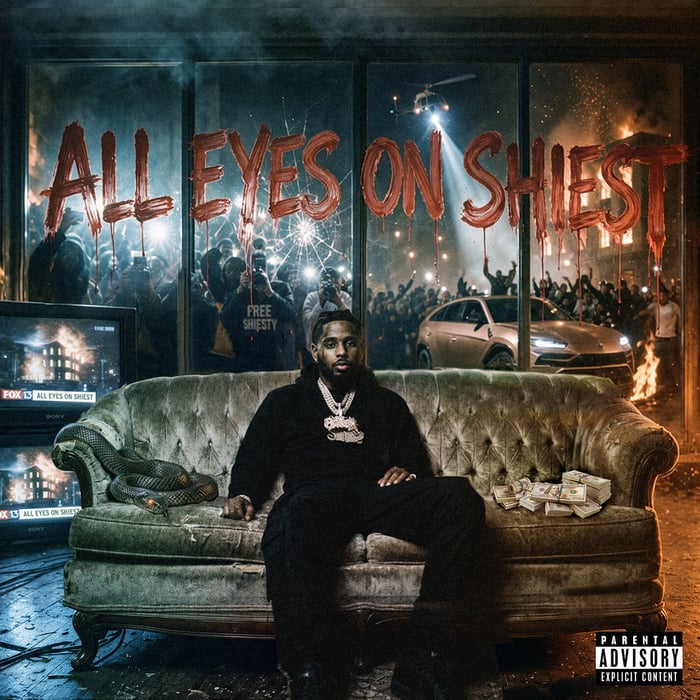
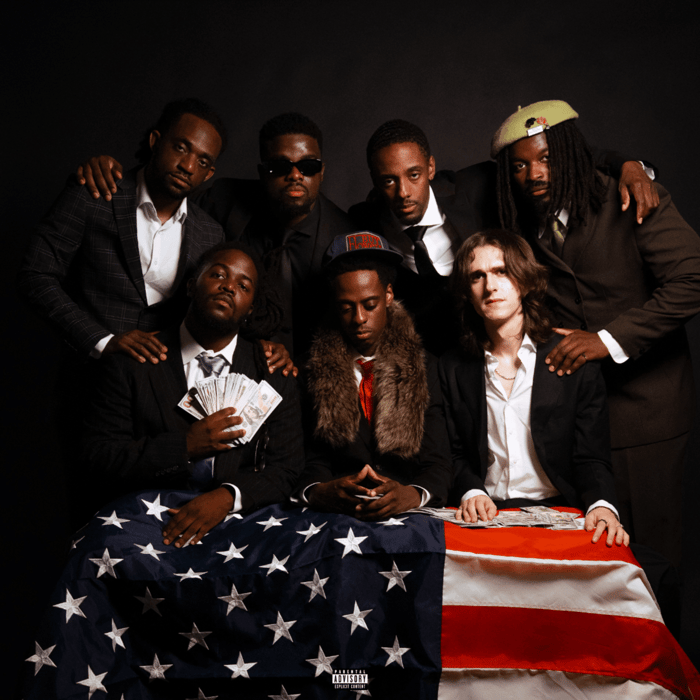
If this album’s imagery stuck with you, that usually means the cover will too. If you want to put that feeling on a wall without turning your room into a merch booth, you can shop album-cover-style posters at our store: https://www.architeg-prints.com
 | DISCOUNTGET 30% OFF*Use code on your next order:
|
* This post may contain affiliate links, meaning we earn a commission if you make a purchase through these links, at no additional cost to you.