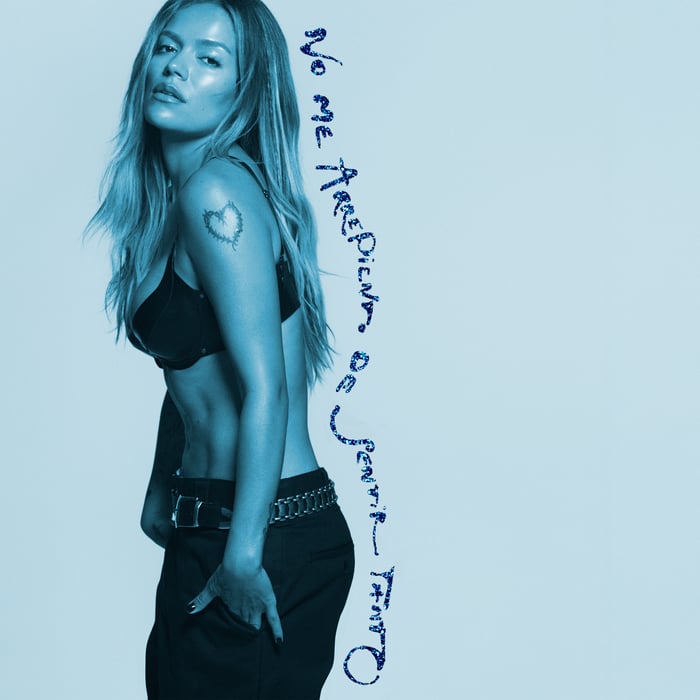
NO ME ARREPIENTO: Karol G’s Breakup Album That Refuses to Shut Up


 See more Architeg Prints stories on Google.
NO ME ARREPIENTO: Karol G’s Breakup Album That Refuses to Shut Up
Karol G’s NO ME ARREPIENTO turns one breakup into a whole weather system—petty, tender, loud, and weirdly methodical.
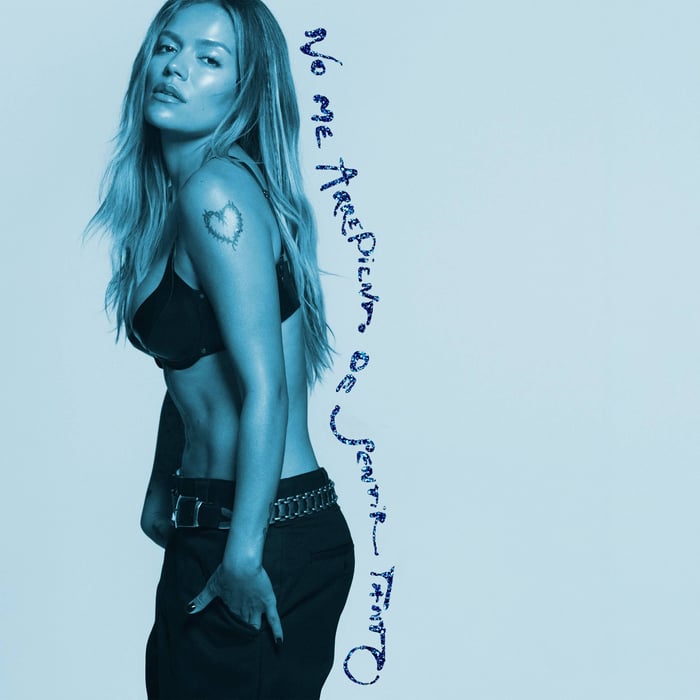
Courtesy of Bichota/Interscope Records.
A breakup so big it needs stadium lighting
Karol G is out here selling stadium tickets like it’s a casual hobby, and NO ME ARREPIENTO sounds like it was built to echo in those huge rooms. The tour energy matters, because this album doesn’t whisper its feelings—it projects them. The title translates to I Don’t Regret Feeling So Much, and the record basically dares you to argue with that stance while it drags you through the same relationship over and over until the details start to feel like evidence.
And yes, it’s one breakup. Not “a theme,” not “an era,” not “vibes.” One guy. One unraveling. One long receipt.
“Maybe” is where she stops romanticizing and starts testifying
The album’s emotional spine tightens in “Maybe,” and it isn’t subtle about the moment it snaps. There’s a line dead in the middle—
“Fuimos futuro y somos final”—that lands like she finally accepts the relationship wasn’t “complicated,” it was finished. The production (Sky Rompiendo is on this one) keeps the track moving, but Karol’s second verse is the real shift: she hands you the architecture of what she built and what he casually knocked down.
When she says
“Yo construyendo y tú tumbándome las torres,”it doesn’t feel like poetry class. It feels like someone standing in the wreckage pointing at specific beams.
The chorus does something colder than a big dramatic blow-up: it runs out of things to say. That choice is the point. The song doesn’t climax into revenge—it drains into resignation. And I’m not totally sure if that’s maturity or just exhaustion finally winning, but either way it’s convincing.
This is her record—she’s not just the voice, she’s the hands
A lot of pop stars “executive produce” the way people “totally read” books they bought. This doesn’t feel like that. Karol G’s name is all over the production credits: eleven out of fourteen are hers. That ratio matters because the album behaves like one person steering the whole ship—sometimes elegantly, sometimes like she’s yanking the wheel on purpose just to feel the skid.
Other producers rotate in with real presence:
- Ovy On The Drums shows up four times and even tags his name in tracks like “Bebiendo Lágrimas” and “Ahí,” plus at the end of “Con Quién Andará?”
- Tainy has four credits too, and you can hear the polish and pacing choices when he’s involved.
- Edgar Barrera appears twice.
- Cashmere Cat has one.
- Judeline and rusowsky co-produce “Con Quién Andará?”—and they also sing on it.
But the broader point is simple: Karol is more involved in the making of this album than anyone else on it. It’s her mess, and she arranged the furniture.
“Bebiendo Lágrimas” turns heartbreak into a to-do list (and that’s the joke)
Her friends warned her he was no good, and Karol doesn’t pretend she didn’t see it. She admits the red flags were obvious, then flips it into a punchline:
“Con red flag ya venías, pero parece que tengo miopía.”It’s funny in the way self-awareness is funny when it shows up late.
“Bebiendo Lágrimas” is where she announces her “retirement from love,” but she says it like someone filing paperwork, not someone transforming. Then she does the most Karol thing possible: she’s already crying on a yacht, already plotting what she’d do if they got back together, already rolling his promises into a blunt, then putting a padlock on the door in case he returns.
That sequence is not “healthy.” It’s also not accidental. The album keeps showing you how quickly she can switch from grief to control—like she’s terrified that if she pauses, the sadness will win by default.
“Te Llevas To” is her dignity clause
Somewhere earlier in the relationship, there were celebration scenes—Paris dreams, big “yes” energy, all that cinematic optimism. “Te Llevas To” is the sound of her revisiting that version of herself and deleting it.
The central bargain is brutal and clean:
“Guardé de ti mis ganas de llorar / Te llevas to’, menos mi dignidad.”Take everything, just don’t take the last thing that lets me look at myself.
Tainy helps shape this one, and you can hear it in the way the track stays controlled even while the lyric is losing the plot emotionally. She also drops a specific boundary—she won’t give him August again—which hits harder than any grand speech. Naming a month is petty in the best way: it means it really happened.
“Con Quién Andará?” turns a classic heartbreak ghost into drunk driving anxiety
There’s a thread running through older Spanish-language heartbreak storytelling here: when someone leaves, they take the promises with them. The album nods to that lineage directly—José Luis Perales wrote “Porque te vas,” which Jeanette made famous, and Jeanette appears again here as the opener to “Con Quién Andará?” with Bronco following behind. The effect isn’t “nostalgia” so much as Karol placing her current crisis inside a long-running human tradition: people leaving, people spiraling, people asking the same questions into the void.
Then Karol enters the scene like a modern update: she’s been behind the wheel lately, she’s had a drink or two, she’s circling the city hoping to run into him—part longing, part perreo, part self-sabotage. She’s basically interrogating the windshield:
- Does he want her more than before?
- Whose lips is he on?
- Will he think of her while he’s doing it?
By the third verse, she hits the ugliest truth:
“Yo sigo escribiéndole aunque no me lea.”I’m still texting even though he’s not reading. That line doesn’t ask for sympathy. It exposes the habit.
Judeline mirrors that same restless cruising energy on “Bby WOW,” hunting for the “accidental” meeting that never stays accidental.
When Karol gets horny, she gets precise (and that’s where she’s dangerous)
This might be a hot take, but Karol G is at her best when she’s horny—not because it’s scandalous, but because she suddenly sounds decisive. Desire gives her a spine.
“MATADORA,” produced by Cashmere Cat and Tainy, is the track where she weaponizes almost-saying-no. A guy asks her to make it easy on him, and she replies that she’s not a whore… but almost. That “almost” does more damage than a clean refusal. It’s the kind of line that keeps a man hopeful and keeps her in control, which is exactly what the song is about whether it admits it or not.
The images are purposely ridiculous in a grounded way: she’s crying on a Hayabusa with nothing on under her blouse. It’s melodrama, sure, but it’s her melodrama—high-speed sadness with expensive taste.
There’s also a recurring bit where a guy asks for “la rusa” and she reminds him she’s not European. It’s funny, but it’s also Karol refusing to be turned into an exotic prop for someone else’s fantasy.
“For U My Lova” runs warm in the other direction, and it lands one genuinely sharp line: the love of her life is waiting for her in the reflection of his mirror. That’s intimate and haunting—until the refrain hands the song over to what “everyone else says” about them, including that big flashy “billion-dollar couple” chatter. The track almost has a private heartbeat, then it panics and checks its own headlines.
“Alguien que te amaba” uses clichés on purpose—then stabs you with specifics
“Alguien que te amaba,” produced by Edgar Barrera, starts by sprinting through the classics: wilted flowers, starless nights, disappearing clouds, a flame under the rain. It’s a speedrun of Spanish love-song imagery, like she’s saying, “Yeah, I know the script.”
But the second verse is where the song stops performing and starts accusing. The relationship ended before she could even say goodbye. Being alone with her stopped meaning anything to him. And the line that actually sticks is simple:
“Pa’ todo sí, pero pa’ mí ya no había tiempo.”Time for everything, but no time for me.
She tells him not to worry—then, at the end of the last chorus, she chooses silence. That silence reads like the first adult choice on the whole record: not begging, not screaming, just shutting the door.
“Final Feliz” is happy only in the way denial is happy
“Final Feliz,” produced with Oklou and Tyler Spry, makes its promise work on one detail that’s painfully ordinary: the last kiss at LAX that she didn’t know was the last. That’s the kind of memory that ruins airports for people.
The song doesn’t float away into fantasy; it keeps returning to the small cruelty of hindsight. Then it shifts into that river-and-paper story, and she offers to write it on his skin if she could go back. It’s romantic, but it’s also a little unwell—like she’s trying to tattoo permanence onto something that already proved it won’t stay.
I initially thought this track was going to be her “closure moment,” but on second listen it sounded more like she’s rehearsing how she wishes she behaved. Which is relatable, but also… not closure.
Big guests, oddly weak songs: the one place the album flinches
If I’m filing one real complaint against this album, it’s this: the two biggest guest spots land on the two weakest tracks. That’s not “hate,” it’s just weird math.
On “Ahí,” Karol’s half actually contains an argument—there’s tension, a point being made, emotional stakes. Then Drake arrives and turns it into a list:
“I want a face just like Carolina / And I want a waist just like Carolina.”It’s not that the lines are unforgivable; they’re just… empty calories. Like someone walked into the wrong room and started flirting with a mirror.
At the end, there’s a spoken exchange about what someone would want in a woman, and it settles on two traits: kind and Latina. That might be meant as playful, but it lands like the song shrinking itself down to a dating-app bio.
The Bruno Mars collaboration “Still” has the same basic issue. Karol’s side is stronger: she keeps his sweater and letters, hoping he’s happy about it even though that would be difficult. Mars comes in telling her to lie down and not let her mind wander. He gets one excellent line—
“You know you’d be my favorite scar”—and then the rest kind of evaporates. The song is “good,” sure, but good in the way a nice waiting room is good: it does the job, but nobody’s making memories there.
The tracks that actually feel like the album’s true center
When I think about what this record is really doing, I keep circling three songs:
- “Maybe”
- “Si lo ven”
- “Con Quién Andará?”
Not because they’re the “best” in some abstract way, but because they feel like the moments where Karol stops posing and starts confessing. They’re where the album quits trying to be impressive and just becomes specific—messy, sharp, and stubbornly human.
Conclusion
NO ME ARREPIENTO doesn’t try to convince you she’s over it. It tries to convince you she was right to feel it all—even when the feeling made her act ridiculous, even when it made her circle the same pain like a neighborhood she can’t stop driving through.
Our verdict: People who like breakup albums that name names without naming names will eat this up—especially if you enjoy pop that’s structured like a diary with studio-grade lighting. If you need your heartbreak music to be “mature” and quiet, this album will irritate you the way a friend irritates you when they go back to the same person for the fifth time and call it “closure.”
FAQ
- What is the core theme of NO ME ARREPIENTO?
It’s one breakup examined from every angle: regret that refuses to be regret, desire that keeps interrupting grief, and pride trying to mop up the mess. - How involved is Karol G in the album’s production?
Very. Her name appears on eleven of the fourteen production credits, making it feel like her hands are on the steering wheel, not just the microphone. - Which track feels like the emotional turning point?
“Maybe,” especially when she lands “Fuimos futuro y somos final” and the song starts sounding less like yearning and more like acceptance. - Do the guest features help the album?
Not really. The Drake and Bruno Mars collaborations are the most high-profile, but they land softer than the album’s solo moments. - If I only play three songs, which ones capture the album best?
“Maybe,” “Si lo ven,” and “Con Quién Andará?”—they carry the album’s real tension: attachment, pride, and the urge to text anyway.
If this record put a particular image in your head (yacht tears, LAX last kisses, late-night windshield interrogations), you can always make it literal—shop your favorite album cover poster at our store: https://www.architeg-prints.com/.
 | DISCOUNTGET 30% OFF*Use code on your next order:
|
* This post may contain affiliate links, meaning we earn a commission if you make a purchase through these links, at no additional cost to you.