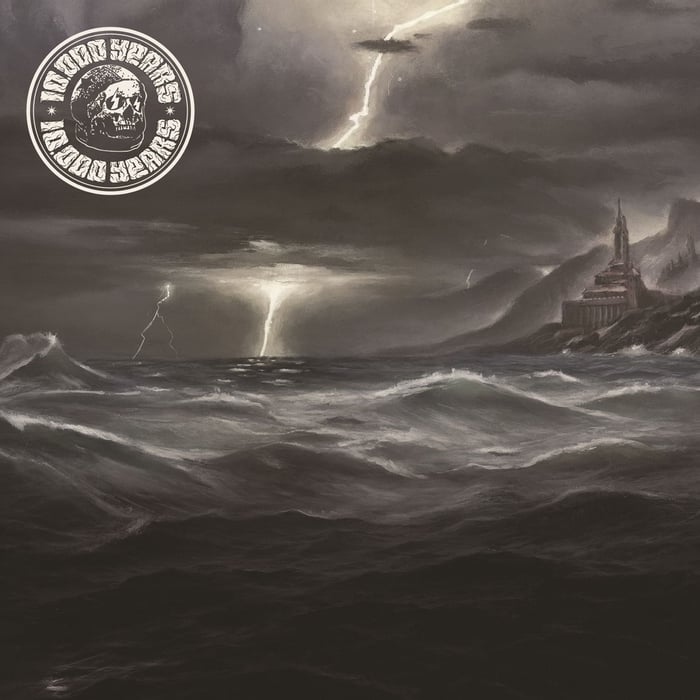
Esox Lucifer Review: 10,000 YEARS Make Stoner Groove Sound Dangerous Again


 See more Architeg Prints stories on Google.
Esox Lucifer Review: 10,000 YEARS Make Stoner Groove Sound Dangerous Again
Esox Lucifer turns 10,000 YEARS into a riff machine with a pulse—groovy, hazy, and weirdly disciplined. Yes, it’s short. No, it doesn’t care.
A quick warning: this album doesn’t “arrive,” it hits
I put on Esox Lucifer expecting a victory lap. What I got was 10,000 YEARS acting like they’ve got something to prove—again—and doing it with the kind of smirking confidence that makes a lot of heavy bands sound like they’re reading off a worksheet.
Two years ago, All Quiet On The Final Frontier made it obvious this Swedish stoner behemoth had outgrown the “promising” phase. That record was riff-and-groove first, everything else second, and it landed like a real statement. So yeah, I went into Esox Lucifer waiting for the usual sequel problem: louder, shinier, emptier.
At first, I thought the new record might actually be too eager—like they were sprinting into the room to show you the cool thing they built. But on second listen, that urgency starts to feel like the point. This album isn’t trying to sound “important.” It’s trying to sound alive.
The opener tells you the game: momentum over mythology
The first move is the instrumental “Pursuit Special,” and it’s not subtle about what it’s doing. It doesn’t open a “world.” It opens a throttle.
The grooves drive forward with that stoner-rock insistence—less about heaviness as weight, more about heaviness as motion. And calling it “Pursuit Special” feels cheeky in a very specific way: they’re basically admitting the whole album is a chase scene.
That’s an arguable choice, by the way. Some people want their heavy records to loom. Esox Lucifer prefers to run. If you’re looking for a slow ceremonial entrance, you might already be annoyed.
“Fleur De Sledgehammer” is where they show their real upgrade
The crash into “Fleur De Sledgehammer” is the first “okay, they meant this” moment. The band snaps from instrumental swagger into full vocal-and-riff lockstep without sounding stitched together.
The vocals flow instead of bark—almost slippery—and that matters because the riffs and drums are pounding like they’re trying to dent the floor. That contrast is where the energy turns electric. It’s not just “heavy + melody.” It’s the band choosing to let the vocal line move like smoke while the rhythm section plays like a demolition crew.
Here’s my hot take: this is where 10,000 YEARS quietly flex that they’ve gotten better at control. They’re not simply louder than before—they’re more coordinated. The groove hits harder because it’s guided, not because it’s chaotic.
I wasn’t totally sure on first pass if the vocals were going to cut through the way I wanted across the whole album. They do—just not by being dominant. They thread through the riffs like they’re part of the rhythm.
The middle stretch is the album’s real brag
After that opening one-two punch, “Church Of The Red Museum” and “Alien Tactics” keep the pressure on, and this is where the album starts to feel less like a set of songs and more like a band showing off a very specific kind of stamina.
They’re firing on all cylinders, sure—but the real trick is how they keep the grooves hooky without turning them into singalong candy. The riffs aren’t just big; they’re sticky. The drums don’t just hit hard; they steer.
Another arguable claim: this album’s “anthem” quality isn’t about choruses—it’s about repetition used like hypnosis. If you need traditional songwriting peaks, you might miss the point and call it samey. If you like being dragged forward by rhythm, you’ll feel exactly why this works.
“Two Million Stones” is the moment the haze becomes the weapon
Then “Two Million Stones” lands—and it doesn’t politely arrive, it collapses into you. The song’s title makes a joke out of understatement, because the track hits with the force you’d expect from something geological.
The riffs are hazy, almost dreamlike, but the rhythms are commanding—enchanted, in that “you’re going where this goes whether you consent or not” way. That’s the 10,000 YEARS sweet spot: they can make something sound fogged-out and still feel tightly ruled.
If you want the simplest read: “Two Million Stones” is where the album proves it isn’t just a riff pile. It’s a mood machine with actual muscle behind it.
And I’ll admit this: I kept waiting for it to tip too far into the haze and lose definition. It never quite does. It rides the line, which is harder than it sounds.
The ending doesn’t comfort you—it clenches
As the record heads out, it doesn’t drift into a gentle cooldown. “Paranoidium” brings angst-laden heaviness that feels less like a theatrical “dark” track and more like the band tightening the screws. There’s tension in it—like the groove is still there, but now it’s paranoid about its own heartbeat.
Then the album closes with the title track “Esox Lucifer,” and it’s thunderous in that titanium-heavy way: not fuzzy and friendly, but dense and gleaming, like the riffs were forged instead of written. It finishes on a high level—stellar, sure—but more importantly it finishes with the band sounding like they’re enjoying themselves while they swing the hammer.
When the last notes ring out, the feeling isn’t “what a journey.” It’s “they meant every second of that.”
The one thing that bugged me: it’s over fast
The only real downside is the album’s brevity. And yeah, that’s a mild complaint—because the alternative is a bloated record that hangs around after it’s said what it came to say.
Still, I can’t pretend I didn’t want a little more room to live inside some of these grooves. A couple sections feel like they could’ve stretched out and gotten stranger. Maybe that’s me wanting the band to indulge; maybe the band is smarter than me and knows exactly when to stop.
Either way, the short runtime reads like a decision: hit hard, don’t linger, leave the listener slightly irritated that it’s already done. Which… fine. That’s a power move.
What 10,000 YEARS are actually doing on Esox Lucifer
Here’s what I think is really happening on Esox Lucifer: 10,000 YEARS are doubling down on groove as the main character, but they’re doing it with more confidence than last time. The riffs don’t feel like “material.” They feel like leverage.
They take what they built on the previous album and crank it up—tenfold isn’t a scientific measurement, but it’s emotionally accurate. The record sounds like a band having the time of their lives, and that matters because fun is usually the missing ingredient in heavy music that’s trying too hard to be taken seriously.
This one doesn’t beg for credibility. It acts like it already has it.
Esox Lucifer is out now via Ripple Music.
You can also find 10,000 YEARS on Facebook: https://www.facebook.com/TenThousandyrs
Where I land on it (without pretending math is music)
If you want a neat little number to staple onto your opinion: I ended up feeling about as positive as an 8/10 person would feel—high praise, not blind devotion. That’s not me hedging; that’s me admitting the album’s biggest flaw is that it leaves before I’m ready, and its biggest strength is that it never wastes a bar acting “epic.”
Conclusion
Esox Lucifer doesn’t try to reinvent 10,000 YEARS. It tries to sharpen them. The riffs hit, the grooves pull, the vocals glide through the wreckage, and the closer lands like a final stomp that doesn’t ask permission. It’s a short album, but it’s the kind of short that feels intentional—like walking away mid-conversation because you already made your point.
Our verdict: People who like stoner groove that actually moves—not just crawls around looking tough—will love Esox Lucifer. If you need long runtimes, sprawling experiments, or a band that stops to explain itself, you’ll get impatient and start checking the track time like it owes you money.
FAQ
- Is Esox Lucifer heavier than All Quiet On The Final Frontier?
It feels heavier in impact, mostly because the grooves are tighter and the band sounds more уверенно (confident), not because it’s slower or sludgier. - Which track is the best entry point?
“Two Million Stones” is the clearest snapshot: hazy riffs, commanding rhythm, and the band’s whole vibe condensed into one hit. - Does the album have filler?
Not really. The bigger issue is the opposite—it ends before some parts can fully sprawl. - Are there clean vocals or harsh vocals?
The vocals come off flowing and melodic rather than harsh, working as another moving layer in the groove. - Who will be annoyed by this album?
Anyone who wants big narrative arcs, long track journeys, or dramatic “importance.” This record prefers momentum and blunt force.
If you’re the type who bonds with an album visually as much as sonically, consider grabbing a favorite album-cover poster for your wall at our store: https://www.architeg-prints.com/ — it fits the whole “live in the riff” lifestyle without making it weird.
 | DISCOUNTGET 30% OFF*Use code on your next order:
|
* This post may contain affiliate links, meaning we earn a commission if you make a purchase through these links, at no additional cost to you.