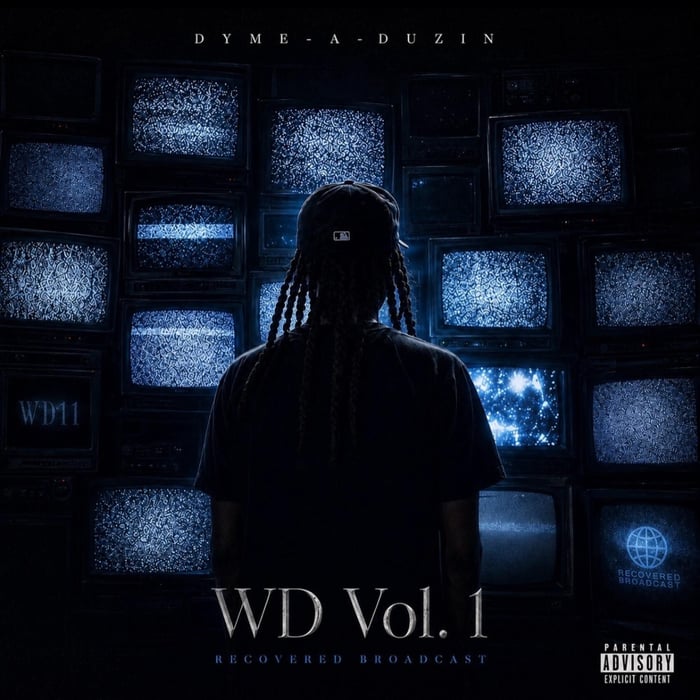
WD Vol. 1 Review: DyMe-A-DuZiN Turns Guilt Into a Sitcom Script


 See more Architeg Prints stories on Google.
WD Vol. 1 Review: DyMe-A-DuZiN Turns Guilt Into a Sitcom Script
WD Vol. 1 presents a candid exploration of self-accountability, faith, and fatherhood through DyMe-A-DuZiN's raw and introspective lyricism, challenging traditional rap narratives with honesty and vulnerability.
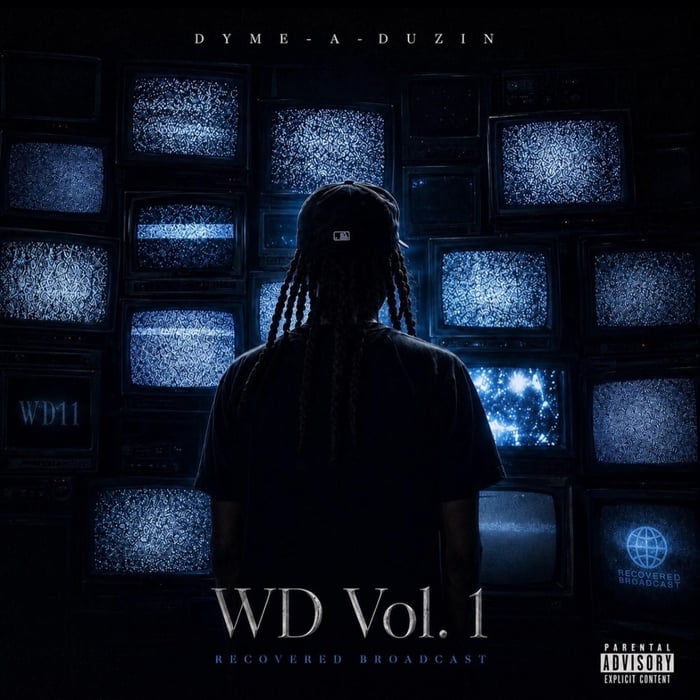
This isn’t “growth”—it’s a guy refusing the easy alibi
Most rap projects want you to clap for “maturity.” WD Vol. 1 doesn’t beg for that kind of applause. It does something more uncomfortable: it keeps walking you back to the moment where blaming the world would be convenient… and then it swats that excuse out of your hand.
The voice behind this record sounds like someone who learned performance early—like, “standing in front of adults and holding attention” early. You can hear it in how he frames scenes and how quickly he turns a bar into a confession. And not the trendy, aesthetic confession either—the kind where the punchline is that he’s the problem, again, and he knows it.
That said, I wasn’t sure at first if this album was going to be more sermon or more diary. On my first pass, I honestly braced for preachiness. But a few tracks in, it clicked: the preaching is mostly aimed inward. He’s not trying to save you. He’s trying to corner himself.
The origin story isn’t sweet—it's loud and crowded
Here’s the first thing WD Vol. 1 makes clear: the “church” in this world isn’t a quiet escape hatch. The way DyMe-A-DuZiN talks about those early years, the holy setting doesn’t cancel out what’s happening right outside the door. The tension is the point—kids being coached and shaped inside, while violence waits outside like it pays rent.
And the name “DyMe-A-DuZiN” doesn’t land like a branding exercise. It lands like a label someone gave a ten-year-old who already liked working a crowd, already understood attention as a tool. When he brings up family roots—his mother singing with the Risen group, his grandmother doing backup for the Isley Brothers—it doesn’t feel like a resume flex. It feels like he’s explaining why music and performance were never optional in the first place.
If you want a clean “came up from nothing” narrative, this isn’t that. The album’s claiming something messier: community and danger can occupy the same address, and the adults running the place might be from the same streets as the people causing the chaos.
There’s also a real-world reference point tied to it, and it’s worth hearing him speak in that setting:
https://www.youtube.com/watch?v=w2Njm52HHdw
Arguable take: the album uses church imagery less like comfort and more like pressure—like a spotlight you can’t step out of.
“Wayans Bros” is where he chooses guilt over a villain
The industry chapter could’ve been a classic “they did me wrong” arc. And sure, he brings up the kind of career turbulence artists love to blame forever: label complications he couldn’t control, corporate shuffle energy, the feeling of being moved around like inventory. He even puts Chris Lighty in the story—exactly the kind of detail that could’ve turned into a shrine or a scapegoat.
But “Wayans Bros” refuses to become that. That’s the move. The track doesn’t linger on corporate betrayal; it lingers on his own impatience and his own missed warnings. Instead of painting himself as the victim of business, he remembers being told to wait—and not being able to do it.
When he goes back to recording from his mother’s basement, the basement isn’t a mythic “from the ground up” trope. It’s more like a consequence. A place you end up when the big machine doesn’t love you back and your pride needs somewhere to sit.
And there’s this unresolved little tension inside the writing that I couldn’t stop chewing on: when he says “brothers,” does he mean real brothers-in-arms—or is he side-eyeing fake camaraderie, sitcom-style, like he’s living next to actors playing loyalty on TV? The fact that the question hangs there is kind of perfect. That ambiguity is the point: he’s not sure who’s real, so he audits himself instead.
Arguable take: “Wayans Bros” works because it’s emotionally stingy—he withholds the satisfying villain and makes you sit with him instead.
“The Pilot” doesn’t bash religion—it bashes the salesman version
The album keeps returning to spirituality, but not in the “I found God, stream my redemption” way. “The Pilot” hits a nastier contradiction: the figure who performs morality while running a hustle. The language is sharp because the target is specific—another pimp in the pulpit, dressed up as guidance.
What makes the song bite is how it places clashing beliefs right next to each other without smoothing them over. He can talk about connecting to God through chakras and then immediately interrogate someone else’s Christian posturing. It’s not “anything goes” spirituality; it’s “prove you mean it” spirituality.
He doesn’t just accuse—he asks how someone knows Christ when they can’t quote much. That’s such an annoyingly effective jab because it’s not a big dramatic excommunication. It’s a simple “show your work.”
Arguable take: “The Pilot” isn’t anti-faith—it’s anti-performance, and that’s why it stings.
“Parent Hood” is imaginary fatherhood that still leaves bruises
The next pivot is wild: there aren’t kids in the actual biography here yet, but “Parent Hood” still stages a whole parenting life like a rehearsal you do because you’re scared you’ll fail the real thing.
He opens with a disclaimer—he doesn’t think he’s capable of bringing a child into the world—and then he goes ahead and builds the children anyway:
- a son learning structure and religion
- a daughter sharp enough to spot a fool instantly
- both of them needing angels tough enough to survive demons, including the ones wearing preacher smiles
This track doesn’t feel like “I can’t wait to be a dad.” It feels like: what if caring for someone finally forces me to become a man? That question hangs over the song like a threat.
Curtiss King steps in late and answers the fantasy with a blunt reality: 4 a.m., Similac, shaking the bottle, warming it up, the crying kid, the unglamorous loop of responsibility. And the sting is in the ending—Curtiss basically implies DyMe hasn’t done this in a long time. Not as an insult, more like a sober corrective: you can imagine the duty, but imagination isn’t the duty.
Arguable take: “Parent Hood” hits harder because it’s pretend—he uses fantasy as a lie detector.
“Do Over/Unhappily Ever After” brings the father in—then swaps him out
From there, the album lets the actual father figure drift into view, but not as a big reunion scene. On “Do Over/Unhappily Ever After,” the dad arrives like a quick memory that still has teeth. The lines are short, the distance is obvious, and whatever time was spent there didn’t sound good.
Then the song does something quietly brutal: the father gets replaced—by a preacher with Cadillacs and a job preaching. That substitution feels intentional. Like he’s saying, “Fine, if a father isn’t present, somebody else will fill the role,” and sometimes that “somebody” is a polished hustler with access and authority.
I’ll admit, this was one of the moments where I paused and wondered if the album was stacking too many symbols in a row—dad, preacher, Cadillac, absence, grift. It’s a lot. But on second listen, the bluntness read less like clutter and more like how memory actually behaves: it piles details without asking permission.
Arguable take: this track’s emotional power comes from how quickly it moves on—as if lingering would be giving the pain too much respect.
“Jamie Foxxx” is basement therapy, except the therapist is the internet
The basement returns, but the function changes. It’s no longer just where songs get cut. It’s where he tries to untangle his head.
“Jamie Foxxx” gets a single verse that starts with a jarring line—“I’m not a sex addict if you should ask”—and then immediately stops being funny. It’s the kind of opening that sounds like a joke until you realize he’s using humor as a doorstop, trying to keep the panic from closing in.
He asks, “What is a goon to a gooner?” and then essentially answers it with the most depressing modern proof possible: paid membership, no ads. The “edger” thing—his own term—lands like a self-aware flinch. He even interrupts himself: “But chill on that.” That’s not censoring for the listener. That’s him grabbing his own wrist mid-confession.
Then he nails the diagnosis in a few bars: hypersexualization, mind-wasting. Not as a slogan. As a leak he can’t plug.
Arguable take: “Jamie Foxxx” is less about sex than about control—he’s describing compulsion like it’s a landlord.
“Birds of Prey/Dawson’s Creek” turns the phone into a crime scene
If “Jamie Foxxx” is the internal mess, “Birds of Prey/Dawson’s Creek” is the mess made visible—specifically through the phone.
He’s scared to show her the phone, and the fear doesn’t read like paranoia. It reads like evidence management. The betrayal isn’t only the content; it’s the algorithm. That’s the modern horror: you can try to behave, and your feed will still snitch on you like it’s getting paid per scandal.
There’s also that sharp emotional flip where the woman is left to build a whole second half of a relationship by herself, just hoping he’ll love her again while she waits alone. It’s bleak because it’s ordinary. No melodrama—just a person stranded in someone else’s indecision.
Mild criticism, though: the emotional setup here is so strong that I kept wanting one more specific lyrical turn—some detail that cuts deeper than “afraid to show the phone.” The track still lands, but it could’ve twisted the knife cleaner.
Arguable take: the phone is the real antagonist on this song, and DyMe treats it like a haunted object he helped create.
“News at 10” and the weird mismatch with Wati Heru
Wati Heru slides in on a hook with a “what’s new?” energy—new shoes, backstabbers. It’s breezy enough that it almost sounds like a different room than DyMe is standing in.
Then DyMe comes through on “News at 10” with that line that flips the vibe: keeping cordial poems on microphones, and now the cord’s to your neck. That’s not just toughness—it’s a threat dressed as wordplay, like he’s tired of being the polite version of himself.
And here’s the awkward truth: these two songs don’t really feel like they’re talking to each other. The transition reads like a channel change. Maybe that’s intentional—news cycle whiplash as structure—but even if that’s the concept, it still jolts.
Arguable take: the disconnect is either clever commentary on modern attention… or it’s just messy sequencing. I’m not fully sure which.
“Supernatural” is chorus-first, and it admits it
“Supernatural” comes from the other direction: the chorus drives, the verses show up like they’re clocking in. That sounds like a diss, but it’s also kind of refreshing when a song admits what it is.
The highlight is the dead-platform flex—“You was MySpace, you was imeem”—which is the rare nostalgia bar that doesn’t feel like pandering. It’s basically him describing someone as expired social media, which is a mean way to say “you mattered once, and now you don’t.”
Then BLKZEN enters doing magic tricks, and everyone’s treating him like a wizard. It’s theatrical in a way the album otherwise avoids, which makes the moment pop more than it should.
Arguable take: “Supernatural” works because it’s shallow on purpose—the hook carries the weight so the verses can smirk.
“Sister, Sister” is a lineage claim dressed as a scolding
The record also wants credit, and it wants it aggressively.
DyMe puts himself in a hallway-recording era at Edward R. Murrow when Capital STEEZ approaches him around 2010, looking for guidance. The way DyMe frames it, he helped the younger rapper find footing, and in return he got influence—paid back in kind.
That relationship becomes a whole “succession” idea in the second verse of “Sister, Sister.” He maps a chain: stepfather guidance all the way up to the people he addresses directly—Joey Bada$$ and JID by name—and he tells them, essentially, to stop ignoring that he’s their offspring. It’s a bold thing to say out loud, and it’s also kind of hilarious in the calmest way, like he’s issuing a paternity test for style.
Musically and lyrically, he sharpens up when there’s a target in front of him. The second half runs through “I Call Your Name” by Switch, and he interpolates “30 for 30” by SZA and Kendrick Lamar in his verse. The interpolation doesn’t feel like cosplay. It feels like he’s using familiar DNA to strengthen his argument: I’m in the lineage, whether you admit it or not.
Arguable take: “Sister, Sister” is less homage than territorial marking—DyMe draws a family tree and circles his own name in thick ink.
“Wayne Heads” and “7th Heaven” are where the ego gets put on trial
He brings full heat on the advice verse of “Wayne Heads.” New York becomes a sleeping titan, and the counsel is blunt: lower the ego—because ego is the weakest weapon you’ve got. That line hits because it’s not motivational-poster wisdom. It’s said like an older guy grabbing your collar before you ruin your life.
There’s even a nurse in the song who’s already seen his chart and concluded he lacks a backbone. That’s nasty, and it’s also the kind of insult that implies he’s been in the system long enough for people to talk about him like a file.
Then “7th Heaven” swings for the big claim: King of New York, but on honest conversation and no drug raps—“the stamp without the stove.” This is the only boast on the album that doesn’t immediately fold into self-deprecation. And because of that, it sounds almost suspiciously confident.
The punchline still comes, just from a different angle. He insists he doesn’t need a culture expert to validate him—which sounds like a flex until he makes it clear how weird it is to have spent two decades being managed by exactly those types. The skepticism expands outward: an internet that kills the realist, live chats replacing the therapy nobody paid for.
And it ends with his father again, sliding into the verse before the track digs into drugs in family history and the last name Donnovan—inside a song that’s, on paper, about being the greatest rapper in the city. That contradiction feels intentional: even at peak brag, he drags the family weight onto the stage with him.
Arguable take: “7th Heaven” is the album’s boldest moment because it dares to brag without hiding behind irony.
The tracks that actually tell you what the album is
If you want the spine of WD Vol. 1, it’s sitting in a handful of songs that keep repeating the same uncomfortable habit: self-incrimination.
The ones that feel most central here are:
- “Wayans Bros” (self-blame instead of industry excuses)
- “Do Over/Unhappily Ever After” (father absence, preacher substitution)
- “Parent Hood” (imagined responsibility as a test)
- “7th Heaven” (honesty-as-brag, with family history in the margins)
Arguable take: the album is strongest when DyMe stops trying to connect tracks conceptually and just lets one messy truth run the whole room.
DyMe-A-DuZiN made WD Vol. 1 like a person writing closing arguments against himself—then handing the jury a mirror. It’s not a comfort listen. It’s not even consistent in its transitions. But it’s weirdly effective at one thing: turning every topic—faith, sex, family, internet, city pride—into the same question asked from different angles: what am I doing to my own life?
Our verdict: People who like rap when it’s nosy, self-snitching, and spiritually irritated will actually love this album. If you need clean hooks, tidy themes, or “let’s celebrate the grind” energy, you’ll bounce off WD Vol. 1 fast—and probably complain that it’s “too much talking,” which is exactly the point.
FAQ
- What is the core theme of WD Vol. 1?
It keeps circling self-accountability—he repeatedly chooses personal fault over easy villains, even when the industry or relationships would make better scapegoats. - Is WD Vol. 1 a religious rap album?
Not in the tidy sense. It uses church, preaching, and spirituality as pressure points, mostly to call out hypocrisy and self-deception. - Which track best represents the album’s emotional center?
“Parent Hood,” because it stages responsibility as a lived trial—even before it’s technically real—and forces the fantasy to collide with unglamorous details. - Does the album rely heavily on nostalgia references?
It uses them selectively (like MySpace/imeem bars) as punchlines and cultural shorthand, not as a whole aesthetic. - Is WD Vol. 1 more lyrical or more hook-driven?
More lyrical overall, though “Supernatural” is a clear case where the chorus is doing the heavy lifting and the verses knowingly take a back seat.
If this whole review put you back in an “album art matters” mood, you can always shop a favorite album cover poster at our store—hang the obsession where you can see it: https://www.architeg-prints.com
 | DISCOUNTGET 30% OFF*Use code on your next order:
|
* This post may contain affiliate links, meaning we earn a commission if you make a purchase through these links, at no additional cost to you.