Somi’s Bloom Album Review: This Record Wants You to Sweat for Joy


 See more Architeg Prints stories on Google.
Somis Bloom Album Review: This Record Wants You to Sweat for Joy
I listened to Somi’s Bloom album and realized it’s not “pretty” at all—it’s a blunt manual for surviving love, womanhood, and your own thoughts.
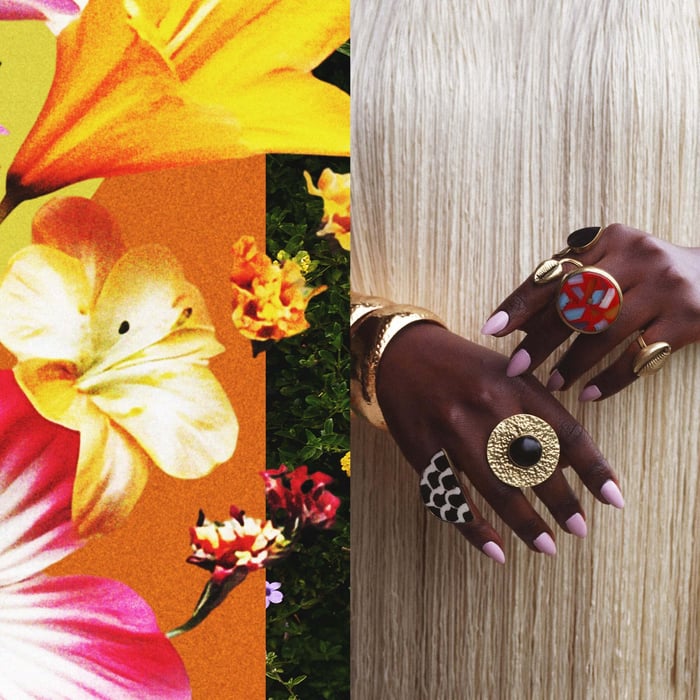
First, the cover tells you the lie (and the truth)
You look at the artwork and expect something soft—petals, ease, a tasteful little exhale. Then the Bloom album starts talking like it’s keeping receipts. This isn’t background music for a sunlit kitchen. It’s music that watches you make the same mistake twice and then politely hands you a broom.
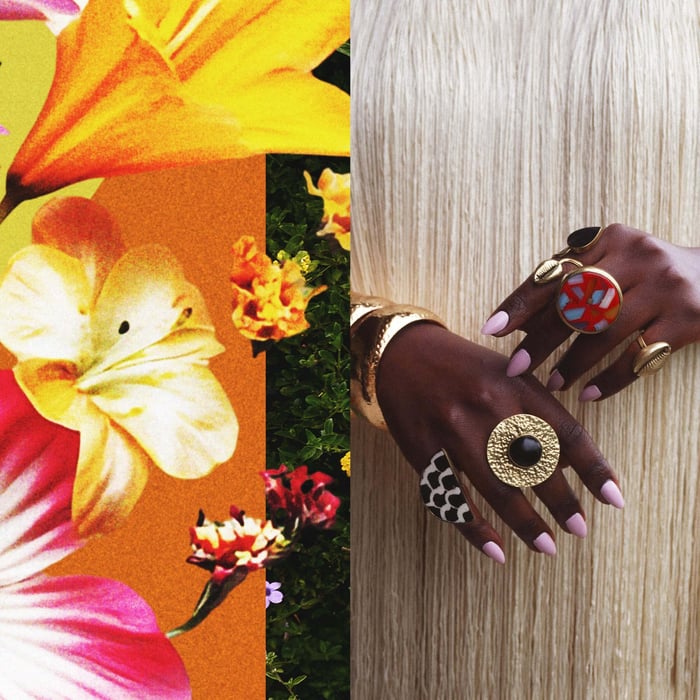
And yeah, I get it: “blooming” sounds gentle. But the record keeps insisting—sometimes quietly, sometimes with teeth—that blooming is work. Not vibes. Work.
The whole setup: Somi built a house and then invited the songs to argue inside it
Here’s what’s clear from the jump: Somi Kakoma isn’t operating like an artist who’s just hoping somebody “gets it.” She’s built her own structure—Salon Africana—that functions as both a cultural agency and a label for her own albums. That matters, because the album behaves like someone who has control over the room: it doesn’t ask permission to change tone, or to get literary, or to get political mid-phrase.
Her background also shows up as more than a bullet list. She’s an Illinois native, born to a Rwandan and Ugandan couple who emigrated. She’s lived in Zambia too. She had Hugh Masekela as a mentor. And she’s worked in theater—writing and performing in plays—which is honestly the first clue as to why the album’s lyrics keep moving like monologues that learned how to sing.
A reasonable listener could disagree, but I think that theater sensibility is the album’s hidden engine: even when the groove is warm, the words are staging a scene.
How it’s made: the Bloom album travels, but it doesn’t sightsee
The production credits read like a passport: Somi and Benjamin James produced What Does It Take to Bloom?, with Aaron Marcellus co-producing the title track. It was recorded to tape in New York, Paris, Dakar, and Lagos. You can hear that geography in the way the record refuses to settle into one “genre costume,” but it never feels like tourism.
Benjamin James is also one half of the Nigerian duo The Cavemen., and the connection comes through like muscle memory rather than a feature checklist. Their paths crossed in Lagos, and I buy it—this album sounds like people meeting in real rooms, not files being emailed politely.
Sonically, the palette is straightforward on paper: jazz, soul, highlife, spoken word. But the way it lands is less “fusion” and more like Somi deciding she’s allowed to use whatever language gets the point across fastest.
Arguable claim: the album’s biggest flex isn’t its stylistic range—it’s how calmly it uses that range to corner you.
“Throw Something”: Somi starts with a tantrum, then turns it into weather
Somi has a habit on this record: she drops a statement about a condition—an emotional climate—then lets the rest of the song fill in the consequences. Sometimes that filling-in takes the form of lists that get so long they become funny in that grim way, like when someone is clearly spiraling but also weirdly organized about it.
There’s a specific kind of woman on this album who announces she’s done, and then proves it: stomping, sulking, wrecking the place, kicking the door. On “Throw Something,” Somi stacks impossibilities like she’s daring the universe to contradict her: winter usurping summer, clouds weeping, the ocean refusing to drink its rain, deserts crying, flowers with no will to bloom. Then she does it again in the second verse, because apparently one round of apocalyptic imagery isn’t enough.
if you decide to look away, it’s a lonely fight either way.
And the punchline—if you can call it that—is how small the chorus gets. It drops into something plain and almost tired. The music underneath feels like actual feet doing actual work. That contrast is the point. The song spends all this energy describing the world breaking, then admits the real problem is simpler: abandonment.
You could argue the verses are the “good writing” and the chorus is too bare. I’d argue the bareness is the blade.
The title track: blooming as a supply list, not a mood board
“What Does It Take to Bloom?” doesn’t romanticize its own metaphor. It’s insistent, almost stubborn, about the question. What does it take? The answer is weather and labor: sun, soil, thorns, weeds, worms; winters and rainstorms; dirt and rough hands.
Then the second verse turns into a practical inventory—like a handwritten list you’d tape to the fridge:
- a palm of seeds
- water every day
- faith and hard praying
- care and pruning
- love and air
- hurt you don’t get to skip
- plans that still get “gone to weather”
And that line—“Tell me what the flowerbeds know”—lands like she’s not asking for inspiration. She’s asking for instruction from something that survives by being rooted.
At first I thought the title track was going to be one of those inspirational centerpieces you nod at politely. On second listen, it hit me that it’s basically a demand: stop pretending growth is clean.
Mama’s voice: the record lets someone else win the pen
The album makes a bold move by letting Somi’s mother show up as the sharper writer. In “Mama on Blooming,” her mother speaks about loving flowers, about finding a full open bloom one morning, and then draws the distinction that’s quietly devastating: with a plant, you put in the seed and you see it. With a child, you’re left to wonder at the bloom.
That’s not a Hallmark line. That’s a parent admitting the mystery of who their kid becomes—and admitting they don’t get to control it.
Then “Mama on Tradition” includes her singing a phrase in another tongue, and Somi spins that into Ngayaya, which is basically two verses and a few words at the end that bring mama back in.
Arguable claim: these “mama” moments aren’t interludes—they’re the album’s spine, because they give the record a second authority that Somi herself can’t fake.
“So You Want to Be a Woman”: instructions that feel like a sentence
Somi sounds most comfortable when she’s giving instructions—because her “instructions” are usually traps that reveal who benefits. On a song aimed at a girl growing up, she pushes the directives as far as they’ll go, until they start sounding like threats.
“So You Want to Be a Woman” features Lakecia Benjamin on saxophone, and the central question gets asked four times, each time answered differently. The refrain in between is the part that sticks, because it’s structured like policy:
Raise her when you need her / Erase her when you’re done / The burden and the miracle / The daughter and the gun.
Those nouns do a nasty double job: two are what a country makes of a woman; two are what it calls her. And the gun hits twice—it’s what she’s shaped into and what gets pointed at her. The song has already distributed crowns of sacrifice before it gets there, like it’s keeping track of who gets rewarded for suffering.
The verses don’t hide behind abstraction either. They’re blunt about turning her body into a stage, using her womb for politics, anointing her matriarch while insisting she never ages. Even her protest is supposed to show up dressed correctly—pearls on the outside, rage with a ribbon tied around it.
And then the third verse turns the screw: hunger, war, empire—suddenly they’re at her door like she owes payment.
I’m not totally sure whether the song is indicting a specific nation or just the general machine that consumes women and calls it tradition. But the ambiguity doesn’t weaken it; it makes it feel uncomfortably portable.
“Aiwah” and “Sugar”: romance as a negotiation, not a rescue
The album’s love songs don’t show up to soothe you. They show up to bargain.
On “Aiwah,” Omar tells Somi he’ll love her in every way for all his days, and she responds by basically saying: great, prove you can remain when it gets tedious. There’s a laugh from him, an averted gaze—tiny tells. He insists he wouldn’t treat her badly, but she’s already holding the leverage because she raises the stakes to something unglamorous: are you ready for the work?
Then “Sugar” flips the viewpoint to the loser’s side. The feeling is: if he had honey in hand, maybe he could hold her; if he had sweetness on his tongue, maybe he’d finally see her correctly. She tries to look away, but the truth won’t let her. When she finally finds the courage to go, the chorus hesitates, wondering whether “baby” is even a name she can give him yet.
Arguable claim: these songs don’t believe in love as fate—they believe in love as labor, and they’re skeptical the other person brought gloves.
Context that matters: Somi doesn’t treat her career like separate chapters
This album doesn’t appear out of nowhere. Somi’s 2022 album Zenzile was built on Miriam Makeba’s material. In 2020, she became the first African woman put forward in any of the Grammys’ jazz categories, thanks to Holy Room—a live session with the Frankfurt Radio Big Band that earned a Best Jazz Vocal Album nomination.
She also wrote Dreaming Zenzile, a musical about Makeba, and performed in it at New York Theatre Workshop and the Repertory Theatre of St. Louis.
I’m saying all this because you can hear an artist here who’s used to inhabiting stories from the inside. The Bloom album isn’t “influenced by” theater—it speaks like someone who’s had to project emotion to the back row without lying.
Arguable claim: the album’s confidence comes from craft, not charisma.
When it stalls: “Sometimes Love” hits a dead end and doesn’t bother turning around
Not everything on the record lands. There are moments where one of Somi’s compositions just… stops, like it ran out of argument.
“Sometimes Love” is the clearest example. Somi assigns love an hour—morning and evening, noon and dawn, winter and the eve of summer. The chorus insists it’s always true. Then The Cavemen. arrive and compress time—hour, day, season—like they’re sweeping the floor fast.
But the song doesn’t develop beyond that. It’s the thinnest writing on the album for me, and it’s frustrating because the premise could’ve opened into something ugly and specific. Instead, it feels like a sketch that accidentally made the final cut.
The best part is the outro: two voices exchanging the hours until she finally concedes to losing control. That ending has more emotional motion than the whole song before it.
Arguable claim: the track’s emptiness might be intentional minimalism, but it plays like an unfinished thought.
Two houses: “Lay It Down” and “Love Could Be Anywhere” turn solitude into architecture
Later, the album puts Somi alone in a house—twice—like it’s testing two versions of solitude.
On “Lay It Down,” youth looks back at her through quicksand and memory, and she’s too winded to count. Pain shows up saying hello like an old friend. Daylight calls. The bed becomes a balm. There’s no strength left for tears, which is one of the most honest forms of exhaustion.
call me by my childhood name, when innocence felt like a game.
Her request is specific and bruised. She’s trying to find a way back “home,” but not a home with furniture—home as a version of herself that didn’t have to perform survival.
Then “Love Could Be Anywhere” flips the house: blinds up. Doors opened. She tells herself she’s alright. She wants sun to replace clouds. She says a name into an empty room, goes down to the sea and back again. She keeps her shadow watching her and insists it isn’t wearing her feet.
That last insistence is a strange line emotionally—like she’s trying to convince herself she isn’t being dragged by her own life.
Arguable claim: these songs are the album at its most revealing, because they stop preaching and start bargaining with the self.
Fear, greed, and those “un-” words: the record gets weird on purpose
As the album moves forward, fear turns into arithmetic: she counts the hurt, then counts the blessings, day after day until she’s through. It sounds like someone who’s trying to survive without the luxury of a meltdown.
“We’re All Falling” is a grim little mirror for greedy people and the stories they tell. The grind is overwhelming, and Somi sounds genuinely unsure what she’s “selling” these days. The final verse asks the kind of question you only ask when you’re tired: will her palms show scars of a life well lived, or will memories be unforgiving once she’s gone?
Then “Interlude: Skin to Skin” comes in like a coded note. It’s packed with “un-” words—her own puzzle:
- uncast the spells
- unguard your secrets
- undress your heart
- unveil our past lives
- come close and tell me it is you
- do it twice
Old lover, old familiar.
A person and an entire history in four words. That’s the kind of line you don’t write unless you’ve revisited the same wound enough times to know its address.
Arguable claim: the interlude is more emotionally expensive than some full-length songs on other albums.
Conclusion: blooming here means getting your hands dirty on purpose
The Bloom album keeps returning to the same blunt principle: growth isn’t a reward, it’s a process you pay for upfront. Somi sings like she’s done pretending otherwise—whether she’s listing impossible weather, quoting her mother’s wisdom, interrogating what a country demands of women, or walking through an empty house trying to hear her own name land differently.
Our verdict: This will hit people who like their beauty a little abrasive—listeners who want jazz/soul/highlife color, but also want lyrics that stare back. If you need your albums to “just feel good,” you’re going to get annoyed when Somi turns love into homework and tradition into a courtroom.
FAQ
- What is the core theme of Somi’s Bloom album?
Blooming as labor—emotional, political, and spiritual—rather than a cute metaphor. - Does the album lean more jazz or more soul?
It moves through jazz, soul, highlife, and spoken word, but the writing drives the whole thing more than any one genre tag. - Which track makes the strongest statement about womanhood?
“So You Want to Be a Woman,” because it frames society’s demands as a repeating instruction manual that keeps erasing the subject. - Is there a weak point on the record?
“Sometimes Love” feels underwritten compared to the rest; the outro does most of the heavy lifting. - What’s the most emotionally direct moment?
“Lay It Down,” especially the request to be called by her childhood name—simple, specific, and hard to shake.
If this album got under your skin, you might want something physical that keeps the mood around—an album-cover poster on the wall does that quietly. If you feel like it, you can shop prints at our store: https://www.architeg-prints.com
 | DISCOUNTGET 30% OFF*Use code on your next order:
|
* This post may contain affiliate links, meaning we earn a commission if you make a purchase through these links, at no additional cost to you.