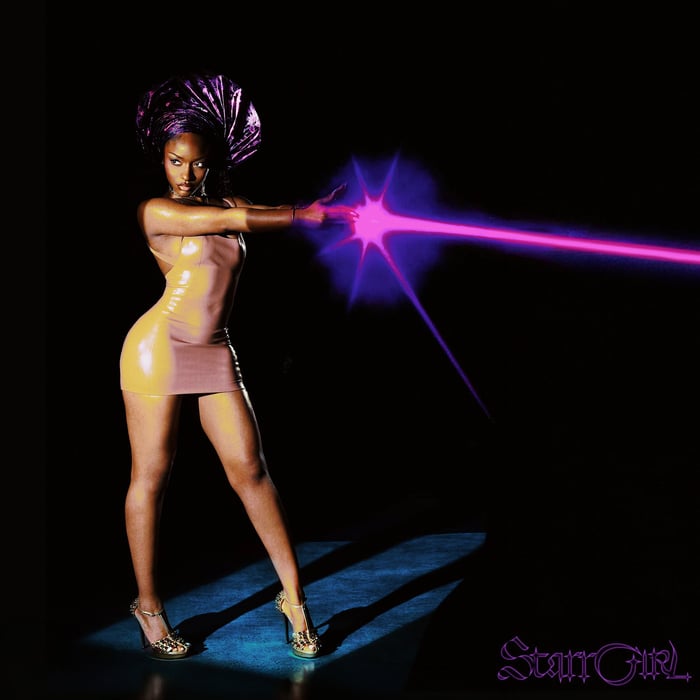
StarrGirl Review: Ayra Starr Flexes So Hard It Almost Bends Reality


 See more Architeg Prints stories on Google.
StarrGirl Review: Ayra Starr Flexes So Hard It Almost Bends Reality
Explore the bold attitude and electric energy of Ayra Starr’s new album StarrGirl, where swagger meets multilingual lyricism and unapologetic confidence.
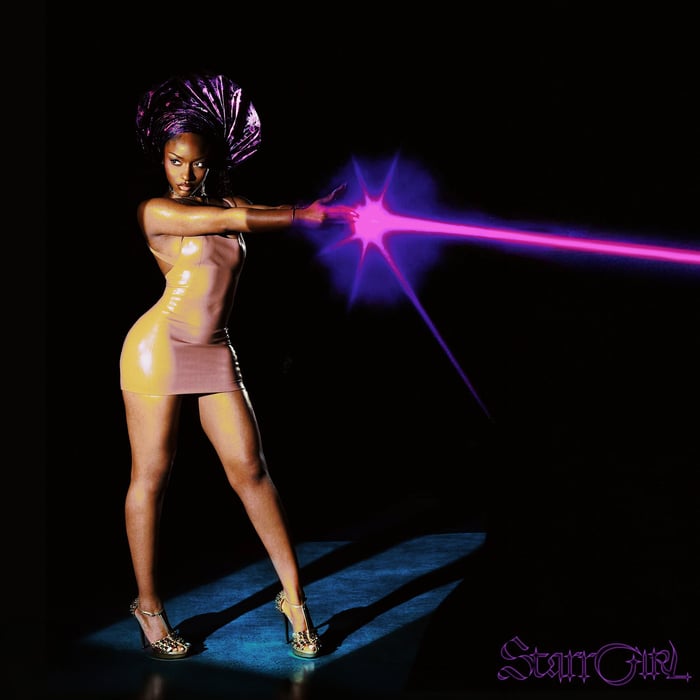
This album isn’t asking to be liked—it’s collecting receipts
Ayra Starr doesn’t “step into her power” on StarrGirl. She invoices you for witnessing it. The whole record moves like she already won the argument and now she’s just picking the background music.
And yeah, it’s fun—often ridiculously fun—but it’s also calculated in a way that feels almost nosy, like you’re overhearing someone rehearse their legend out loud.
Mavin’s star pupil is acting like the school can’t hold her
Here’s what’s obvious after a full listen: Mavin Records has treated Lagos pop like a training program for years, and Ayra sounds like the graduate who’s tired of wearing the uniform. She’s still rooted in that home-base polish, but the confidence has gotten so loud it’s basically a new instrument.
The career details are baked into the attitude. A Grammy-nominated duet with Wizkid doesn’t just sit on the shelf—it changes how you deliver a line. Roc Nation management doesn’t just look good in a bio—it turns the music into a negotiation tactic. And even when she’s still recording on familiar ground, she performs like she’s already halfway out the door, waving from the limousine.
There’s even that NPR Tiny Desk moment, which she treats less like a cozy live-session flex and more like a teaser trailer. She drops an unreleased song there like, “By the way, I have more ammo than this setlist.”
Arguable take: she’s not using institutions (labels, platforms, co-signs) to prove herself—she’s using them as props to prove she can leave.
The title track energy: “Dangerous” is her mission statement
Here’s the pivot: “Dangerous” hits like the opening scene where the main character says their own name in the mirror and believes it. She literally introduces herself as Starrgirl and straightens the posture of the whole album.
The flexing isn’t metaphorical; it’s logistical. Contracts, money, status—she makes it sound like paperwork is foreplay. The voice is brazen and casual at the same time, like bragging is just breathing for her now.
“I’m talking ten figures, in the day, I’m out.” — Ayra Starr
That line isn’t there to convince you. It’s there to remind other people in the room to stop negotiating like amateurs.
Arguable take: “Dangerous” isn’t the best song here, but it’s the most important one—because it teaches you how to listen to everything that follows.
She mixes languages the way she changes outfits—without asking permission
Anticipation for StarrGirl has been weirdly specific: even before people had the full tracklist, the idea was that this is a trilingual album—English, Nigerian Pidgin, Yoruba—sliding between them like it’s one long sentence. And then she casually hints she’s leveling up Spanish too, like Duolingo is just another accessory.
What I keep noticing is that she doesn’t use language to translate meaning—she uses it to control distance. One switch makes a line feel intimate; another makes it feel like a headline. Even when you don’t catch every word, you catch the intention: nearly every track is chasing either money or a body in motion. Sometimes both in the same bar.
Arguable take: the multilingual thing isn’t “representation”—it’s an intimidation tactic. She’s telling you she has more ways to win than you have ways to keep up.
Sex and swagger get crowded, then they get funny
A bunch of StarrGirl lives in that foggy middle zone—smoke mixed with perfume—where the songs are sexy but also kind of… amused with themselves. The dirty lines start to feel less like seduction and more like stand-up delivered in lingerie.
“Amazing” is the best example of her turning the room into a joke without losing the heat. The “earthquake” stuff is dramatic, sure, but then she undercuts it with a casual jab that makes the whole thing feel like a private roast.
And when kwn slides in for the second verse with nothing but clock-watching innuendo—“you got work at 9:30” energy—it actually exposes what Ayra is doing: she’s leaving “secrets” everywhere, but not in a romantic way. More like evidence.
Arguable take: the funniest lines on this album are also the most revealing—because humor is how she avoids sounding needy.
“Hot Body” has a great engine… and an unnecessary lap around the block
I didn’t expect “Hot Body” to be one of the stickiest tracks, and on first impression I thought the hook was going to be the big selling point. On second listen, the hook is weirdly the least interesting part.
“Look what a hot body can do” sums everything up too neatly, like a slogan slapped on a good outfit. The real fun is in the exhibit list—cars, fragrance, the whole showroom vibe—then those opening lines that actually have personality: the controller/remote imagery that makes desire sound like a device you can misplace.
The Spanish-language remix works because it leans into groove and texture—guitar licks, familiar bass—and Danny Ocean basically turns it into a little calendar flip into the next season. But then you get that mediocre second helping of the hook and it slightly punctures what could’ve stayed sleek.
This is my mild complaint: StarrGirl sometimes doesn’t know when to stop repeating the obvious. The album is strongest when it trusts the listener to keep up without the chant.
Arguable take: “Hot Body” would be better if it were a little less convinced of its own catchiness.
“Tornado” is where she turns bragging into math
That unreleased Tiny Desk track, “Tornado,” is the kind of flex song that doesn’t bother with mythology. It brags with numbers, prices, and status like she’s reading out a market report where she’s the only stock that matters.
The meanest boast is the one that turns inflation into a personal rival: she frames herself as “the price they wanna beat,” and then flips it into an invitation—if you’re starving, come eat. It’s arrogant, sure, but it’s also oddly practical. She’s not saying she’s rare; she’s saying she’s in demand.
She even dips into Nigerian infamy with that Anini reference, which is a risky kind of name-drop because it drags real-world grime into an otherwise glossy record. The beat—courtesy of Shizzi and Skillies—does the bullying for her: catchy, groovy, and a little pushy, like it’s elbowing you toward the chorus.
Arguable take: “Tornado” is the album’s sharpest flex because it doesn’t romanticize anything—it just posts the price tag.
Wizkid on “Gimme Dat”: love as a negotiation, not a fairytale
Love shows up on StarrGirl the way money does: as a commodity with terms. Ayra doesn’t stumble into romance—she drafts a deal.
“Gimme Dat” frames peace of mind like a bargain you should be able to get on awoof—Pidgin for a freebie or something that costs nothing. And her target feels obvious here: Wizkid. She sets the conditions like she’s filing a contract:
- no rush
- one-man race
- no pressure
Then she asks for commitment with that “Diallo, Diallo” refrain, and Wizkid answers with exclusivity—keep it private, keep it calm. But the funniest moment is when the song admits the negotiation hasn’t even started yet. She basically says: relax, I’m still inspecting what you’re offering.
Arguable take: this isn’t a love song—it’s a power test disguised as flirting.
Rema finally shows up, and he plays cartoon villain on purpose
It took years of sharing the same Mavin ecosystem before Ayra and Rema landed on an official track together, and “Who’s Dat Girl” treats that like an event.
Rema walks in dressed like the punchline—“all Balenci”—and calls Ayra a “Black Powerpuff Girl” while casting himself as the villain. It’s theatrical in a way that could’ve been corny, but he sells it by committing fully. Even the “Michael Scofield” escape-plan bar feels like he knows exactly how unserious it sounds, which is why it lands.
Then he gets weirdly precise with the flattery—“the, not a”—like he’s editing the compliment in real time. Ayra returns the energy by cruising through Santa Monica and claiming she motivates like Ken Saro-Wiwa, which is a heavy reference to drop into a song that’s otherwise strutting around in designer shoes.
I’m not totally sure that line belongs in this particular mood… but I also can’t deny it makes the track feel sharper, like she refuses to be only one thing at a time.
Arguable take: “Who’s Dat Girl” works because it’s half cosplay, half status report—and the contrast is the point.
“Where Do We Go” is heartbreak with office-hours lighting
If heartbreak needs a passport switch, “Where Do We Go” gets one. Pairing up with Ilya (who’s built a career on American radio instincts) gives the song a more conventional shape, like it’s trying to fit through a narrower doorway.
The lyrics play with a commuter routine—“park the Mercedes”—and then the power flips when Amanda Marshall mirrors the line back, reversing who’s traveling to who. That small switch is the whole song’s emotional trick: control changes hands quietly, and suddenly the narrator is the one asking for direction after getting led on.
It’s written with a bench of co-writers, and you can hear that committee polish. Sometimes it smooths the pain into something replayable; sometimes it sands off the weirdness that makes Ayra most interesting.
Arguable take: “Where Do We Go” is the album’s most “radio” moment—and that’s both its strength and what makes it feel slightly less like her.
“Misunderstood” tries on third-person mythology, then “Midnight in New York” gets real
“Misunderstood” sketches her character in third person: black sheep, lone wolf, two-door model, gas with no brakes. The “plus twos” phrase is the best hit in the whole metaphor pile—specific, odd, memorable.
But the track also shows a funny contradiction: she’s talking about no brakes, yet she’s careful enough to “stop in the codes,” keeping the chaos contained. That’s Ayra all over—she performs recklessness, but the decisions are tidy.
Then “Midnight in New York” stands out for a different reason: her name shows up as a producer here (alongside LONDON and Matt James), and the song feels like the moment she stops trying to win and just tells you what she did. Red wine with a stranger, no need for names, no need for agreement. It’s intimate without begging for intimacy.
Arguable take: “Midnight in New York” is proof she doesn’t need big punchlines—she just usually prefers them.
When the writing slips, it’s not charming—it’s distracting
Not everything lands clean. “Heaven Baby” opens with a pickup line that barely parses—“Are you alone time?”—and the light touch runs out fast. It’s the kind of lyric that sounds like it was meant to be cute, but instead it feels like someone bumped the keyboard mid-text.
Then there’s “Letter to God,” where the grammar gets torn up so badly it risks pulling you out of the feeling. I kept waiting for the emotional center to override the clunkiness, and it almost does—but not consistently.
And yet “Treasure” brings back some of that “Dangerous” dim-to-bright vocal pacing, where syllables fade and then reappear like she’s controlling the electricity in the room. So even when the words wobble, the performance knows where the heartbeat is.
Arguable take: Ayra can get away with messy writing when the melody is strong—but she pushes that luck a little too far here.
Conclusion: the album wants the crown, not the compliment
StarrGirl plays like Ayra Starr is building a world where swagger is the native language and softness is a controlled substance. The best tracks don’t ask you to believe she’s on top—they assume you already accepted it and now you’re just catching up. When it stumbles, it’s usually because it repeats the headline instead of letting the details do the damage. But when it hits—“Gimme Dat,” “Tornado,” “Who’s Dat Girl”—it doesn’t just sound confident. It sounds inevitable.
Our verdict: People who like pop that struts, flirts, and negotiates with a straight face will eat this up. If you need perfectly polished lyrics and zero ego, you’re going to feel personally challenged—and not in a fun way.
FAQ
- Is this StarrGirl review positive or negative?
It’s mostly impressed. The album wins by attitude and momentum, even when a couple lyrics trip over their own shoes. - What’s the most replayable stretch of the album?
The run that includes “Gimme Dat,” “Tornado,” and “Who’s Dat Girl” feels like the clearest statement of what she’s trying to pull off. - Does Wizkid’s feature change the album’s energy?
Yes—he turns “Gimme Dat” into an actual negotiation scene instead of just another flirtation. - What’s one thing that doesn’t work as well?
A few lines (“Heaven Baby,” parts of “Letter to God”) feel more clumsy than catchy, and the album doesn’t always edit itself. - Is this album more about romance or status?
Status. Even the romance tracks often sound like power tests with good lighting.
If you want to keep the StarrGirl energy on your wall, you can shop a favorite album cover poster at our store: https://www.architeg-prints.com/ — it’s a clean way to live with the obsession without replaying the hook for the 400th time.
 | DISCOUNTGET 30% OFF*Use code on your next order:
|
* This post may contain affiliate links, meaning we earn a commission if you make a purchase through these links, at no additional cost to you.