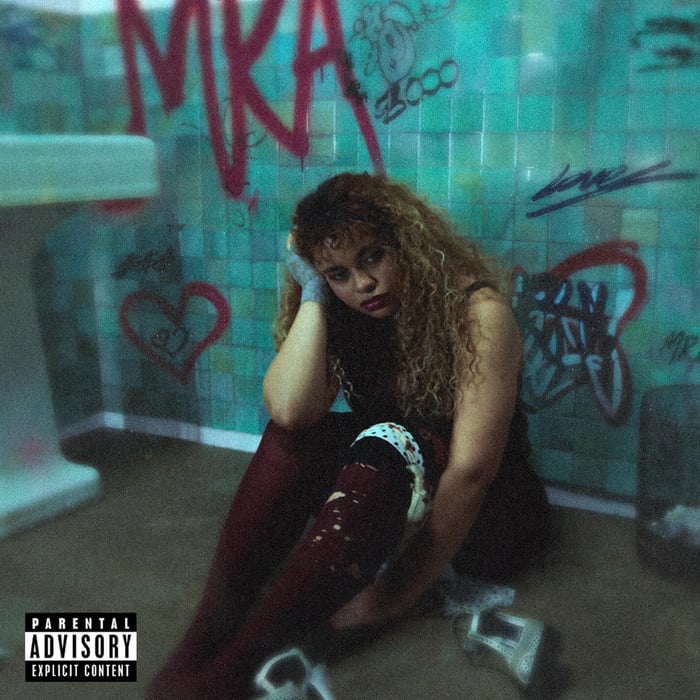
Bella Kay’s My Reckless Abandon Review: Oversharing as a Power Move


 See more Architeg Prints stories on Google.
Bella Kay’s My Reckless Abandon Review: Oversharing as a Power Move
My Reckless Abandon turns a viral moment into a diary with teeth—and it dares you to flinch.
Let’s be honest: this album isn’t asking to be liked
Bella Kay’s debut doesn’t stroll in politely. It kicks the door, points at its own worst impulses, and says, “Yeah, this is the point.”
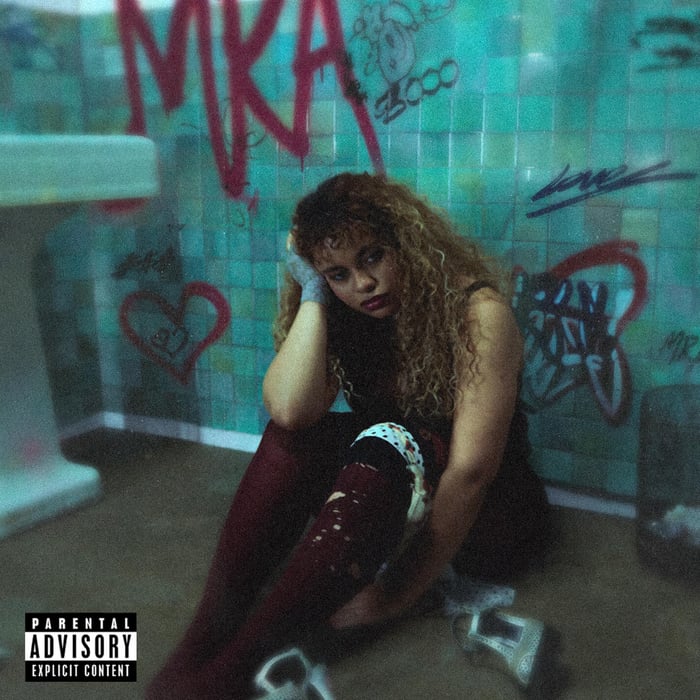
A track called “The Sick” went viral in 2025 and basically turned her into a household name before she even had an “official” body of work to hide behind. My Reckless Abandon is what she does with that kind of sudden attention: she aims it directly at her most humiliating, most human moments. Not in a vague “I’m so real” way—more like she’s dragging the audience into the exact tone that made strangers lock in, then refusing to sanitize it.
The album was written when she was twenty and recorded in New York and Los Angeles, with Idarose steering as executive producer. You can hear that split geography in the emotional temperature: parts of this record feel like tight city-night confessionals, and other parts feel like sunlit self-interrogation where the brightness doesn’t help at all.
And no, this isn’t a “growth” narrative. It’s a spotlight turned inward until it gets uncomfortable.
The “Promise?” problem: she already knows the answer
The record starts building its central addiction early: wanting clarity from someone who benefits from staying blurry.
In “Promise?” the boy is sketched with the kind of detail that gives away the narrator’s problem. He laughs like a little kid, has an asymmetric smile—small, intimate observations that scream, I’m already gone. And she knows the whole situation’s rigged. If she admits how she feels, he can reject her, and that’s clean pain—too clean, almost. So she tries to negotiate a loophole: “So if I tell you, then promise me I can take it back.”
That line is the album in miniature: she wants truth, but she wants a return policy.
She describes him following her everywhere—rain, her drink, even her cortisol—like a crush measured in stress hormones. It’s a sharp choice, honestly. Most pop songs romanticize obsession; she body-checks it. She makes it sound biological, not poetic, which is exactly why it lands.
Arguable take: this isn’t a love song at all. It’s a report from inside an anxiety loop.
“Say It Say” and “marrow”: begging for something solid
From there, “Say It Say” tightens the screws. A long reply becomes a whole “book between the lines,” which is such a brutal modern detail—because yeah, anyone who’s ever stared at a paragraph text knows how it can turn into a Rorschach test.
The boy’s always smiling when he lies to her, and she’s not even asking for kindness anymore. She’s asking for anything she can grab. Even rudeness would be better than floating. That’s the album’s recurring trade: she’ll accept harm if it comes in a tangible shape.
Then “marrow” takes that idea and makes it almost anatomical. She wonders whether he has the courage to fight for her—and answers before he can: “I’m loyal to the bone / But maybe marrow isn’t good enough.” That’s not just insecurity; it’s preemptive self-rejection. She doesn’t wait for him to choose wrong. She chooses wrong for him, then calls it realism.
If you’re looking for a neat arc, I kept waiting for it too. It doesn’t arrive here. What arrives is the habit.
“iloveitiloveitiloveit”: the hit that weaponizes self-awareness
None of those boys answer her, and that silence pushes her into the song that turned her into a superstar: “iloveitiloveitiloveit.”
Instead of asking a person, she asks fate—coin flip logic as emotional outsourcing: “Heads, we go to yours, tails, we go to mine.” It’s funny in the bleakest way: she “owns everything else,” but she can’t own the decision that matters.
The first line—“I like being used, it means I have a purpose”—is a gut-punch because she doesn’t dress it up as metaphor. She says it like she’s already resigned, and the chorus shoves harder: “I love it when we fight, and I like it when you’re mean / We don’t have to get into what that says about me.”
What surprised me is how fast she gets to the self-analysis—faster than the listener can. A lot of artists act like self-awareness is redemption. Here, it’s just another form of narration. She’s fully aware and still walking into the same door.
On first listen, I thought the track was just engineered for virality—sharp hooks, blunt lines, easy ignition. On second listen, it felt more like she designed a pop banger as a trap: the catchiness makes you sing along to something you’d normally whisper to a therapist.
Arguable take: the hook isn’t there to sweeten the confession; it’s there to make sure the confession spreads.
“Blur” and “karaoke”: she turns mixed signals into a hobby
“Blur” is where she admits she enjoys the complications. She wants him in the kitchen and the bathroom—domestic intimacy, not just lust—and then watches him touch her from a balcony with the view of his bedroom. That detail matters: she’s staging her own longing like a scene she can replay.
And she doesn’t want boundaries. She wants the lines blurred. Not because it’s romantic—because blurred lines mean no one has to name the thing, and naming is where consequences start.
Then “karaoke” twists the knife with a different kind of double-life: a guy who calls her “baby” in bed and acts like her buddy by day. That’s not just hypocrisy; it’s a strategy. And she lands one of the album’s best insults when she finally stops romanticizing his instrument more than his personality:
“Yeah, I’ve grown up a bit / These days you’re such a bitch / At least now we’re equivalent.”
That last part is the real sting. “Equivalent” isn’t victory. It’s surrender to the same petty level. And it’s said like she’s almost relieved.
Arguable take: “karaoke” works because it doesn’t pretend she’s above him. It admits she’s been playing too.
“STOP” and “tongue”: when the story gets thinner on purpose
“STOP” shifts toward an older man, and the details get weirdly sparse. She wants tattoos on her skin; she admits stalking a Spotify playlist—those are basically the only hard facts she gives. Compared to the guitar-playing boyfriend she eviscerates in “karaoke,” this guy is more silhouette than person.
At first I thought that was a writing weakness. Then I wasn’t so sure. The vagueness starts to feel intentional, like she’s showing how little she actually has to hold onto—how desire can grow out of scraps and projection.
The song lives on push-pull tension, and what’s interesting is how it sits near other sad songs that already answered “yes” to the relationship anyway. Even the threat—“He’s gonna know it’s about him”—hangs there like she can’t quite bring herself to say it out loud.
“tongue,” meanwhile, commits to one theme and refuses to decorate it. It’s about one thing: a boy who really wants it but can’t say it. No second topic, no symbolic detour. It’s almost aggressively single-minded, like she’s testing what happens when you don’t hide the point behind poetry.
Arguable take: “tongue” is powerful because it doesn’t try to be deep. It just sits in the frustration until you feel awkward.
“swu”: five words, then the spiral underneath
“swu” takes the directness of “tongue” and turns the volume up: “I wanna have sex with you” planted right in the refrain, then worried like a loose tooth through the verses.
She wants it, but immediately asks what happens after. What if they do and he changes his mind? She could undress, move closer—but she needs proof of care first. That push and pull isn’t coy. It’s protective.
And then the reason snaps into focus: she hates her body. Those five words don’t just explain the hesitation; they reframe the whole record’s bargaining tone. She isn’t negotiating because she’s playful. She’s negotiating because she’s terrified that being wanted is temporary and being judged is permanent.
Arguable take: the song pretends to be horny-confident, but it’s actually a control ritual dressed up as boldness.
“Sleep for Dinner”: when the album stops flirting and starts bleeding
“Sleep for Dinner” drops the boys entirely, and honestly, it’s the moment the album stops being “messy relationships” and becomes something heavier.
She sings about eating sleep for dinner. About chewing food and spitting it out. About asking the Lord to forgive gluttony while it turns poisonous inside her. That’s not edgy; it’s specific. And specificity is what makes it hard to shake.
Counting calories becomes the only hobby. One missed meal separates her from being thinner; five meals separate her from the girl she wanted to become. It’s a horrifying math problem because it’s delivered like routine.
Then, mid-song, she abandons coherence:
“I’m screaming, I’m screaming, I need some help / I can’t get better, I don’t know how.”
Here’s my mild criticism: the album sometimes leans so hard into raw confession that it risks feeling like it’s daring you to be uncomfortable rather than earning the moment musically. “Sleep for Dinner” mostly earns it because the writing is so concrete—but around it, the record occasionally flirts with the idea that saying something painful is automatically a climax.
Still, this track is the hinge. After this, you can’t pretend the record is just dating chaos.
Arguable take: “Sleep for Dinner” is the actual center of My Reckless Abandon, even if the hits try to steal the spotlight.
If you or someone you know is struggling with an eating disorder, support is available. In the US, the National Alliance for Eating Disorders helpline can be reached at 1-866-662-1235.
“i deserve better.”: the argument with herself finally gets a verdict
The thread runs straight into “i deserve better.” and it opens with one of the bluntest admissions on the album: she let him mistreat her because she hates herself.
She says she’d forgive him if he returned. She loves when it ends like that. She lives for the fights. And then she tries to draw a line anyway—insisting in the chorus that this time he’s wrong.
The part that stuck with me is the ending. The song lands on “It’s not my fault.” And it doesn’t feel like a triumphant self-help slogan—it feels like she had to rewrite the ending in her own head until it stopped blaming her. You can hear the effort in the choice. It’s not confidence; it’s a decision.
Arguable take: the power of “i deserve better.” isn’t that she believes it—it’s that she says it anyway.
“A Father’s Lament”: inheritance, warnings, and a voice message that doesn’t let go
A voicemail from her father opens “A Father’s Lament,” and it changes the album’s whole lighting. Suddenly the mess isn’t just romantic; it’s generational.
In the song that follows, she recounts a lecture from when she wasn’t even four feet tall: don’t be too much or too little—stay in the middle if you want to make it out. Don’t be too loud; “our loud” is different from “their loud.” You can’t afford pride. Then the line that lands like a stamp on the forehead: “You’re Black, baby girl, oh, don’t waste it.”
When she started wearing mini skirts, he gave her another version of the same warning: don’t give them one reason to hate you; don’t give them one reason to start. It’s parental love translated into survival tactics, and it’s chilling because it’s practical. Not sentimental. Not poetic. Practical.
The final verse moves that lecture forward a generation—to little Tommy with the race cars and Nikes—and turns into a prayer that the world finds its redemption before he has to find his own.
I’m not totally sure if Bella Kay means this track as a pause in the drama or the real explanation for it. Either way, it’s the album’s deepest breath—and maybe its hardest punch.
Arguable take: “A Father’s Lament” makes the rest of the record sound less like chaos and more like learned caution wearing different costumes.
“mindfuck”: the coldest bargain on the record
If “A Father’s Lament” is the moral spine, “mindfuck” is the moment she shows how low she’s willing to bargain.
He’s at a party being cool and joking around—maybe with her, maybe taking someone else home. She accepts all versions at once. She even grants the other woman her full humanity: pretty, really nice. No villain needed.
Her condition shows up in the bridge:
“I’d rather be the one that you want than the one that you fuck.”
She offers it like it’s higher ground: let him have his fun, let her name stay lodged in his head forever as the consolation prize. And the delivery is quiet enough to pass for kindness, which is exactly what makes it icy.
“She might be the one that you touch, but I’m the one that you keep,” she concludes—satisfied with living in someone’s mind as a form of winning.
Arguable take: “mindfuck” isn’t romantic suffering. It’s emotional chess played by someone who swears they’re fine losing pieces.
Conclusion: she doesn’t clean up the mess—she frames it
My Reckless Abandon takes the kind of voice that goes viral and forces it to hold eye contact for a full album. Bella Kay keeps circling the same hungers—clarity, control, being chosen—and she’s bold enough to show how those hungers can rot into self-negotiation. When it hits, it hits because the details are too specific to be performative. When it misses, it’s usually because the rawness dares the listener to call it depth. But even that flaw feels like part of the point: she’s not presenting a healed self, she’s presenting the loop.
Our verdict: People who like diaristic pop that admits the ugly part out loud will latch onto this fast—especially if you’ve ever reread a text thread like it was scripture. If you need singers to sound “over it,” or you get allergic to self-awareness that doesn’t equal self-improvement, this album will irritate you like a too-tight ring. Which, to be fair, might be exactly what it wants.
FAQ
- What is the core theme of My Reckless Abandon?
It keeps returning to wanting certainty from people who profit from ambiguity—and how that uncertainty turns into self-blame. - Which songs feel like the emotional turning point?
“Sleep for Dinner” shifts the album from relationship spirals into something bodily and existential, and the rest of the tracklist can’t un-know it. - Is “iloveitiloveitiloveit” just a viral single or a key track?
It’s a key track. The catchiness is the delivery system for a confession most artists would soften. - Does the album offer resolution by the end?
Not really. “It’s not my fault” in “i deserve better.” feels like a chosen sentence, not a final transformation. - Who is “A Father’s Lament” really about?
It’s about inheritance—how love can sound like warning labels, and how those warnings shape the rest of her risks.
If you want something physical to match the album’s “say it plain” energy, a bold album-cover poster on your wall kind of makes sense. You can browse prints at https://www.architeg-prints.com.
 | DISCOUNTGET 30% OFF*Use code on your next order:
|
* This post may contain affiliate links, meaning we earn a commission if you make a purchase through these links, at no additional cost to you.