Steve Lacy’s Oh Yeah Review: A Funk Confessional That Won’t Sit Still


 See more Architeg Prints stories on Google.
Steve Lacy’s Oh Yeah Review: A Funk Confessional That Won’t Sit Still
Steve Lacy turns Oh Yeah into a sly, messy truth-telling session—tight grooves, uglier lyrics, and jokes that land because they hurt.
The Album’s Real Trick: It Pretends the Beats Don’t Need the Words
For a long time, Steve Lacy moved like someone who could win with vibes alone. Oh Yeah is him deciding that’s not enough—and then overcorrecting on purpose.
He came up building tracks in the scrappy, modern way: making music online as a Compton high schooler, stitching ideas together on an iPhone, sketching a chorus and letting the rest be implied. That “good enough” approach accidentally became a superpower when “Bad Habit” blew up on TikTok, turned into his first No. 1, and even snagged a Grammy nomination in 2022. The problem with a moment that big is it teaches you the wrong lesson: that a catchy fragment is the whole point.
After that, the silence felt deliberate. And when Oh Yeah finally starts talking, it’s not small talk. It’s him walking back into sessions right after Gemini Rights, recording a bunch of it in Paris, and—this detail matters—cutting out coffee and edibles partway through. You can hear the pivot: less haze, more nerve endings. I’m not saying sobriety is a sound, but I am saying this album keeps choosing clarity even when clarity makes him look worse.
And he more or less tells you the mission statement straight up:
“I’m ready to speak my mind.” — Steve Lacy
At first I took that as the usual album-rollout bravado. On second listen, it feels like a warning label.
“is it cool?” (feat. SZA) Isn’t Flirting—It’s a Controlled Burn
Here’s the first big tell: Lacy doesn’t try to seem lovable. He tries to seem accurate.
On “is it cool?” with SZA, he drops a line that’s basically anti-pr: “I just cheat every now and again.” The drums stay low—like the track is keeping its voice down because it knows what it’s admitting. SZA and Lacy circle the same question from different emotional angles, which is way more interesting than a typical feature where the guest just adds sparkle.
Lacy stacks up the reasons he’s risky:
- an absent father hanging over him like an inheritance
- self-destruction any time his heart’s involved
- that needy fantasy of being “the one you tell your mom about”
- and the bluntest version of the truth: “You ain’t gotta trust me to love me, baby / ’Cause I don’t even trust myself.”
SZA stretches her lines like she’s testing the elasticity of the situation; Lacy keeps his tight, like he’s trying to control the narrative with syllable-by-syllable discipline. Together, they make the question feel less romantic and more like a cognitive test: is this “cool,” or is it just self-harm with a good playlist?
He even admits he goes “feral” when silence drags on too long—like quiet is the real enemy, not betrayal. That’s the kind of confession that isn’t cute, and I’m pretty sure that’s the point.
Arguable take: the track’s restraint is the flex. A louder beat would’ve turned this into theater, and Lacy is aiming for something meaner: honesty without catharsis.
The Groove Never Stops—Because He Doesn’t Want You Thinking Too Hard
The baseline sound of Oh Yeah is familiar if you’ve tracked his work: guitar chords, rubbery bass, dry drum-machine hits, and phrasing that acts casual until you notice how carefully every hook is pinned in place.
There’s a funky undercurrent that keeps moving no matter what he’s confessing. And that’s not just style—it’s strategy. The groove works like a conveyor belt. Even when he says something wild, the track keeps walking forward so you don’t get to sit with it too long.
I kept catching myself nodding along and then realizing, a second late, that he just said something bleak. That delay is part of the album’s design. It’s basically him saying: I’ll tell you the truth, but I’m not going to let you stop the party to process it.
Arguable take: Oh Yeah isn’t trying to be “deep.” It’s trying to be unavoidably specific, which is harder—and also riskier, because specifics make you accountable.
“the feeling” Turns Desperation Into a Dance Move
This is where the album’s craft really shows off. On “the feeling,” Lacy expands the core formula into something more band-like. The bass line walks through changes like it’s confident it can carry anything, and the falsetto floats on top like he’s trying to levitate out of his own mess.
But lyrically, it’s not floating. It’s sinking with style.
He’s “drunker than a bitch” staring at old pictures. He decides being a burden is better than swallowing everything. And then he walks straight into the songwriter’s trap and admits it out loud:
When you start writing songs just to stop thinking about someone, you end up making them about that person anyway.
That’s not just a good line—it’s an exposure. He’s telling you the album is a symptom, not a statement. At first I thought the track was just sleek and sad. Then the words clicked, and it started sounding like a private spiral dressed up as a groove.
Arguable take: “the feeling” is the real center of the album, because it makes the prettiest music host the least flattering thoughts.
“doom” Goes Ugly on Purpose—and It’s Weirdly Refreshing
Then he lets it rot a little.
Both sides of “doom” move at a crawl, with heavier bass and slower drum hits. The pace feels intentional, like he’s forcing you to stay in the room with him. He plays a villain in a neon nightmare—Sin City energy—acting like a big baby with a grudge and a scoreboard for karma.
He’s also at his most blunt about the culture around him: a “freaked-out generation,” everybody chasing validation, everybody hooking up, nobody protecting love like it matters. It’s a broad claim, sure, and someone could easily roll their eyes. But he sells it because he’s not preaching from a mountaintop—he sounds like he’s stuck in the same sludge.
And then Part II drops the sermon entirely. He loses focus, loses passion, and needs quiet so badly he builds a whole chorus around essentially yelling “Shut the fuck up.” It’s not subtle. It’s not polite. It’s also one of the most human moments on the record: the point where the “ready to speak my mind” thing collapses into actually, I need everyone to stop speaking at all.
Mild criticism, though: the ugliness is effective, but it risks feeling one-note in its bluntness—like he’s so committed to not being filtered that he forgets a little finesse can hit harder than a brick.
Arguable take: “doom” isn’t there to sound good. It’s there to stop the album from sounding too charming to be believed.
Badu and Cecile Believe: Two Features, Two Different Mirrors
The features on Oh Yeah aren’t random—they’re diagnostic tools.
On “pure colour,” Erykah Badu slides through Lacy’s loosest soul groove, bending lines however she wants. Lacy, meanwhile, keeps the structure tight. That contrast is the whole scene: her voice acts free; his production acts controlled. She sings like she doesn’t recognize herself anymore, and the track feels like identity dissolving in real time.
Then Lacy answers by turning to family pressure—relatives convinced he’ll become his father, as if destiny is contagious. He swats it away with a line that basically says: they don’t know anything, they won’t control me. The moment lands because it’s defensive in a way that feels earned. He’s not giving you a clean backstory; he’s giving you the emotional reflex.
“lovesexdrugbomb” goes in a different direction. Cecile Believe takes it somewhere synthetic: processed harmonies hovering over drum-machine pulses. Her refrain reframes the on/off romance as something flexible, still sitting right where they left it—like the relationship is an object you can pause and resume.
And then Lacy drops what might be his funniest, most alarming suggestion: “Kill your boyfriend.” He retracts it a beat later—okay, that’s excessive, I just need you right here—and suddenly the track feels like a rom-com scene where the character says the quiet part loud, then tries to mop it up before anyone calls a therapist.
He even references crying through a rom-com until he laughed, which is exactly the emotional temperature of that moment: melodrama turning into self-awareness mid-sentence.
Arguable take: these features don’t “add variety.” They expose different ways Lacy tries—and fails—to keep control.
“nice shoes / in your world” Is Lonely, Hilarious, and Kinda Brutal
He dropped “nice shoes” earlier as a solo, but here it’s expanded into a two-part suite: “nice shoes / in your world.” This is where the album’s comedy and isolation shake hands.
The filtered buildup eventually settles into a long groove jam, and it even pulls in a James Brown vocal sample borrowed from Lyn Collins’ “Think (About It).” It’s an infectious choice—classic funk DNA—but he uses it like a backdrop for modern alienation.
And then he lands one of those lines that’s funny until you realize it isn’t:
If he had a dollar for the friends he would sleep with, he could buy really nice shoes.
It’s a joke, sure. It’s also a confession about how he translates closeness into desire because he doesn’t know where else to put it. He admits he’s sad without fully clocking it, leaning on “my guitar and serotonin,” calling himself a “non-confront, avoidant, lonely coward,” and literally asking for permission to spiral. That’s not the language of a pop star trying to look cool. That’s the language of someone narrating their own bad habits like they’re weather.
In Part II, he turns outward: addressing a room full of beautiful people, calling one an angel, confessing his problems have always been about himself, and then retreating back to his own world before it gets too heavy for them. That retreat is the thesis of the suite: he can enter the room, but he can’t stay.
I’m not totally sure the extended groove jam will work for everyone—it asks you to live in the mood instead of chasing the next hook—but that patience is where the track earns its weird power.
Arguable take: this is the album’s sharpest writing because it makes loneliness sound social, not solitary.
“bebe” and the Comedown That Turns Into Vows
After the suite, “bebe” shows up like a comedown with glitter still stuck to your face.
It plays like a hexed little love spell. Friends pull him back from an edible haze, and somehow he appears holding wedding vows. That image is ridiculous in the best way—like romance has been so warped by chemicals and fantasy that commitment becomes a prop you can suddenly pull out of your pocket.
At first I thought “bebe” was going to be a throwaway, a cute cooldown. Then the vow-energy hit, and it started sounding less like sweetness and more like someone trying to conjure stability by saying the most stable words he can think of.
Arguable take: “bebe” isn’t tender. It’s a scramble for an anchor.
“show you me” Is the Most Nervy Crush Song Here
His most jittery groove goes to a crush on “show you me.” The beat doesn’t thump—it clicks. The arrangement is almost physical in how it moves: snare hit, guitar stab, bass, then he steps around it like he’s trying not to trip.
He plays love police on himself. He’s sure he’s in love, and he’s equally sure the other person should be too—which is both confident and wildly delusional, the classic crush cocktail.
Then he gets properly nervous: compliments a new tattoo, blurts “Are you even gay?” mid-approach (an insane pivot that somehow sounds like a real anxious thought slipping out), and finally makes the only move he can manage: maybe we should meet, introduce myself, I could show you me.
That last line is the album in miniature: behind the jokes and the grooves, he’s begging to be seen—but only on terms he can control.
Arguable take: “show you me” is braver than the big confessions because it captures the humiliating micro-moments where your personality glitches.
Where I Landed (And What I Kept Replaying)
This album lands in what I’d call a “great, not flawless” zone—the kind of record that wins by being specific and a little reckless.
The songs I kept circling back to were:
- “the feeling”
- “doom”
- “nice shoes / in your world”
Not because they’re the “best-made” in a sterile sense, but because they’re where the album’s real personality shows: the groove as cover, the confession as compulsion, and the humor as a stress response.
Arguable take: if you came here for another “Bad Habit” lightning strike, you’ll miss what Oh Yeah is doing—because it’s not chasing virality. It’s chasing relief.
Conclusion
Oh Yeah sounds like Steve Lacy realized charm can be a hiding place, then decided to take the hiding place away while keeping the funk. The grooves keep smiling, the lyrics keep slipping, and the album keeps yanking you between “this is fun” and “wait, that’s bleak”—which is exactly how a lot of modern relationships feel when you’re being honest for once.
Our verdict: People who like funk-forward pop with uncomfortable admissions (and can handle a little emotional whiplash) will actually love Oh Yeah. People who want clean romance, tidy morals, or another bite-sized TikTok chorus are going to get irritated—and maybe that irritation is part of the design.
FAQ
- Is Oh Yeah more about lyrics or production?
It finally treats lyrics like the main event, but the production keeps dancing so the words don’t flatten the mood. - What’s the most emotionally direct song?
“the feeling” hits hardest because the groove is gorgeous while the writing admits how trapped he feels. - Do the features matter or are they just hype?
They matter. SZA, Erykah Badu, and Cecile Believe each expose a different version of Lacy’s control issues. - Is “doom” supposed to be unpleasant?
Yes, and that’s why it works. It slows everything down so you can’t escape the ugly thoughts. - What should I start with if I’m new to Steve Lacy?
Try “nice shoes / in your world” for the album’s funniest loneliness, then “show you me” for the anxious crush energy.
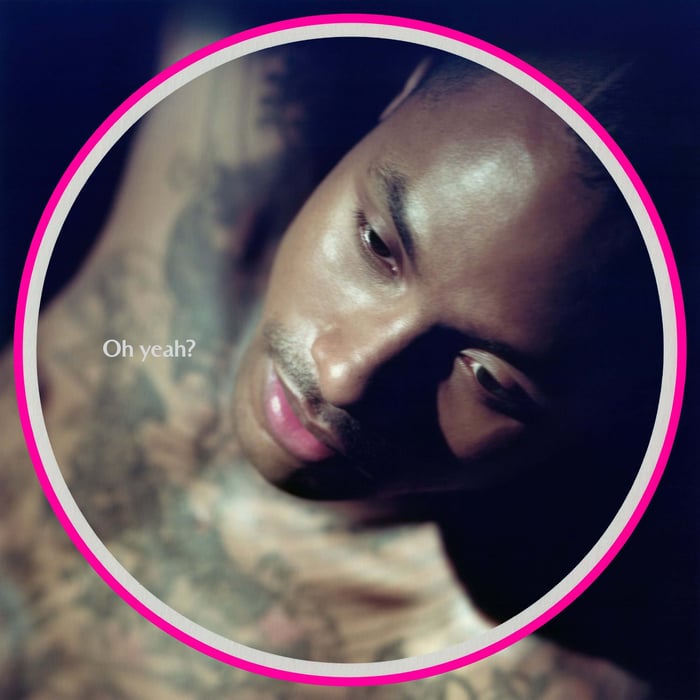
If this album stuck an image in your head—cover art included—maybe grab a poster of your favorite album cover and make the obsession slightly more practical: https://www.architeg-prints.com
 | DISCOUNTGET 30% OFF*Use code on your next order:
|
* This post may contain affiliate links, meaning we earn a commission if you make a purchase through these links, at no additional cost to you.