People Aren’t Friends: Another Planet & steel tipped dove’s Trust Issues


 See more Architeg Prints stories on Google.
People Aren’t Friends: Another Planet & steel tipped dove’s Trust Issues
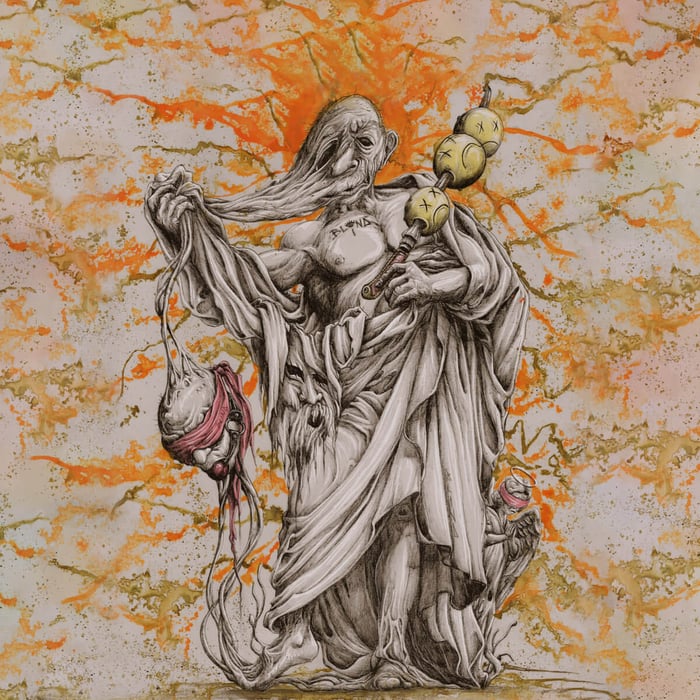
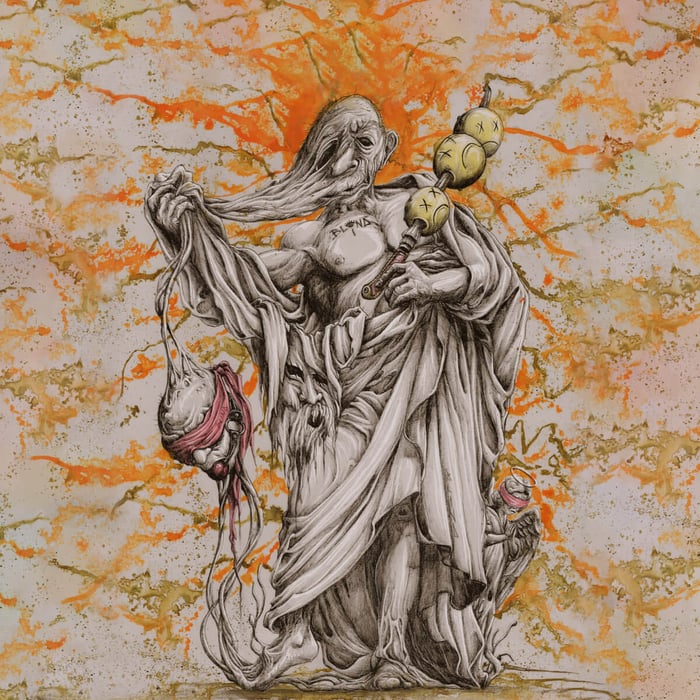
People Aren’t Friends turns New York mistrust into a bass-heavy maze—Phiik & Lungs sound like they’re rapping with their backs to the exit.
A record that greets you like a locked door
This album doesn’t welcome you in. It sizes you up first, checks your pockets, then decides whether you’re useful.
People Are Not Your Friends plays like a survival manual for the New York underground where trust isn’t a virtue—it’s a liability you can’t afford. The mood isn’t “dark” in a performative way; it’s the specific kind of guarded you get when door splits vanish, texts go unanswered, and crews fracture over beat money like it’s inheritance. Phiik and Lungs don’t sound like they learned cynicism from the internet. They sound like they earned it in person.
They move as Another Planet—two childhood friends from Long Island—and the album’s whole posture feels like that: closeness inside the duo, suspicion aimed everywhere else. The Tase Grip orbit is in the air too (AKAI SOLO is part of that circle), but the bigger story is simpler: this is what happens when you keep showing up and people keep proving you right for not trusting them.
steel tipped dove builds the rooms, then removes the windows
Here’s the creative decision that makes the whole thing sting: steel tipped dove handles the production across the entire record, and he doesn’t give the songs the “release” most rap beats are designed to provide. I kept waiting for a melodic handrail—some obvious lift, some warm chord change—and it mostly never comes. On first listen I actually thought, is this going to blur into one long loop experiment? But the longer it runs, the more the point clicks: the sameness is the trap. The walls don’t move because the situation doesn’t move.
Dove’s loops are heavy and stubborn. They sit there, bass-forward, not evolving so much as enduring. Drums hit with force in places, disappear in others, but the underlying architecture stays tight—rooms so close together you can walk between them without noticing you changed tracks. That could’ve made the album feel desperate in a cheap way. Instead it makes the emcees sound like the only moving parts in a city that doesn’t budge.
And that’s the real trick: when the beat refuses to “cheer up,” every complaint feels less like whining and more like weather.
Phiik starts the album by calling the whole scene out—then keeps going
The opening move is blunt: Phiik points at the way rappers clown each other but won’t actually show up. The line about people “choking on clout” lands because it’s not written like a tweet; it’s written like a conclusion after too many empty gestures. Then he does something nastier—he offers someone a chair to “sit back, relax and watch you drown.” That’s not motivational-talk bitterness. That’s the sound of somebody deciding empathy has a limit.
The album never really calms down after that. The grievances aren’t sprinkled in for flavor; they’re the engine. Lungs, especially, treats “fake people” like an ecosystem, not a few bad apples. He zooms out and sees everyone staring into the same phone, using the same manipulation tactics, corralling “a bunch of rats.” It’s harsh, sure, and someone could argue it’s overkill—but the performance sells it because he sounds like he’d rather be wrong. He just isn’t.
“Treasure Junk” turns the mirror back on the rapper, which is the only flex here
On “Treasure Junk,” Lungs catches rappers acting rich in the club while still sleeping in their parents’ bed—an image that’s funny until you realize he’s not laughing. Then he swerves into the most honest kind of self-hate: it’s time to “shun the whole guild,” including himself. The line “Rappers not special / We should definitely be shunned” hits like somebody ripping up their own membership card.
Phiik follows with something quieter and, honestly, heavier. He describes that dead moment after asking a crowd to make noise and getting nothing back—“You ask the crowd to make noise / And they do not holler.” That’s the sort of sentence that shouldn’t hurt, but it does, because every performer knows that silence. The album’s mistrust isn’t just aimed outward; it’s the fear that even your moment can evaporate in real time.
“Actually Good at Rapping” is petty… and that’s why it works
This is where the album’s cynicism gets almost casually cruel. Lungs complains that Phiik is around too many rappers who are “not actually good at rapping,” which sounds like basic gatekeeping until you hear how worn-out it is. It’s not “I’m better than them.” It’s “why am I stuck in rooms where the craft doesn’t matter?”
Phiik replies with a deadpan obituary: “I regret to inform you / That a rookie has stomped out a vet.” That line does two things at once—mourns the old standard and admits the new reality is winning. If you wanted inspiration, wrong album. This one’s interested in what happens when the talent hierarchy collapses and everyone pretends it’s fine.
I’m not totally sure the track needed to underline the point so explicitly—the title is practically a billboard—but the bluntness is part of the aesthetic. Subtlety doesn’t survive in this environment, and they’re not trying to be polite.
Lungs goes surreal to describe rot; Phiik stays close enough to bruise
Lungs keeps showing up in these songs like a guy narrating pile-ups from inside the crash. On “Ossuary,” he’s tossing out grotesque imagery—J. Edgar Hoover dressed in bed piss, a walking zombie “out the ossuary lip”—and then he imagines a sinkhole swallowing cops. It’s political disgust turned into body horror, like he doesn’t trust realism to communicate how rotten things feel.
“Incorruptible Mountain” is another one where he stacks history and hallucination in one breath. He complains about people mad he doesn’t sound like J Balvin (a very specific gripe, and kind of a hilarious one), then starts grabbing at George Washington’s talcum and General Shao Xing like he’s flipping through a cursed textbook. You could argue it’s too scattershot. But I think that’s the point: the world is noise, so he raps like noise.
Phiik, on the other hand, usually writes closer to the nerve. “Bathsalts” isn’t dressed up as much. It’s plain bruises and plain defense mechanisms: “Ugly life, but my mother said I’m handsome.” There’s tenderness tucked into the ugliness, and that contrast carries weight. Then he aims a grudge at someone acting tough online, noting it’s “not a crime,” but still calling out the switch-up: “how you acting like a fan now?” The album keeps implying an exit strategy—leaving the scene, leaving the city, leaving the noise—and Phiik sounds like he’s already packing boxes.
“The Last Days” turns the beat into a dust-covered countertop
Dove’s production gets especially surgical on “The Last Days.” The drums thin out until the track feels like a room with the furniture removed. Over that mournful repeated phrase, Phiik delivers one of the record’s bleakest little jokes:
I waited for the second coming
But Jesus said he couldn’t make it.
It’s funny the way bad news is funny when you’ve run out of surprise.
The hook deals in odds, not dreams:
I’m a long way from the top
But fifty-fifty shot, it’s more than halfway.
That’s a gambler’s optimism—technical hope that still sounds exhausted. Then there’s the Columbus line: “They should’ve shot Columbus off the boat.” It’s tossed off like a shrug, which somehow makes it sharper. No grand speech, just: we could’ve avoided so much.
“Shoot the Space” is where the paranoia gets physical
“Shoot the Space” comes in with more drums than the tracks around it, and it plays like a sudden flare-up—an argument that turns into yelling. Lungs meets the aggression head-on, talking about 5G “passing through your jeans and curtains,” which lands less like conspiracy and more like a metaphor for the modern feeling of being penetrated by signals you never agreed to.
Then he drops an exit line that’s too clear to be random: if rap doesn’t work out, he’ll dip the city with his kid and become “the bleakest hermit.” That’s not just a threat to quit; it’s a fantasy of peace. The album keeps returning to the idea that the only winning move might be leaving the board.
“Monster Trio” removes the drums and lets AKAI SOLO confess
When “Monster Trio” strips the drums down to almost nothing, it’s not a flex. It’s an exposure. Into that near-empty space, AKAI SOLO drops the most inward verse on the project, and it reads like a private call accidentally recorded: his mother in Boston, the sister he hasn’t spoken to, a minivan idling out front, paranoia about neighbors conspiring. It’s not the cartoon paranoia of rap; it’s the lonely kind, the kind that creeps in when you sit still.
He lands a line that feels like the album’s hidden thesis: to end up where he’s at, you have to cut out part of your heart and leave it behind. He even nods to dove directly—“This road laid by doves with steel tips”—and for once the mistrust sounds like respect. Not warmth. Respect.
“Guess the Station” crowds the room with ShrapKnel—and the loop fights back
“Guess the Station” gets roughed up by ShrapKnel, and dove actually starts changing the loop under everyone more than once—like the floor shifting mid-verse. Curly Castro diagnoses a rival’s insomnia with that perfect insult: a pen that sleeps and time-travels “to a battle against the old me.” PremRock pops in, dismissing rappers while sipping WhistlePig rye, which is such a specific detail it either makes you roll your eyes or nod like, yeah, that’s exactly the vibe.
This is one of the few moments where the album feels crowded in a satisfying way. The guests don’t dilute the theme—they widen it. Everyone sounds like they’ve got their own reason to distrust the room they’re standing in.
“Stolen Cop Car” is crooked on purpose—and it almost falls over
The most warped beat belongs to “Stolen Cop Car.” The loop is off-balance, crooked enough to make you lean your head like you’re trying to read a sign. Fatboi Sharif is perfectly cast here, rapping from inside the weirdness instead of trying to tame it:
I smoke the blunt in the background
Of a stolen cop car.
It’s absurdly calm imagery, which makes it stick.
Lungs doesn’t get outshined. He measures four seconds outdoors as “twenty-seven cameras” of coverage—hyper-vigilance as math. Then he drops a drug-economy comparison that’s so blunt it feels like a slap: the plug made more bread last year than college football in Alabama. It’s a grotesque benchmark, and that’s why it works. He’s saying the scale is already broken; stop pretending it’s normal.
If I had one mild complaint, it’s that the track’s weirdness risks becoming the headline instead of the writing. The beat is so crooked it begs you to talk about it. But the verses are good enough to keep the focus where it should be—on the feeling of living under surveillance and still trying to act casual.
“Charred Sardines” is where Phiik’s armor shows the dents
“Charred Sardines” has the roughest, most stripped loop on the album, and it makes space for Phiik to sound like a real person instead of a clenched fist. He goes back to childhood:
I was only thirteen when I knew what loss was
Watching the Mets play.
It’s a funny line on the surface, but it’s also a real memory of learning disappointment early and learning it repeatedly.
Then the grief pushes through the armor:
I feel these memories breaking me down
Until my chest ache.
That’s the album at its most effective—no mythology, no collage of historical figures, just a body reacting.
Lungs answers in merchant mode, quoting “fifteen hundred for a sixteen” and describing cops pulling up with a summons and calling a six-year-old a teen. The numbers and the cruelty are delivered the same way, like the world has turned into invoices and accusations.
“Dunkin Like Dirk” pretends it’s swagger, then admits it’s isolation
“Dunkin Like Dirk” shows off some schoolyard boasting, but the loneliness leaks through both pens. Phiik starts with Cupid’s bow “full of bad love and forget-me-nots,” calls the NYPD “full of bacon,” talks like he’s killing an opponent in the fourth quarter—classic chest-out stuff. Then he leaves the boast open like a wound: the fall is greater when you fade away from loved ones and have nobody to call.
Lungs is colder on the same beat, describing himself as “a nice guy” whose rhymes are like cold wind that incites dread. And then he sketches a man stripped by a company, sitting at the edge of the verse with nothing left. That’s not a random character—he’s pointing at the way systems take people apart and then call it business.
Phiik closes the thought with a simple, cutting question:
What made you think I did?
And suddenly the title makes even more sense. A fadeaway shot isn’t just basketball; it’s the motion of stepping back from everyone on the floor.
Tracks that actually stick in your teeth
- “Monster Trio” — the emotional center, and the most human verse.
- “Guess the Station” — a rare moment where the beat actively shifts, and the guests widen the paranoia.
- “Bathsalts” — Phiik at his most direct: bruised, petty, honest.
- “Actually Good at Rapping” — petty title, sharp execution, and a real frustration underneath.
People Are Not Your Friends isn’t trying to build a community; it’s documenting why the community keeps failing.
Our verdict: People Are Not Your Friends is for those who like rap that sounds like it was written in a notebook during a long, annoyed train ride. If you need big hooks, glossy lift, or any sense that “we’re all in this together,” you’ll hate it—and the album will probably nod and say, fair.
FAQ
- Is People Aren’t Friends more lyrical than it is musical?
Yes, and that’s intentional. The beats are designed like rooms you pace in; the verses are where the movement happens. - Do Phiik and Lungs sound the same on this album?
No. Lungs leans surreal and abrasive; Phiik stays closer to everyday injuries and awkward silences. - What’s the most emotionally direct moment?
“Charred Sardines,” when Phiik drops the childhood-loss memory and admits how the memories hit his body. - Does the production ever “open up”?
Barely. Dove keeps the loops tight and bass-heavy, and when drums vanish (like “Monster Trio”), it feels like exposure, not relief. - Which track is best if I’m only sampling one?
“Monster Trio.” It explains the album’s mistrust without shouting it.
If this album’s paranoia and minimalism is your kind of wall art too, you can always grab a favorite album-cover-style poster for your space at our store: https://www.architeg-prints.com — because sometimes the right image says what you won’t.
 | DISCOUNTGET 30% OFF*Use code on your next order:
|
* This post may contain affiliate links, meaning we earn a commission if you make a purchase through these links, at no additional cost to you.