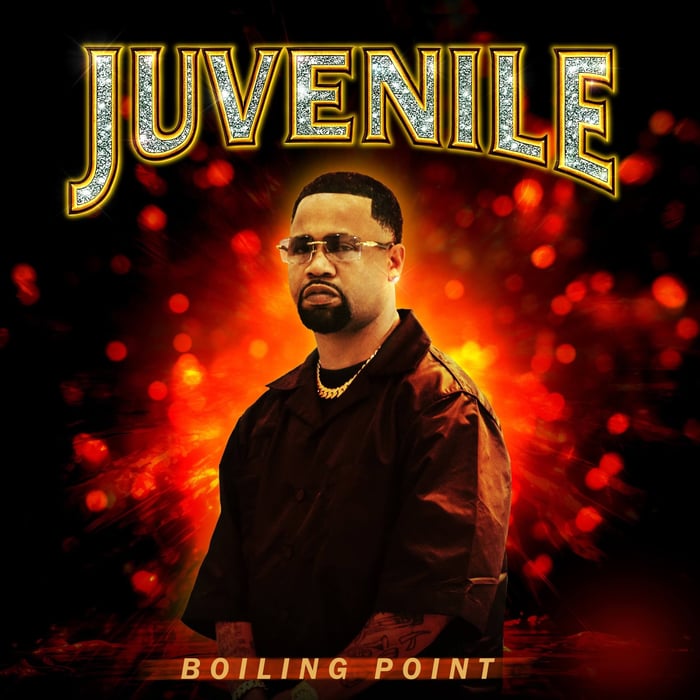
Boiling Point Review: Juvenile’s “Comeback” That Refuses to Behave


 See more Architeg Prints stories on Google.
Boiling Point Review: Juvenile’s “Comeback” That Refuses to Behave
Juvenile’s Boiling Point isn’t nostalgia—it’s a loud argument with time, money, and desire, and it occasionally wins by being ridiculous.
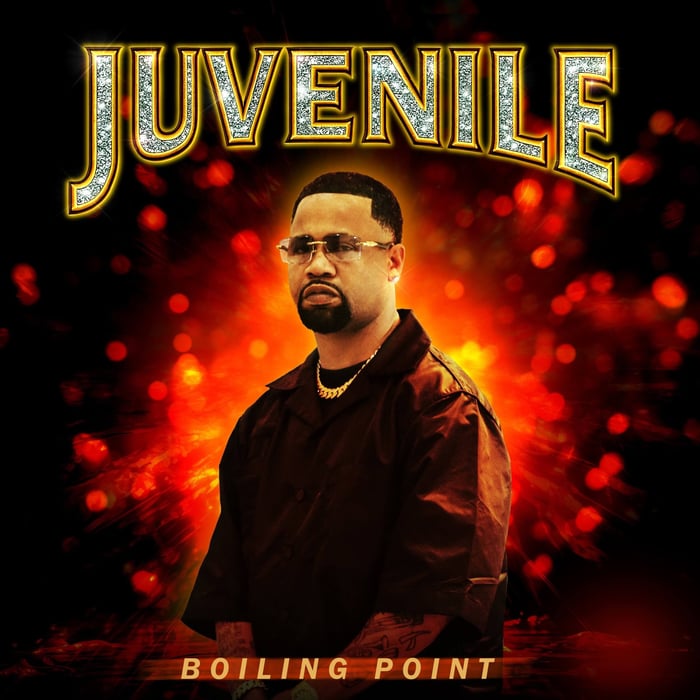
This album doesn’t stroll in—it kicks the door
I put on Boiling Point expecting a polite legacy lap. What I got was Juvenile acting like the last decade was a clerical error and everyone else needs to catch up.
And yeah, it’s messy on purpose. This record keeps choosing volume—of bass, of sex, of grudges, of friends who finally made it back outside.
Tiny Desk didn’t “revive” him—it dared him
Here’s what’s really going on: Juvenile didn’t suddenly remember he had classics. He got cornered into proving it live.
That whole “what even is Tiny Desk—no” impulse is the most Juvenile thing imaginable. Then the internet clowning forced the exact outcome he didn’t want: showing up anyway, bringing Mannie Fresh, stacking the room with New Orleans muscle (Trombone Shorty, Jon Batiste, and string players tied to Louisiana classical pedigree), and turning it into an event people wouldn’t shut up about.
The part that matters isn’t that the crowd demanded “Back That Azz Up.” It’s that the show needed an encore at all—the first in that series’ history. That doesn’t happen because people are being polite. That happens because the room realizes the artist isn’t a memory. The room realizes he’s still built for impact.
And I’m not 100% sure, but it sounds like that performance flipped a switch: not “let’s celebrate the old days,” but “oh right, I still know how to drive this thing.”
“If I don’t go on Tiny Desk with my dogs, and we didn’t do that shit live, man, this shit wouldn’t be happening.” — Juvenile
The reunion energy isn’t marketing—it’s survivor’s guilt with a grin
B.G. showing up across Boiling Point changes the air. You can hear the weird mix of relief and damage. After doing real time and then having the government try to police his lyrics—yes, actually trying to make him submit them for approval—he comes back sounding like someone who’s decided the only safe volume is “loud.”
On “The Reunion,” he’s back in that headspace: popping at people for nothing, riding with switches, circling prison like it’s a second job. Then “Juvie Beverly” loosens up—yachts, rotating women, “free the real ones” energy. It’s not character development. It’s just the honest contradiction of being older, richer, and still wired like the block.
Birdman sets the table early with a geographic roll call—Magnolia, Claiborne, St. Bernard, Calliope, Hollygrove—like he’s drawing borders with a marker. He’s not really rapping so much as claiming territory and time, invoking Soulja Slim, reminding you this whole machine started decades back.
When Juvenile, B.G., and Birdman share space, that’s when the album feels most human. Not soft—human. It’s old friends who outlived plenty of people from the same neighborhoods, sounding almost surprised they get to record together again.
Most of Boiling Point is sex and bounce—and it’s not pretending otherwise
A lot of Boiling Point belongs to women, sex, bounce rhythms, and straight-up bargaining. That’s not a detour; that’s the core business model Juvenile got rich on.
“B.B.B.” runs on the same kind of engine that powered “Back That Azz Up”: that commanding bounce swing where Juvenile barks questions like he’s interrogating indecision itself:
- “What you want, a poor nigga?”
- “You want a good fucker or you want a toe licker?”
- “You want a young nigga ridin’ on a four-wheeler…?”
- “…Or you want a grown man who can drop pole in you?”
It’s blunt in a way that’s almost cartoonish—yet it works because he performs it like a man reading a menu he invented.
Then Genesisthegawd flips the angle on her verse and matches him bar for bar. The detail level is the point: stamina, Chanel, trips—specific demands, not vague flirting. The track becomes a tug-of-war, not a monologue, and that’s why it hits harder than it should.
And the Megan Thee Stallion remix? That one matters for a practical reason: it charted on the Hot 100 and gave Juvenile his first entry in twenty years. Megan slides in talking AARP money and jacuzzis pinker than tusi, like she’s trolling the concept of “grown” while embracing it.
I thought that remix would feel stapled-on—streaming-era glue. On second listen, it sounded less like a feature and more like a flex: Juvenile letting a modern star chase his beat instead of the other way around.
When the sex songs get lazy, you feel it immediately
Not every sex track earns its own oxygen.
“Pay Me” is basically a weekly itinerary—pickup, drop-off, mall shopping, Bentley rides—and then the chorus boils down to “pay me back in pussy.” No wink. No twist. It’s transactional to the point of being carpentry: sturdy, functional, emotionally blank.
“Fuego” leans on DJ Khaled shouting “cántenlo pa’ la calle” over and over, while Juvenile chases a Puerto Rican woman he originally clocked as Creole. Then he pretends to interview her in the second verse. It’s a weird choice—like the song wants to be playful but can’t stop narrating itself.
And “Hot Boy Summer” should’ve been an easy win—Jacquees singing, Trombone Shorty credited in the production orbit—but the song itself kind of… sits there. Nothing collapses, nothing lifts. It’s the musical equivalent of an expensive shirt that doesn’t fit.
“Drop the Location” is the real centerpiece—because it’s actually about something
Most of this album wants the function of a party. “Drop the Location” is the moment Juvenile stops entertaining and starts testifying.
He names betrayals in plain speech—the kind of plain that’s sharper than poetry:
- friends who vanished when things got ugly
- people too greedy to swallow pride
- someone who applauded when others talked trash about him
- that paranoid question that cuts deepest: “You told me you ain’t said shit, why the feds all in my garbage?”
Then he lands the line that feels like a door shutting:
“We supposed to be best friends, but we can’t now, you destroyed it.”
He even references B.G.’s probation like it’s just another annoying constraint—small, practical detail, no dramatic violin swell. That’s exactly why it stings. It’s life logistics turning into emotional exile.
The hospital simile in the chorus—“Like a hospital when it’s empty, homie, I ain’t got no patience”—sounds corny if you read it silently. Hearing him spit it with venom? It sells. Delivery drags the line across the finish line.
Swizz Beatz hands him steel—Juvenile answers with repetition as a weapon
“You Mad” comes in clanging and aggressive, Swizz Beatz basically handing Juvenile a toolbox full of metal.
Juvenile’s move is almost annoyingly simple: he lists every wrong assumption people made about him and flips each with “didn’t you?” for an extended stretch.
Did you think I was broke? Didn’t you.
Did you think my watches were fake? Didn’t you.
Did you think I wouldn’t slide? Didn’t you.
A reasonable listener could say it’s one trick dragged too long. I get that. But the accumulation is the point—it turns into a chant, like he’s rubbing your face in the fact that doubters always talk like they’re reading from the same script.
“Meph Town” is the strangest swing: Juvenile raps as meth
The weirdest three minutes on Boiling Point belong to “Meph Town.” Juvenile raps in first person as methamphetamine. Not metaphorically. Literally.
He calls himself a big fish, says he moves through the neighborhood like COVID, says laws get made to stop him but he finds new ways anyway. He even warns: “Stay away from me right now before you relapse.” Then he shrugs into the bleak punchline: “ain’t no business like the dope business.”
It’s odd. It’s menacing. And honestly, I kept waiting for it to go further—to twist the knife, to expose more horror, to turn the concept into a story. It doesn’t quite. But nothing else here sounds like it, and that alone makes it feel like a risk instead of a playlist filler.
“He Gone” is Mannie Fresh and Juvenile laughing while they aim
“He Gone” is Juvenile and Mannie Fresh trading bars roasting a man who never did anything: never blew up a zip, never tipped Balmain, never walked into the kind of store where they close the door because they know you’ve got money.
Dee-1 jumps in with the church angle—Catholic school pretending to be a goon, clout photos, can’t quote scripture. The chorus goes nuclear: tell his mama to take the insurance.
It’s the funniest thing on the album by a long stretch, and the production backs the roast with a grin instead of a scowl. Juvenile isn’t above pettiness; he’s refining it.
“Neva Go Broke” is the grown-up track—and it earns the breathing room
London On da Track gives “Neva Go Broke” a reggae-inflected bounce, and Juvenile uses that lighter motion to carry heavier memory.
He talks about selling drugs as a kid to pay bills, his girlfriend dreaming he got killed, a big homie pulling him aside and basically saying, you still got life to live.
By the third verse he’s making peace in a way that feels earned, not motivational-poster:
“First I wanna say rest in peace to my past / And rest in peace to them presidents on that cash.”
That line lands because it’s not pretending money didn’t matter—it’s admitting money mattered too much, and he survived anyway.
Young Juve shows up—and you can hear the gap between lineage and readiness
On “Hot of the Hottest,” Juvenile’s son Young Juve shows up sounding green but game—talking trust issues, thriving off negativity—while Juvenile mentions a mural of himself in the Magnolia Projects like it’s both a flex and a burden.
It’s a classic rap-family moment: the kid wants the legacy without the bruises, and the dad can’t help reminding him the bruises are the whole receipt.
Twenty tracks is a lot, and the album doesn’t always justify the sprawl
This is where Boiling Point trips itself.
Twenty songs is simply too many for the kind of punch this album wants. It would be tighter at fourteen or fifteen, easy. The interlude feels pointless—like a placeholder left in by accident.
“WYM (Woah)” with Akeem Ali runs on fumes. “One More” is a drinking song that vanishes the second it ends. And a few guest spots—especially when Birdman pops up again (and again)—add volume without adding memory.
That said, when the album locks in, it locks in hard. Juvenile at fifty-one sounds like Juvenile at twenty-five with creakier knees and a longer list of people who owe him money. The sandpaper grit is still there. The punchlines still live on the absurdly specific edge. And he still raps about women, money, and enemies like he’s been juggling all three since the Clinton administration—because he has.
The live-performance dare yanked him back into the booth. And he showed up with enough real songs to justify the whole comeback narrative, even if the tracklist refuses to stop talking.
Conclusion
Boiling Point isn’t Juvenile chasing youth. It’s Juvenile insisting the culture never stopped needing his exact tone: half bark, half grin, fully unbothered—and occasionally, unexpectedly sharp.
Our verdict: If you like bounce-driven rap that treats sex as commerce, loyalty as currency, and jokes as weapons, you’ll actually love Boiling Point—especially when it gets personal (“Drop the Location”) or fearless (“Meph Town”). If you need tight editing, subtle themes, or songs that don’t repeat a good idea until it’s slightly bruised, this album will test your patience like it’s doing cardio.
FAQ
- Is Boiling Point mostly a party album or a serious one?
Mostly party—until “Drop the Location” swings the mood into something colder and more specific. - What’s the most essential track to understand the album’s point?
“Drop the Location,” because it shows Juvenile still knows how to write when the jokes stop. - Does the album feel like a forced comeback?
Not forced—more like provoked. It sounds like a guy who got challenged to prove he’s still himself. - Do the guest appearances help or clutter things?
Both. B.G. adds real electricity, but some repeat appearances and lesser guest spots add length more than impact. - Is the tracklist too long?
Yes. The best songs hit hard, but a tighter cut would’ve made the album feel meaner and more replayable.
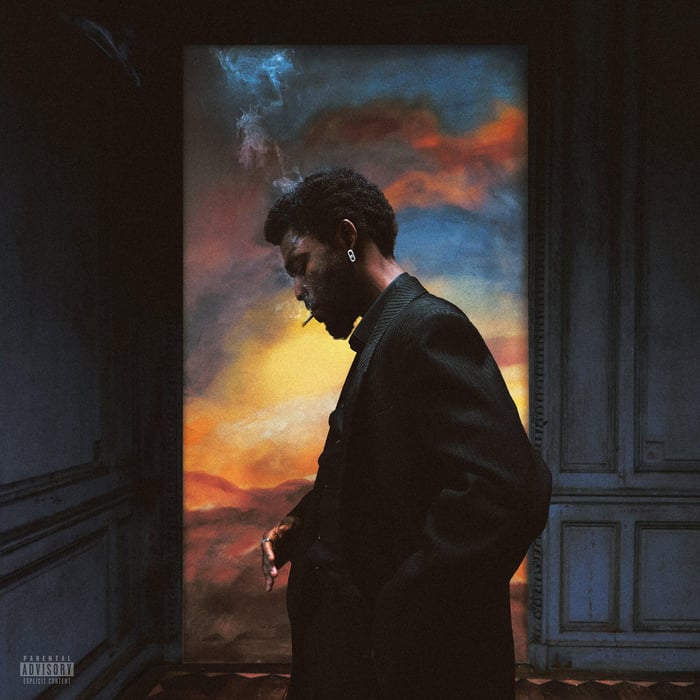
If you keep thinking about the cover after you’re done listening, that’s usually a sign the era is sticking. If you want to hang that feeling on a wall, you can shop your favorite album cover poster at our store: https://www.architeg-prints.com.
 | DISCOUNTGET 30% OFF*Use code on your next order:
|
* This post may contain affiliate links, meaning we earn a commission if you make a purchase through these links, at no additional cost to you.