POMPEII UTILITY Album Review: Earl, MIKE & Surf Gang Overcook It (On Purpose)


 See more Architeg Prints stories on Google.
POMPEII UTILITY Album Review: Earl, MIKE & Surf Gang Overcook It (On Purpose)
POMPEII UTILITY turns 33 tracks into a dare: accept the jagged Surf Gang noise, or admit “real hip-hop” is just a comfort blanket.
The hook: this isn’t “a collab,” it’s a stress test
Some albums want to be understood. POMPEII UTILITY wants to see what you’ll tolerate—and then reward you for not flinching.
How this lineup ends up feeling inevitable
Here’s what you hear immediately: nobody sounds like they’re visiting. Earl and MIKE move through these beats like the room already belongs to them, and Surf Gang’s production isn’t “support”—it’s the weather.
You can tell this is the result of a long overlap of scenes and habits: the kind of creative relationship where people stop needing a reason to work together and start treating collaboration like passing the aux cord. The scope gives it away too. This isn’t a cute little EP that politely exits before it gets awkward. It’s two discs, 33 tracks—the kind of number that suggests nobody stopped anyone in the studio. And honestly, I think that’s the point: if this album has a mission statement, it’s that clean editing is optional when the vibe is real. Reasonable people can disagree with me, but I don’t hear “bloat” as an accident here—I hear a group flexing the privilege of not caring if you keep up.
POMPEII (MIKE’s disc) starts mid-stride—and keeps walking through grief
The first thing MIKE does on “The Fall” is sound like he’s already in motion. No warm-up, no speech, no scenic route. He’s back home in his head, brushing off doubters, basically asking who’s even worth rapping against. It’s confident… and then it gets darker without making a big theatrical move about it.
That’s the crucial move on MIKE’s side: grief doesn’t get a spotlight. It’s threaded into errands, travel, money, exhaustion—life happening while the loss is still happening. On “AFRO,” the hook lands like he’s finally letting the air out, and then he’s right back to stacking images: trips, heat, strangers, the team, the weight he’s carrying. He doesn’t pause for the listener’s benefit. He just keeps going. You can argue that’s emotionally evasive, but I hear it as something harsher: he’s showing you what mourning looks like when you don’t get the luxury of stopping.
And when MIKE compresses that feeling into a tight burst, it’s nasty in the best way. “Shutter Island” reads like accumulated damage filed into a few lines—no dramatic drums, no “sad song” framing, just blunt atmosphere.
“Those crooked slums, a thug’s resort / Hood above, I lust for warmth … / They never gave your son a choice.” — MIKE, “Shutter Island”
That last line doesn’t sound like a metaphor; it sounds like a conclusion he’s tired of arriving at.
UTILITY (Earl’s disc) is louder, looser, and weirdly funnier
If MIKE’s disc is a forward march, Earl’s is a conversation with himself that keeps changing topics and still somehow circles back to the same bruise.
On “this2shallpass,” he opens with the kind of big statement you say when you’re trying to convince yourself: things are up, we’re reestablished, we’re good. And almost instantly he undercuts it—paper cuts from cash, demons in the chapel. It’s a quick slide from triumph to complication, and I don’t think it’s accidental. Earl’s been doing that for years, but here it sounds more casual, like he’s stopped pretending optimism is something you “achieve.”
“Charli 2na” is peak Earl in this mode: he bigs himself up, compares himself to an iconic group’s standout, then admits the bottle warped him. That honesty about drinking pops up again and again, and what surprised me is how little he hides it behind wordplay. I thought I’d get the usual Earl maze—phrases folded into phrases—yet a lot of these admissions just sit on the beat plainly.
On “quikk,” he basically says he had to hop off drinking because it was getting ugly. On “:( again :),” he’s even more direct: he marks a boundary, takes inventory of the damage, and decides to fix it. Earl at this age doesn’t sound like he’s performing “growth.” He sounds like he’s reporting it with a shrug, which somehow makes it hit harder.
And then he swerves into domestic longing and frustration on “AOK,” talking about wanting his kids and treating the obstacles like clowns. There’s a memory tucked in there too—wanting simple comfort, the tub, his pops. It’s the kind of detail that makes the song feel less like a statement and more like a real person accidentally telling the truth.
By the time “Sisyphus” lands, he’s not posturing as the cool cryptic rapper. He’s tired.
“It’s been a long day for real / Pushing all this weight uphill … / Let me fall straight on my head.” — Earl Sweatshirt, “Sisyphus”
If you want a hot take: I think Earl’s writing here isn’t “more mature” because it’s clearer—it’s more mature because he’s choosing when to be unclear, instead of hiding behind it all the time.
Surf Gang’s production isn’t “experimental”—it’s deliberately inconvenient
The drums across POMPEII UTILITY have this thin, metallic clank—like somebody kicking a fire escape just to hear it ring. These beats don’t feel “dusty” or “warm.” They feel digital, pressured, slightly hostile. The distortion isn’t a texture in the background; it’s the main character.
Specific moments make the intent obvious:
- “React” has synths that chirp like a corrupted handheld game booting up wrong.
- “Minty” fizzes like a ringtone trapped inside a subwoofer.
- “Home on the Range” is one of the rare times the album lets light in—almost pleasant, almost breathable.
- “Shutter Island” does the opposite: everything clipped, tight, suffocating, like the air got rationed.
A reasonable listener could call this “ugly for ugly’s sake.” I get that. I’m not totally sure I even liked it on first play. But on second listen, it clicked: the roughness is the point because the verses are about living with roughness. Smooth production would’ve made half these lines feel like theater.
And both rappers adjust their approach to survive the frequencies. MIKE gets tighter—more terse, more sprinting-through-the-barline energy—especially on “Da Bid” and “F.E.A.R.” Earl, meanwhile, goes sharp on “Ew!” and then drops a flex that’s half serious, half self-mocking—stepping out of ash “like a phoenix or somethin’,” and the “or somethin’” is the tell. He knows exactly how corny the image is, and he keeps it anyway. That’s confidence, not sloppiness.
The guests aren’t decoration—they’re pressure points
This record doesn’t use features like shiny accessories. The guests show up to tilt the emotional angle or make the track stranger.
On “Da Bid,” Jadasea turns inward fast, landing on a line that basically asks whether what was shared was even love—and then follows it with a prayer that tomorrow doesn’t show up. That’s not a vibe; it’s a sinkhole.
On “NOT 4TW,” Anysia Kym sings about raining on her own parade, and it’s gloomy enough that the song earns the beat switch underneath her. It feels like the production is reacting to her mood, not the other way around.
Then there’s Niontay on “F.E.A.R.”, who comes in like a wildcard text message you didn’t ask to receive. He says he’s pre-teen sized, talks about belief dissolving through getting high, brags about women in every tour city—messy, funny, kind of revealing. It’s like hearing someone read their own group chat out loud and not realizing what it exposes. You can hate that energy if you want, but I think it’s strategically placed: it breaks the album’s seriousness just enough to keep it from becoming self-important.
Na-Kel Smith shows up on “Back LA” rapping about hustling and aiming for a million off rap with this relaxed enthusiasm that says, plainly, he knows whose universe he’s in. It’s not a takeover; it’s a cameo that understands the assignment.
And the sharpest “everyone locked in” moment is “Leadbelly,” the one track where Earl and MIKE actually trade bars directly. It’s the tightest point across both discs—competitive, focused, like they finally decided to look each other in the eye.
There’s a line in there—“I told Twin, ‘you better than me/I still got vendettas to see through’”—that lands with a grin you can practically hear.
Yes, it’s too long. No, I don’t think they care.
Let’s not pretend: 33 tracks is a lot. Some songs barely leave a footprint. “Back Home” and “Ew!” almost feel like transitional fragments—more like notes than fully distinct stops. And there’s a stretch on Earl’s disc—between “quikk” and “Chicago”—that can absolutely lose you if you’re listening while doing anything else. The part that lost me wasn’t the experimentation; it was the sequencing fatigue. My attention wandered, and the album didn’t bother to chase it.
A tighter edit—say 24 or 25 songs—would probably hit harder for most people. That’s my mild complaint, and I’m sticking to it.
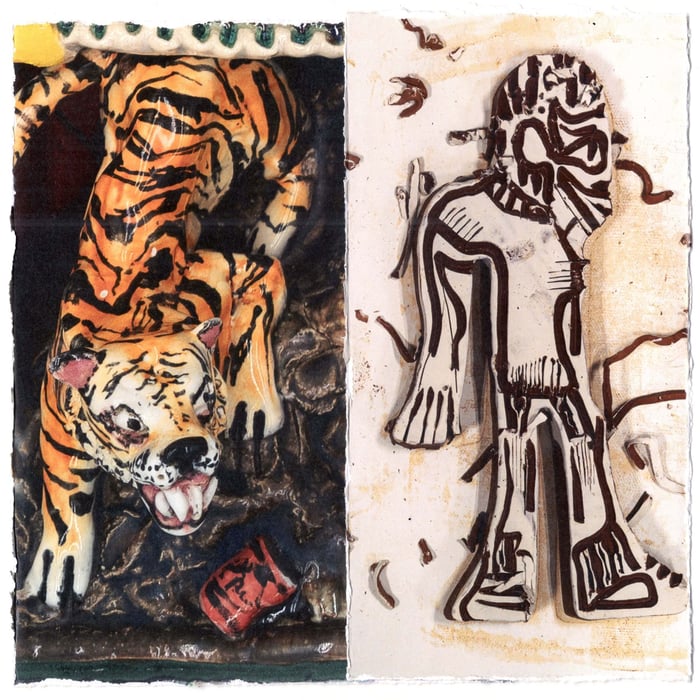
But here’s the twist: after sitting with it, I stopped wanting the tight version. Because the sprawl feels intentional in a different way. UTILITY reads like a refusal to be pinned down—socially fluid, useful, hard to summarize cleanly. And POMPEII as a concept fits the studio vibe you can practically picture: bodies scattered around, everyone tired, the room looking like something got paused mid-disaster. The mess is the message. They wanted the whole room, not a framed photograph.
If you came here wanting a neat “statement album,” you’re going to call this indulgent. If you’re willing to treat it like a document of a specific creative pocket—rappers and producers pushing each other in real time—then the excess starts feeling like honesty.
Favorite tracks (the ones that actually stick to your ribs)
Not the “best” in some imaginary objective sense—the ones that keep pulling me back:
- “AFRO”
- “Kirkland”
- “Sisyphus”
Each one lands because it makes a clear emotional move without sanding down the production edges to make it easier.
Conclusion: POMPEII UTILITY is a dare dressed as a hangout
POMPEII UTILITY isn’t trying to convert you. It’s trying to keep itself interesting. The clanging Surf Gang drums, the constant distortion, the unbothered length—none of that reads like carelessness to me anymore. It reads like a group choosing friction over polish, because polish would’ve lied about what these songs are actually carrying.
Our verdict: People who like rap when it feels unfinished-in-a-human-way—when it sounds like the room, not the résumé—will love POMPEII UTILITY. People who need every track to justify its existence, or who treat clean mixing like a moral value, will hate this and call it “lazy” while missing the point entirely.
FAQ
- Is POMPEII UTILITY one album or two?
It plays like a double project: POMPEII (MIKE’s disc) and UTILITY (Earl’s disc), stacked into a 33-track set. - Does the Surf Gang production change how Earl and MIKE rap?
Yeah. MIKE tightens up and sprints through measures; Earl gets sharper in places and more plainly confessional in others. - What’s the emotional core of MIKE’s disc?
Grief that never gets a clean “sad song” container—he folds it into travel, money talk, and daily motion so it can’t be separated out. - Is Earl actually more direct here, or am I imagining it?
You’re not imagining it. Some tracks still twist, but the sobriety talk and exhaustion on songs like “Sisyphus” lands without the usual fog machine. - Do I need to listen front-to-back?
Not strictly, but the sequencing makes more sense when you let the two halves breathe. Just know there’s a mid-disc stretch that can test your focus.
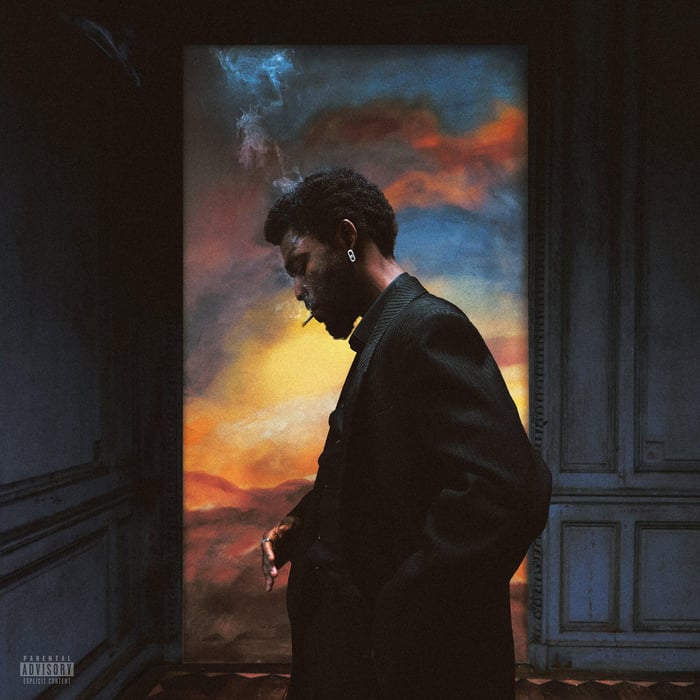
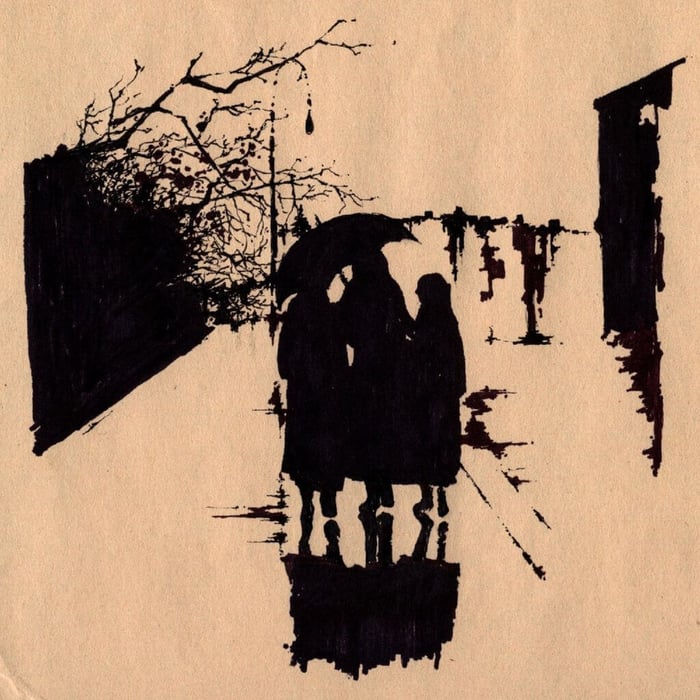
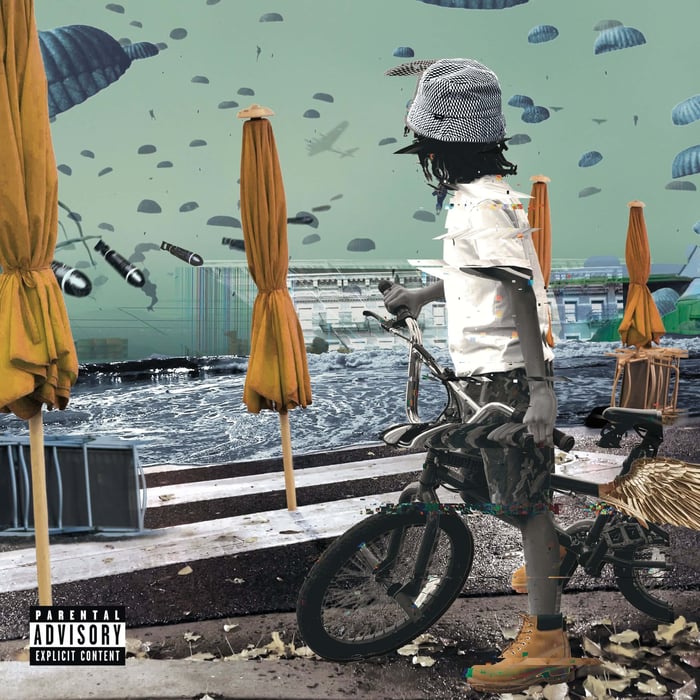
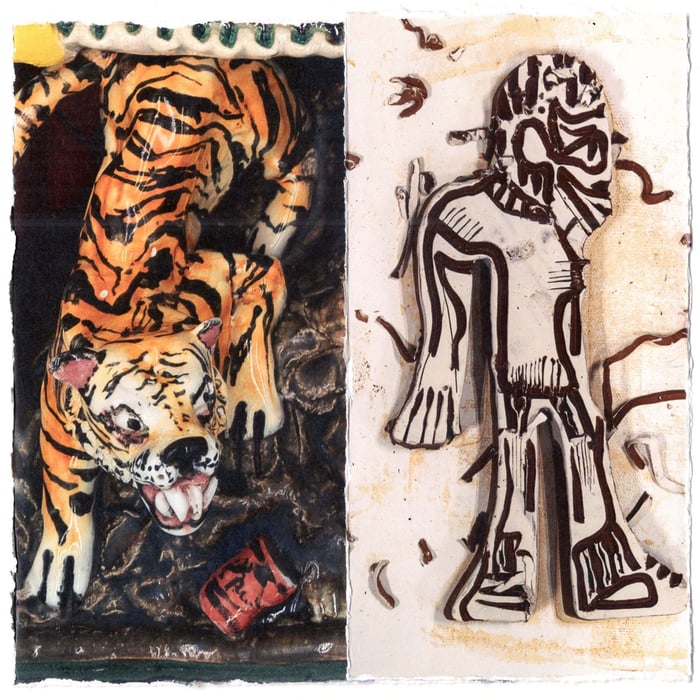
If the cover art (and this whole “mess on purpose” philosophy) is your kind of decoration, you can shop a favorite album cover poster at our store: https://www.architeg-prints.com/ — it’s a nice way to let your wall argue with your guests quietly.
 | DISCOUNTGET 30% OFF*Use code on your next order:
|
* This post may contain affiliate links, meaning we earn a commission if you make a purchase through these links, at no additional cost to you.