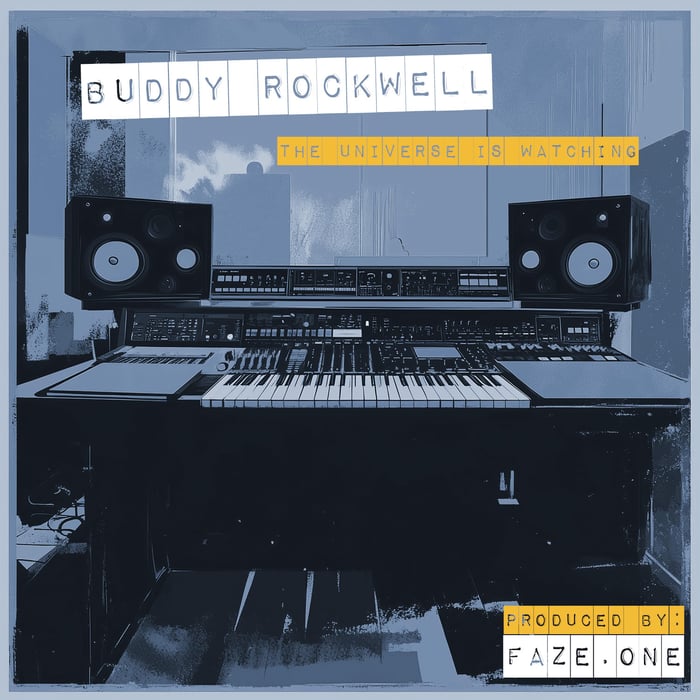
Buddy Rockwell’s Universe Watching: Self-Help Rap That Hates Being Self-Help


 See more Architeg Prints stories on Google.
Buddy Rockwell’s Universe Watching: Self-Help Rap That Hates Being Self-Help
Buddy Rockwell’s Universe Watching plays therapist, witness, and menace—sometimes in the same verse—and it’s way more honest when it stops preaching.
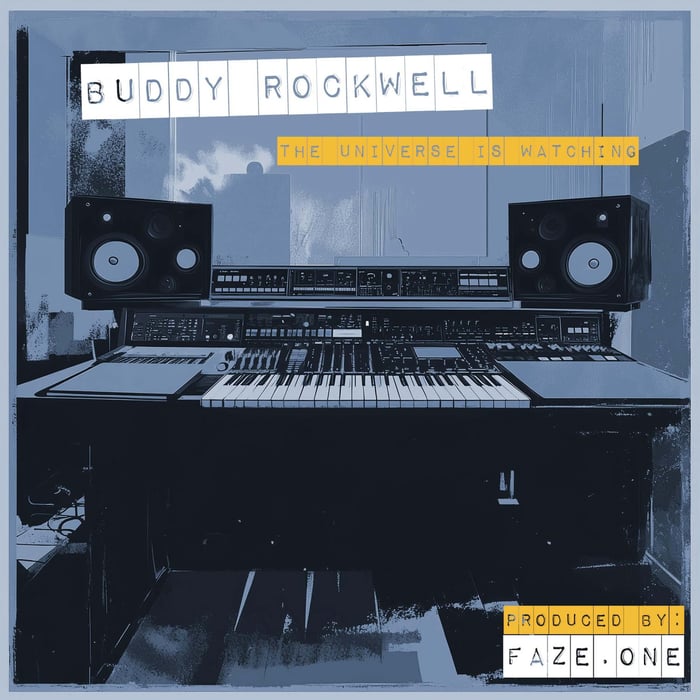
Courtesy of Syfn Labs.
First, the real problem: rap advice has no face
Hip-hop telling you how to live is a tough pitch, and it’s not because “people don’t like messages.” It’s because a message without a human inside it is basically a poster. The second an MC shifts from describing a person to directing a person, the room temperature drops. A witness has blood in their mouth; an instructor has bullet points.
On The Universe Is Watching, Buddy Rockwell keeps flipping between those two modes—sometimes mid-track. And that tension feels intentional. He’s a producer by reputation, but here he’s also rapping every verse over his own beats, which means he’s not just narrating the pressure—he’s building the pressure chamber and then locking himself in it.
I’ll admit, on my first pass I thought, “Okay, here comes the motivational stuff.” But that first impression didn’t survive the album, mostly because the best moments aren’t motivational at all. They’re confessional, awkward, and specific—the stuff that doesn’t fit on a coffee mug.
“The Summit” proves he’s most believable when he’s ashamed
The album really shows its hand on “The Summit.” It’s a man pacing around a dark kitchen, replaying the same argument-reconciliation cycle with a woman and finally admitting the part you’re not supposed to say out loud: every time she needed him, he prioritized himself.
“I talk tough, but yo, I bruise easy,”
that’s not a slogan. That’s a leak. He follows it with the memory that she used to read him clean—“like a loose leaf”—and now he’s alone writing poems with nobody there to judge him. It’s not romantic. It’s lonely and a little pathetic in a recognizable way.
What makes him interesting is the repeated pivot: he doesn’t ask for a rewind or reset. He just wants her to remember he was kind sometimes, and that even when he showed up disguised, he did show up. It’s the “sometimes” that sells it. He’s not campaigning for forgiveness; he’s begging to be filed under not entirely fake.
A reasonable listener could argue this is him trying to control the narrative after the fact. I heard it more like a guy learning—too late—that you don’t get credit for love you didn’t deliver on time.
“The Difference In Between” is the album’s sharpest mirror
“The Difference In Between” starts like he’s filming the world with a handheld camera: a dude keeping receipts in a shoebox shrine, a rich kid performing “street,” a woman buying a crystal to cure shame and then screaming at a child in a parking lane. That sequence is nasty in the best way—quick portraits, no moral explanation, just the ugliness hanging there.
Then the song snaps inward, and suddenly the target is him:
He says he sold his sadness, turned trauma into brands, marketed his madness. That’s the line where the album stops pretending it’s about “people these days” and admits it’s about the modern trick of monetizing your own damage.
The verse ends at his dinner table—building harmony with family while continuing to drink—and that’s the kind of detail you can’t fake. Anyone can rap about grinding; not everyone admits the grind followed them into the house and sat down with a plate.
If the record has a thesis, it’s probably this: the adult version of you doesn’t stop being messy. It just gets better at decorating the mess.
“Inception” vs. “Forever Young”: aging isn’t the point, control is
The same voice shows up older on “Inception.” He’s got wrinkles kids don’t understand, and each wrinkle is tied to a debt—emotional, financial, spiritual, take your pick. He says there’s no applause in fighting yourself, and no trophies for asking for help. That’s bleak, but it’s also accurate. Nobody claps when you finally schedule the appointment.
He contrasts his old self—chasing every high like it’s salvation—with what he wants now: good sleep and a normal conversation. Honestly, that’s one of the most grown lines on the album. Not “a mansion,” not “a legacy.” Sleep. Talk. Proof that broken people can change.
Then “Forever Young” flips the aging theme backward: he refuses to be categorized by his birthday, pushing back at people who tell him to grow up, because they want to “box” him into his twenties like a brand. That line hits because it’s true: adulthood gets marketed like a product upgrade.
Two lines in that track look away from him entirely—and they’re the ones that linger:
- grown men losing their life in a loop
- kids talking to God with a nine in the chute
That’s not nostalgia. That’s a warning shot.
I’m not totally sure the song knows whether it’s celebrating youth or accusing the world of selling it as a cage. But the confusion actually fits: identity talk is always clean until you live in it.
The title track shows his best trick—and his worst habit
On “The Universe Is Watching,” he’s on a curb watching traffic breathe, trying to understand patterns, realizing every stranger has the same tightness in their chest—just a different ID. That’s a great image: traffic as a lung, the city as a nervous system.
Then he does his signature trade: strangers become abstract puzzle pieces, and the curb disappears. He does that move in almost every hook, and it’s where the writing gets weakest.
Here’s my mild complaint: the hooks keep floating upward into “meaning” when the verses are doing perfectly fine staying human. It’s like he doesn’t trust the listener to sit with a scene unless he turns it into a cosmic lesson. And the irony is, the album doesn’t need that help. The grounded moments already hit.
A listener could argue the big hooks are the point—that he’s building a mantra engine. Sure. But to my ears, the choruses are where the record starts sounding like it’s trying to be important instead of being specific.
“The Essence” nearly over-explains… then asks one question that matters
“The Essence” goes the furthest into instruction mode: respect doctors who heal, lawyers who defend, pay every bill, do the responsible things. Fine. But then he lands the real line—simple, sharp:
What’s the point if you forget how to feel?
That question dwarfs everything around it. The track also drops in a speech from Dead Poets Society and lines from Whitman’s “O Me! O Life!”—and I’ll be honest, those references almost made me roll my eyes at first. They’re a little too “freshman year intensity.”
But the weird part is: the borrowed words still don’t beat his own question. The song widens past spreadsheets and titles and “success” until it ends on something you can actually picture and walk past: the art on the wall in your one-room flat. That’s the album at its best—choosing the small object over the big concept.
When he vanishes into metaphors, the songs start emailing themselves
Not every track keeps a body in the room.
“Minds Telescope” is all intellect, no fingerprints: dissecting atoms with thought, charting constellations, decoding a scroll Da Vinci couldn’t finish because it fractured the soul. It’s high-minded in a way that risks turning into fog. I kept waiting for one concrete detail—one kitchen, one curb, one dinner table—and it mostly refuses.
“Going Off Again” runs on the same fuel: rhyming about rhyming, riddles about riddles, announcing that lyrics are still killing it. That can be fun, but it’s also the easiest flex in rap—like a chef telling you they can cook while you’re still hungry.
“Clockwork Empire” gets even more office-lit: a thousand emails, zero stress, a calendar cut like a hitman’s log. There’s one punchline that should’ve been cut before it ever left the studio: the focus-being-sharp-like-lines-of-coke bar. It’s not offensive; it’s just corny in a way that briefly collapses the mood. The album’s smarter than that line.
“Vision” stays in technology and space metaphors—rocket ships, neural nets, tickets hidden in a solar system—and somewhere halfway through, the narrator kind of disappears. The beat changes, and Eligh takes over, which jolts the track back into motion even if the concept was starting to drift.
If you love lyrical gymnastics, you’ll defend these tracks. I get it. But I’m convinced Buddy Rockwell is more dangerous—and more listenable—when he stops trying to sound like a cosmic manual.
“Sky High” and “Cryptoknight” win by pointing at real life
Then the album swings the other direction and suddenly remembers that details are undefeated.
“Sky High” is basically a list of highs you can touch:
- a suede suit and Shaft in the mirror
- his granddad’s stories told with a jazz voice
- a fresh box braid
- stage fear, and the joy right after you survive it
- the heels on a Harlem queen turning the block into a scene
That’s not just imagery. That’s taste. And taste is character.
“Cryptoknight” repeats the trick, but aimed at someone else: a lunch-break warrior in a nine-to-five cape fixing flat tires and then fixing his pride. Eligh comes in describing the whole thing as a thankless tradition—honor roll dedicated to honoring his kids. That line lands because it respects ordinary heroism without turning it into a corporate poster.
A reasonable listener might call these songs lighter weight. I’d argue they’re heavier, because they don’t hide behind philosophy.
“Second Chances” uses one missing detail like a knife
“Second Chances” has one moment it refuses to explain—and that’s exactly why it works.
Someone at an open mic tells him he’s got that flame and to keep it real. Then:
he was gone in a flash like a scene inside a script.
No backstory, no tribute paragraph, no neat resolution. Just absence.
That’s how loss often feels in real life: not a speech, just a cut to black. The album accidentally (or deliberately) nails that.
“Once In a Lifetime” drops the simplest truth on the record
“Once In a Lifetime” might contain the plainest, most useful line here: a kid in the back row drawing maps of a planet grows up and learns,
the only real way you make it is by making.
Not dreaming. Not branding. Not “manifesting.” Making.
It’s almost annoyingly straightforward—which is probably why it sticks.
“Mental Garden” ends with a fight he refuses to narrate
The closer (or at least the emotional peak) is “Mental Garden.” The whole town mutters that this man doesn’t bleed and only talks to gods. He steps into sunlight like the war has been over for weeks—jaw steady, dust on sandals because he arrives late on purpose. Pride unsheathed, heart running faster than the blade in his sleeve.
There’s a line that hits like a proverb: he doesn’t argue with the riverbed. And when it’s done, one strike lands clean and silence fills the air instead.
The wild part: he never tells you what the fight was about. And that makes it better. It keeps the violence from turning into content. Whatever was in his hand, he says it wasn’t strength or rage—it was a man stepping out of the way of his own demands.
You could argue that dodging the context is a cop-out. I heard it as discipline: sometimes the point isn’t the enemy, it’s the posture.
Where it lands: solid, with three clear standouts
I’m not going to pretend every hook works, because they don’t. When the choruses start turning people into “puzzle pieces,” the album loses its grip on the dirt-and-dishes realism that makes it hit. But when it stays in scenes—kitchens, curbs, dinner tables, stages—it’s blunt in a way that feels earned.
If I’m ranking what actually stays with me, it’s these:
- “The Summit”
- “The Difference In Between”
- “Mental Garden”
And yeah: overall, this lands in the solid zone for me—stronger in verses than hooks, strongest when it chooses embarrassment over inspiration.
Buddy Rockwell’s The Universe Is Watching isn’t really telling you how to live. It’s showing you what it costs to keep pretending you already know. The record wins whenever it stops chasing “importance” and just admits what happened in the kitchen, on the curb, at the dinner table, and in the head.
Our verdict: People who like reflective rap that’s allergic to fake confidence will actually like this album—especially if you prefer specific scenes over motivational fog. If you need your choruses to be big, catchy, and uncomplicated, this might test your patience (and you’ll probably blame the universe for it).
FAQ
- Who is Buddy Rockwell on this album?
He comes off like the same person in two roles: a witness describing what he sees, and an instructor trying to turn it into a lesson—sometimes in the same track. - What’s the core keyword “Universe Watching” referring to here?
It’s the album’s habit of zooming from everyday scenes (curbs, traffic, dinner tables) into big-pattern thinking, like life is a surveillance system with a moral. - What are the best tracks to start with?
“The Summit,” “The Difference In Between,” and “Mental Garden” are where the writing feels most human and least like a concept pitch. - Does the album lean more personal or more abstract?
Both, and that’s the friction. The personal songs feel sharper; the abstract ones sometimes drift into metaphors that outgrow the narrator. - What’s the main weakness?
The hooks. They often float upward into generalized meaning right when the verses are doing the more interesting work of staying specific.
If you want to keep the Universe Watching vibe on your wall, a clean album-cover poster is a nice way to live with the mood without replaying your own regret at full volume. You can browse prints at our store: https://www.architeg-prints.com
 | DISCOUNTGET 30% OFF*Use code on your next order:
|
* This post may contain affiliate links, meaning we earn a commission if you make a purchase through these links, at no additional cost to you.