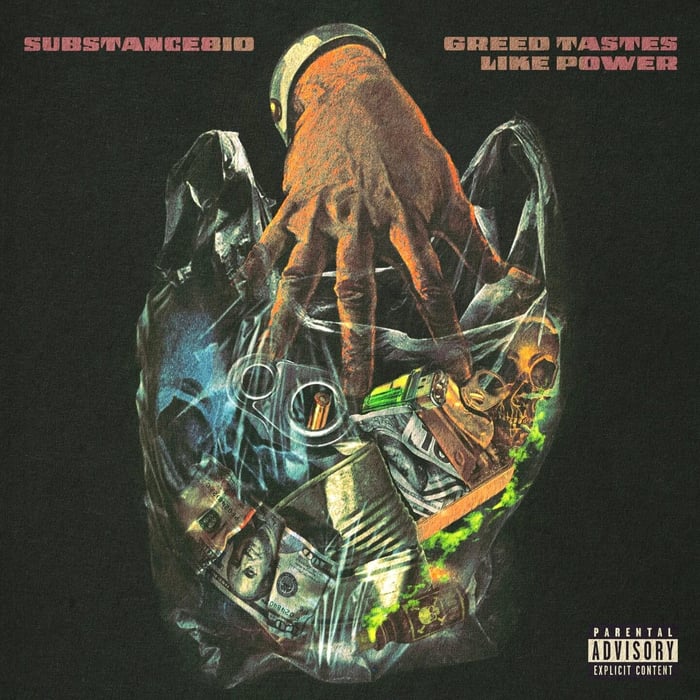
Greed Tastes Like Power Review: SUBSTANCE810 Makes Paperwork Sound Menacing


 See more Architeg Prints stories on Google.
Greed Tastes Like Power Review: SUBSTANCE810 Makes Paperwork Sound Menacing
Greed Tastes like a hustle manual with a pulse—SUBSTANCE810 turns budgets, credit scores, and spite into a strangely human flex.
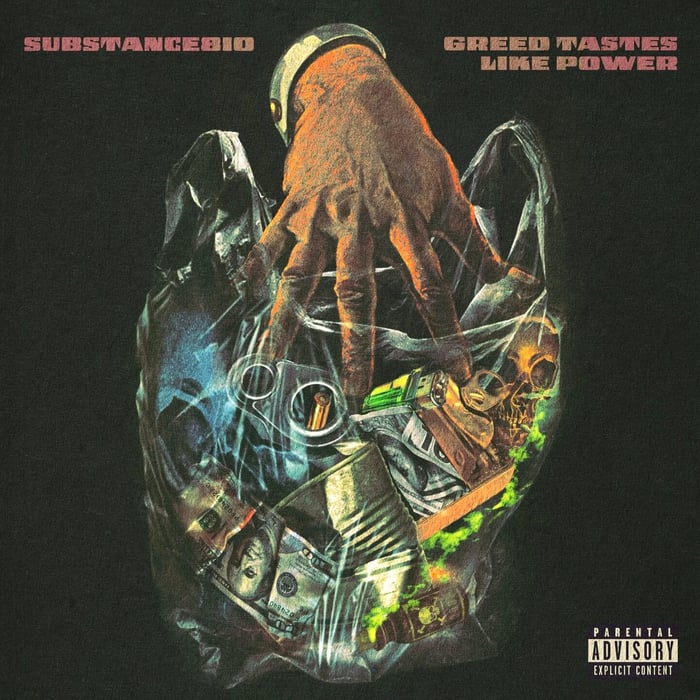
A rap album that treats money like a weather system
Most rap albums brag about money like it’s a trophy. Greed Tastes Like Power does something pettier and more revealing: it treats money like maintenance. Like it’s always leaking, always being tracked, always being protected from somebody.
And yeah, at first I rolled my eyes—another “get the bag” record, right? But a few tracks in, it hit me: SUBSTANCE810 isn’t selling aspiration. He’s documenting what it costs to stay unbothered while everything around you tries to make you act stupid.
SUBSTANCE810’s routine is the point: build, ship, repeat
The vibe here is workmanlike in a way most artists avoid, because it’s not “romantic.” SUBSTANCE810 sounds like someone who cuts a record with a specific producer, pushes it out into the world, moves a few hundred copies to the kind of listeners who still care who made the beat, then starts the next one before the month’s even done.
That repetition isn’t a weakness—it’s the engine. The album’s obsession with money, keeping it, acquiring it, not losing your head while doing it… it mirrors the release pattern. Grind isn’t a slogan here; it’s literally the schedule.
He’s from Port Huron, Michigan, and the “810” isn’t a random tough-guy number—it’s an area code stamp, the kind of detail that tells you he likes things to be verifiable. The music moves under the Umbrella Collective banner, but it doesn’t feel like a “collective project.” It feels like a guy taking inventory of his life and refusing to decorate it.
“Gordon Gecko” opens with the ugliest flex: administration
Here’s the first big tell: the mood on “Gordon Gecko” looks like paperwork. Not glamorous paperwork either—more like forms you fill out with a pen that keeps dying.
He’s talking about smashing the post office with a box truck, re-depositing a check, pocketing the gross amount. The bar isn’t “I got money,” it’s “I understand the system well enough to do something shameless inside it.”
Then he slides into credit repair like it’s a hook. A 750 score becomes a heavyweight belt. It’s funny, but not “comedy” funny—funny because it’s the kind of detail you only brag about if you’re really living in the boring parts of adulthood.
What surprised me is how calm he sounds saying he’s learned to simplify and delegate. That’s not rapper talk; that’s someone who’s had to stop doing everything himself because it was making him sloppy. The album keeps returning to that: control doesn’t look cool, but it keeps you alive.
“Money Never Sleeps” isn’t a motto—it’s a correction
The core lesson on “Money Never Sleeps” isn’t flashy: it’s the basic business truth people pretend they invented—it’s not how much you make, it’s how much you keep.
But the track doesn’t stop at “money tips.” Underneath that verse, he’s tying the same logic to everything else: household chores, keeping a line in the water, selling to a well, the idea of “freedom” as the actual goal instead of status symbols.
That’s a bold choice, honestly. Most artists would rather die than admit the dream involves chores. SUBSTANCE810 says it like he’s not even trying to impress you—which, ironically, is what makes it land.
“Kindness for Weakness” makes competence sound like paranoia
“Kindness for Weakness” is where he starts stacking roles like he’s daring you to call him one-dimensional. Shepherd and baker. Moving units like chopping grams. Playing his hands like Monopoly. “Certified” in making distinctions. Verbs like Swahili—meaning he wants you to hear how fluent he is, how he can switch functions fast.
He brags that he can handle both burners, the oven, and the blicky. It’s a ridiculous image, but it’s also the album in one line: domestic life and street logic happening in the same kitchen.
And then he undercuts any heroic narrative. If he doesn’t see legal C.R.E.A.M., he’ll scheme and do it dirty, and it shows up with no ceremony. No victory lap. No motivational speech. Even his collectibles are stored in a top loader, like he’s archiving evidence more than enjoying spoils.
That’s why the album works: nothing feels aspirational or oversold. It’s not selling you a dream. It’s showing you the receipts.
“Gluttony” is where he finally overdoes it—on purpose
If you want overselling, that’s what “Gluttony” is for. The threat-talk pops off for a couple rhymes, and then he gets weirdly specific: metal precision, CNC-type imagery, the sort of detail that makes violence sound like manufacturing.
Here’s an arguable take: SUBSTANCE810 sometimes leans so hard into “my first plan works” energy that it borders on stubbornness. Like he doesn’t even bother pretending he brainstormed. He just executes one route and calls that discipline.
He tells someone their rap is soft, and then delivers the nastier insult: nobody’s looking at you; people look through you. That’s not even competition talk—that’s existential. He compares himself to uncut yola without soda—raw, rough, unprocessed. A little dramatic, sure, but it fits the album’s central fantasy: being the real thing in a world full of fillers.
Then he says he’s hit his peak, ready for action, with the last five years feeling like a culminating moment. After that, he leaves you where you were—because family comes first. That’s the one spot where he sounds almost tender, and it’s jarring in the best way. The album keeps acting like emotion is a liability, but it can’t fully hide it.
“Self Preservation” is the street map behind the mindset
The record’s honesty sharpens on “Self Preservation.” Van Ness Street isn’t just a setting—it’s the origin story he trusts. He says he was raised there and not raised weak. It’s a claim people will argue about (everyone says they weren’t raised weak), but the way he tells it matters: it’s less “tough guy,” more “this is the programming.”
He drops a line about seeing drums long before he made his first beat, which feels like him admitting he studied rhythm as survival before it became music. The pot was boiling, but no one was preparing tea—great image for chaos without comfort.
Then there’s that boat metaphor: his boat was poked with holes, and it didn’t get water. I’m not totally sure what he means there on first pass—maybe resilience, maybe luck, maybe pure refusal to sink—but the point is he’s describing danger like it’s normal background noise.
And as he raps, hustling turns into salesmanship: selling his words like a good salesperson sells product. That’s the album again—art as transaction, transaction as craft.
“Clear Conscience (Outro)” flips the bravado into doubt
This outro is one of the most human moments on the whole thing, because it shows the cost of building a persona and then having to live inside it.
He calls himself paranormal because he thinks he’s got an unusual gift. Then he second-guesses it: everyone tells him he’s different, and suddenly he’s afraid he’s normal. That’s not a rapper confession you hear every day, mostly because it’s not cool. It’s real.
And he drops the line that quietly explains the whole album’s control-freak energy:
“If you do not write the story by yourself, others will do it for you.” — SUBSTANCE810
He talks about mornings when he doesn’t want to get out of bed, but does anyway because there are worse people. That’s not “inspirational.” It’s closer to grim accountability.
Then he brings in his son—grown up now, not a child—and time becomes scarce. The detail about his son making the honor roll even though he hated school (carrying packs to teachers out of spite) is so specific it can’t be faked. It’s pride mixed with stubbornness, a family trait presented like a mirror.
I’ll admit it: I expected the outro to be a throwaway. On second listen, it became one of the tracks that sticks, because it’s the only place the armor briefly opens.
“Bee Stings” keeps the spite alive—and lets the guests complicate it
“Bee Stings” continues that cycle of spiteful raps, but it also lets the world rush in through other voices.
Squeegie Oblong slides in like he’s been teleported from another shift entirely—Amazon helping people move, a special clock he punches when he wants. He claims he doesn’t do extra shots or extra punchings and says he likes his music, which lands like someone casually describing chaos as routine.
Then he drops the line that actually reframes the whole album’s tension between wildness and discipline:
“Born and raised in the jungle / Moved on, got caught up in the zoo of life feeling like a domesticated uncle.”
That’s not just a clever couplet—it’s the feeling of growing up dangerous, then realizing adulthood has its own cages. Different bars. Same captivity.
At the end, Jamil Honesty comes in asking where the skills for building are—and answers in this surreal spray of imagery: Viking vowels, the devil dancing on the Sabbath like Cab Calloway, a flute opposite the tuba. It’s chaotic, maybe even a little too abstract, but it serves a purpose: it interrupts the album’s strict “money talk” with something more mythic and messy, like a reminder that not everything can be ledgered.
“I Can Feel It” turns personal into universal—almost by accident
On “I Can Feel It,” the fourth voice of the fourth song takes the last verse, and the perspective shifts. The character talking is making money through investments—not stocks. That distinction matters because it suggests something off-the-books, something tactical.
Then there’s the mother singing “Amazing Grace,” memories in pictures on the wall, the idea that you can finally see the evidence of your life when you “make it.” It’s sentimental, but not gooey. More like: here’s what survives when the noise dies down.
Later, dialogue takes over and the song stops being personal. The “Money Never Sleeps” hook fades away, turning into a general message about enduring rain, snow, or sleet—something anyone could wear like a coat. If I’m being picky, this is one moment that slightly blurs the album’s sharpness. The universalizing is effective, but it also drains some of the record’s most interesting specificity.
Still, it’s a smart pivot: he proves he can step back from his own story and let the theme apply outward.
“Monopolize,” “Mice and Men,” and the posse-cuts that treat work like gravity
The next stretch feels like company—forces—pushing him to work. That’s basically all you hear in “Monopolize” and “Mice and Men.” Not joy, not celebration—pressure.
He talks about filling a second safe, thinking generationally, planting seeds and reaping them. He’s collecting lottery bags and stacking money like he’s trying to get to a specific “where I need to be.” It’s ambition without sparkle. A spreadsheet with a heartbeat.
The guest voices each underline a different flavor of that grind:
- John Jigg$ talks about selling his music and says it feels like he’s dealing again—art as a hustle muscle memory.
- P.U.R.E. eats sautéed asparagus and snails (escargots), then calls himself a made man, bound by the cable tow. That’s refinement and ritual mixed with old-school loyalty.
- K-Prez threatens to cut off his cousin for being shady—blood is thicker than water, but not thick enough to excuse everything. That’s a cold line, and I buy it. Family is love, sure, but it’s also risk.
This section makes an arguable claim through sheer repetition: work is the only god here, and everyone’s praying whether they like it or not. If you wanted the album to loosen up, this is where it refuses.
“Michigan Time” is the curveball: no winning, just driving
Then “Michigan Time” shows up and shrugs at competition. Over a DJ scratch hook, the message is basically: not the weatherman, but grab umbrellas—it’s going to pour, it’s going to get dark like a tar porter.
Josiah the Gift rides along, and suddenly the flex isn’t conquest. It’s cruising.
He’s hitting corners in the mitten, twisting a spliff in the ride, eating chips with dip on the side. Nothing about winning. No scoreboard. Just the simple pleasure of moving through the place that made him.
Honestly, this might be the album’s slyest moment. After all that talk about money and preservation and monopolizing, he lets himself enjoy a small thing. That makes the earlier severity feel less like posturing and more like someone protecting pockets of peace.
Favorite tracks (because some parts genuinely stick)
I’m not going to pretend every song hits me the same, but the ones that keep pulling me back are:
- “Self Preservation”
- “Bee Stings”
- “Clear Conscience (Outro)”
Not because they’re the most “bangers,” but because they reveal the person underneath the strategy.
Conclusion: the album isn’t chasing wealth—it’s chasing control
Greed Tastes Like Power keeps insisting that money is less about luxury and more about leverage, time, and not being trapped. SUBSTANCE810 isn’t trying to sound rich; he’s trying to sound unplayable. Even the tender moments feel like they’ve been audited first, then approved for release.
If that sounds grim, it kind of is. But it’s also weirdly grounding—like watching someone turn survival into a system, then admit the system still doesn’t guarantee peace.
Our verdict: People who like rap that treats adulthood like a contact sport will love this—especially if you enjoy bars about credit scores as much as blickies. If you need big sing-along hooks or glossy escapism, you’ll get bored fast and start checking your own phone screen like it owes you money.
FAQ
- What is the core theme of Greed Tastes like Power?
It treats money as discipline—how to get it, keep it, and not lose yourself (or your temper) while doing it. - Is Greed Tastes like Power more about flexing or survival?
Survival, easily. The flexing is there, but it’s usually aimed at competence, not luxury. - Which track shows the most personal side of SUBSTANCE810?
“Clear Conscience (Outro)”—it’s where the confidence finally wobbles and feels real. - Do the guest verses add anything important?
Yes. They widen the album’s world—work, loyalty, spite, and strange metaphors all collide in a way that keeps it from being one-note. - What songs should I start with if I’m new to SUBSTANCE810?
Start with “Self Preservation,” then “Bee Stings,” then “Clear Conscience (Outro)” to catch the full arc from grit to doubt.
If this record’s imagery stuck with you, you might want something physical from it—album art tends to look even sharper when it’s not trapped in a streaming app. You can shop favorite album cover posters at our store: https://www.architeg-prints.com
 | DISCOUNTGET 30% OFF*Use code on your next order:
|
* This post may contain affiliate links, meaning we earn a commission if you make a purchase through these links, at no additional cost to you.