My Uncle Told: zayALLCAPS’ Album Is a Group Chat With No Exit Sign


 See more Architeg Prints stories on Google.
My Uncle Told: zayALLCAPS’ Album Is a Group Chat With No Exit Sign
My Uncle Told is zayALLCAPS turning late-night dread, romance static, and phone-screen philosophy into a strangely intimate rap album.
Let’s be honest: this album sounds like thinking out loud
Some albums want to be cinema. This one wants to be your lock screen at 2:11 a.m.—three missed calls, one risky text, and a note to self you swear you’ll reread tomorrow.
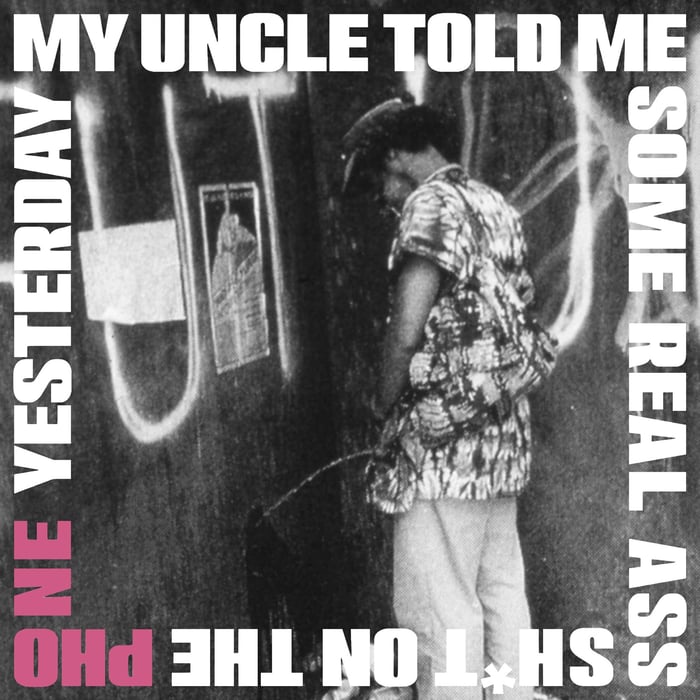
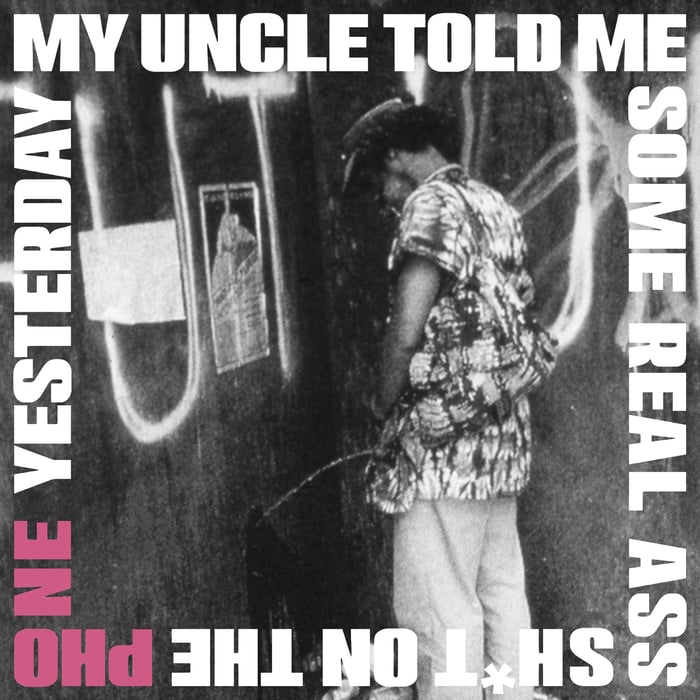
zayALLCAPS’ My Uncle Told Me Some Real Ass Sh*t on the Phone Yesterday plays like a producer who got tired of building rooms for other people and decided to live inside the walls instead. He’s producing nearly everything here, and you can hear that control in the way the beats don’t “carry” the raps so much as they tolerate them—like the instrumental is a moving walkway and he’s choosing to walk the opposite direction just to prove he can.
At first, I thought the whole thing was going to be a pile of clever one-liners stacked into vibes. On second listen, it hit me: the point isn’t the punchlines. The point is the mental posture—the constant toggling between sincerity and self-protection like he’s flipping a phone on silent and calling it growth.
And yeah, the title is one of those titles that dares you to roll your eyes. But it earns the right to exist because the music acts the same way: too specific to be fake, too messy to be polished.
“Satellite”: he’s rapping like the world is burning and he still has notifications
This section’s the first real tell. “Satellite” moves like a brain scrolling through catastrophe and personal drama in the same breath, which is exactly how modern life actually feels—unflattering, unpoetic, true.
He throws images that don’t “connect” so much as collide: a satellite-in-a-tube tied to his phone, a drunk in the speed lane driving his own life like it’s a rental, and even that weird bit about Brodie’s weed basically snitching to the police. It’s absurd, but it’s absurd the way reality is absurd—like when your day falls apart because of something small and stupid, not because of a grand tragedy.
Then he lands a line that doesn’t even try to be subtle:
“A Rollie is just a watch, different signifiers, while we watch the planet die.” — zayALLCAPS
It’s blunt, almost annoyingly so, and that’s why it works. The fires in California hang in the air of the track, and the casual mention of coronavirus (dropped without ceremony) makes the whole thing feel like he’s documenting a time period without stopping to announce it.
He also slips in the part that’s easy to miss: he talks about needing to leave “the institution” first—then getting lost on soju with a woman he immediately frames as someone he shouldn’t tell anything to. That’s the album’s real pattern: he keeps approaching intimacy like it’s a hazard sign he’s trying not to read.
Arguable take: “Satellite” is the best track here because it doesn’t try to be “deep.” It just admits the brain is crowded.
“SIGNZ” and “infinity pool”: warning labels he refuses to peel off
Right after “Satellite,” he leans into the idea that the universe is sending him messages…and he’s basically muting the universe.
On “SIGNZ,” he starts listing warnings—stop signs, slippery floor signs in Spanish, even an American Sign Language joke that veers away from what you think it’ll be (and no, it’s not some nostalgia bait about AOL giants or whatever). The running gag is that every sign is obvious, and he still chooses to ignore it. That’s not “rebellion.” That’s a personality.
Then “infinity pool” shifts the tone: funny-serious, like he’s smiling while admitting something kind of bleak. He says his “magic” is still getting called a hat trick—like even his best moves get reduced to party tricks. And he drops this quiet confession that he doesn’t even know how he got pushed into rapping, which is either humility or a dodge. I can’t tell which, honestly, and that uncertainty is part of the album’s weird charm.
He sketches a moment with his brother taking him somewhere, ordering “some potion and some steak,” then pivots into introducing himself as the “credit card holder of Faith.” It’s the kind of line that sounds ridiculous until you realize he’s describing belief as a transaction—like he’s paying interest on hope.
From there it spirals: everything gets “too real,” and he starts guessing at himself—claiming he’s that guy, the sacrifice, a samurai lamb of Christ, a demigod…then an idiot. That last word matters. He refuses the clean myth.
Arguable take: “infinity pool” is where the album accidentally tells the truth—because the contradictions don’t get edited out.
“Only 1ne” and “rQST Line”: romance as a voicemail you can’t delete
Now the record narrows from “world’s on fire” to “my heart’s on airplane mode.”
“Only 1ne” brings in Josh Forehead, and the writing sharpens—less cloudy, more direct. The verse reads like someone trying to argue in court against their own worst impulses: he did her wrong, insists he’s not a monster, calls himself her sponsor (a loaded word), keeps old pictures until it starts feeling like stalking, then hits the gut-punch math: he weighs her heart at a ton and shrugs like it’s inevitable—“that’s just the price of love.”
zay’s hook here is almost aggressively plain—like a text you send because you refuse to call. It’s about not talking too much, not opening up. Which, again, is the album’s thesis: he doesn’t fear love; he fears what love makes him say out loud.
“rQST Line” keeps the back-and-forth dynamic, this time with Anto the Wayward. Their love turns into cosplay—meaning they’re acting like lovers while staying protected behind costumes. There’s even that detail where she feels compelled to call him by her own name, like identity is slipping mid-conversation.
He’s stuck on the dial tone, glad her phone’s muted, lying in bed with someone new and still interrogating himself. That’s not romantic. That’s compulsive reflection dressed up as tenderness.
And then zay drops the lighter flex—radio spins, a new video, “getting faded like Arsenio”—and it’s funny, but it also makes Anto sound like he wandered into the wrong room. That mismatch feels intentional, like zay wanted the feature to sound slightly displaced, because that’s how connection feels to him: never quite synchronized.
Arguable take: the hooks on these songs don’t “hook”—they withhold, on purpose, like he’s rationing vulnerability.
“Digital Jungle”: conworld turns the phone into a battlefield
“Digital Jungle” is where another voice—conworld—steps in and basically states the mission: the medium itself is the artform.
Then he lists the daily burden of being alive inside the cloud: a WeTransfer of self, passing in and out, waking up at war, phone on the floor, portfolio work at 4:30 in the morning, grabbing Portos with his bro just to keep the machine running. He talks rollouts and rolls his eyes at them in the same breath, which is the most honest “artist promo cycle” moment on the whole record.
zay’s hook is thin, deliberately so: he says there’s something beautiful he gets in the digital jungle, and something beautiful in conworld’s verses when he’s with “you”—and then he basically admits that “you” is also a lot of nothing. That’s the move: build a small shrine, then confess it’s empty.
The line that stuck with me is about his friends shouting instead of crying—and him wishing he knew how. That’s not decorative sadness. That’s a genuine skill deficit.
Arguable take: “Digital Jungle” is the album’s most adult track because it admits the problem isn’t the internet—it’s what we use it to avoid.
“SWOOP” and “Ms. Tiery S-Curl”: dating as a stress test
“SWOOP” starts hilariously mundane: her Toyota’s in the shop, so he gives her a ride. That’s it. That’s the romantic gesture. And somehow, it works, because the song is honest about how small his smoothness actually is.
First dates make him nervous. He can’t pick a place. People say he has a type; he argues he has taste—then immediately caves and admits it’s the same archetype, just different faces. That’s the kind of self-own you only say when you’re trying to stop lying to yourself.
He tosses in this goofy transformation—Tom and Jerry turning into Ben and Jerry’s—then keeps it moving: tinted windows, cruising to Troop, wanting respect for not being a fad. It’s funny because it’s a weird thing to ask for on a date, but I also get it: he’s trying to prove permanence while acting temporary.
Later he calls himself a heartbreaker, remembers she wanted babies, he said “maybe,” and then admits he can be rude and obnoxious—an attitude he frames as trauma-based. Here’s my mild criticism: that “trauma-based” framing flirts with excuse-making. It’s not that he’s lying; it’s that he uses the explanation as a shield before he uses it as a fix.
“Ms. Tiery S-Curl” feels like the softer parallel universe version of him. He describes a girl from “Universe B” who makes his pulse do uneven, loopy laps—no camera, no 3D, no battery. He likes the distance because it means he can’t fully submerge. That’s the tell again: he wants the feeling, not the drowning.
Arguable take: “SWOOP” is more revealing than the love songs because it shows him negotiating basic human closeness like it’s a contract.
“B3lieve dat”: the one time the album lets a woman answer back
“B3lieve dat” features ugonnaya, and the tone shifts because she’s not just a subject—she responds.
She talks about taking him to shine, setting the scene, craving the genuine article. There’s that neat wordplay—Mary J lighting up Mary Jane—then the line that actually matters: she believes in him the way he believes in her.
“Believe in me like rosary beads.”
It’s devotional, but not corny. And because she’s the only woman on the album who gets to speak for herself, the song lands like a small correction to the project’s usual one-sided phone-call energy.
Arguable take: the album needed more moments like this—because zay’s interior monologue gets a little too comfortable being the only perspective.
“4skore” and “CHANGEZ”: when wordplay starts filling holes
Here’s where the album stumbles—not disastrously, but noticeably.
On “4skore,” the wordplay starts acting like substitute teaching. You get the score pun, the fast-folding rhyme patterns, the simulation talk, the “Flavor of Love” bit, and a lot of getting dumb “in between” until everyone goes numb. It’s not that it’s unlistenable. It’s that you can feel him filling gaps where a flow should be.
“CHANGEZ” does something similar. There’s a great punchline in there—about him maybe being fake, maybe being distant, giving his word and breaking the agreement—and he basically abandons it for a string of rhymes: spider legs, an IHOP simile, balling in H-town like the Rockets. Entertaining, sure. But it floats away from anything emotional fast, like he got scared of the line that actually cut.
Arguable take: these songs prove zayALLCAPS is funnier than he is disciplined—and the album’s best moments happen when he stops trying to be clever.
“BESTIE (TOKYO)”: the front seat is the biggest offer he can make
This is the album’s emotional punch, even though it’s small and kind of awkward—like a confession typed with one thumb.
She finally stops orbiting and asks the question the whole record has been dodging: are we sleeping together, are we friends, or what? He answers with those instant declarative phrases—calling her his best friend, wishing they were good friends—like he’s trying to solve ambiguity by naming it.
Silas Short plays bass and guitar here, and doesn’t sing. That choice matters: the music gives you warmth without another voice competing with zay’s indecision.
He reminds her she’s moving far away, to a city she’ll miss. He admits he’s felt “pinched” even when he’s up. He keeps repeating that he hopes she’s good, “and something,” which is such a human way to trail off when you don’t know what you’re allowed to ask for.
And then the relationship logic gets appropriately messy: she wants him to come home, come over, fix things that haven’t been fixed. He calls her his Yoko (Ono), tells her to book him—don’t look for him—warns he’d never divorce a backseat. She refuses to choose between the three options she named earlier. And in the middle of that, he admits the biggest thing he has to give is… the front seat.
That’s either tragic or honest or both. I kept waiting for him to offer something grander. He doesn’t. That’s the point.
Arguable take: “BESTIE (TOKYO)” isn’t a love song—it’s a document of someone bargaining with closeness in real time.
The tracks that actually stick (and why)
If I had to point to the songs that show the album’s intent most clearly, it’s these:
- “Satellite” — where the apocalypse and the personal life share a sentence without apology.
- “infinity pool” — where he stops posturing and admits he’s guessing at himself.
- “SWOOP” — where the normal details expose him more than any grand confession.
And yes, I changed my mind a bit after more listens: I originally thought “SWOOP” was just a breezy interlude. It’s not. It’s the album admitting that intimacy starts with logistics, not poetry.
Conclusion
My Uncle Told isn’t trying to impress you with polish. It’s trying to make you sit inside the half-said thing—the unsent message, the dial tone, the stupid joke that’s covering a real fear. When it works, it feels like a private call you weren’t meant to overhear. When it doesn’t, it’s because zayALLCAPS sometimes uses wordplay the way people use small talk: to avoid saying the one sentence that would actually change something.
Our verdict: This album will click for listeners who like rap that sounds like someone thinking in real time—producer-brain beats, awkward honesty, and romance that never fully lands on its feet. If you need big hooks, clean arcs, or any sense that the narrator has learned his lesson, you’re going to get impatient and start checking your own phone halfway through.
FAQ
- What is the core vibe of “My Uncle Told”?
It feels like late-night texting turned into songs—intimate, jittery, and allergic to clean resolutions. - Does the production matter as much as the rapping here?
Yes. The beats often feel like the real narrator, and the vocals are more like marginal notes written on top. - Which track is the best entry point?
“Satellite” if you want the worldview fast; “SWOOP” if you want the human side first. - Are the love songs straightforward?
Not really. They’re more like relationship status arguments that never make it to “posted.” - What’s the main weakness of the album?
A couple tracks (“4skore,” parts of “CHANGEZ”) use clever rhymes to dodge emotional consequences, and you can feel the evasive maneuver.
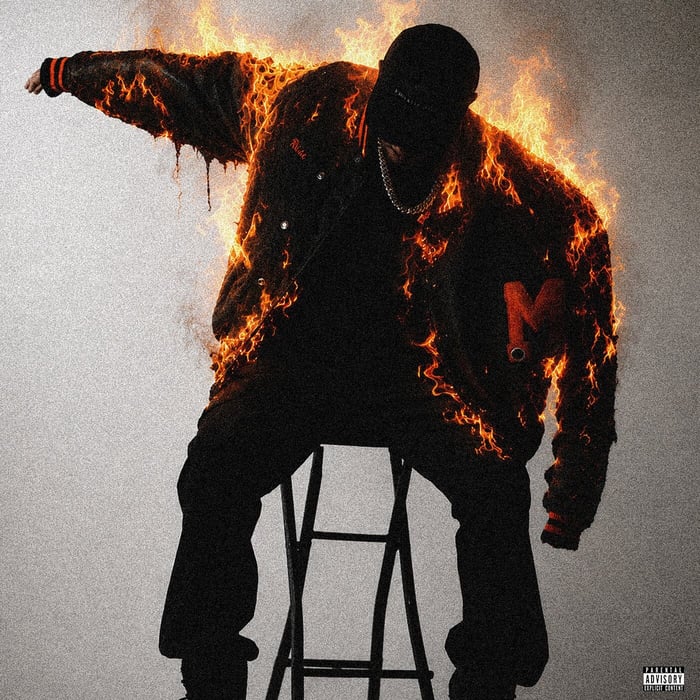
If this album’s cover is now burned into your brain (it happens), you can always grab a favorite album cover poster for your wall over at our store. It’s a nice way to give all that phone-call energy a physical frame.
 | DISCOUNTGET 30% OFF*Use code on your next order:
|
* This post may contain affiliate links, meaning we earn a commission if you make a purchase through these links, at no additional cost to you.