Bars Not Dead Vol. 2 Review: Kai Ca$h Raps Like Hooks Are a Scam


 See more Architeg Prints stories on Google.
Bars Not Dead Vol. 2 Review: Kai Ca$h Raps Like Hooks Are a Scam
Exploring Kai Ca$h’s daring approach in Bars Not Dead Vol. 2, where dense verses replace hooks and raw lyricism takes center stage.
Courtesy of KAI CASH LLC.
One verse, no hook: the whole album is a wager
A rap song with one verse and no hook has nowhere to hide. No reset. No second voice sliding in to change the temperature. The lyrics have to stand there alone, the way a person stands alone when they’ve talked themselves into a corner and still insist they’re fine.
That’s the thing about him—he raps like he’s thinking in real time, but he’s also sculpting. The couplets bend back on themselves. The rhyme choices sound deliberate in a “I rewound this and fixed it” kind of way, not a lazy freestyle spill. He’s one of those rappers who pauses at the line—like he knows the line is the product.
If you’re here for big choruses, you’ll probably call this stubborn. I hear it as a creative decision: Kai Ca$h wants the verse to be the hook. He wants the quotables to replace the sing-along.
I’m not totally sure he pulls it off every time, though. When it hits, it feels like a private conversation you weren’t invited to. When it doesn’t, it’s three minutes of somebody admiring their own posture.
“Make Them Pay. (Swap Out Edition)” is the real thesis
This is the cut where he makes the “one verse” format feel necessary instead of performative. Over a reused backdrop of Drake’s “Make Them Pay,” the song turns into a single long answer to everybody who’s been watching him and asking questions with their eyebrows.
He stacks real-life boundaries and self-mythology on top of each other: the three-day fast he did for help, the strict sobriety he no longer maintains, and the lines he’s drawn around his daughter. It’s all in there, crammed into one verse like he doesn’t want to give the topic room to spread out and get dramatic.
And then there’s this weirdly vivid moment of luxury-as-scripture—wine on the table “like I dined with Jesus.” It’s funny, but not as a joke. It’s funny because it’s exactly how a lot of people talk when they’re trying to convince themselves their new life is still spiritual.
He talks anxiety. He talks gratitude. He talks not buying into fear of missing out. He calls himself a natural Aquarius. He makes plans to dedicate the year to family. And then he does the smart thing: he backs away while the verse still sounds like him, before it turns into an inspirational speech.
This track made me rethink my first impression of the project. At first I thought the “no hook” thing was mostly a flex—like, watch me rap uninterrupted. But here it sounds like restraint. Like he’s keeping the emotions inside a tight frame so they don’t start spilling into performative confession.
That’s the difference between “personal” and “useful.” This one’s useful.
“I’m a Legend... on God!” turns confidence into cardio
Then he goes right back into the deep end: another one-verse, no-hook sprint, no chance to inhale. “I’m a Legend... on God!” mourns “the old me,” but it doesn’t mourn quietly. It’s more like he’s stomping around the house, mourning in expensive shoes.
“If I ever burnt a bridge, it’s ‘cause I’m good at swimming / But trust, I never burnt a bridge that was worth rebuilding”
That’s a joke, sure, but it’s also a worldview: forgiveness is optional when you’ve made yourself the destination.
He throws in an Oilers reference—putting everything “on ice”—and it’s one of those moments where his personality sharpens. It’s not just rap-bragging; it’s him picking a specific metaphor and committing to it.
Still, the song also shows the risk of this format: stack enough “I’m him” statements in a row and the verse starts sounding like a mirror that can’t stop complimenting you. The confidence is real, but confidence alone isn’t a story.
“Balenciaga Hockey Jersey” is where he gets specific again
This one tightens the camera lens. He starts with prayer, then introduces himself in a way that feels like an ethic more than a biography: he got his knowledge of life from himself, not a teacher.
Then he drops a small, bitter truth that actually stings:
- Love starts fading when you’re greater than you thought
- Hate gets louder when you make it past the porch
- Safety becomes a daily practice, not a vibe
That’s not just “I made it.” That’s “I made it and the neighborhood changed shape around me.” The verse moves like he’s walking through his day, checking corners, checking motives, checking his own ego while pretending he isn’t.
By the time he’s asking to get beamed up and declaring it’s “Hammer time,” he’s turned paranoia into momentum. A reasonable listener could call it overconfident. I hear it as him trying to hype himself into being unbothered—like the unbothered version of him is still under construction.
Features: everyone’s in a different movie, on purpose
The guest spots on Bars Not Dead don’t blend into one big posse cut haze. They feel intentionally separated, like Kai Ca$h wants each feature to sound like a different room you briefly walk through.
Reuben Vincent on “Too High.”
Reuben comes in “brain fried to a frequency,” pitched high, running five-percenter references and chasing some imagined fix through a woman he’s convinced has to be right. He glides—Ali-on-the-ropes imagery—and then he’s gone. It’s theatrical, but it works because it’s committed.
Kai Ca$h’s side of the same track is a different kind of intoxication. He’s less psychedelic, more clinical—like his “all-time high” could be prescribed. He talks protection from God like it’s an actual perimeter fence.
Smoke DZA on “Parlay in Pari$.”
This one drops heavier. DZA sets “hood tragedies” down like a plate you didn’t ask for but still have to stare at. And the power line lands because it’s plainspoken:
“Don’t wait for them to involve you / Give them power to feed you, give them power to starve you”
It’s not poetry class. It’s street math.
Lord Sko on “You Know the Deal.”
Sko’s energy is appreciative but hungry. He’s talking about being in rooms with no money—then being rich in those same rooms when nobody’s there. It’s a flex, but it’s also loneliness disguised as triumph.
SwaVay and Niko Brim on “Emo.”
SwaVay sounds like he’s flashing back before the “movie montage” version of struggle—before the 8 Mile fantasies, before gang violence became something people brag about online. His mom warning him off the hood hits like a real memory.
Then Niko Brim pops in counting hundreds and window-shopping, like he’s already on the other side of the story but still browsing the glass.
The interesting part is how disconnected it all feels—like none of these voices are toasting in the same room. That could frustrate people who want cohesion, but I think it’s the point: Kai Ca$h is curating a spectrum, not building a choir.
“Faithfully.” turns paranoia into landscaping
The hook on “Faithfully.” is basically yard work as worldview. He keeps the grass trimmed, calls everyone past the lawn a snake, and the image of his girl at the window praying he gets home safely gives the whole thing a domestic tension. Like the danger isn’t glamorous; it’s routine.
Then the verse extends the metaphor like he’s dead serious about it:
- Cut the grass down
- Spot the snakes
- Enter the garden
- Urge the flowers to thrive
- Plant seeds
- Let time take the picture
And then he hits a realization that sounds like adulthood arriving late but loudly: maybe he should sell the building, maybe he was meant to buy the estate.
Ben Reilly shows up in the same yard, dealing with loved ones getting disrespectfully aggressive, then pivoting to prayer—asking protection not just from evil, but from the need to carry protection. Different phrasing, same lawn.
You can disagree with me, but I think “Faithfully.” is where the album’s emotional stakes actually become legible. It’s not just “I’m up.” It’s “I’m up, and it changed what I’m responsible for.”
When the sneer works—and when it just sits there
“$how Me $um.” has a nice sneer aimed at people speaking on his name “from the back of a bus.” That’s clean—petty, but clean. The song has teeth.
But then there’s a line comparing an all-white coupe to hauling slaves, and it lands with a thud because there’s nothing under it besides the rhyme. It’s one of those moments where you can hear the pen chasing shock value and forgetting to bring meaning along.
The funniest moment on that track is also the most human: he lets a favorite singer “come and have a taste,” then watches her write an album about how he tasted. That’s not even a rap boast. That’s just consequences, delivered with a shrug.
“Picture Me Giving AF Who Don’t Like Me.” is where I started waiting for the song to give me… anything new. He runs out of material fast—“lit like PnB and them,” riding around with a TV in the car, then a sex boast that feels default, like a placeholder line you’d expect him to revise but didn’t.
And on “Reputable Regime.” he thanks his critics again—an idea that’s already been worked over by the time it shows up here. Some of the comparisons reach and miss: motion infinite like buffet food, rap like The Matrix. One line does stick, though, because it actually sounds earned:
“It took me time to be this great, not no hours or weeks / I’m talking years on top of years like sentencing”
That’s the kind of bar that makes the rest of the weaker punches feel even weaker, because it proves he knows the difference.
“Winning.” is luxury without the rhinestones
“Winning.” is him being oddly grounded while listing the perks. He admits he was in the cheap seats not too long ago, and then he stays concrete the whole way through—wild-caught salmon at Soho House, Nova Scotia, tanning golden brown, taking time off with no posts, no engagement.
And then he says the quiet part loud: he’s all for the number Oprah earns. It’s such a specific kind of ambition—less “I want money,” more “I want money that turns into gravity.”
The watch bar is the closer that tells you exactly who he is: he can’t tell the time on his wrist, wonders why the watches are expensive, and he won’t bust down anything—he likes the factory setting. He buys the luxury and refuses to decorate it for strangers. Honestly, that’s a better metaphor for his whole album than any of the spiritual talk.
Because Bars Not Dead is stock. No glitter chorus. No radio tailoring. Just bars, straight from the factory.
Conclusion
Kai Ca$h made Bars Not Dead like he doesn’t trust hooks to tell the truth. When he’s locked in—“Make Them Pay. (Swap Out Edition),” “Faithfully.,” “Winning.”—the one-verse format feels like a pressure chamber that turns lived experience into compact, replayable lines. When he’s not, the same format exposes every weak flex and half-baked comparison with nowhere to hide.
Our verdict: People who actually replay verses, quote lines in group chats, and think a hook is optional will love this. People who need choruses, structure, and a reason to care before the second minute hits will bounce—probably blaming “vibes,” even though the real issue is attention span.
FAQ
- What does “Bars Not Dead” really mean on this project?
It plays like a dare: Kai Ca$h is insisting that pure rapping—dense, quotable verses—can still carry songs without hook scaffolding. - Is this album approachable for casual listeners?
Only if you enjoy listening closely. If you treat lyrics like decoration, the one-verse tracks can feel like they never “open up.” - Which tracks show the most personal writing?
“Make Them Pay. (Swap Out Edition)” folds family, sobriety shifts, anxiety, and belief into one verse without turning it into a diary read. - Do the features help or distract?
They help by widening the mood, but they don’t blend into one unified hangout. It’s more like rotating spotlights than a group photo. - What’s the biggest weakness here?
When the subject matter slips into default flexing—like on “Picture Me Giving AF Who Don’t Like Me.”—the no-hook setup makes the emptiness obvious fast.
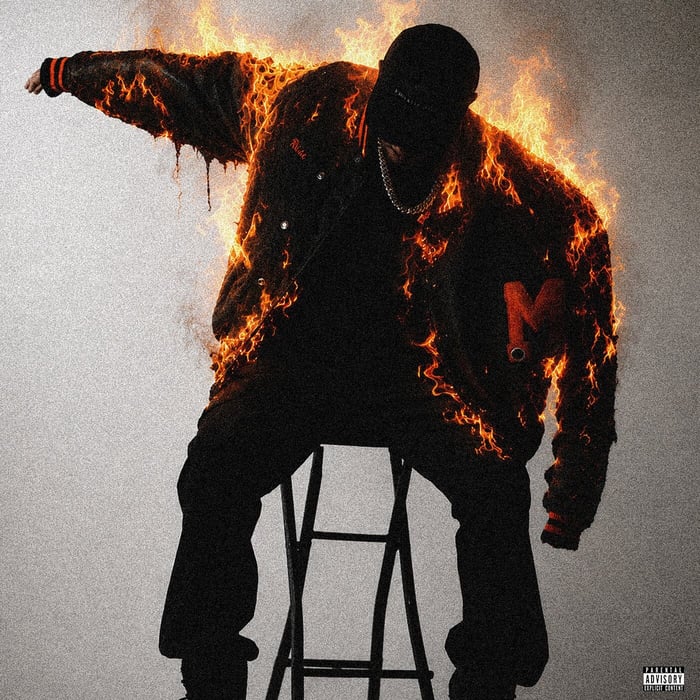
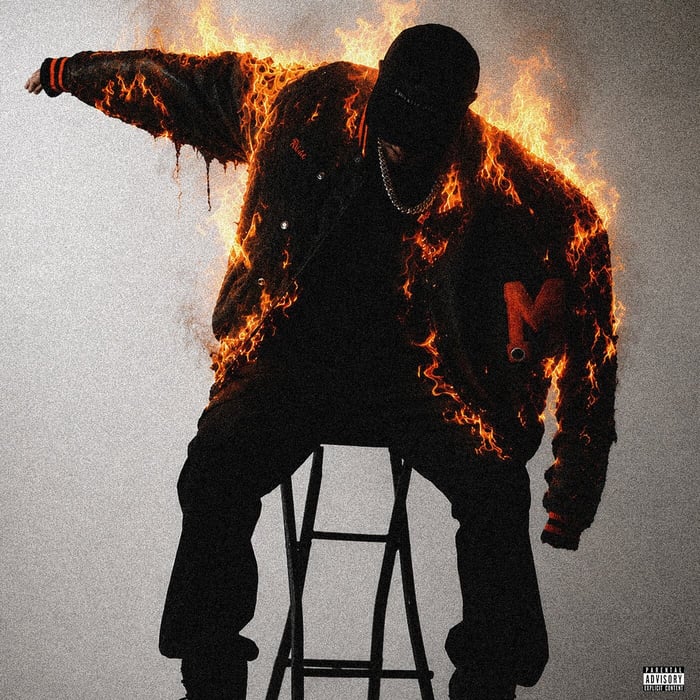
If this album’s cover is stuck in your head the way certain bars get stuck in your mouth, you can grab a favorite album cover poster over at our store: https://www.architeg-prints.com/ — a clean way to keep the “factory setting” energy on your wall.
 | DISCOUNTGET 30% OFF*Use code on your next order:
|
* This post may contain affiliate links, meaning we earn a commission if you make a purchase through these links, at no additional cost to you.