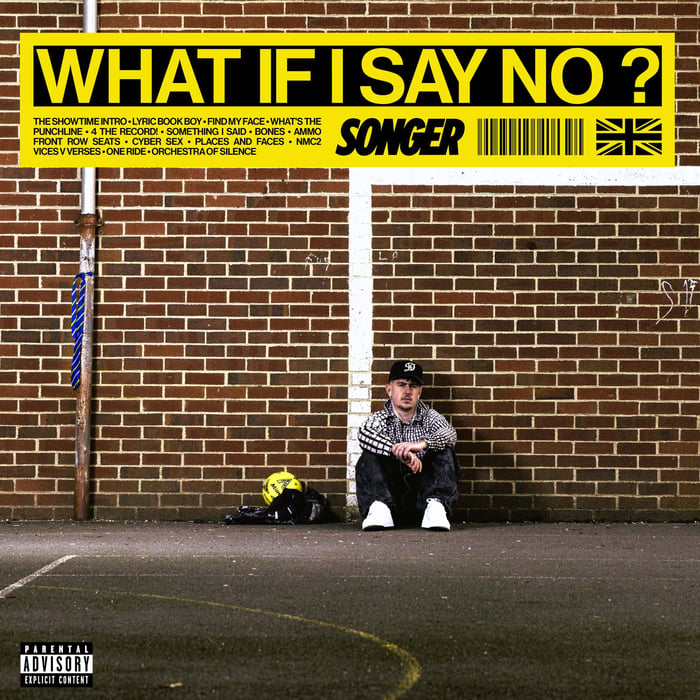
Songer’s WHAT IF I SAY NO? Is “SAY NO” Music for People Who Don’t Sleep


 See more Architeg Prints stories on Google.
Songer’s WHAT IF I SAY NO? Is “SAY NO” Music for People Who Don’t Sleep
Songer’s WHAT IF I SAY NO? turns SAY NO into a lifestyle: pub-floor snapshots, label-meeting spite, and sudden tenderness that lands when you least expect it.
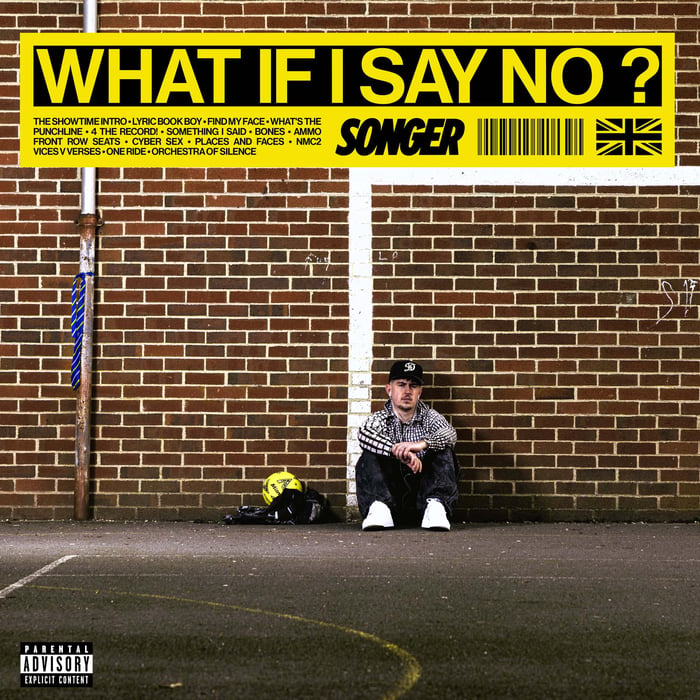
This album doesn’t ask for your attention—it grabs your collar
The first thing I noticed is how close everything feels. Not “hi-fi close,” more like “standing too near someone who’s telling the truth in public.” WHAT IF I SAY NO? is built like a running mouth and a running mind—Songer keeps moving, keeps talking, keeps daring you to keep up.
And yeah, SAY NO is the core posture here. Not in a motivational-poster way. In a “try to control me and I’ll turn it into a verse” way.
The family line isn’t nostalgia—it’s the fuse
There’s a family thread running underneath all this, and it’s not sentimental. I can practically hear the inherited habit: music as background noise in the house until it becomes the house. The album carries that sense of being raised around people who love songs the way other families love football results—argumentative, routine, lifelong.
I get the impression the lineage matters because it gives him permission. Like: I’m allowed to do this. I come from this. That matters when the rest of your life keeps trying to turn you into a product, or worse, a polite version of yourself.
“FIND MY FACE” turns the pub into a terrarium
From the jump, “FIND MY FACE” drops me into Wokingham pub scenes that aren’t dressed up for the camera. It’s not a charming local-color montage; it’s a cramped little ecosystem of “no hopers,” stolen partners, petty tensions, and people killing time like it’s a substance.
Songer doesn’t narrate these people like characters. He stands next to them—watching the match end nil-nil, sitting through it because nobody understands what he’s for, and then there’s that line that tells you the real villain isn’t even booze:
“I’m just drunk and afraid of silence.”
That’s not a pretty confession. It’s an admission that quiet is where the brain starts talking back.
Then the coat bit hits—this weird, funny, bleak detour about buying a new jacket off Brick Lane and turning it into almost a companion object: big enough for bottles, built-in chargers, capacity for a small off-license. Waking up in the back of an Uber “sleeping inside a life far longer than an hour” lands like a hangover thought that’s too sharp to be just a joke. The punchline is that he ends up hating the coat anyway. The thing that was supposed to carry the life starts to feel like evidence of it.
I’m not totally sure if he’s proud of that spiral or embarrassed by it. Maybe both. The track doesn’t clean up the contradiction—it lets it stink a little.
“WHAT’S THE PUNCHLINE” is him heckling the entire rap idea
Next bridge: after all that lived-in grime, he swerves into pure ego as a weapon. “WHAT’S THE PUNCHLINE” feels like Songer deciding that if everyone’s going to perform confidence, he’ll perform it so hard it becomes a critique.
A fortune teller gets “sacked” for telling him he’s destined for greatness—because in his head, he’s been the GOAT forever. It’s absurd on purpose. He’s tossing coins at anyone rapping about being “on the wing” like Bale or Beckham. He shrugs off the idea of a label’s big money with that “happy with the draw” line, calling himself Sam Allardyce like he’s coaching his career into points rather than glory.
And the key is: he keeps asking “where’s the punchline.” That question is a challenge, but it’s also insecurity disguised as banter. Like he’s daring the room to prove him wrong before he has to sit alone with the doubt.
“4 THE RECORD!” aims at the gatekeepers… then wobbles
From there, “4 THE RECORD!” comes out swinging at the type of people who let A&R taste replace their own ears. The opening claim is clean and nasty:
“They aren’t your tunes / They aren’t your bars, and they aren’t your loops.”
That’s not just a diss—it’s a boundary. He’s basically saying: you don’t get to claim authorship because you were nearby when it got approved.
But I’ll be blunt: the second verse loses the thread. The tumble dryers, the lost marbles, the skeleton Cartier—those images feel like he’s reaching for a surreal flex and ends up sounding like he’s flipping through random pockets. It’s not unlistenable, it’s just the first moment where the record’s momentum does that little stutter-step.
The funny part is that even that wobble kind of supports the album’s bigger attitude: Songer would rather trip while talking than polish himself into silence.
“PLACES AND FACES” turns money stress into a personality test
“PLACES AND FACES” widens the lens to the business side without turning into a pity speech. KiLLOWEN shows up talking about a tax bill that eats nearly a paycheck (or two), plus the dream of a yard with a gallery view. That’s the kind of detail that isn’t glamorous—it’s specific enough to be real, and annoying enough to be true.
Songer’s angle is different: he’s exhausted by the million coffee meetings with labels, and he draws a line—feed him properly or he’s gone. It’s a small moment, but it tells you a lot. This album keeps translating “success” into ordinary needs: meals, rest, respect, the ability to walk away.
Then he flips “spilled milk” into “spilled champagne” and calls it a sign he’s living. That’s not just a flex; it’s him trying to convince himself the mess is proof it was worth it.
“SOMETHING I SAID” and “AMMO” are where the bravado gets audited
After all the outward-pointing stuff, the album turns inward on “SOMETHING I SAID.” It’s all “what-if” thinking around a romance that’s quieting down. The praise starts to feel like critique. He watches her handle issues that he can’t neatly put away. Even the idea of books spanning timelines shows up—like his head is trying to intellectualize the emotional drift.
And then he says he should “sack the dealer for the hands that you were dealt.” That’s such a petty, human impulse: if the relationship is hurting, blame the person shuffling the cards. It’s also him admitting he wants control over luck, which is basically the entire album’s subtext.
“AMMO” sharpens that. “Sorry” becomes a physical stain—carpet, white wine, dread that waits for morning. He hints at problems that know his name but that he still won’t name out loud. And the hook of it is denial as self-protection:
He won’t give her “the ammo.”
That’s SAY NO again—except this time it’s not for the industry or the haters. It’s for intimacy. That’s colder, and it’s also more honest.
“NMC2” is the sequel that refuses to let the candles go out
This is the part where my first impression changed. Early on, I thought the album was mostly a victory lap with pub grit and punchlines. But “NMC2” drags the listener back to the actual stakes: time, health, legacy, the stuff you can’t out-rap.
Seven years after “No More Candles,” the candles are back—and not one’s gone out. That’s a loaded image: the danger hasn’t passed, the burn is still burning. He even plays with that old line about burning twice as bright and living half as long, basically saying if he’s gone at forty, take care of the songs.
Then he’s thinking about handing down shoes that feel “double hard” to run in—unless he loosens laces he’s kept tight for years. That’s the clearest metaphor on the album, and it doesn’t feel decorative. It feels like he’s admitting he’s trained himself into tension.
There’s domestic tenderness too: she sleeps through a dull week, he picks lashes off her cheeks, she tells him to make a wish, and he wishes she sleeps. Not fireworks. Just that quiet kind of love that looks boring until you realize it’s the only thing holding someone together.
And then the line that stings because it’s simple:
“I can tell you I can rap, I can’t tell you I’m alright.”
That’s the album in one sentence: skill is easy to prove, wellness isn’t.
“VICES V VERSES” admits the real trade: numbing vs being seen
This section flows naturally because “VICES V VERSES” basically answers “NMC2.” He frames vices as enhancement and verses as visibility. That’s a brutal little equation: one makes you feel better, the other makes you legible.
He even shrugs off counseling as too stripping, too exposing, when he can tell “a million souls” over a beat instead. The bleak joke is that crowds don’t ask questions—they tap their feet. That’s not an attack on listeners; it’s him noticing the deal. You give people the pain in rhythm, and they pay you back in movement.
And there’s a genuine warmth when he talks about family playing his music—like it’s a welfare check disguised as support. On stage, he watches the audience live, like he’s verifying the whole arrangement is real.
“ORCHESTRA OF SILENCE” turns responsibility into a habit you can’t quit
“ORCHESTRA OF SILENCE” reaches back to him at seventeen, carrying the world on his back. The detail that lands is how he describes bottling everything up for years and then running around “chasing a can.” That’s the pattern: repression, then scrambling for relief.
A teenager messages him daily saying the music saved his life. Songer’s response isn’t corny; it’s direct—you’re here, you’re not alone. And he pushes the point hard: if you take anything from the lyrics, let it be that life is for living, because someone’s world collapses without you.
You could argue that’s dangerously close to a school poster. But the way it’s placed—after all the ego and avoidance—makes it feel like an emergency flare. Like he’s telling you what he needed to hear, not what sells merch.
“ONE RIDE” and “CYBER SEX” show his weird balance: pep talk + sight gag
From here, the album starts engaging the listener more directly. On “ONE RIDE,” he’s basically giving directions—run away, don’t close your eyes, live in the moment—then drops the line that sounds like it belongs in a school assembly:
“No one is better at living than you / As long as the life that you’re living is true.”
I kept waiting for him to undercut it with a darker twist, and… he mostly doesn’t. That’s a choice. He’s risking sincerity on purpose, and whether you buy it will depend on how allergic you are to earnestness.
Then “CYBER SEX” slides in with humor again, and honestly it works better than it should. The sight gag about a man in a Hublot from AliExpress is the kind of joke that could’ve aged instantly—but it’s delivered with enough calm confidence that it sticks. The “sleep mode” glasses line has that modern dissociation baked in: everything’s on, but nobody’s present.
He even reaches for Tina Turner in the second verse and then backs off, relaxed—like he knows exactly how far to push a reference before it becomes costume.
“FRONT ROW SEATS” points outward, but the best hit is self-inflicted
The final stretch kicks into “FRONT ROW SEATS,” where he starts pointing at bigger issues: child poverty at an all-time high, a pendulum nobody can swing back, politicians he calls gaudy. It could’ve turned into generic outrage, but the best moment is when he clowns himself:
“I’m always left-dragging / But now I’m fucking left-dragging on the side of the kitchen.”
That’s the album’s best political language—embarrassment, not slogans. He’s not above the mess; he’s in it, snagged by it, dragging through it.
And then the chorus narrows to one person—little miss green eyes—without whose sparkle he doesn’t think he’d care at all. It’s a slightly alarming admission, honestly. Depending on your mood, it’s romantic or it’s a red flag with good melody.
The ending imagery sticks: sitting with stoners in back, checking the windows, sitting in front of speakers playing old 2017 voice memos—his teenage self basically lecturing him about the exact life he walked into. He still tips a busker a hundred because imposter syndrome won’t stop asking for rent.
Favorite tracks (the ones that actually tell on him)
If you want the clearest read on what WHAT IF I SAY NO? is doing, I’d start here:
- “BONES” — the one that feels like it’s tracing the outline, not coloring it in
- “NMC2” — where the jokes stop working and that’s the point
- “VICES V VERSES” — the trade-off between numbing and being seen, said out loud
Conclusion: SAY NO is his shield—and sometimes his cage
Songer uses WHAT IF I SAY NO? to prove he can’t be edited into something tidy. The pub scenes, the label-meeting contempt, the relationship chess, the self-help lines that are almost too sincere—he keeps switching masks, but the face underneath is consistent: a person who’d rather talk himself into a corner than let silence win.
The album’s not flawless. A few stretches reach for cleverness and land in clutter. But the main move—turning SAY NO into both swagger and self-defense—hits because it’s specific, lived-in, and occasionally uncomfortable in a way that sounds like real life.
People who like rap that feels like overhearing someone’s week through a thin wall will love this album—especially if you’ve ever used a joke to dodge a feeling. If you need every track to be neatly structured, or you get itchy when an artist starts sounding like your conscience, you’re going to bounce off WHAT IF I SAY NO? and call it “a bit much” (which, to be fair, it is).
FAQ
- What does “SAY NO” mean on this album?
It comes off like a refusal to be controlled—by labels, by expectations, and sometimes by the people closest to him. - Is WHAT IF I SAY NO? more bragging or more personal?
Both, but the personal stuff keeps hijacking the bravado, especially on “NMC2” and “VICES V VERSES.” - Does the album have humor, or is it heavy the whole time?
The humor’s constant—AliExpress-luxury jokes, petty punchlines—but it keeps bumping into real dread. - Where should I start if I only listen to three songs?
“BONES,” “NMC2,” and “VICES V VERSES” give you the clearest range of what he’s doing. - Is this a “background music” album?
Not really. It keeps pulling your attention with specific scenes and lines—great if you want company, annoying if you want peace.
If this record put a visual in your head, you can make it literal—shop your favorite album cover poster at our store: https://www.architeg-prints.com. It’s a nice way to hang the obsession on a wall instead of carrying it around.
 | DISCOUNTGET 30% OFF*Use code on your next order:
|
* This post may contain affiliate links, meaning we earn a commission if you make a purchase through these links, at no additional cost to you.