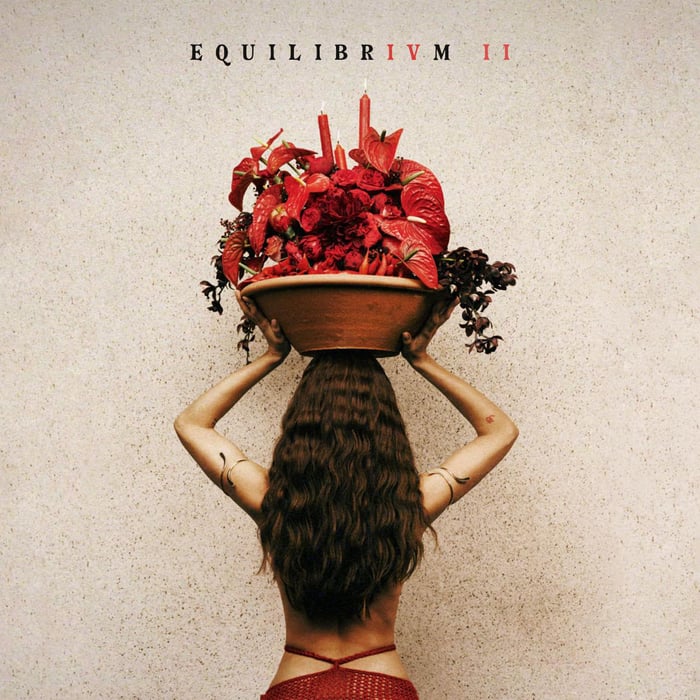
EQUILIBRIVM II Review: Anitta Turns Spiritual Armor Into Party Music


 See more Architeg Prints stories on Google.
Album Review: EQUILIBRIVM II by Anitta
EQUILIBRIVM II isn’t “experimental”—it’s Anitta building pop songs like protection charms: salt, candles, jokes, and one raw nerve she won’t bandage.
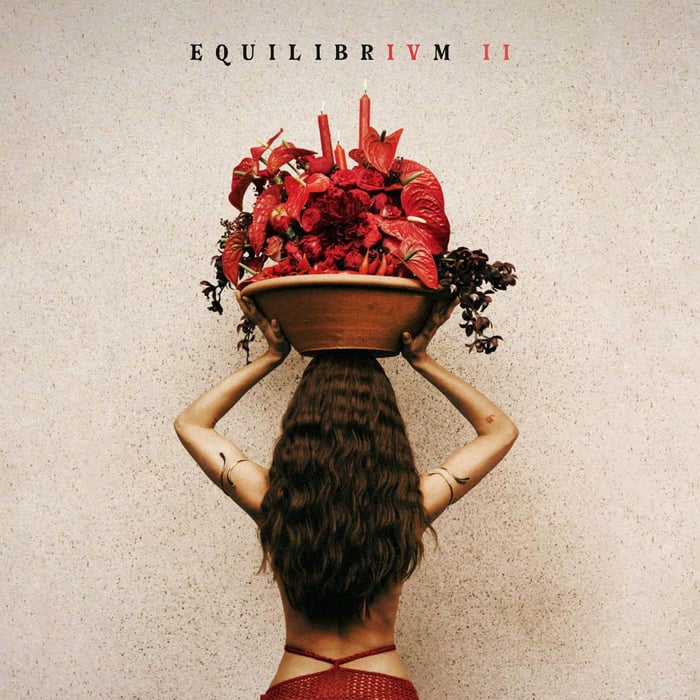
This album isn’t asking to be understood—it’s asking to be used
Some albums want admiration. EQUILIBRIVM II wants results. It plays like a set of objects you keep by the door—practical, symbolic, and weirdly specific—except here the objects are hooks, guests, prayers, and a grin that shows its teeth.
The first thing that hit me is how intentionally domestic it feels: this is music that sounds made inside a lived-in space, not in a sterile “industry” room. I can practically hear the walls. And yeah, I’m taking her at her word that she wrote and produced all of this in a studio inside her house with guests in the room—because the album’s vibe is exactly that: people close enough to interrupt, energy close enough to sweat.
What EQUILIBRIVM II is really doing is smuggling belief into pop structure the way samba has always done—right under the melody, in plain sight. The protective “hardware” isn’t metaphorical here. It’s literal: coarse salt, candles, plants, matches. The point isn’t aesthetics; the point is staying intact.
And if you think that’s too heavy for a pop record, well… the record clearly doesn’t care.
Protection songs: salt, candles, and the refusal to be easy prey
The protective run early on doesn’t feel like “themes.” It feels like a checklist—like Anitta is building a perimeter around herself and then dancing inside it.
“Sal Grosso” is where the logic is laid out with almost annoying clarity: the concrete jungle forces you to defend yourself, so you do. Coarse salt, prayer, candle, match—basic tools, treated like serious equipment. KBrum comes in blessing Seu Zé before the first sip, dragging in herbs from Guiné and a candle from the mercadão, and dropping that line about the malandro’s heart living in the sole of his foot. That’s not poetry for poetry’s sake. That’s a worldview: stay grounded or get taken.
Then the album doubles down—aroeira bath before anything, espada-de-são-jorge behind the door, and the kind of stubborn prioritizing that sounds like maturity but is really self-defense: she’d rather be late than live rushed.
And “Eu Não Sou Santa” lands like the thesis statement because it says the quiet part loud. The hook is cocky, but the verse after it turns freezing:
“Eu não sou santa, mas sei que a Santa me adora.” — Anitta
That one line makes the album’s whole posture click for me. She isn’t pretending purity. She’s saying protection isn’t a reward for being “good”—it’s something you claim because you need it. The following verse is the bleakest stretch on the record: cold night, nowhere to go, no affection, no home. The thing that keeps her body from being “out there” is Nossa Senhora’s mantle. It’s not subtle. It’s not trying to be.
A reasonable listener could argue this is too literal—like the album refuses symbolism out of spite. I’d argue that’s exactly why it works: it’s not art class, it’s survival.
Family and lineage: the album acts like inheritance paperwork
From there, the album shifts into lineage—not “where I’m from” as branding, but as debt and receipt.
“Deus Mãe” hits with KING Saints listing what he owes his mother: health, wealth, luck enough to care for her until she’s gone, grandchildren, a house with a pool. It’s a shopping list, but it isn’t materialistic—it’s devotional. He inherited her hair, her way of speaking, even her madness. It’s love described with specificity, which is always riskier than saying “I’m grateful.”
Anitta’s verse comes in shorter and stranger—less list, more scar tissue. Courage from the cradle, first home inside someone’s chest, the scar that gave her voice. It’s the kind of writing that doesn’t invite you in politely; it hands you a fact and moves on.
Then “Oke” frames her father as a teacher, and the lesson is hunting. That’s a sharp choice: not “guidance,” not “wisdom,” but hunting—as if the album is admitting that tenderness alone doesn’t get you fed. Katú Mirim bargains over a rattlesnake that didn’t do the job and a storm that couldn’t stop her. Brô MC’s refrain throws in a warning that’s basically a proverb with teeth: a huntress in a rush goes home without eating.
And “Ogum Me Rodeia” gives Maria Bethânia a bridge that frankly stomps on a lot of other moments on this record. She asks the orixá to lift his shield, tear the path out of the ground, split evil with a sword—so she ends up in the house where her body doesn’t know wounds, only faith. It’s such a clean image it almost makes the rest of the album look messy on purpose.
If there’s a “verse to beat” here, it’s that one. And I’m not even sure Anitta tries to beat it—she lets it stand like a pillar.
Crossroads energy: when threats show up, she turns them into comedy
The album doesn’t stay solemn. It gets playful in a way that feels tactical: humor as defense, mockery as control of the room.
In “Feitiço,” someone tries to bring her down with a spell at the crossroads, and her response is basically: you picked the wrong battlefield—I’m from there too. Mart’nália sings the accusation, Anitta waves it off, and the best flex in the song is the one that sounds like a laugh mid-fight: out of everyone you could test, you chose the person who taught you to dance. That’s not just swagger; it’s dominance disguised as a joke.
Then she takes the same “don’t start with me” energy and flips it into straight comedy on “Não Me Cutuca.” She insists she’s fine, peaceful, not at war—she just needs chamomile tea, coffee, and a naughty cafuné. And the rule is clear: nobody pokes the maluca. It’s hilarious because it’s delivered like a wellness routine, but it’s really a boundary with a smile drawn on it.
Alceu Valença responds in proverbs—don’t step on a snake’s tail; the remedy for a crazy person is another crazy-and-a-half. It’s basically the album admitting that escalation can be community theater as much as violence.
By “Você Já Sabe,” there’s barely any threat left to address. It turns into weather and ritual: she becomes thunder if it rains, a red candle lights the hallway. That’s the record shrugging and saying, “I’ve already handled it.”
I’ll admit: on first listen I thought this middle stretch was just vibe-setting, like interludes with big personalities. On second listen, it’s obvious it’s plot—she’s showing what she does with pressure: she turns it into something she can sing over.
Hummingbirds and expectations: she’s kinder than the album’s armor suggests
“Abre Caminho” is deceptively gentle. Hummingbirds come with three instructions: land if you landed, live in me if you stayed, fly without me if you want. Alexandre Carlo passes the lines back to her until she answers with a bird that used to be a nest—one of those images that sounds simple until you realize it’s about something that changed shape and never fully recovered.
What I like here is that the song doesn’t beg. It permits. That’s rarer than heartbreak theatrics.
Then “Tudo Isso” takes the same theme—attachment, expectation—and gets sharper, funnier, almost impatient. She’s done building fantasies for other people. She won’t waste time explaining what’s obvious. She dismisses people who aren’t worth the palpitation in her chest. The line about being past Baghdad and back lands like an exaggeration meant to communicate exhaustion: she’s seen enough nonsense to restart with a plan and no apologies.
A lot of listeners will call this “confidence music.” I think it’s something more specific: it’s the sound of someone who learned that explaining yourself is a tax you don’t always have to pay.
When she wants the impossible, the album suddenly limps—in a revealing way
“Pra Você Gostar de Mim” (the Rita Lee song) is the one moment where the album’s usual tools—ritual, humor, bravado—don’t fix the problem. Nothing in the medicine cabinet helps. She counts oceans she’ll have to cry, pieces she’ll have to unfold herself into, just to deserve a man’s attention. That’s brutal, and it’s also the only time on this record where she seems to believe someone else gets to decide her value.
She puts on colors, shine, sequins. She rehearses phrases. Her samba nearly dies over him. Her bloco is empty without him. She’s “not winning” in the love category, and she hopes the whole mess never ends up on television—which is such a specific kind of humiliation it feels like a private fear slipping out in public.
Then comes the final offer: fruit on her head, assuming the man who doesn’t love her might at least eat. That’s tragic, but also weirdly pragmatic—like even rejection has to be repurposed into function.
If I have a mild complaint about EQUILIBRIVM II, it’s here: this track’s despair is so singular that it briefly makes the rest of the album feel like it’s been “managing” feelings rather than living them. But maybe that’s the point. Maybe the whole record is a set of strategies—and this is the moment strategy fails.
Gratitude, Spanish blue, and the one time the writing goes blurry
“Contemplação” should be a victory lap—water running at her feet, flooding and gold-plating, healing and purifying. She gives gratitude for every choice and the abundance in every drop. Grupo Ofá sings a Yoruba refrain over it.
And yet… this is the one time she goes generic. I kept waiting for a detail—one image that pins the feeling to the ground the way salt and candles do elsewhere. Instead it floats. Some people will love that open-ended spiritual wash. I think it’s the album briefly losing its grip on its own specificity.
“Azul” has a similar problem in Spanish: blue sky that may or may not be God’s, blue perfume, a “little-blue” love, lots of diminutives. It’s pretty, but prettiness isn’t what this album does best. Here it almost sounds like the language itself is being used as a filter to soften the edges.
“Divino Sexual” squeezes more out of its setting—Pedra do Sal, Ipanema shore, and the frankly wild instruction to put on “Trem Das Onze” mid-tantra. That detail is the kind of grounded absurdity this album thrives on. Still, the English bookends sound like they were written by a tourism board trying to flirt. Not offensively bad—just slightly too polished, like someone wiped fingerprints off the glass.
“Ponta do Pé” closes this stretch by being a regular samba and not asking for extra help. And honestly, it’s a relief. The album sounds most convincing when it stops decorating and just moves.
“Respira”: the mask drops, and the grievance finally speaks
Then “Respira” walks in with no protection at all. No armor. No ritual objects held up like a shield. It’s personal story, plain voice.
It frames her as a girl from the favela who looked elegant on your screen while everyone kept talking about her ass. Wildness and sense both. The real sting is the idea of overlooked vision—like nobody even bothered to mention her broader talent because she sang funk, “what a waste.” That line of thinking—society’s, not hers—hangs over the song like a bad smell.
“Quem dera fosse homem, tinha mais benefício,” she sings, and it lands with the exhausted clarity of someone who’s done pretending the game is fair.
And she doesn’t even let that grievance ruin the night. The complaint sits inside a song that’s also about dancing in the rain—“da macumba ao Cristo Redentor”—moving through Europe, Rio, Ecuador, inviting someone to come score a goal in her Maracanã. It’s a flex, but it’s also an insistence: I’ve carried this for a long time, and I’m still going out.
You could argue “Respira” is the album’s real centerpiece, not because it’s the biggest, but because it’s the least managed. Everything else is a method. This is a pulse.
Where I landed: the tracks that actually hold the power
I’m not interested in pretending every moment hits equally. The album is strongest when it treats spiritual material as practical reality—when the symbols are tools, not decor.
The songs that stick hardest for me:
- “Eu Não Sou Santa” — because it admits vulnerability without begging for pity
- “Ogum Me Rodeia” — because that Bethânia bridge feels like a door being kicked open
- “Respira” — because it stops performing strength and just states the cost
And yeah, overall this feels like a confident record—more effective than “perfect.” It’s trying to keep the objects intact.
Conclusion
EQUILIBRIVM II plays like Anitta turning belief into a working system: salt by the door, humor as a warning sign, lineage as a map, and one exposed nerve to prove the armor isn’t fake. When it gets too vague (“Contemplação,” parts of “Azul”), the spell weakens. When it gets specific—candles, saints, shields, rain, Maracanã—it hits like something you could actually carry with you.
Our verdict: People who like pop that does something—sets boundaries, calls protection by its real name, and still dances—will eat this up. If you need your spirituality subtle, your samba polite, and your vulnerability neatly packaged, this album will annoy you like a red candle lighting a hallway you wanted to keep dark.
FAQ
- Is EQUILIBRIVM II more about religion or about mood?
It’s about practice. The album treats faith like gear you use, not a mood board you curate. - What’s the most emotionally direct track here?
“Respira.” It drops the rituals and just talks about the cost of being seen wrong on purpose. - Does the guest list feel like features-for-streams?
No. The guests sound like people in the room, not names pasted on for marketing—arguably the album’s smartest production decision. - Where does the album stumble a bit?
When it goes broad and pretty. “Contemplação” and “Azul” drift into generic color-talk compared to the record’s sharper moments. - If I only play three songs, which ones prove the point?
“Eu Não Sou Santa,” “Ogum Me Rodeia,” and “Respira.” That trio shows the album’s armor, its mythic reach, and its exposed nerve.
If this whole “music as protection object” idea stuck with you, it’s the kind of thing that looks great on a wall too—especially album art that feels like a talisman. If you want, you can shop a favorite album cover poster at our store: https://www.architeg-prints.com.
 | DISCOUNTGET 30% OFF*Use code on your next order:
|
* This post may contain affiliate links, meaning we earn a commission if you make a purchase through these links, at no additional cost to you.