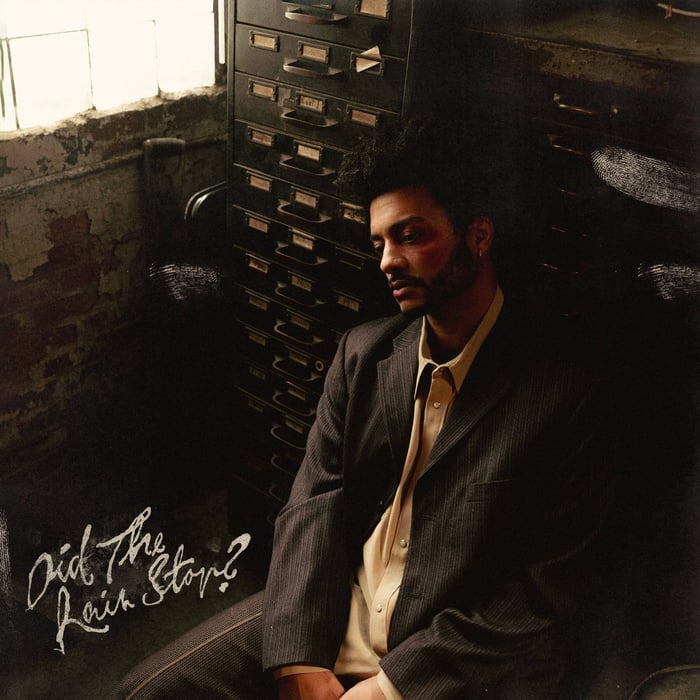
Did the Rain Stop Album Review: Felix Ames’ Apology Spiral Won’t Quit


 See more Architeg Prints stories on Google.
Did the Rain Stop Album Review: Felix Ames’ Apology Spiral Won’t Quit
Felix Ames delivers a raw, faith-haunted album full of confessions about love, addiction, family, and self-reckoning, creating a deeply honest and emotionally charged listening experience.
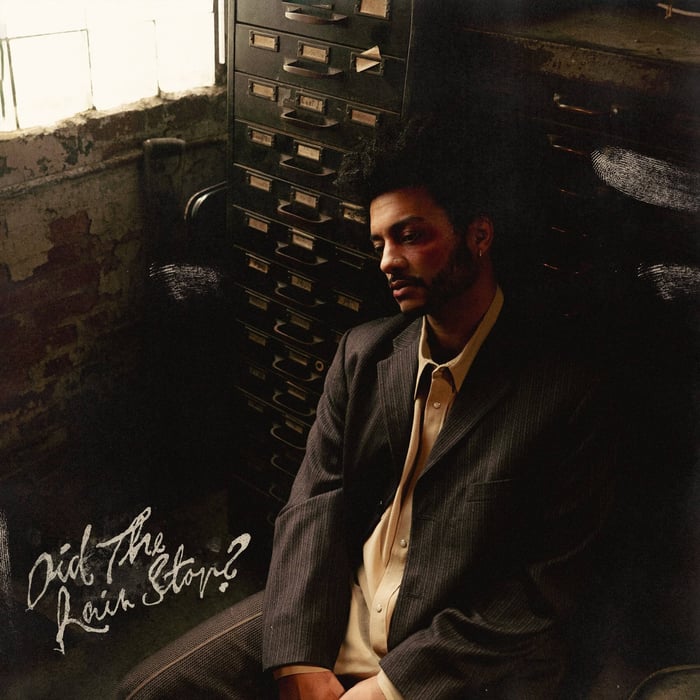
A record that sounds like it was made where secrets go to hide
Some albums want you to dance. This one wants you to sit still and admit something—preferably something you’ve been pretending doesn’t count.
Did the Rain Stop? feels like Felix Ames using music the way other people use a late-night text they shouldn’t send: too honest, a little circular, and weirdly precise about the parts that hurt most. The whole thing plays like he’s not trying to impress anybody. He’s trying to survive his own thoughts, on the record, in real time.
The “Rain Stop” setup: modest rooms, heavy memories
Here’s what’s obvious from the jump: Ames doesn’t build these songs like glossy products. Earlier on, he set up a recording situation in his mother’s basement during a stretch where he wasn’t moving around much, and those basement sessions became 7711—one of the earliest flags in his catalog. Even as the projects changed, the gear and vibe stayed modest, like he doesn’t trust polish not to lie.
Then JENA happens—recorded in producer Calvin Valentine’s house—right after Ames says goodbye to his grandfather in hospice. That timing matters. You can hear it in how the writing keeps acting like a private note he accidentally left on the kitchen table.
And whether he means to or not, Ames writes like he’s coaching himself through the day. Not in a motivational-poster way—more like: here’s what I need to hear so I don’t do the same stupid thing again.
Did the Rain Stop? sticks with that tradition and drags a few specific ghosts into the room:
- a woman he cheated on (the biggest wound, and he knows it)
- a cup he won’t let other people see into
- a surname he’s scared of carrying forward
- a God he keeps thanking anyway, even while clearly failing at the whole “live right” concept
That last one is the album’s real tension: gratitude without stability. Faith without clean hands.
“What Went Wrong?”: repentance that doesn’t trust itself
This album’s apologies aren’t polite. They’re messy and self-suspicious.
On “What Went Wrong?” Ames starts in repentance—and then immediately interrogates the entire idea of repentance. He accepts guilt, sure, but he also pokes at the point of being “saved” if he’s not actually living by the Gospel. It’s not a clean confession; it’s a confession that keeps side-eyeing itself.
The song grows teeth as it goes. He hits a line that feels like the center of the whole record:
“I climbed to the top of the world / And forgot why I even did it”
— Felix Ames, “What Went Wrong?”
That’s not just regret. That’s realizing ambition didn’t even pay out emotionally. And then the imagery keeps tightening: leaving his baby where he found her, walls closing in, ending up alone in a wilderness with nobody left to call and no strength to keep moving. It’s dramatic, yeah—but it doesn’t feel theatrical. It feels like someone trying to make the consequences vivid enough that they’ll finally stick.
What really lands is the way he admits the past won’t rinse off. He tries to wash this woman out like she’s a stain, and still gets ambushed by sensory memory—the smell of her hair—like the brain’s own betrayal.
I’ll admit: on my first listen I thought this track was going to be standard remorse music. By the time it hit that “top of the world” turn, I had to revise that. He’s not performing guilt. He’s arguing with guilt, and losing.
“Crack a Smile” and “I Don’t Wanna Die”: love, silence, and the cup he won’t show you
The album keeps swapping settings, but it never leaves the same emotional room: consequences, denial, and the weird ways people keep choosing the thing that hurts them.
On “Crack a Smile,” a car accident hangs in the air—imminent, avoidable, and somehow still inevitable. He sees it coming and still can’t do the satisfying thing (the “I warned you” moment). Instead, he learns how to keep quiet while watching someone need help. That’s a brutal detail because it’s not heroic; it’s cowardice dressed as restraint.
He describes loving her as war sometimes. Not romantic war. Actual exhausting war—the kind where you stop recognizing yourself.
Then there’s the photo that makes him smile, and instead of comfort it drags him downward. He drops one of the album’s most telling admissions:
- Only he knows what’s in his cup
- Only he knows how long it’s been since he’s had a sober thought
That’s the “Rain Stop” thesis in miniature: secrecy as identity. Not “I drink,” but “I live inside a hidden container.”
And “I Don’t Wanna Die” doesn’t glamorize that container at all. Ames paints drinking in the grimmest possible terms: a monkey on his back that outlasts everything, poison used as company, and a social circle that blames everything except the guy doing the drinking. That last part stings because it’s a little too real—how everybody wants the addiction to be a fog machine instead of a decision.
He even answers himself, basically: it’s time to grow up. Then he asks the question that comes after every dramatic vow—what am I supposed to do now?
This is where I’m not fully sure if the album wants to offer a way out, or if it’s deliberately staying in the “naming the problem” stage because naming it is the only control he has. Part of me kept waiting for the music to hand him a ladder. It mostly hands him mirrors.
“The Colemans” and “I Was Just a Child”: family poison, inherited damage
The family thread is where Did the Rain Stop? gets quietly scary.
On “The Colemans,” Ames decides there must be something in the water—something tainted. He’s thinking about toxins constantly, like the family line itself is a chemical spill nobody cleaned up. He sees himself as one of the last representatives of his family “with the power to change,” but he says it like someone who doesn’t fully believe in that power. He’s half-ready to take everything to the grave that produced them, which is a dark way of saying: maybe I’ll just end the story by refusing to tell it.
Then a child’s voice appears after the verse—simple greetings: hi to Dada, hi to Daddy. That moment is small and wrecking. It’s like the album suddenly shows you what’s at stake: not just his pain, but the next generation listening.
From there, “I Was Just a Child” flips perspective into memory. He closes his eyes and only sees it—whatever “it” is—and he’d rather not see it anymore now that he’s grown. The person he’s addressing is still in the same place, stuck. He insists he had no options. Then he catches himself ignoring warning signs and realizes he’s not different after all.
Changing his mind takes effort even when the truth is obvious. That’s one of the album’s more uncomfortable points: insight doesn’t equal change. Sometimes insight just means you can describe your own crash in better vocabulary.
“You Built Me a Home” and “Arms of Your Lover”: romance as dependency (and he knows it)
The next pivot is “love,” but not the cute version.
On “You Built Me a Home,” Ames wakes up nightly asking what controls him. He decides it’s something beyond his control—yet the details he gives are all the choices people make when they’re chasing a feeling: quick changes, broken friendships, clearing out space just to have room for her.
Then he lands on the clearest, most honest description he gives all album, and it’s not romantic. It’s a warning label:
“What’s a drug to a fiend? / That’s what you are to me.”
That line makes the whole record click in a harsher light. This isn’t just about cheating or regret. It’s about appetite. Fixation. The way love can masquerade as salvation while behaving like a substance.
She wonders what happens if it doesn’t last a lifetime; he promises he’ll leave her stronger than before. And I’ll say it: that promise sounds noble, but it also sounds like something people say when they’re trying to pre-forgive themselves for the damage they suspect they’ll cause.
On “Arms of Your Lover,” the touch matters more the softer it gets. The arms “can turn over stones,” which reads like: she can unearth things he’s buried. He says he feels the pain she’s feeling—and that he gets what he deserves. It’s tenderness with consequences attached. No cheap comfort.
If I’ve got a mild gripe here, it’s that the album sometimes leans so hard on confession that a couple moments feel emotionally crowded—like he’s stacking heavy lines to make sure you don’t miss the point. I didn’t need every turn of the screw. The best parts already cut deep.
“Fell Short, Spun Round” and “Taste of Summertime”: leaving home, returning emptier
After all that intimacy, the album turns outward—travel, distance, the aftermath of leaving.
On “Fell Short, Spun Round,” “another home” becomes another thing he left behind while chasing something he couldn’t name. He comes back to himself with a justification that’s both sad and kind of funny in its minimalism: “At least I can say I tried.” That’s the motto of a person returning with nothing but a story.
Then “Taste of Summertime” spreads the regret across a wider map. He misses the friends he left—many of whom are already gone forever—and he’s standing in “home” while admitting it doesn’t feel like home. That’s a specific kind of loneliness: not being exiled, just being emotionally unregistered in the place you’re technically from.
He never managed to say goodbye. Whatever he was looking for was already gone. And the song lands on the bleak acceptance that it might be time to move on alone.
This is one of the album’s strongest emotional plays: it doesn’t use nostalgia as comfort. It uses nostalgia as proof that time has teeth.
“Second Second Chances”: the loudest faith on the record, and it’s still complicated
Faith isn’t a side theme here. It’s a pressure system.
On “Second Second Chances,” the Lord gets named outright, repeatedly. Ames thanks God for second chances—and the second, and the third, and the fourth too. The delivery feels like someone counting breaths after almost going under.
He describes being “cooked and hogtied” while the devil wins by a landslide, then insists he’s become a better man and sounds completely sure of it. That certainty is fascinating because it’s either:
- real growth, finally spoken plainly, or
- a person overcorrecting into confidence because uncertainty is how relapse starts
When she lies in his arm, she feels sure about who he is—because she doesn’t know his history. That’s a brutal little truth: intimacy can be built on incomplete information, and people call it trust.
Then millkzy pops in with a related prayer that’s less certain, asking whether God changes His plans and whether love stays alive after sins pile up. Ames answers for both of them: he never thought it would be like this, and he doesn’t miss anything else about who he used to be.
I don’t know if I fully buy that last claim—“doesn’t miss anything”—because people usually miss at least the numbness. But I do believe he wants to be the kind of person who doesn’t miss it.
“Way Back When”: praying over a voice, and breaking your own vow
If the album has a gut-punch closer, it’s “Way Back When.”
Somebody’s voice becomes a sacred object. Ames prays over it—prays he never forgets its sound in his ear. He wants the person to live, to live their life, but not without him. He admits he’s just as lonely as the person found him. He cried, got swallowed by silence, escaped—only to meet them here again.
Then the prayer flips and stabs him:
He said he’d never live the way you did… and now here he is.
He broke the vow. That’s the album’s most honest kind of tragedy: not that he suffered, but that he repeated. And once you’ve repeated it, all that’s left is prayer over ruins—asking for the only thing he can still ask for: the sound of that voice again.
This track, more than any other, makes the album’s title feel like a dare. Not “did it stop?” like a weather report, but “did it stop?” like: did the punishment ever end, or did I just learn to live soaked?
So, does it actually work—or just confess loudly?
I’m not going to pretend every moment is perfectly paced. A couple songs feel like they’re trying to out-sad themselves, and once or twice I wanted him to trust the silence more than the lines.
But overall? The album hits because it refuses to clean up its own contradictions. It thanks God while admitting it isn’t living right. It promises change while circling the same bruises. It loves someone like a drug and still calls it “home.” That’s not neat. That’s human.
And yeah, the tracks I keep coming back to are the ones where he stops explaining and just admits what happened:
- “What Went Wrong?”
- “Way Back When”
- “Taste of Summertime”
Conclusion
Did the Rain Stop? doesn’t feel like an album made to entertain you. It feels like Felix Ames building a small room out of songs and locking himself inside until he tells the truth clearly enough to hear it. Sometimes it’s messy. Sometimes it’s painfully sharp. Either way, it doesn’t let you stay comfortable for long.
Our verdict: If you like your “Rain Stop” music raw, faith-haunted, and allergic to easy redemption arcs, you’ll actually love this. If you want clean choruses, tidy morals, or a narrator who isn’t constantly catching himself in a lie, this album will feel like being stuck in a heartfelt conversation you can’t politely end.
FAQ
- What is the core theme of “Rain Stop” on this album?
“Rain Stop” plays like ongoing self-reckoning—cheating, drinking, family baggage, and faith all arguing in the same room. - Is Did the Rain Stop? more about romance or recovery?
It’s both, but it treats romance like a dependency and recovery like an unfinished sentence. - What song hits the hardest emotionally?
“Way Back When” turns prayer into a confession about repeating what you swore you’d never become. - Does the album sound polished or intentionally modest?
It leans modest—connected to Ames’ earlier DIY roots—like gloss would ruin the honesty. - Where should I start if I’m new to Felix Ames?
Start with “What Went Wrong?” if you want the moral knot, or “Taste of Summertime” if you want the loneliness to show up quietly.
If this album put you in that “staring at the cover art longer than you meant to” mood, you can always grab a favorite album cover poster from our shop and make the feeling annoyingly permanent: https://www.architeg-prints.com/
 | DISCOUNTGET 30% OFF*Use code on your next order:
|
* This post may contain affiliate links, meaning we earn a commission if you make a purchase through these links, at no additional cost to you.