Infinite Dream Album Review: REZN’s “Cycles” Isn’t Here to Comfort You


 See more Architeg Prints stories on Google.
Infinite Dream Album Review: REZN’s “Cycles” Isn’t Here to Comfort You
REZN’s Infinite Dream plays like a lucid haze—riff-heavy, devotional, and oddly urgent. A blunt, track-by-track read on what “Cycles” is doing.
A dream that starts running before you’re ready
Some albums ease you in. This one kind of grabs your wrist and drags you into the fog while you’re still tying your shoes. Infinite Dream energy, but not in the gentle, ambient way people sometimes mean—it’s more like waking up mid-fall and realizing you’re supposed to enjoy it.
REZN are nearly a decade deep into being a band that refuses to sit still, and “Cycles In The Infinite Dream” (their sixth full-length since Let It Burn) makes that stubbornness feel like the whole point. They don’t “return” so much as reappear with a slightly different face, like you’re meant to recognize them by the silhouette rather than the details.
I’ll admit: my first impression was that it might be a little too enamored with its own atmosphere. On second listen, I realized that’s not vanity—it’s structure. The haze is doing real work.
Consistency isn’t the same as safety
Here’s what’s easy to miss if you treat this album like a genre checklist: they’re not mixing psychedelic, stoner, shoegaze, and doom to show range. They’re doing it to mess with scale—making riffs feel enormous, then making “enormous” feel oddly intimate.
That’s the trick REZN keep pulling. They evolve without sounding like they’re chasing a trend, and they keep the roots intact without turning into a self-cover band. The early stuff set a stupidly high bar, and this record doesn’t try to “beat” that bar— it just widens the room so the bar doesn’t matter as much.
A reasonable person could argue the band’s consistency is the headline. I think the headline is harsher: REZN are making the case that mood can be muscular, and they’re doing it without yelling about it.
“Rites Of Passage” opens like a door you didn’t see
The opener, “Rites Of Passage,” doesn’t waste time establishing a vibe. It feels immediate—not because it’s fast, but because it’s decisive. There’s a difference. The track sets the tone in the way a strong first scene does: it doesn’t explain anything, it just starts behaving like the world is already in motion.
And what follows is basically a kaleidoscopic walk through REZN’s whole universe: psychedelic blur, stoner heft, shoegaze glow, doom weight—all fed into these hazy, joyful soundscapes that keep shifting shape. If you’re waiting for a clean “here’s the heavy part / here’s the pretty part” split, you’re listening to the wrong band.
One arguable take: the album’s real hook isn’t a riff or a chorus—it’s the way the band keeps changing the air pressure around you.
“Cloudfall” (video): the band shows their hand
The record’s sense of motion really clicks around “Cloudfall,” which stretches out like it’s trying to prove something about patience. It’s not background music. It’s more like a slow, deliberate lever being pulled.
If you want my blunt read: “Cloudfall” is the album teaching you how to listen to it. It expands while staying coherent, like the band is confident you’ll follow them even when the edges blur.
I’m not 100% sure everyone will have the same patience for it, though. If you need songs to “get to the point,” you might think the point never arrives. I think the point arrives—you just don’t notice it until you’re already inside it.
The big, cleansing soundscapes: “Transient,” “Cloudfall,” “Aerial Birth”
This is the heart of the record’s Infinite Dream logic: tracks like “Transient,” “Cloudfall,” and “Aerial Birth” don’t just progress—they unfurl. The arrangements expand as they go, and the effect is less “epic build” and more “vivid sonic cleansing,” like somebody opened a window in a room you didn’t realize was stale.
A strong claim (feel free to disagree): REZN aren’t writing songs here as much as they’re designing environments. The melodies and riffs matter, sure, but the real satisfaction comes from how the soundscapes take “vast forms”—how the music stretches out into something breathable.
And when it works, it really works. There are moments that feel genuinely breathtaking, not because they’re technically flashy, but because the band understands how to hold a tone long enough for it to start feeling emotional.
The haze isn’t laziness—until it almost is
The more instrumental and closing stretches—“Devotion” and “Terra Pretta”—lean into a hazier delivery. That’s where the album’s dream-sequence vibe gets most explicit. It’s like the sharp lines of the earlier tracks soften, and suddenly you’re floating.
Here’s my mild criticism: the haziness can start to feel like a blanket you can’t quite push off. Not often, and not fatally, but there were a couple moments where I kept waiting for a sharper turn—a more dramatic contrast—because the album is so good at contrasts elsewhere. The blur is gorgeous, but it can also be a little too comfortable in its own glow.
Still, the closer “Terra Pretta” lands with that “monumental conclusion” energy, and it doesn’t cheap out with an easy crescendo. It feels earned, like the end of a dream where you wake up annoyed that reality has such low production value.
Riffs still matter: “The Vessel” and “Escher” swing the hammer
If you came here worried REZN would disappear into pure atmosphere, relax. The band’s penchant for riffs is in full force, and “The Vessel” and “Escher” prove it. Those tracks don’t just “have riffs”—they soar. The guitars feel like they’re cutting channels through the haze, making the air move.
What stands out is how committed the whole band sounds. Everybody plays like they mean it, and the musicianship doesn’t come off as “look what we can do.” It comes off as musical ideas actually reaching fruition, and that’s rarer than it should be.
Arguable statement: the heavier moments hit harder on this album because the band refuses to frame them as the main event. They let the riffs show up like supporting characters who steal the scene.
Nine tracks, urgent delivery, and a dream with teeth
Across the album’s nine songs, there’s an urgency to the performances that keeps the dreamlike presentation from turning sleepy. That’s the balancing act: the record feels hugely dreamlike, but the band plays like the stakes are real.
And thematically—yeah, it’s in the title, but it’s also in how the music behaves. The “cycles” idea comes through in the way sections return, reshape, and re-enter with new weight. It’s not a concept album with a storyline; it’s a feeling of recurrence, like thoughts looping in your head but changing slightly each time.
I thought this would be a purely “pretty” trip when I first pressed play. But by the end, what surprised me was how life-affirming the record feels—like the band is insisting that heaviness and joy aren’t opposites, they’re just different lighting.
One more arguable take: this album is making a bold claim for album-of-the-year energy not by being the loudest, but by being the most consuming. It doesn’t ask for your attention politely. It assumes it.
Album art and release details (the practical stuff)
The record is out now via Sargent House, which makes sense: the label fit feels like an extension of the album’s scale and seriousness.
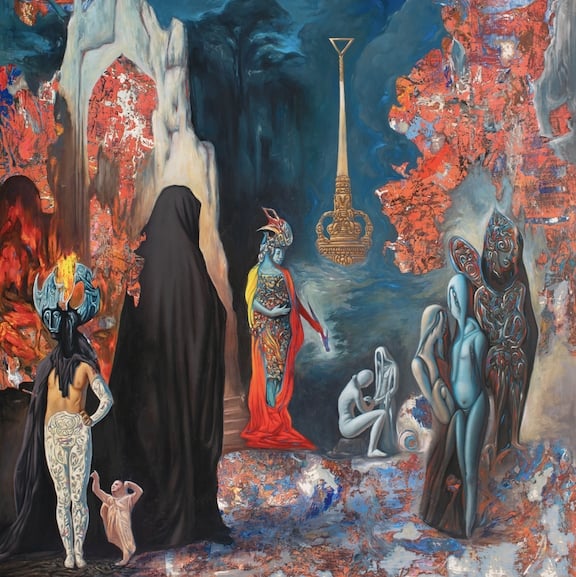
And yes, the cover looks exactly like the kind of thing this record sounds like—clean, cosmic, and a little ominous in that “you’re safe but you’re not in control” way.

Conclusion
“Cycles In The Infinite Dream” doesn’t just “sound psychedelic” or “feel heavy.” It’s more specific than that: it builds enormous rooms out of haze, then drops riffs into them like anchors so you don’t float away completely. It’s urgent, passionate, and designed to be experienced straight through—like a dream sequence with enough muscle to leave fingerprints.
Our verdict: If you like your heaviness wrapped in atmosphere—if you enjoy doom and stoner weight but want it lit by shoegaze glow—this will absolutely eat your week. If you need neat hooks, quick payoffs, or songs that get in and get out like polite guests, you’ll probably call it “too hazy” and go back to something that taps you on the shoulder every 30 seconds.
FAQ
- Is “Cycles In The Infinite Dream” a heavy album or an atmospheric one?
It’s both, and the point is that it refuses to choose—riffs hit hard, but the soundscapes are the real architecture. - Which tracks best show the album’s huge soundscape approach?
“Transient,” “Cloudfall,” and “Aerial Birth” are where the songs visibly expand and start feeling like environments. - Where should I start if I’m new to REZN?
Start at “Rites Of Passage” and just keep going—this album’s sequencing is part of its argument. - Does the album ever slow down too much?
A couple hazier stretches (“Devotion,” parts of the closing run) can feel like they’re daring you to drift—but the payoff is there if you stay with it. - Who’s the album for, in plain terms?
People who want doom/stoner weight without giving up color, texture, and that “I’m floating but I’m still feeling things” sensation.
If this record lodged in your head visually as much as it did sonically, a good album-cover poster is basically the only sensible souvenir. If you feel like grabbing one for your wall, our store’s here: https://www.architeg-prints.com
 | DISCOUNTGET 30% OFF*Use code on your next order:
|
* This post may contain affiliate links, meaning we earn a commission if you make a purchase through these links, at no additional cost to you.