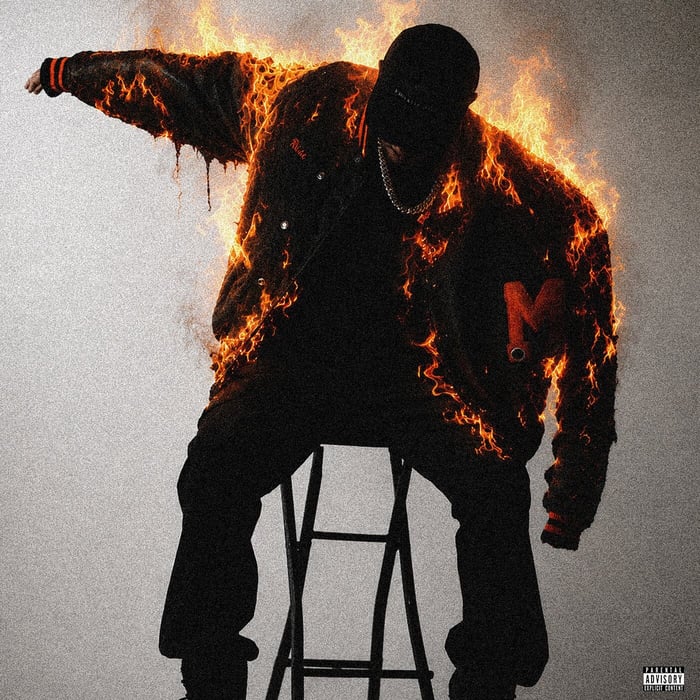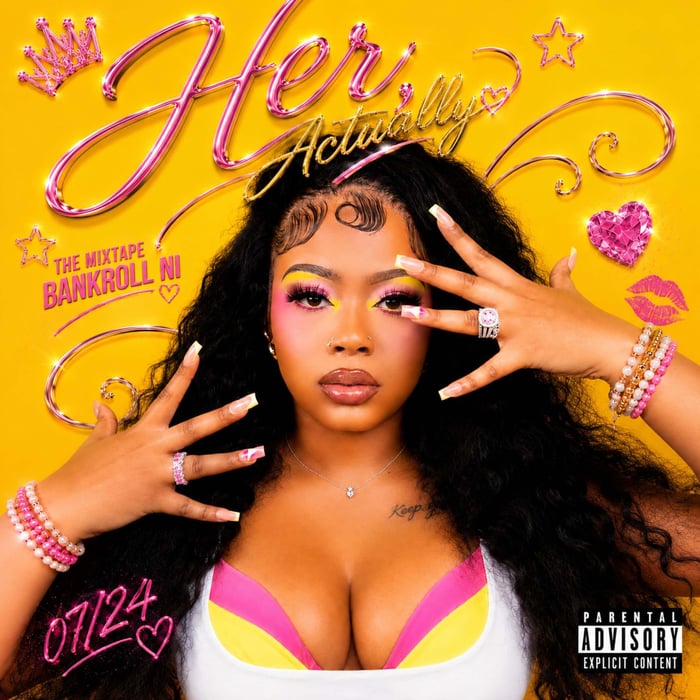
Her, Actually Mixtape Review: Bankroll Ni’s Flexes Bite Harder Than Therapy


 See more Architeg Prints stories on Google.
Her, Actually Mixtape Review: Bankroll Ni’s Flexes Bite Harder Than Therapy
Her, Actually isn’t “confidence rap”—it’s a running tab of debts, bodies, and bruised egos, delivered like jokes you don’t want aimed at you.
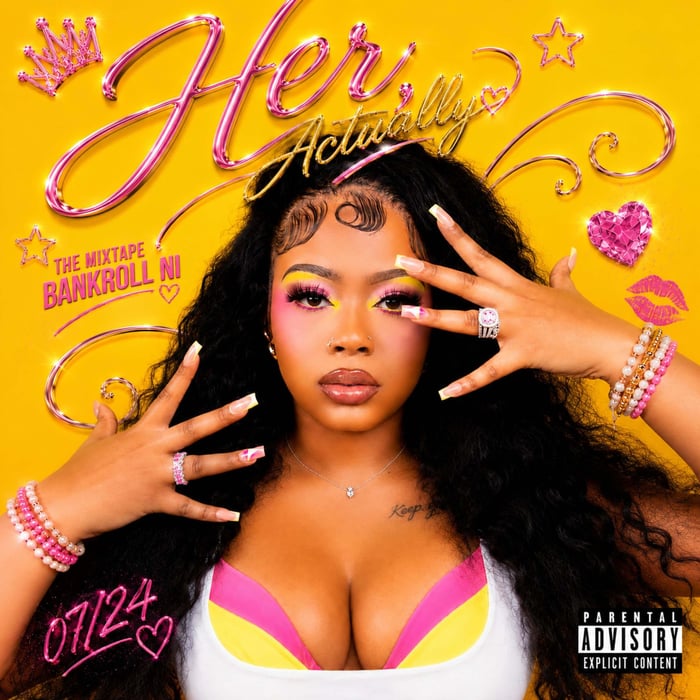
A mixtape that doesn’t ask to be liked
Some albums flirt. Her, Actually walks up, takes your seat, and tells you to move like it’s doing you a favor.
Bankroll Ni has the kind of presence that makes a lot of rappers sound like they’re “performing” confidence while she’s just… talking. Not explaining. Not inviting you in. More like reading out loud from a private list: who crossed her, who paid, who didn’t, and who’s currently replaceable.
And yeah, I can already hear someone saying this is just standard braggadocio. I don’t buy that. This tape isn’t built around brags—it’s built around control. Control of the room, control of the relationship, control of the story, and especially control of the punchline.
The real engine: punchlines as a lifestyle choice
Here’s the thing that separates this mixtape from a million other “talk slick on a hard beat” projects: she writes like she’s allergic to filler. On Her, Actually, punchlines aren’t the seasoning. They’re the meal.
What hit me early is how she stacks specifics until it starts sounding like a receipt printer having a panic attack. On “Tab,” she isn’t just flexing—she’s itemizing. Hair down her back, money wired, Chanel bag, dinner paid for, car fresh off the lot. The verse keeps turning the screw until the hook lands with that final threat that doubles as a summary: she gets her gaps, and she’s knocking tops off. It’s not subtle, but it’s not supposed to be. The point is that the transaction ends when she says it ends.
And then she does the slyest thing: she runs another verse like it’s a new scene in the same movie. Candles. Roses. Bottles. Red lights. She doesn’t just want you to picture the money—she wants you to picture the setup. That’s how you can tell this isn’t empty flexing. She’s directing.
“Do You Need That” and the art of embarrassing someone on purpose
Flowing from that energy, “Do You Need That” doesn’t feel like a new topic so much as a new target. The taunting turns outward—aimed at a woman who can’t stop watching, can’t stop comparing, can’t stop losing. The punches come fast enough that you don’t get a breather between them.
One of the meanest tricks she pulls is acting like the insult is casual—like she almost didn’t bother. Lines about thinking of steak when people bring up beef land because she says them like she’s checking her phone. Then she follows with something like “I’d be mad too if I had to bag you,” and the whole thing plays like a shrug that happens to leave bruises.
If you’re looking for empathy here, you’re lost already. This is a tape where the jokes are designed to make someone shut up forever.
“Poses To” and the flex that includes gratuity
Next step: she starts charging for the experience.
On “Poses To,” the price tag isn’t just high—it’s petty in a specific way, like she’s proud she remembered to include the gratuity. The vibe feels like she’s out of town, dealing with out-of-town talkers, and she’s got time today. There’s even that little turn where she sounds like she’s taking questions, like, go ahead, ask—if you think you can afford the answer.
This is one of those moments where Her, Actually shows its real obsession: not money, but dominance through detail. The flex works because she keeps the camera close.
Misdirection is her favorite sport
Now it gets sneakier.
Bankroll Ni has a gift for misdirection: once the jokes start flowing, they don’t stop, and the topic can switch without warning because she’s more committed to momentum than “telling a story the normal way.”
“Bounty” is the clearest example. She flips into a whole bit where she’s not Macaulay Culkin, not home alone—but still moving like Kevin, still operating with two phones. It’s a wild reference because it drags a Christmas movie into the logistics of modern cheating like that’s a reasonable thing to do. And somehow it works. The point isn’t realism; it’s that she can bend anything into a weapon.
I thought that kind of left-field writing might get corny fast. On second listen, it felt more like she’s showing off how quickly she can pivot without losing the thread. That’s a different skill than just being “funny.”
“Kai Cenat” and the hustle fantasy that almost becomes real
“Kai Cenat” circles back to that two-phone habit, but the mood shifts toward motion—show to show, like she’s running a circuit. There’s a line of thinking here that’s basically: moving so much starts to feel like baking—getting all the dough. Then she’s dropping so much money at the mall she can’t even get back through the door.
That’s an exaggerated image, obviously, but it tells you what she values: not just spending, but being unbothered by the consequences of spending. It’s not wealth; it’s immunity.
Do I believe every detail? I’m not totally sure, but I also don’t think belief is the point. She’s selling the sensation of being untouchable, and she’s smart enough to keep it comedic so it doesn’t sound like she’s begging you to be impressed.
“Cocky Asf” and the one-liner that wins by not trying
“Cocky Asf” is where her ego turns into a blueprint: buy a Lamborghini, name it Mary, marry her man in order. It’s the kind of plan that sounds ridiculous until you realize she’s saying it with the calm of someone scheduling a dentist appointment.
Then there’s the deadpan bar that kind of defines her whole approach: she’s not getting topped unless someone is literally topping her.
It’s crude, sure, but it’s also a perfect Bankroll Ni moment—confidence so blunt it collapses into a joke right in front of you, and she just keeps going. The tape loves that move: building tension, popping it, walking away.
“Firefighter” and the hook that stabs twice
From there, the project starts shaving phrases down until they’re basically slogans.
On “Firefighter,” even the fire department bit feels worn into a new shape—burnt tire, fire hose, cookie thrown, imagery tossed in like she’s scattering props. The chorus gets sharper too: instead of one clean phrase, it’s two quick stabs, one finishing before the other fully lands—“made him come put on this suit,” then ripping him out his clothes. It’s fast, almost impatient.
Here’s an arguable take: this is where her hooks get better by getting less musical. They’re not trying to sing. They’re trying to hit.
Men as a conveyor belt: “I Got Yo Man”
The next idea is blunt: men aren’t love interests here, they’re throughput.
The tape keeps treating men like vendors in a stadium corridor—one after another, nobody there long enough to matter. On “I Got Yo Man,” she takes somebody’s guy, apologizes like it’s customer service, and sends him away anyway. She mentions he’d already been warned to keep it in his pants because his reputation was bad… and then she robs him by checking his pockets before she gets rid of him.
That last touch matters. The theft isn’t about need; it’s about humiliation. It says: you weren’t even worth the respect of leaving untouched.
“Addressing Me” and the anti-therapy policy
The mixtape also has a specific hatred for emotional negotiation.
On “Addressing Me,” the guy is aggressive with the texting, trying to talk things out right now, and she dismisses him with a line that feels like a door shutting: he wants to talk, but this isn’t therapy. That’s basically the relationship philosophy of the whole tape: don’t over-invest, don’t explain, don’t indulge the idea that someone deserves access to your feelings.
I kept waiting for a crack in that armor—some hint she’d let the mask slip. It doesn’t really happen. If anything, the tape suggests that vulnerability is just another way to get played.
“What We On” and the moment that feels almost accidental
“What We On” keeps the desire fast and minimal—Drum, Margielas, threat in the air. There’s even a sneaky detail about a girl she was with who wasn’t supposed to be in the first verse, which gives the song a messy, lived-in edge.
This is one of the moments that made me hesitate, just for a second, about what the tape is actually doing. Is it all control, or is it also chaos that she’s learned to surf? I can’t fully tell. But that uncertainty works in the song’s favor—it makes the bravado feel less rehearsed.
“dATE” flips the script mid-song
Then “dATE” pulls a neat trick: she hands the chorus to a man who just wants to take her out. For a moment it sounds like we’re about to get a more traditional dynamic—him chasing, her deciding.
But by the second verse she’s the one pulling up in the SRT, wining and dining women on her own dime, telling them not to waste time. The switch isn’t subtle. It’s the point. She’s saying: even when I let you speak, I’m still writing the scene.
Arguably, that’s the whole tape in one move.
“Chosen One” and “Inside”: the contradictions are the personality
The run continues with “Chosen One,” where she can’t decide between two girls and solves it by smashing them into the same outcome—taking both home. It’s cartoonish, but it also fits the mixtape’s core belief: decisions are only hard if you accept limits.
On “Inside,” she calls herself a girls’ girl and immediately offers to eat women in the next line. That contradiction isn’t a mistake. It’s her telling you what kind of loyalty she means: not tenderness—alignment. Respect. Stop talking slick about her, and maybe you can stay in her orbit.
And she’s clearly annoyed that people talk about her constantly and never respectfully. The tape doesn’t ask for admiration. It demands basic decorum—or else.
“Walk” is where the writing slips a little
Not every moment is bulletproof.
“Walk” is where the writing dips—mostly because the hook takes up so much of the track that the verses start feeling like they’re just there to justify it. She even scolds other rappers for stealing her lyrics and suggests she should patent the peel, which is funny, but it lands more like a throwaway than a knockout.
If the tape has a weakness, it’s that sometimes the hook-first structure makes the song feel smaller than her personality. She’s best when the verses are doing the heavy lifting, not orbiting a repetitive center.
“Again”: a dead man, a bad party, and no choir
“Again” goes cold: a man is dead, and the party wasn’t even good. She puts those two facts next to each other and just leaves them there—no dramatic choir, no moral lesson, just a blunt pairing that makes the emptiness feel louder.
Then it swings back to the usual ecosystem: running up a bag, women mad, rivals’ men reduced to props. There’s even that image of someone hitting four flat like they saw a ghost—she paints humiliation with speed.
The most revealing moment here is when she brings up out-earning her father. It’s the rare ask on the tape that doesn’t require stepping on someone else’s neck. And because it’s rare, it sticks out. It’s the closest thing to a human landmark in a project built like a fortress.
Then it’s back to money—handled with intimacy so direct it’s basically flirtation. And it’s telling that no man in these songs gets treated with that kind of naming or closeness. Money is the only partner that stays.
Conclusion: Her, Actually doesn’t seduce—it audits
Her, Actually plays like a ledger with jokes written in the margins: every song is a new entry, every hook a stamp, every verse a reminder that she’s not negotiating her position in the room. It’s funny, harsh, occasionally messy, and way more calculated than it first sounds.
Our verdict: People who like rap that treats romance like a contact sport will love Her, Actually—especially if you enjoy punchlines delivered with a straight face. If you need warmth, growth arcs, or a single sincere apology that isn’t immediately revoked… you’re going to feel like you showed up to therapy and got handed a receipt.
FAQ
- What is the core vibe of Her, Actually?
It feels like controlled chaos: fast punchlines, transactional relationships, and a constant need to win the moment. - Which tracks stand out most on repeat listens?
“Bounty,” “Firefighter,” and “Do You Need That” keep revealing new little jabs and pivots the more you sit with them. - Does the mixtape ever slow down emotionally?
Not really. Even the more personal flashes (like out-earning her father) show up briefly, then the armor snaps back on. - Is Bankroll Ni more focused on hooks or verses here?
Verses are the main event—except on “Walk,” where the hook dominates and the writing feels less sharp. - Who is this mixtape not for?
Anyone who wants romantic sincerity or tidy storytelling. This is not that kind of project, and it doesn’t pretend to be.
If this tape’s energy made you want something physical to hang onto, an album-cover poster is the right kind of trophy. You can pick one up at our store: https://www.architeg-prints.com
 | DISCOUNTGET 30% OFF*Use code on your next order:
|
* This post may contain affiliate links, meaning we earn a commission if you make a purchase through these links, at no additional cost to you.