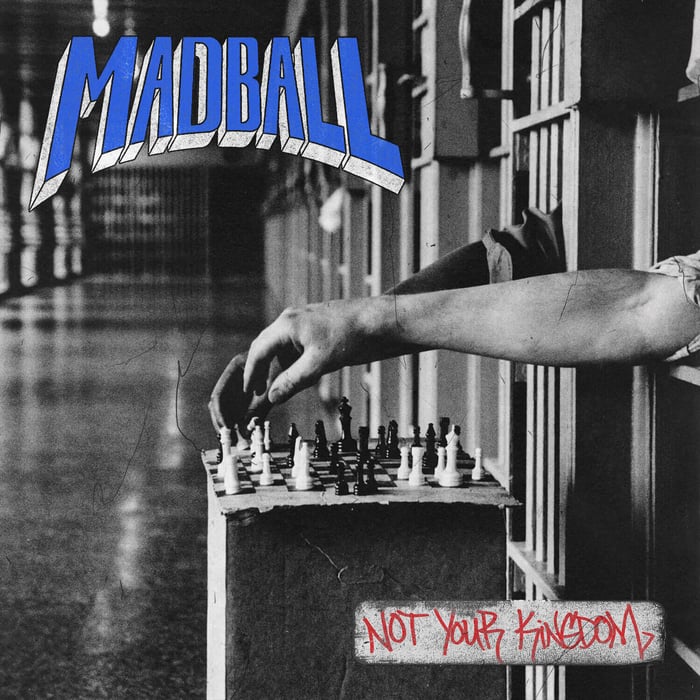
Not Your Kingdom Review: Madball’s “New” Album That Acts Like a Riot


 See more Architeg Prints stories on Google.
Not Your Kingdom Review: Madball’s “New” Album That Acts Like a Riot
Madball’s Not Your Kingdom doesn’t ask politely—this review explains why it sounds like they’re kicking down the door on purpose.
A Door-Kick of an Album, Not a Grand Entrance
Hardcore’s been oozing into places it used to be politely refused entry—bigger stages, wider playlists, casual listeners acting like they “always loved this.” But when I put on Not Your Kingdom, it doesn’t feel like Madball chasing that shift. It feels like them reminding everyone who built the damn room in the first place.
This is their tenth album, and it lands with the confidence of a band that doesn’t need a reintroduction. If anything, the record’s whole attitude is: you can keep your trends; we’ve got our own rules.
What surprised me early on is that it’s not just legacy maintenance. It honors the familiar Madball stomp, sure, but it also nudges into a couple side streets they don’t usually bother walking down.
The Opening Move: “Tethered” Hits Like It’s Already Mid-Set
The first real statement is that there’s no ceremonial build-up. No polite intro. The album starts moving and assumes you’ll catch up.
“Tethered” comes out swinging with a blend that feels like hardcore punk built on a hip-hop sense of bounce—less “look how versatile we are” and more “this groove is a weapon now.” The riffs pulse instead of just grind, and the drums don’t merely keep time—they inflate the track until it feels huge. Freddy Cricien’s delivery has that tight rhythmic flow that makes the words hit harder, even when he’s practically barking them. It’s the kind of opener that leaves you feeling like you got shoved into the pit before you even found the stage.
Then “Flammable” shows up and refuses to overstay its welcome. It’s basically a one-minute bruise: harsh guitars, blast beats, and that sweaty-venue hallucination where you can almost feel the air getting thicker. If “Tethered” is a bounce, “Flammable” is a fist.
A Quick Breather That’s Really Just a Setup
After that initial hit, “Rebelude” slides in as a short interlude—calmer, noodlier, almost like the band pacing themselves. Almost.
Because it doesn’t resolve into calm. It mutates.
“Rebel Kids” kicks the door right back open and becomes an early high point. The energy is built for fists in the air, but the point isn’t just “get hype.” The track is basically a demand: find your own lane, think your own thoughts, stop picking the easiest path just because it’s paved. That message can sound corny in lesser hands, but Madball sells it because they don’t sound like motivational speakers—they sound like they mean it.
And honestly, if I’m choosing between a hardcore band, a politician, or an influencer telling me how to live, I’ll take the hardcore band. At least they’re not pretending it’s for my own good.
When the Album Gets Anthemic, It Also Gets Political (On Purpose)
From there, the record keeps firing short, sharp bursts.
“Don’t MisStep” is a swirling storm—fast, noisy, and direct. It feeds you energy while warning you not to lose your way, and it doesn’t hang around long enough to soften the impact.
Then “What Say You” swings into one of the album’s most anthemic moments. The drive here is the point: it feels engineered to get a room chanting back at the band. Lyrically, it takes aim at billionaires and the general vibe of powerful people acting like the world is their personal property—there’s even a pointed nod that sure seems aimed at a certain president-type figure. And the title phrase, “not your kingdom,” lands like a slogan you could spray-paint on a wall without feeling silly.
The argument the song makes is simple and kind of timeless: the power of many beats the power of a few—no matter how loudly the few insist they’re in charge. The track doesn’t politely debate it. It tries to start a rebellion right there in your headphones.
I will say this, though: I kept waiting for one extra melodic twist to push the chorus from “strong” to “unstoppable.” It’s already one of the album’s big moments, but it comes this close to being the track that haunts you for days.
“Stab Wounds” and the Metal Injection That Still Sounds Like Madball
“Stab Wounds” brings more metal into the bloodstream—heavier tone, sharper edges—yet it never stops being Madball. The track spins up a circle-pit maelstrom that feels weirdly beautiful in the way only controlled chaos can be. It’s not a style pivot. It’s the band widening the attack.
Then “Sunrise” shows up as a little palate cleanser. It sounds like someone skipping through radio stations—flickering fragments—before the album slams back into gear.
That transition matters, because it sets up “Life’s A Mural,” which is another full-body banger. This one aims at hypocrisy: people judging other people’s actions while their own morals are, frankly, a mess. The “mural” idea sticks because it’s not abstract—it implies permanence. Like: your choices don’t vanish; they get painted somewhere you can’t scrub clean, and they might come back to embarrass you later.
It’s not subtle. It doesn’t need to be.
Riffs First: “Family First” Into “Clockwork”
“Family First” is riff-centric in the most practical way: it’s built to move bodies. You can jump to it, bang your head, or switch your footwork as the track slips into that wonderful madness—those sweet riffs that practically force a stankface whether you want one or not.
And it pairs naturally with “Clockwork,” which feels like a continuation of that physical momentum. The sequencing here is smart: the album doesn’t scatter its best riffs randomly; it groups them like it’s trying to keep a live room boiling.
At first, I thought this stretch might blur together—same tempo, same bruising intent. But on second listen, the differences pop: where one track bounces, the next track locks in and grinds, like the band tightening bolts mid-fight.
The Late-Album Sprint: Short Tracks, No Mercy
“IWI” is tiny—around thirty seconds—but it still hits. It’s not “filler short.” It’s “weaponized short.” Like a quick jab that sets up the bigger punch.
That bigger punch is “The Ride,” the penultimate track and, to me, another album highlight. It drives hard and feels like it’s dragging you toward the finish line whether you’re ready or not.
Then the album closes with “Chase a Dream,” and this is where Madball’s stamina becomes the flex. Fourteen tracks in, and they’re still not easing up. The heaviness stays. The madness stays. The whole thing keeps that battleground feeling—like the music isn’t being played at you, it’s being used on you.
The closer runs through wild, frenetic verses, then slows into a brooding bass line that changes the lighting in the room. For a second, it feels like the album might end in reflection. Then it surges into one last burst of noise, just to make sure you don’t get too comfortable with your thoughts. And then it ends—satisfyingly, cleanly, with no victory lap.
The Eight-Year Gap Doesn’t Show Up in the Sound
There was an eight-year wait for new music, and here’s the weird part: it doesn’t sound like a comeback record. It sounds like Madball never left, like the calendar simply forgot to notify them.
Not Your Kingdom makes a case for why the band has the legacy it has. Not in a nostalgic way—more like a living demonstration of how to lay a path for younger bands without turning into a museum exhibit. It lets you rage, sure, but it also lets you feel something sharper than adrenaline. Catharsis is the obvious word, but the real trick is that it’s also fun—fourteen tracks of controlled havoc that doesn’t require you to “get it” intellectually.
One thing I’m not totally sure about: the album flirts with slightly different textures (that hip-hop bounce, the metal edge), but it never fully commits to exploring them. Maybe that restraint is the point—Madball keeping the recipe intact while swapping a spice or two. Or maybe they just didn’t feel like rewriting the whole cookbook. Either way, the core remains unmistakable.
If I had to put a number on it, I get why someone would land around a 9/10 here. It’s not flawless, but it’s effective in the way hardcore is supposed to be: it moves you, bruises you, and sends you back out into the world a little more awake.
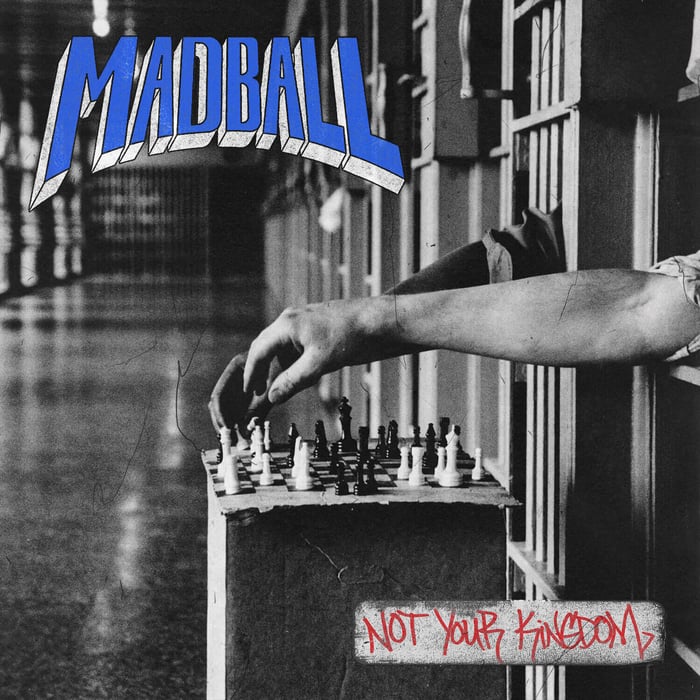
Release Note (Because You’ll Ask Anyway)
Not Your Kingdom is out now via Nuclear Blast Records.
Conclusion
Not Your Kingdom doesn’t try to modernize Madball—it tries to remind modern hardcore what backbone sounds like. It’s a record that hits fast, thinks just enough, and leaves you wanting to break something you own so you can rebuild it correctly.
Our verdict: People who like hardcore that actually moves—pit brains, riff addicts, and anyone tired of rich-guy gospel—will love this. If you need softness, nuance-as-a-hobby, or choruses that hug you, you’re going to bounce off it and call it “aggressive” like that’s a critique.
FAQ
- Is Not Your Kingdom a “back to basics” Madball album?
Not exactly. It’s classic Madball drive, but with flashes of hip-hop bounce and a more metallic bite in spots. - What’s the best entry-point track if I’ve never heard Madball?
“Rebel Kids” is the cleanest mission statement—big energy, direct message, built to be shouted back. - Does the album slow down much?
Only in brief pivots like “Sunrise” and the brooding bass moment near the end—then it snaps back into impact mode. - What’s the main theme Madball is pushing here?
Personal agency and collective power: don’t follow the easy road, don’t worship powerful people, and don’t let anyone treat the world like “not your kingdom” doesn’t apply. - Is it worth hearing front-to-back or just grabbing highlights?
Front-to-back. The short tracks and sequencing are part of the pressure system—it’s designed to feel like a set, not a playlist.
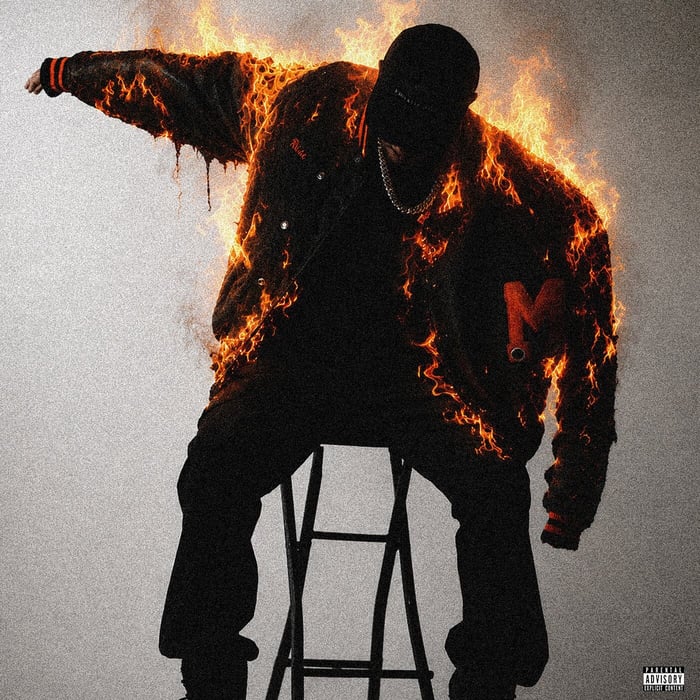
If this record put a specific image in your head—like that album cover staring at you while the riffs swing—grab a favorite album-cover poster from our shop: https://www.architeg-prints.com. It fits the whole “hang your convictions on the wall” thing without making it weird.
 | DISCOUNTGET 30% OFF*Use code on your next order:
|
* This post may contain affiliate links, meaning we earn a commission if you make a purchase through these links, at no additional cost to you.