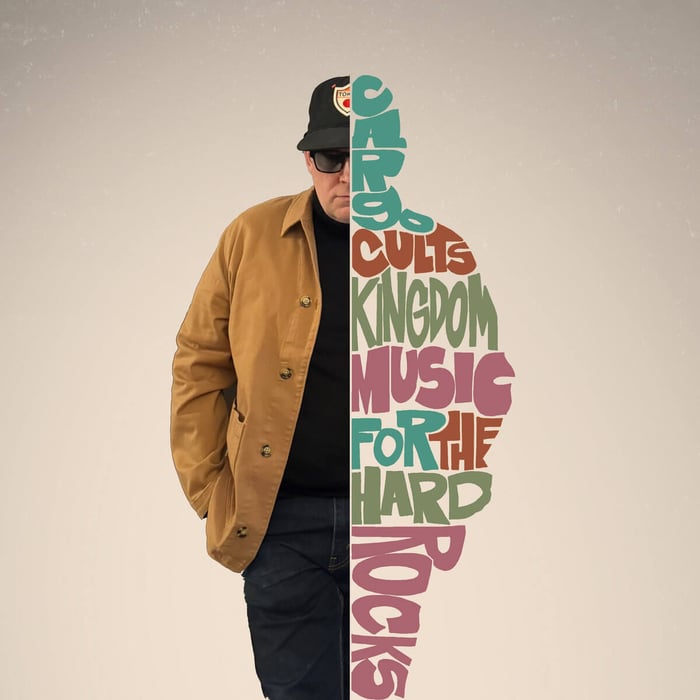
Kingdom Music: Cargo Cults’ Hard Rocks Album Review (Yes, It’s That Heavy)


 See more Architeg Prints stories on Google.
Kingdom Music: Cargo Cults’ Hard Rocks Album Review (Yes, It’s That Heavy)
Kingdom Music for the Hard Rocks by Cargo Cults delivers grown-man rap with raw honesty—grief, old jokes, and looped beats that challenge you to keep pace.
A record that doesn’t “open”—it just starts telling on itself
Some albums ease you in. Kingdom Music for the Hard Rocks doesn’t. It drops you straight into a life where the past isn’t “backstory,” it’s the air in the room.
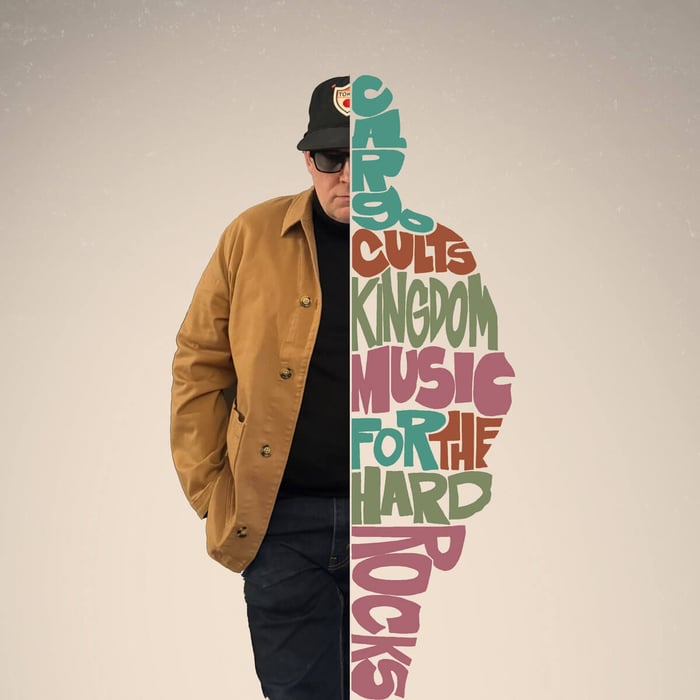
How Cargo Cults actually works: long-distance rap as a pressure system
Here’s what I hear happening behind the curtain: this group is built like a relay race where nobody’s in the same city, but they still pass the baton clean. Alaska writes from New York. Zilla Rocca, a producer out of South Philadelphia, shoots the beats over from Philly. And instead of sounding pieced together, it sounds… domestic. Like two people keeping a routine because the routine is the point.
I can’t pretend I didn’t squint at the premise at first—another rap project built from “chemistry” and “maturity,” sure, okay. But on second listen, the distance becomes the aesthetic. This album wants that slight emotional lag you get when people communicate in packets: memories arriving late, grief arriving on time, jokes arriving right when they shouldn’t.
The origin story matters only because it explains the obsession: Zilla Rocca clocked Alaska years before the group existed, back when he was shelving new arrivals at a record store. Later, they finally crossed paths on the same bill in New York City, and you can hear what Zilla was chasing: a grown rapper who isn’t pretending he’s still 22. The whole thing feels like it was designed around one specific type of voice—someone who can say “dead classmates” and “arcade quarters” in the same breath without changing tone.
That’s not a compliment to technique. That’s a confession of worldview.
“Amberlands” isn’t nostalgia—it’s a warning label
The track that pins the record to the wall is “Amberlands.” Alaska describes the neighborhood like he’s diagramming a cage: a poor pocket shaped by white flight, blue-collar strain, single mothers, and a hard limit on softness. He even gives it a body count—not as shock value, but as context for why nobody in the story gets to be fragile for long.
You get specifics that don’t feel “written,” they feel remembered: twenty-six buildings total; a local kid stealing the tires off his bicycle; the retaliation; the divorced dads cruising around in Trans Ams like that means something; a motel absorbing transients like weather; a kid with a panther tattoo; some guy named Benny who seems connected to everything because of course he is.
Then there’s the clubhouse detail—nudie magazines wrapped in plastic—which is the kind of gross little artifact that makes the whole scene real. It’s not there to be edgy. It’s there because childhood is often just adults’ trash arranged into a museum.
And Alaska doesn’t romanticize it. He basically says: you didn’t have to be in constant violence, but you always had to be ready to talk it.
“This wasn’t the environment for softer kids… It wasn’t always violent, but you always had to talk the shit.” — Alaska
He lands the verse with deaths that aren’t treated like plot twists: Darren murdered in sixth grade; Travis taken by crack not long after. It’s blunt because the memory is blunt. The song isn’t asking you to mourn; it’s explaining why the rest of the album can’t pretend death is abstract.
Arguable claim: “Amberlands” is the real thesis track—everything else is just footnotes with better jokes.
“Same Song Same Rhyme”: the phone call that only means one thing
If “Amberlands” is the childhood blueprint, “Same Song Same Rhyme” is adulthood realizing the blueprint never stopped printing. The grief here isn’t street-mythology grief. It’s the quieter, meaner thing: friends dying of natural causes, the kind of death that shows up as a sentence in a conversation and then everybody goes quiet.
You can hear the call-and-response of bad news—What happened? / He just collapsed / Oh man, that’s awful—like the words are preloaded. Then Alaska drops a line that’s funny in the way a bruise is funny:
They survived the rowdy years—drugs, booze, violence—only to get taken out by DNA and bad diets. It’s a cheap laugh that turns into a real one because it’s true. Or at least it feels true when you’re listening.
Then the album pulls a move I didn’t expect: Alaska’s daughter says she wants to study sciences, and if she studies hard enough maybe she’ll find a cure for death—so he can see his friends forever and nobody will cry anymore. The moment is proud and brutal at the same time. It’s a kid offering magic as a love language. It made me pause the track the first time because I wasn’t sure if I wanted the album to go there. But it does, and it doesn’t flinch.
Arguable claim: That daughter moment is more devastating than any explicit “I miss my friends” line could ever be.
“Half Life” throws a party for the dead—and doesn’t make it corny
“Half Life” is the album’s strangest flex: it imagines the dead friends coming back for one night, not as zombies, not as ghosts—just whole. That choice matters. A ghost would be poetic. A zombie would be a joke. Bringing them back normal turns it into a fantasy that actually hurts.
And the party isn’t some cinematic setup. It’s household reality: bogeys on the table, pierogies, hoagies, cheap booze, and whatever substances people need if they’re jonesing. It’s basically saying: if the dead came back, we wouldn’t greet them with violins—we’d feed them like always.
Some friends hang in the shadows, dozing, because parties always made them nervous. One friend cleaned all week just to “come back” and died of an overdose anyway—like the universe can’t help itself. Others don’t show because they’d rather grieve from afar than walk into a room and feel awkward.
The only thing they ask Alaska is to bring flowers—while the house is loud with laughter and low-grade intoxication. That’s the whole trick of the song: it refuses to separate joy and grief into neat rooms. They’re in the same kitchen.
Arguable claim: “Half Life” isn’t sentimental—it’s logistical, and that’s why it hits.
Zilla Rocca’s production: the beats aren’t big, they’re stubborn
To make this album work, Zilla Rocca doesn’t try to outshine the writing. He does something riskier: he builds short looped phrases and nails them into place so the rapper has to do the heavy lifting. It’s almost confrontational. Like: here’s the loop; now live in it.
On “Nostalgia Tripping,” you get one looped phrase under a stack of voices and snapshots: roller-skating Zilla Rocca in a church basement; cold Coors Lights on warm nights; Jesse the Tree in the car downloading Limewire files; older friends doing whippets in a bedroom while Phish plays. The beat isn’t there to “set a mood.” It’s there like a repeating thought you can’t get rid of.
“Castro’s Home” moves fast—almost too fast—like it doesn’t want to sit with what it’s saying. Neighbors curse doors marked by eviction notices. A quarter JanSport becomes a fashion item instead of a homework tool. Curly Castro is on a rooftop while New York fireflies hum lullabies. That’s not a normal image, and I’m not even totally sure what it’s “supposed” to mean—but it feels right, which is a different kind of clarity.
Mild criticism, though: sometimes these loops are so committed to being minimal that they flirt with monotony. The album gets away with it because the writing stays vivid, but there were moments I caught myself wanting one extra musical turn—just a hinge, a crack in the wall.
Arguable claim: The production is intentionally “small” because the album doesn’t trust big beats not to lie.
“Old Fogies”: guest verses that sound like grown people, not guest slots
“Old Fogies” is where the album stops being a two-man machine and becomes a little neighborhood of its own.
Breeze Brewin comes in showing “new tricks for old dogs,” and the verse actually earns that phrase. He admits sometimes he tries to feel and other times he’s numb. He flashes back to being a shorty who didn’t know the law—then pivots to adulthood, hard work outsourced, knowledge gained the ugly way: by seeing things. The farming image—planting seeds, wanting peace—lands like he’s trying to convince himself it’s still possible.
I’m going to say it: that Breeze Brewin verse is one of the album’s best-written moments, not because it’s flashy, but because it feels like someone choosing restraint instead of running out the clock.
Alaska’s part leans into “Miller Time” and a past where he was aggressive. Now it’s about getting his child where she wants to go. That’s a grown kind of ambition—less ego, more logistics.
Then Reef the Lost Cauze pops in calling his track “Yankee Stadium” like it’s masterpiece theater, calls himself a “golden geezer,” and asks for basic luxuries: sleeping, living good. He takes a swing at other rappers too, comparing them to termites in cheap wood. It’s a mean image, but it fits the album’s theme: a lot of things look solid until you tap them.
And Dr. Jays slips in a time-marker: a store you could shop at before shops started selling Rocawear. That’s not name-dropping; that’s measuring time by what the malls used to carry.
Arguable claim: These features don’t “add variety”—they widen the album’s idea of aging until it feels communal.
“Buy the Ticket Take the Ride”: the cliché pile-up that knows it’s a cliché
This track is basically Alaska walking into a room full of sayings and turning the lights on. The advice isn’t original, and the song knows it. He drops a line that practically winks at the listener:
“Add up the adages, calculate the clichés / Never trust people who say words from people these days.”
Then he builds a verse that’s almost entirely other people’s sayings. Young kids have small problems; old kids have big problems. His mother told him to put one thing in the win column. Gifts are obligations. Conversations lead to problems. Everything spirals. The most direct lines defeat us.
Nothing he says is wrong. But none of it is his.
That’s the point, I think: when you get older, you inherit a whole library of “truths,” and half of them are just people trying to sound wise because they’re scared. The song ends telling everyone to brace for a bumpy ride—like wisdom is a seatbelt you didn’t ask for.
Arguable claim: The track is purposely unoriginal to show how adulthood can feel like quoting your way through the day.
“Lightweight” and “Too Damn Old to MC”: the bathroom-scroll confessional
On “Lightweight,” Alaska’s companion isn’t a crew—it’s bourbon and a BBC series. All the punchlines come from the same house he lives in, which is a quiet flex: no exoticism, no “studio magic,” just life.
He calls himself a satirist like Mark Twain, rides the R train, drinks Old Gold, remembers robbing a 40-ounce of Private Stock. Then he admits David Foster Wallace turned him off reading, and now he scrolls Twitter while sitting on the toilet.
That’s not a punchline. That’s a portrait of modern attention span with the dignity removed. And it works because he doesn’t pretend he’s above it.
“Too Damn Old to MC” is colder. Twenty years ago was wild times; twenty years from now might be dialysis. Bourbon replaces the Rumple Minze of childhood—same habit, different label. He measures the journey both ways with the same ruler: “check out my melody” to “check out my elegy.” That’s a brutal symmetry.
He even throws in the kind of legal-sounding disclaimer—“The thoughts and opinions that’s expressed here are all mine”—like he’s testifying at his own trial. Then the box-cutter scar shows up in the same verse, earned while trying to defend someone from getting jumped. That detail matters: this isn’t cosplay toughness. It’s the residue of trying to be decent in a bad moment.
Arguable claim: These songs aren’t about being “old”—they’re about realizing your vices aged with you and got better manners.
“Skate Like a Limo”: breakup morning as a slow-motion spreadsheet
The album closes a loop with J Scienide on “Skate Like a Limo.” It’s the morning after a breakup, and the song understands that heartbreak isn’t poetic at 8:30 a.m.—it’s administrative.
Waking up is slow and hard, but today there’s an excuse to sleep longer: recovery. At 8:30, he’s checking his phone for signs of reconciliation. The TV is still on from last night. He puts on cartoons, pours cereal, and then—perfect detail—he sees Ice-T staring out from the Cheerios box. He looks at bills and calculates what he owes.
Cereal. Unpaid bills. Cartoon rerun. Ice-T judging you from cardboard. 8:30 in the morning.
Then he goes to the studio and makes a rap record anyway. That’s the whole album in miniature: life doesn’t pause so you can process it, so you turn it into a verse before it turns you into silence.
Arguable claim: “Skate Like a Limo” is the most adult track here because it refuses to dramatize sadness—it just shows you the kitchen counter.
Where I land: favorites, and what “great” really means here
My favorite run is still:
- “Amberlands”
- “Same Song Same Rhyme”
- “Half Life”
And yeah, I’d call the album great—not in a trophy sense, more like in a “this actually holds together” sense. The mild knock is the production’s stubborn minimalism occasionally asking too much patience. But the writing keeps dragging you back by the collar, so the record earns its own rules.
At first I thought this was going to be a straight “grown rap” victory lap. It’s not. It’s a grief record wearing street clothes, with jokes that sound like coping because they are.
Conclusion
Kingdom Music for the Hard Rocks doesn’t chase youth or trend-chase relevance. It sits in the unglamorous middle: family, memory, dead friends, cheap food, old vices, and the strange responsibility of still being alive to narrate it.
Our verdict: People who like Kingdom Music when it sounds like real life—messy, funny, depressing, domestic—will eat this up. If you want big hooks, shiny beats, or a rapper pretending he’s immortal, you’re going to get bored and start checking your phone like it’s “Lightweight.”
FAQ
- What is the core vibe of Kingdom Music?
It feels like grown friends trading stories over cheap beer—until someone mentions a funeral and the room changes temperature. - Which tracks hit the hardest emotionally?
“Same Song Same Rhyme” and “Half Life” go straight for the soft parts without dressing it up. - Is the production flashy or minimal?
Minimal on purpose—short loops that force the lyrics to carry the weight. - Does the album lean more nostalgic or present-tense?
Both, but the nostalgia isn’t cozy; it’s used to explain why the present feels the way it does. - Where should I start if I’m new to Cargo Cults?
Start with “Amberlands,” then “Half Life,” then circle back—those tracks teach you how the album wants to be heard.
If this album’s mood stuck to you, it probably means the cover would look good on your wall too. You can shop album cover posters at our store here: https://www.architeg-prints.com
 | DISCOUNTGET 30% OFF*Use code on your next order:
|
* This post may contain affiliate links, meaning we earn a commission if you make a purchase through these links, at no additional cost to you.