Dry Clean Only Album Review: NYC Rap That Treats Pride Like a Receipt


 See more Architeg Prints stories on Google.
Dry Clean Only Album Review: NYC Rap That Treats Pride Like a Receipt
Dry Clean Only turns luxury talk into a survival manual—chemicals, Scripture, winter paranoia, and jokes that don’t soften the dread.
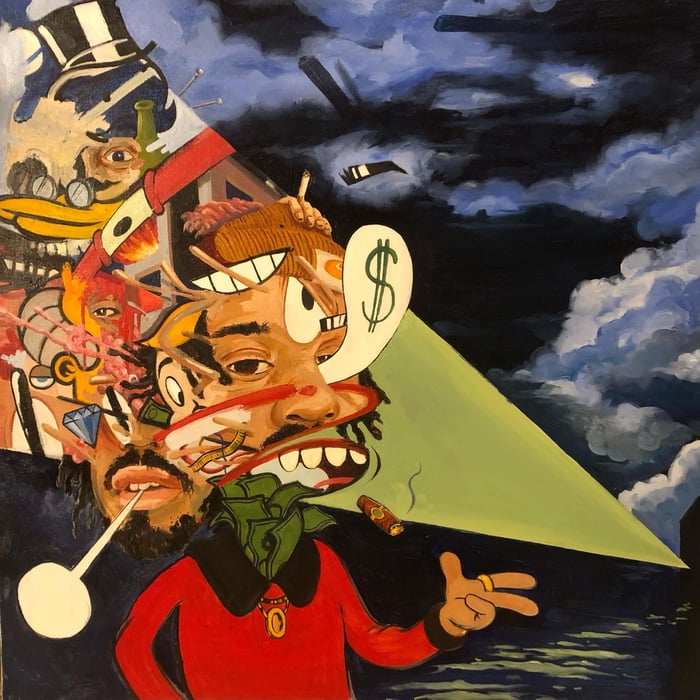
A record that doesn’t “let you in”—it lets you bounce off it
Some albums invite you to relate. Dry Clean Only pretty much dares you to keep up. It’s dense in that very New York way: not scenic, not spacious, just packed—like walking into a corner store where every square inch is trying to sell you something and judge you at the same time.
The core trick here is language. S!LENCE raps like he’s speaking a private dialect with missing pages, and tenten backs him with beats that feel assembled from samples with surgical intent. I’m not saying it’s “cryptic” as an aesthetic flourish. It’s more like: this is how the guy actually thinks, and if you don’t catch it, that’s your problem. A reasonable listener could argue it’s needlessly closed-off, but to me that’s the point—it’s the sound of someone refusing to translate themselves.
That dry-cleaning intro isn’t trivia—it’s the thesis
The album opens with a dry-cleaning clerk explaining (in the bored, been-here-forever tone) that dry cleaning isn’t dry—your clothes get soaked in chemicals, not water, and you could even call it “organic.” It’s funny in a plain way, but it’s also the mission statement: everything on this record gets processed like fabric. Money, pride, faith, winter misery—same cycle, same harsh solvent.
From there, S!LENCE starts stacking garments and flex objects like they’re evidence tags: Issey Miyake trainers, ACG gear, Grand Seiko watches, a vintage bubble jacket. It’s materialistic talk, sure—but it doesn’t land like celebration. It lands like inventory taken under stress. Even the moment with Mr. T—still wearing dry-cleaning tags attached to the back of his outfit—plays like a joke that refuses to relax. The tags are still on because nothing is ever really “done.” Maintenance is the lifestyle.
If you think this is just fashion-rap with extra steps, I get it. But the repeated return to cleaning, tagging, and upkeep turns the luxury into something closer to compulsion than pleasure.
“Meanwhile...” and the album’s favorite move: whiplash as honesty
The first time I heard “Meanwhile...,” I thought, okay—this is going to be one of those projects where randomness pretends to be depth. Then the song kept going, and I had to adjust. The whiplash isn’t decorative; it’s the actual emotional rhythm.
It starts with a cocktail recipe—ginger beer, bitters, dark rum—like we’re casually hosting. Then it snaps into S!LENCE calling himself the holder of the golden gun, talking a million dollars made selling tachini pans, pivoting into Japanese stunts like he’s giving a seminar, and finally dropping into a bleak pocket where memory splashes across the brain, energy dissipates, dissociation creeps in… and hatred somehow gets “sated.”
And then—almost offensively fast—he climbs out of it by announcing he’s one of God’s favorite humans. No bridge. No soft landing. That’s the album’s signature: jokes aren’t here to lighten the mood; they sharpen it. He keeps a straight face over absurd content, and that straight face makes the dread feel more real, not less.
A listener could argue the lack of interstitial space makes the writing feel emotionally evasive. I think it’s more like panic management: if you pause too long, you might not start moving again.
“ACG Slippers”: comic books as threat assessment
“ACG Slippers” is where S!LENCE makes rivalry sound like a nerdy prophecy. He compares himself to a blue ring octopus and his opponent to a “common crook of Metropolis,” then he’s in Gotham “wearing ostrich,” and suddenly the other guy has “penguin problems.” It’s comic-book logic, but not in a cute way. It’s a power-ranking system where costumes and cities are shorthand for predation.
What surprised me is how well the track sells that logic. It shouldn’t work—on paper it’s ridiculous—but the conviction is so steady you start accepting it like you’re reading a street report written by someone who grew up on villains.
If I’m nitpicking, this is also where the album can feel a little too pleased with its own references. Not enough to sink it, but enough that I caught myself thinking: alright, we get it—you can world-build.
When the title track turns “comic” into cruel
By the time the title track “Dry Clean Only” hits, that earlier comic-book framing curdles. The imagery gets uglier: a fat dummy gets his throat slit while the village kids laugh. It’s one of those moments where the album stops flirting with darkness and just stands in it, hands in pockets, like it’s waiting for your reaction.
This is also where money stops being “just money.” On Dry Clean Only, cash always drags a shadow behind it, usually shaped like Scripture. The record threads in sampled moments from Reverend Ike—the prosperity preacher energy—especially the bit where a woman wants a prayer for someone to repay her $300, and he basically says don’t waste a prayer on crumbs; aim for millions. It’s a philosophy of scale: faith as leverage, prayer as a business plan.
And S!LENCE raps like he buys it. Or at least like he’s testing what happens if you talk that way long enough. Whether he believes it wholeheartedly, I’m honestly not completely sure—that’s one of the album’s smarter tensions. He sounds both seduced by the idea and quietly freaked out by what it turns you into.
“Grand Seiko Divine Time” and “Duck Hunt!”: hope gets monetized
“Grand Seiko Divine Time” does something mean but accurate: it places a declined card right alongside heartbreak, like they belong in the same list of life events. That’s not “relatable,” it’s revealing. The hook digs in with a flex that’s also an accusation:
- “If it wasn’t for me / You’d never put that gold on top of your teeth”
- “If it wasn’t for me / You’d never found out how high you could reach”
It’s the sound of someone claiming they didn’t just inspire you—they financed your self-esteem. You can disagree with the posture, but you can’t miss what he’s implying: value is contagious, and he thinks he’s the carrier.
Then “Duck Hunt!” frames the whole grind as motivational theater—monetizing hope until it squeaks. It builds toward a skit where two guys debate whether “the bag” is automatic, or whether the amount gets cut if more mishaps happen. That’s the album in miniature: even the payoff has fine print.
A reasonable listener might say the skits interrupt the flow. I’d argue the opposite—the skits are the album admitting the quiet part out loud: everybody’s calculating, even when they’re praying.
“The Incalculable Price of Pride”: the album’s real bruise
The title track may be the album’s concept statement, but “The Incalculable Price of Pride” is where the concept bleeds.
S!LENCE treats pride like something you pay for over time, not a moment of arrogance. He imagines himself as a boastful death—lifted by the Most High, a venerable old man, absurdly fly corpse, mourners playing a harpsichord made of pure gold. It’s grand, almost cartoonish. And then he yanks it back to earth with a line that hits like a private confession: he never took a dive or even understood why, even during times he wanted to die.
The song keeps cycling images:
- frostbitten fingers on a trek
- a chase while his face is camouflaged by a full-zip BAPE jacket
- brown water coming out of the tap
- pigs outside
That last stretch—water ruined, cops present—feels like the album’s setting finally speaking plainly. And the line “Can’t believe what pride cost him” lands like a receipt you didn’t know you were keeping.
If you wanted tidy storytelling, you won’t get it here. But if you’ve ever watched someone try to flex their way out of fear, this track nails the sound.
tenten’s beats: careful sabotage of stagnation
tenten handles the production across the whole project, and the best thing he does is refuse to let S!LENCE get comfortable. The beats are sample-built, but they don’t sit in one palette; they shift track to track like he’s intentionally changing the lighting so the same voice feels different.
“Issey Miyake Trainers” is lush without rushing. It’s unhurried in a way that makes the luxury claims heavier—like the song is strolling past you and expecting you to move. S!LENCE adjusts by slowing his delivery and stabbing the pauses between bars so the silence feels like punctuation, not absence.
Then “Go Figure!?” flips that: quicker, lighter, and S!LENCE speeds up with it. His cadence gets springier, and he can pivot inside a verse—tight enough to turn a friend’s downward spiral into a full perspective change without sounding like he’s doing “a concept.” The beat stays unwavering underneath, giving him room to say what he wants without having to wrestle the instrumental.
Hot take: tenten is the reason this album doesn’t collapse under its own density. Without that constant recalibration, S!LENCE’s pacing could’ve turned into one long, impressive blur.
The guests aren’t decoration—they change the room
There are two outsiders, and neither one feels like a label-mandated pop-in.
Imani Nichele shows up on “Baroque N!ggas” and kicks the first verse with zero interest in elegance, despite the title. She keeps the “art” in front—then drops a Scarface-level mood and a line that basically says the world’s moral math is broken: we don’t reap what we sow, and even the sun looks like up is down. It’s not pretty. It’s not meant to be.
Her verse gives S!LENCE a ramp to launch off, and he uses it to stitch crime and home together in these warped snapshots: birds hidden inside a chiffon robe, smoke pushing out of air vents, cardinals convinced the Pope is dead. That’s not random imagery—those are “signs” in a world where nobody trusts the official story.
Then Jesse Rack$on takes over “24 Karat Gold Plate Pain” without really rapping. He talks through the whole track, calls out the beat, jokes it sounds like what white folks think their vegan coffee shops sound like, and then brings it back to lived details: a harsh winter across the New York metro area, and a dry-cleaning bill that somehow dwarfed his rent.
And then he lands the title’s idea cleanly: he took life’s pain and gilded it in pure gold. His closing warning is sharp because it sounds like he’s talking to himself too—people trying to do the same trick end up looking and feeling like trash, and he can see it.
I don’t love every second of the spoken delivery—it flirts with rambling—but the looseness is also the point. It’s the album stepping out of its coded language for a second to make sure you understand the cost.
The late-album directive: make “pretty to you” art, even if nobody else agrees
Near the end, a sampled voice lays out a philosophy that might as well be a commandment: the most important art is what you want to make—pretty to you, even if it isn’t pretty to anyone else. Learn your own heart, grow your viewpoint, let it grow.
That’s basically what S!LENCE has been doing the whole time—building in a skewed vernacular and refusing to sand it down. Earlier, on “ACG Slippers,” he calls his verses “the gospel according to me,” which is either egotistical or honest, depending on how allergic you are to self-mythology.
On “Grand Seiko Divine Time,” he frames himself as the quiet man—more than an aura. Even his longtime executive-producer alias gets flipped into an indictment of output: quiet doesn’t mean inactive, it means unbroadcasted labor.
And then his parents get the last word on the project on “Go Figure!?,” addressing a young S!LENCE like they’re trying to install responsibility directly into his bones: he’s a snot-nosed kid old enough to know the truth, and the whole island depends on him—does that compute?
That ending matters because it punctures the bravado. The album’s pride isn’t just vanity; it’s inheritance. Expectation. Obligation dressed up as swagger so it doesn’t look like fear.
Best moments and the tracks I’d actually replay
Loop value here isn’t about catchy choruses. It’s about scenes that stick to your brain like lint you can’t flick off.
My favorite tracks:
- “Meanwhile...” — because it teaches you the album’s grammar: whiplash, then clarity, then back to whiplash.
- “The Incalculable Price of Pride” — because it stops posing and starts showing the bill.
- “Dry Clean Only” — because it takes the earlier comic logic and proves it can turn genuinely vicious.
I’ll admit: on first pass, I underestimated how much the record is using luxury as a control metaphor. On second listen, the clothing and watches didn’t feel like flexes—they felt like the tagging system of a life that can’t afford to get messy.
The album doesn’t want to be “understood,” it wants to be handled. Like expensive fabric with warnings on the label. The longer you sit with Dry Clean Only, the more it starts sounding like a record about maintenance—of image, of faith, of money, of sanity—until maintenance becomes the cage. It’s not comforting, and it’s not trying to be. It’s somebody keeping their pride sharp because dull pride turns into grief.
FAQ
- Is “Dry Clean Only” more about fashion or something deeper?
It uses fashion like a barcode—scanning identity, control, and need. The clothes are props, but the obsession is the story. - Do the skits add anything or just interrupt the songs?
They add pressure. The album’s whole theme is calculation, and the skits make that math audible. - What’s tenten doing that makes the record work?
Constantly changing the sample feel and tempo so S!LENCE doesn’t flatten into one gear. The beats keep moving the furniture around. - Are the guest appearances essential or optional?
Essential. Imani Nichele shifts the tone toward art-as-threat, and Jesse Rack$on turns the concept into plainspoken damage. - Is this an “easy first listen” album?
Not really. The second listen hits harder because you stop waiting for conventional structure and start hearing the patterns in the chaos.
If the album’s imagery got under your skin, an album-cover poster kind of makes sense—something cold and glossy on the wall while the music stays messy in your head. If you want one, you can browse at https://www.architeg-prints.com.
 | DISCOUNTGET 30% OFF*Use code on your next order:
|
* This post may contain affiliate links, meaning we earn a commission if you make a purchase through these links, at no additional cost to you.