Life Is Fleeting Review: Lync Lone Raps Like Time’s Evicting Him


 See more Architeg Prints stories on Google.
Life Is Fleeting Review: Lync Lone Raps Like Time’s Evicting Him
Life Is Fleeting turns Lync Lone’s hustle into a countdown—Rochester streets, drug clarity, movie quotes, and survival bars that refuse to sit still.

A clock-ticking album that doesn’t politely introduce itself
Some rappers measure their careers in bars. Lync Lone has been measuring his in months, maybe even weeks—project after project, self-recorded, self-released, stamped with his Gonzo! Records imprint like he’s trying to outrun a shadow.
Life Is Fleeting doesn’t feel like “here’s my new album.” It feels like “I don’t have time to explain why I made this, so listen faster.” The whole thing tightens around one pressure point: time running out and the daily question that comes with it—do you freeze up, or do you keep moving? The album’s big move is refusing to take turns between dread and willpower. It stacks them in the same breath until they’re basically inseparable. Arguably, that’s the only honest way to rap about survival: panic in one hand, a plan in the other.
He doesn’t linger—he presents the threat and answers it mid-sentence
This is not an artist who builds suspense. He drops a problem and then steps over it like it’s already handled, even when it clearly isn’t.
On “Season of Ghosts,” he takes the emotional weather report—ice-cold, numb, winter-real—and answers it immediately:
“It’s cold but God know that my spirit won’t be broken.”
That’s the pattern. On “November Rain,” whatever life throws is treated like a pop quiz he already aced. He puts it blunt:
“Life keep givin’ me tests, it’s no pressure though I’ma beat ‘em.”
And “The Big Picture” is the most no-nonsense version of that stance—he drops the admission and the antidote in one bar:
“I’m in a bad state of mind, but I get through it every time, so don’t ask if I’m okay.”
That last line is a whole personality. It’s also a bit of a trap. Because if you never let the fear sit in the room, you don’t really get to claim you beat it—you just claim it never had the right to speak. Some listeners will hear strength. Others will hear someone putting a lid on a pot that’s still boiling.
Weed isn’t rebellion here—it’s rent, paid blunt by blunt
The hook on “Bearer of Bad News” is basically the album’s most resigned shrug:
“As long as the smoke keep twirlin and the blunt keep burnin/I don’t really ever got too much complaints.”
That’s not celebration. That’s a coping system with a receipt.
What’s interesting is how the drugs on this album don’t show up as chaos fuel. They show up as a way to see more clearly—almost annoyingly clearly. The stronger stuff especially.
“Shroomwich” opens with him staring at himself in a puddle like it’s a portal:
“I look inside a puddle and see a portal to be immortal.”
It’s boredom getting bullied by chemistry. Then “Fidelio” pushes the same idea into something colder: an alien-world drift, long silences, eyes-in-the-atmosphere vibes. The trip doesn’t rescue him from his thoughts. It just dunks him deeper into them, like he wants the darkness in higher resolution.
I’ll admit, I wasn’t sure at first whether that was brave or just habit dressed up as insight. On second listen, it lands closer to intent: he isn’t chasing escape, he’s chasing definition—making the inside of his head sharper, even when it’s unpleasant.
“Voodoo” is the album’s rare moment of honest collapse
Here’s where the record stops flexing for a second.
“Voodoo” begins dull in that specific way grief gets dull: years lost holding someone down, feeling them like stone in the chest, stuck on a love-lost fortune-cookie line—
“If it’s meant to be, it’ll be.”
Then a small moment detonates it: standing in a store lobby line by a free sample station, grabbing four pastry-like things from a “take one” display. His ex asks why he has to take them all.
And instead of acting cool, he actually answers like an adult trying not to flinch:
He admits,
“Through years of speculation, I surmised it was an ego problem/I could always see the next high, but couldn’t see the bottom.”
And then he goes for the cleanest confession on the whole album:
“I fucked around and found out how not to treat women.”
That’s the point where his usual posture—problem/solution in one bar—breaks. For once, the strength pauses long enough to let doubt speak. Arguably, it’s the best writing here because he doesn’t immediately patch the hole. He lets it breathe. If the rest of the album is him sprinting, “Voodoo” is him stopping at a red light and realizing he has no idea where he’s actually headed.
Rochester isn’t scenery—it’s a weight that changes street to street
A lot of artists name streets like they’re collecting postcards. Here, the streets feel like they’re naming him.
“Monroe Ave” is built out of walking—moving through real places with shifting meanings:
- “Walking down Woodlawn with nothing to lose”
- “Walking down Pearl Street with something to prove”
Same city, different gravity depending on the hour and the mood. This is where the album feels darkest and tightest, like the walls are leaning in and his verses are the only thing pushing back. On a track named after his hometown block, he admits he “don’t know where home is.” That’s not poetic fog. That’s the actual confusion of living somewhere long enough to both accept it and question it at the exact same time.
Then “Woodlawn St.” comes in short, raw, and community-specific—the kind of grit that doesn’t need cinematic lighting. And still, he plants his feet and says it flat:
“I’m opp, but this on my God, so I’m locked into what I chose.”
It’s a line that basically admits he can stand there or leave; the place won’t hold him either way.
If I’ve got a mild gripe, it’s that the album sometimes leans so hard into this “I’m built for it” stance that it risks flattening the city into a proving ground instead of a living place. But when he drops lines like “don’t know where home is,” it snaps back into something real.
The features don’t derail the mood—they tighten the same knot
Features can do two things on a record like this: bring oxygen, or bring clutter. Here, they mostly stay inside the spell and play off it.
On “Life’s a Trip,” Brother Tom Sos grabs the hook with a local bite:
“They say that life is a trip/But coming from where I’m from, we learned that life is a bitch,”
then spins it into affection anyway:
“We love her because she righteous and thick.”
That’s the album in miniature—complain, then immediately keep it moving.
On “88,” Jay Cinema matches Lync Lone’s contempt for the public-facing version of success—ashing a blunt on expensive fabric like it’s nothing:
“Still before my time to go, I’ll be ashing on Persian rugs.”
Then he rejects the industry outright:
“You won’t find me within the industry/You can catch me in the streets.”
Arguably, that line is less a statement of freedom and more a statement of distrust—like fame is just another way to get owned.
And Elcamino shows up with Buffalo grit that doesn’t feel imported; it locks in with Lync’s Rochester accent instead of competing with it. He stacks the wins against the ugliness:
“They gave me a hut, and I turned it to a fortress,”
then measures timeline and ambition with a name-check comparison to Nicki Minaj and Drake.
Different voices, same obsession: money, mortality, and what you do when both are in the room.
Those movie snippets aren’t trivia—they’re mirrors he holds up to himself
A lot of albums use film dialogue like decorations. Here, it’s placed like punctuation—each clip closing a thought, not distracting from it.
You hear a sliver of Terence Fletcher from Whiplash about how “good job” is “the two most damaging words in the English language” at the end of “November Rain,” which already feels suspicious of comfort. That quote doesn’t just sound cool; it reinforces the album’s allergy to praise, rest, and settling.
Then Eyes Wide Shut shows up where it should: the password to get into the hidden world closes “Fidelio.” That’s not random film-bro behavior. The song is already about secrets—who gets to know, who gets left outside, and how silence becomes a room you live in.
And Moonrise Kingdom ends “Voodoo” with those disembodied voices announcing two kids meeting in a field—an oddly innocent framing to end a song that hurts. It underlines the loss by contrasting it with a simpler kind of yearning.
There are other spoken-word sections that aren’t credited, including:
- a monologue about enjoying keeping options open and refusing to choose
- a final lament about how fast it all went
None of it sounds accidental. Even when the voices aren’t his, they aren’t there for “vibe.” They toss his themes back at him in someone else’s words, like he’s testing whether his own thoughts still hit when they leave his mouth.
Grief shows up, says its piece, and he tries to outrun it
Loss makes it into Life Is Fleeting without ceremony. It’s not dressed up, and it’s not lingered on either.
“Divine Intervention” is the bluntest and most unfortunate shape of it:
“My homie died, should I admire?/Don’t even know how the hell I’m still alive here.”
He even talks to the friend—like a conversation that’s a year removed, still not fully processed, still half-stunned.
And then, almost immediately, he snaps back into the album’s main mechanism—denial-as-momentum—declaring:
“My demise is just a myth.”
It’s jarring. It’s also honest in its own way. Some people grieve by sitting still; he grieves by making himself impossible to catch.
The line that sticks is how he phrases the pain:
“It stings a little, but it hurts a lot.”
That’s a weird sentence, but it’s exactly the kind of contradiction a person says when they’re trying to downplay something that’s clearly huge.
He keeps pushing like someone who’s been writing for years, counting the time he has, using that awareness to go harder instead of softer. He even frames it like a childhood decision—like he chose this path at five years old—and when he says it, there’s still a hint of him trying to convince you it’s true. Or maybe trying to convince himself. I can’t fully tell, and that uncertainty actually makes the album hit more.
Where this album actually lands (and where it doesn’t)
I went in expecting a prolific-rapper flex—quantity, hustle, a bunch of tough talk to justify another drop. I was wrong. The real engine is the anxious discipline underneath it: the feeling that stopping means sinking.
What works best is when the album lets the armor crack without immediately sealing it back up. That’s why “Voodoo” and “Divine Intervention” linger, and why “Monroe Ave” feels heavier than a typical location track.
What loses me occasionally is how quickly he answers himself. Sometimes the songs feel like they’re allergic to silence. The movie dialogue helps, ironically, because it forces the track to sit in a thought for a second longer.
Favorite Track(s)
- “Monroe Ave”
- “Voodoo”
- “Divine Intervention”
Conclusion
Life Is Fleeting isn’t trying to be comfortable, and it’s definitely not trying to be timeless. It’s trying to be urgent—a record where the coping mechanisms, the streets, the confessions, the highs, and the movie-quote mirrors all serve one message: time is bleeding out, so say what you mean now. Even when he over-corrects into toughness, the album still reads like someone staring straight at the clock and refusing to blink.
Our verdict: People who like rap that treats survival like a daily chore (not a victory lap) will lock into this fast. If you need your albums to relax into the groove—or you want vulnerability served without the immediate “I’m fine though” cover-up—you’ll probably get irritated and call it exhausting. Which, honestly, might be the point.
FAQ
- What is the core theme of Life Is Fleeting?
Time pressure—money, mortality, and the habit of answering fear with motion before it finishes speaking. - Which track feels the most emotionally direct?
“Voodoo.” It stops performing strength long enough to admit the real problem. - How do the drug references function on this album?
Less “party” and more “focus lens”—the highs don’t erase thoughts, they sharpen them into something darker and clearer. - Do the features change the album’s direction?
Not really. Brother Tom Sos, Jay Cinema, and Elcamino reinforce the same knot: survival, distrust of the industry, and the money/mortality loop. - Why are there movie dialogue clips throughout?
They act like reflective surfaces—closing songs with outside voices that echo the exact discomfort Lync Lone is already circling.
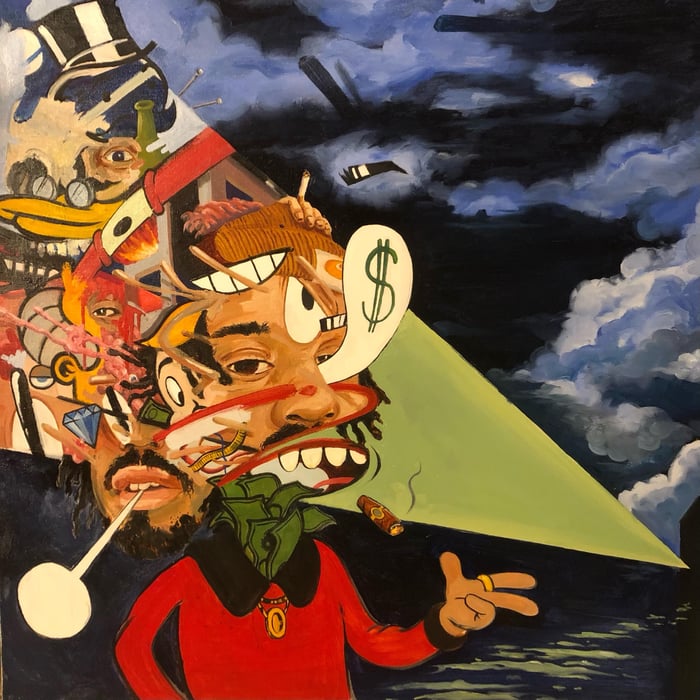
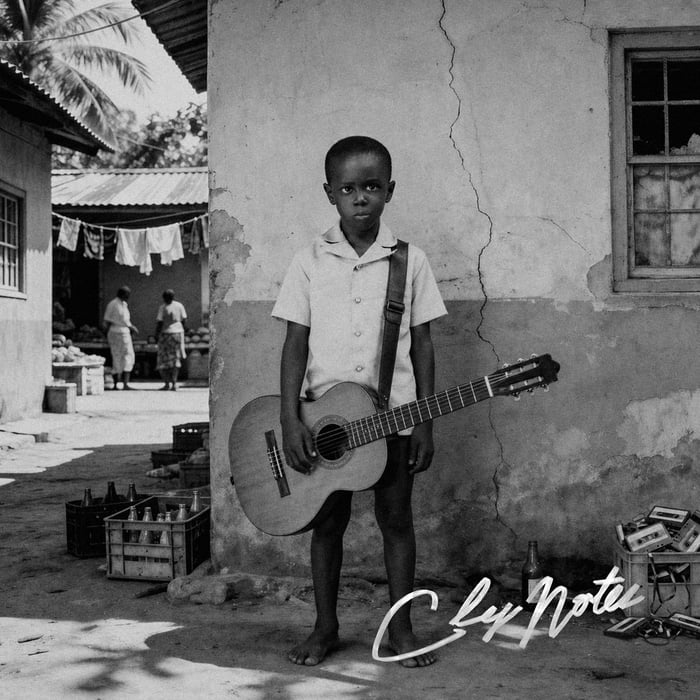
If this album’s cover got under your skin the way the songs do, it’s the kind of image that belongs on a wall, not just in an app. You can shop favorite album cover posters at our store: https://www.architeg-prints.com
 | DISCOUNTGET 30% OFF*Use code on your next order:
|
* This post may contain affiliate links, meaning we earn a commission if you make a purchase through these links, at no additional cost to you.