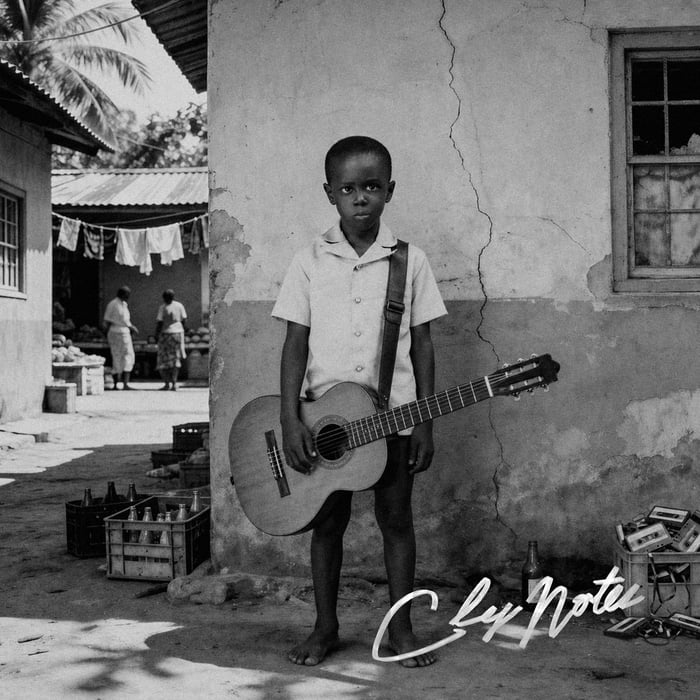
Wyclef Jean’s Quantum Leap Vol. 1 Is a Time-Travel Diary That Refuses to Behave


 See more Architeg Prints stories on Google.
Wyclef Jean’s Quantum Leap Vol. 1 Is a Time-Travel Diary That Refuses to Behave
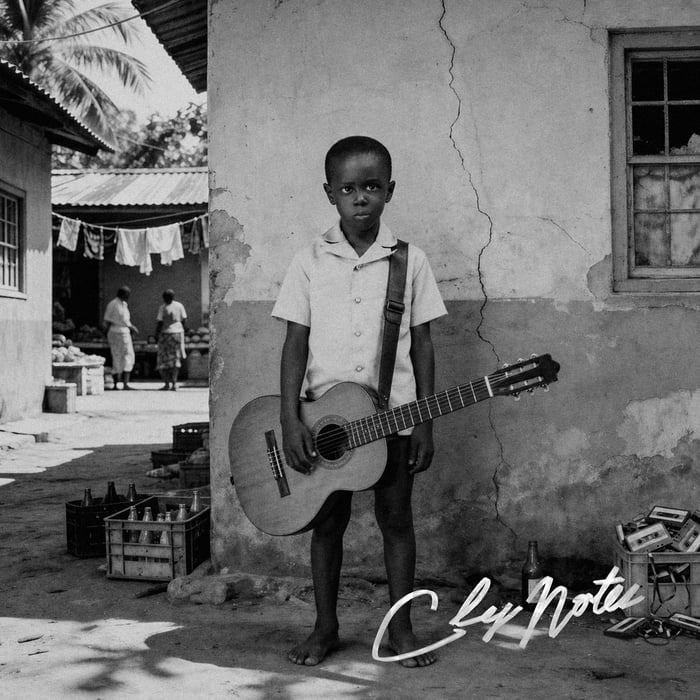
Wyclef’s Quantum Leap jumps from boom-bap to Afrobeats to 2030 prophecy—messy on purpose, sharp when it counts, and weirdly personal.
A record that won’t stand still
This album doesn’t “flow.” It ricochets. And after a full listen, I’m convinced that’s the whole point: Quantum Leap is built like memory actually works—out of order, overstuffed, and stubbornly emotional when you least expect it.
Wyclef Jean has always been the kind of rapper who tries to fit three lifetimes into a verse. Here, he finally turns that habit into the album’s structure. The track sequence itself feels mismatched on purpose, like somebody shook a box of old photos and dumped them on the floor. Years bounce around—1990 shows up, then 1994, then 1991, then it suddenly leaps to 2010 and 2011, back to 1997, and then—because why not—2030. Even the song titles play games with numbers, sliding through 3, 5, and 7 like the album is daring you to find a hidden pattern.
At first I thought the scrambled order was just clutter dressed up as “concept.” On second listen, it started to feel more honest: the loud memories push to the front, the quieter ones get smothered, and the timeline only makes sense the way your own does—broken, selective, and weirdly vivid.
The griot move: Wyclef as guide, not narrator
The album’s voice isn’t “rapper telling you a story.” It’s closer to the griot vibe—host, guide, neighborhood historian—half-sung and half-spoken with that slippery, sing-song flexibility Wyclef leans on when he wants to sound like he’s remembering in real time.
The opener is set off with a spoken intro from Lena Waithe, telling him to take it back to the beginning and calling out places—Compton, Watts, East L.A.—like the album needs a roll call before it starts spilling. And then it spills fast. Wyclef is suddenly tossing out images like he’s trying to outrun silence: a 1964 Impala on the Westside, pines swaying in a line that stretches from Léogâne to Long Beach, Toussaint on the wall as a reminder that being a general isn’t some cute metaphor.
And the detail that really lodges in is the way he flips deprivation into luxury in his own head—talking like “dirt cake” and “Corn Flakes water” were basically Wagyu. It’s funny for half a second, then it lands as a survival reflex: if you can’t upgrade the world, you upgrade the story you tell yourself about it.
He also can’t sit still in one idea for long. He’ll brag about coming back from Haiti with nothing but culture, then pivot into the line about running for president—then he’s already gone again before either thought fully settles. The band underneath stays low and steady, a heavy rolling beat that functions like a road: Wyclef’s the car swerving all over it.
Arguable take: the album isn’t trying to “confuse” you—it’s trying to keep you from getting comfortable.
“1994 - Boom Bap”: when the mess snaps into focus
If you want the album to act like a rap album, “1994 - Boom Bap” is where it finally locks in. The memory gets a soundtrack that actually matches the grit. Wyclef’s reminiscing with sharp little cuts: beepers before cell phones, a shiv-art trick learned from a younger guy leaving Rikers, tension outside a barbershop, rakes getting thrown down until a man called Little Fatts gets put down—then the hands stop.
That’s the kind of detail that doesn’t sound invented. It sounds recalled, which is different. It’s not cinematic; it’s blunt.
Then the chorus stacks references like jewelry—Frankie Valli, Ralph Tresvant, Oran “Juice” Jones—R&B ghosts flashing by like chain links. And it works because the hook isn’t there to decorate the verse; it’s there to prove Wyclef’s mind is wired through music, through radio fragments and street scenes mixed together.
And then Rapsody shows up and changes the room temperature. Wyclef’s approach is ramble-as-style—he talks like his thoughts are rushing him. Rapsody’s the opposite: clipped, urgent, precise. She drops lines that feel like they were sharpened before she walked into the studio—
“Quiet, chill like Thelonious, a Monk amongst all the pandemonium”
—and then she starts casting a net wide enough to catch dope boys and preachers in the same sweep before landing the punch:
“I’m not Toby, I might be Kobe.”
Arguable take: Rapsody doesn’t “feature” on this song—she corrects it.
Faith and receipts: “Devil’s a Lie” as street scripture
The first echo of “Yahweh” hits early, tucked into the hook of “Devil’s a Lie,” and the song’s whole posture is the album’s central blend: hard facts versus the faith that keeps you from folding.
The chorus stacks lived catastrophes like they’re evidence in court: a trap getting raided, an ankle monitor, a near-deportation after an ICE charge. Then Wyclef answers in this half-sung, builder voice—like he’s laying bricks while he talks, trying to construct belief out of close calls.
He’s not quoting scripture; he’s writing his own version for the street. He starts counting off his Genesis, Exodus, Leviticus—not as theology homework, but as a way to organize chaos. The detail that hits is the bullet that missed his head. That’s the hinge moment. Not because it’s dramatic (it is), but because it’s the kind of thing that makes people retroactively decide they were “spared,” because the alternative is admitting it was random.
There’s even a beat switch that turns into confession—sinner marrying himself to the choir—then the song drops you into bleak Carolina through PRICE’s section, where it turns into daylight violence. It’s relentless in a quiet way.
I’m not totally sure the song always balances its parts; sometimes the message piles up so fast it risks turning into a list. But the intent is clear: Wyclef wants faith to sound like something you cling to with bruised hands, not something you wear clean on Sundays.
Arguable take: the spirituality here isn’t about purity—it’s about coping.
“1997 - GBTC”: Wyclef steps back and directs the movie
“1997 - GBTC” feels like the album’s peak fusion moment—the track where Wyclef stops trying to be the main character and starts acting like a director.
A “Gumbo” sign sets the scene. Lil Wayne takes the first verse, and he does that Wayne thing where he makes the line between holy and reckless sound like a tightrope he’s strolling for fun—breaking down a break-dance walkin’, reaching upward, then flipping the title into the hook’s blunt lesson:
“God bless the child that shall become a bastard for that boy.”
Andra Day’s hook pulls gravity from the older “God Bless the Child” lineage—old-soul weight, like the song is carrying family history in its throat. Theo Croker’s horn runs a bluesy thread underneath, slow and swaying, smoothing the edges without removing the sadness.
Wyclef comes in last with his own verse, drawing a line that begins and ends in blood—Rick’s death, a crown at the end of the arc. It’s not subtle, but subtle isn’t what this album is after. It’s after the feeling of a life being narrated while it’s still happening.
Arguable take: Wyclef’s smartest move here is knowing when not to rap first.
“Mr. October”: survival as a business plan (and a flex)
“Mr. October” is where the album’s survival logic turns into a spreadsheet. Wyclef lays out a career path like it’s a blueprint: learning English as self-defense, battle-rapping through the projects, building a paramilitary in Port-au-Prince. He frames the whole hustle as an evolution—from drug dealing to corporate structure, from quarter bricks to quarter reports.
The hook turns that transformation into a repeatable formula:
- “200k a week” becomes the unit of measurement
- spending shifts from Jacob (the watch flex) to acres (land, permanence)
- he claims the “Mr. October” identity like Reggie Jackson’s name is a metaphor for clutch survival
Then G Herbo slides in on the same percussive, clipped, effervescent beat and mirrors the flex in newer language—eight-figure checks, forty acres—before the hook turns and starts blaming rap itself for the body count, like the music made kids chase a myth that ended with them getting whacked.
And then the money teleports into the future: Coinbase wallet, “real estate outer space.” It’s the same theme—escape velocity—but now it’s wired into the internet and speculation. The song basically admits that ambition never calms down; it just updates its software.
Arguable take: the hook is catchier than the verses, and that’s not an accident—it’s Wyclef selling the plan more than confessing the cost.
Two emotional temperatures: “Winter Is Coming” vs “Freedom”
After all that motion, the album hits you with two tracks that pull in opposite emotional directions. And they don’t politely complement each other—they argue.
“Winter Is Coming”: the cold loop and the one line that almost ruins it
“Winter Is Coming” is the cold one. Wyclef’s lying on an ice bed, chewing on infidelity and guilt, wondering how he could’ve been unfaithful when she was only ever grateful. The loop feels enclosed and chilly. It’s not trying to “build” to anything. One steady, dry drumbeat shoves it forward without giving you a release.
And then he drops the most clichéd line in history—grown men don’t cry—right before admitting rivers are already down his cheeks.
That cliché is my one real gripe: it’s a lazy sentence in a song that’s otherwise painfully specific. The honesty deserved better than a bumper-sticker idea of masculinity. Still, the flatness of the beat makes the confession feel less like performance and more like something he couldn’t stop himself from saying.
Arguable take: the song is stronger when it’s emotionally blunt than when it tries to be “wise.”
“Freedom”: warmth, choir power, and a line that cuts
“Freedom” is the warm counterweight. It slips into Afrobeats, and the presence of Joyous Celebration changes the entire oxygen level. The choir doesn’t just decorate the track—they dominate it, like Wyclef invited a whole community into the booth to keep him honest.
His verses turn inward: self-image, longing for affirmation, branding the body with chains and tattoos, calling everyone slaves to opinion. Then there’s this hard slice about tithing that lands like a cold coin on a table:
“Ten percent, pay your tithe / Freedom comes when we die.”
He admits wrestling with Satan just to get to God—another moment where the album refuses to present faith as clean. The song pulls back for the first section, then crashes into upbeat call-and-response choruses. The rise feels processional, upward, and the choir gets the last word in isiZulu before he leaves them.
I kept waiting for Wyclef to steal the spotlight back, but he doesn’t—not fully. And that restraint is part of why the song hits.
Arguable take: the choir is the main character here, and Wyclef knows it.
2030 arrives: “Gemini Man” as future shock with a smooth horn
At the far end of the album’s scramble is 2030—the one real look forward. And it’s not a victory lap. It’s a nervous prophecy.
On “2030 - Gemini Man,” Wyclef starts by describing a world “after the platforms,” like he’s imagining a future where he used to own the features: the views without the tubes, the likes without the ‘Gram, the “I” before the A.I. It sounds like he’s mourning attention economics while also bragging he understood it early. Classic Wyclef contradiction: he critiques the machine while still talking like he built part of it.
Then the near-future imagery turns tragic and weirdly domestic:
- a bot serving breakfast like it’s normal
- a brick purchased by a plainclothes officer using crypto for a sister
- a sister mourning her dead father while accepting a clone from his estate
- a couple embracing across screens
- swords and wars unfolding inside the wavering minds of the creators
Theo Croker’s horn keeps the surface impossibly smooth, pushing a constant buzzing drone that makes the future feel anesthetized. Wyclef’s voice splits into two modes: part reflection, part hyperbole—one moment he’s in a Wu-Tang-ish mask energy, the next he’s telling his daughter the world is a play and she should learn her lines, while warning her about clickbait like it’s a spiritual threat.
His final spoken exhortation turns into a forward-looking prayer aimed at an unseen crowd. It’s not comforting. It’s the sound of someone trying to out-pray an algorithm.
Arguable take: the future section isn’t “prediction”—it’s Wyclef admitting he’s scared he won’t recognize what comes next.
Where I landed (and where the album refuses to)
By the end, the scrambled dates and number-titled tracks stop feeling like a gimmick and start feeling like the thesis: life doesn’t play in order, and Wyclef isn’t pretending his does. The album’s best moments happen when he lets other voices sharpen the picture—Rapsody’s precision, Andra Day’s gravity, Theo Croker’s horn smoothing the edges, Joyous Celebration turning “Freedom” into something bigger than a solo statement.
And yet, the same thing that makes Quantum Leap feel alive can also make it exhausting. Sometimes Wyclef crams so many ideas into one run that the emotional weight can’t fully land before he’s already sprinting to the next scene. I’m not mad at it, but I did catch myself rewinding just to make sure I hadn’t missed the actual point while he was stacking another metaphor on top of another flex.
Still, the album doesn’t want you to sit back. It wants you to keep up.
A few tracks I keep circling back to because they hold the concept and the punch:
- “1994 - Boom Bap”
- “1997 - GBTC”
- “2030 - Gemini Man”
Wyclef made a record that treats time like a deck of cards—shuffle it, deal it, tell your story from whatever comes up first. Quantum Leap isn’t neat, and it’s not trying to be. It’s a memory box with the lid ripped off.
FAQ
- Is Quantum Leap Vol. 1 more rap or more singing?
It’s both, sometimes in the same breath. Wyclef raps, half-sings, directs, and then hands the room to guests who shift the whole tone. - Do the scrambled years matter, or is it just aesthetic?
They matter because the listening experience mirrors memory: jagged, out of order, and guided by intensity instead of chronology. - What’s the best entry-point track if I’m new to this version of Wyclef?
“1994 - Boom Bap” gives you the clearest snapshot of his storytelling, plus a feature that tightens the whole song. - Does the album get too heavy with religion?
It’s religious, but not polite about it. It treats faith like survival gear, not a personality trait—if that bugs you, you’ll bounce off it. - What’s the “future” track actually like?
“2030 - Gemini Man” plays like smooth, horn-lit anxiety: domestic sci-fi details delivered with a prayerful edge.
If this album’s time-scramble got stuck in your head, you’ll probably enjoy hanging it on your wall too—album art has a way of freezing chaos into one frame. You can shop your favorite album cover poster at our store: https://www.architeg-prints.com
 | DISCOUNTGET 30% OFF*Use code on your next order:
|
* This post may contain affiliate links, meaning we earn a commission if you make a purchase through these links, at no additional cost to you.