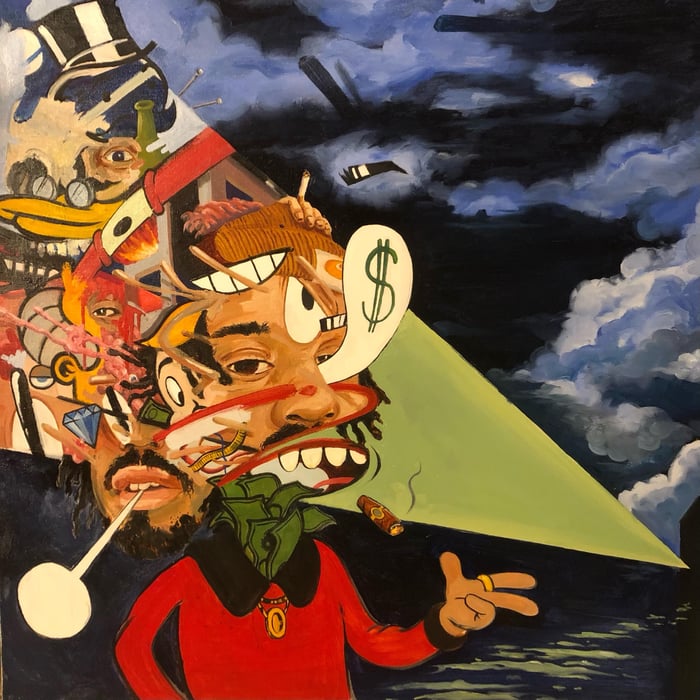
Elephant Room Mixtape Review: Catch Makes Confessionals Sound Like Threats


 See more Architeg Prints stories on Google.
Elephant Room Mixtape Review: Catch Makes Confessionals Sound Like Threats
Elephant Room Mixtape hits like road rap with the mask off—queer desire, jail math, and grief told in uncomfortable close-up.

A Storyteller Who Refuses to “Summarize” Her Own Life
Road rap usually moves like it’s late for something. South London’s lane especially—tempo first, feelings later, if ever. Most of the time, the bars sprint so hard there’s no space for grief to sit down, let alone unpack. Catch doesn’t play that game. She raps like she’s dragging a chair into the middle of the room and making you look at what everyone else edits out.
And yeah, the “Elephant Room Mixtape” title is blunt on purpose. This tape isn’t trying to be mysterious. It’s trying to be unavoidable.
What hits immediately is how she talks from inside the moments, not above them. Not “remember when,” not “I used to,” but that lived-in, still-sweating detail that makes you feel like you’re standing too close. A reasonable listener could say she overshares. I’d argue that’s literally the point—oversharing is her way of taking control of the narrative before anyone else gets cute with it.
“Imagine Being Me”: The Autobiography That Doesn’t Ask for Sympathy
This is where she announces the rules. “Imagine Being Me” opens up the gap she came up in—moving between spaces that look similar from far away but mean different things when you’re the kid living there. She’s flipping through snapshots: selling cocaine in school, friends out swimming while she’s doing prison calls instead of ringing girls. That contrast is nasty, and she doesn’t soften it with “poor me” dramatics. She says it like weather.
Then she drops the kind of scene most rappers either sensationalize or skip: two OGs shooting at each other, a ricochet hitting a woman, and life just… continuing. That’s the part that’s hard to explain to people who want neat moral arcs. Catch delivers it like a grim commute. The fake-road nod she describes feels less like a metaphor and more like the body’s emergency exit.
She saves her sharpest resentment for performance grief—the people uploading “RIP” tattoos for someone they didn’t show up for when he was alive. That disgust isn’t abstract; it’s personal, and it’s aimed.
And then the pivot that actually changes the temperature of the whole tape: she flashes back to being twelve, watching herself not fit.
“Playing with my friends and having weird thoughts when all my school friends were linking girls.” — Catch
She denies having a crush on Kayla, then traces her desire for girls back to a Lil’ Kim poster on her brother’s wall. That’s not a “coming out” storyline polished for applause. It’s the messy, half-embarrassed origin story most people actually have, told without trying to sound inspirational. Some listeners will call it casual; I think it’s deliberate. She’s putting queer desire on the same shelf as parole boards and trap math because, to her, it’s all just life. No italics.
“Playhouses”: The Detail That Makes the Flex Feel Gross
From there, the tape keeps zooming in. On “Playhouses,” she clocks a mother’s love with a line that’s almost too simple, then immediately flips it into a street-life contradiction—playhouses and dinner forks on one side, the “yay ounce” reality on the other. The reason it lands is because she isn’t moralizing. She’s not saying “look how evil this is.” She’s saying: this is the same hand doing both things. Sit with that.
An arguable take: this is where Catch is at her best—when she’s not trying to win, just trying to show you the room. When she leans into pure threat, she’s good. When she leans into lived detail, she’s hard to ignore.
Desire With Teeth: “Shine Your Light,” “Name With A K,” and “Tata”
Here’s the thing people will either love or bounce off: Catch’s writing about women isn’t treated like a side plot or a “different” emotional register. It’s folded into the same blunt delivery. She doesn’t switch voices to become tender just because the subject is romantic. If anything, she sounds more dangerous.
On “Shine Your Light,” she’s singing about having another man’s girl and she doesn’t flinch. The track moves like she’s already decided she’ll survive the consequences. Ten seconds after spitting in the face of a scorned wife (emotionally, if not literally), she’s still standing there. That’s either cold or honest depending on your tolerance for chaos.
“Name With A K” shifts into caution—jealousy spoken with the same phrasing you’d expect from the lads in this lane. That choice feels intentional: she’s refusing to code-switch her desire into something “softer” for listener comfort.
And “Tata” is basically a whole relationship in fast-forward: flirtation through mutual friends, a cheap first date that’s specific enough you can smell the seats, then the argument and the taped-up apology attempt. The second half goes bitter on purpose and ends with the line about finding someone else to be “tata.” It turns sly and spiteful like a real breakup does—petty, wounded, trying to regain dignity by pretending you don’t care.
I’ll admit, at first I thought “Tata” was going to be a one-note detour—just a cute story break. On second listen, it’s more like a thesis: she loves like she raps, with a guard up and the volume high, and she’s not pretending that makes her easy to be with.
“Heisenberg”: The Beat That Refuses to Entertain You
“Heisenberg” is where the production starts telling you what kind of tape this is. The beat (from Santan Dave) doesn’t slice through the mix trying to be flashy. It grinds underneath her—dark, full, patient—built to hold a long verse instead of baiting you with constant switch-ups.
Catch runs it from small local texture (a Tesco jingle kids used to sing about her) to the big statement: she’s got Walter White’s brain, and she’ll aim it at the drug trade instead of the classroom. The line isn’t just a flex; it’s a self-indictment wrapped in pride. That’s the Catch move—she’ll brag and confess in the same breath, then dare you to separate them.
Most of the instrumentals around it follow that same logic: low, narrow, restrained up top. Slow burn. Not “club ready,” not trying to rescue weak writing with shiny noise. A reasonable listener could say the beats are too boxed-in. I get it. There were moments I kept waiting for a wider lift that never came. But the restraint also forces you to sit with her words instead of floating away on production.
“Life’s Good, Life’s Great”: When the Window Finally Opens
Then she flips the mood with “Life’s Good, Life’s Great,” built on a Willie Hutch “I Chose You” flip. Suddenly there’s more air. The weight shifts toward lift rather than menace—a chest-heavy bounce that feels wide enough to move in.
Figs0 drops a gratitude hook, and Catch doesn’t sabotage it by acting too cool for hope. She keeps one eye on the world like she still doesn’t trust it, but you can hear she hasn’t fully given up. That’s a brave choice on a tape like this, because optimism can sound fake fast. Here it doesn’t. It sounds conditional—like she’s letting herself feel good with her back to the exit.
Arguable claim: this is one of the tape’s smartest placements because it makes the darker scenes hit harder later. Light, used carefully, is basically a weapon.
“100 Missed Calls”: The Perspective Switch That Actually Hurts
Halfway through “100 Missed Calls,” the point of view shifts and the tape gets quietly brutal. Catch is calling from inside a cell, talking to a friend who’s made millions and is thinking about killing himself. He says he wishes his life were like hers. From the cell, she hears that wish—and you can practically hear her trying to understand it without laughing or snapping.
The ugly truth sits there: two people staring at each other’s lives like they’re alternate realities, each one unable to believe the other’s pain is real. Catch lets it hang without trying to wrap it up in a lesson.
Then she’s at the parole board, counting the years she’s over tariff. No violins. No “inspirational comeback” framing. Just the administrative cruelty of time.
I’m not totally sure everyone will catch how heavy that sequence is on first pass, because it’s delivered in the same steady voice as everything else. But that might be the scariest part: she makes catastrophe sound normal, because for her it is.
Loyalty as Religion: “The World Still Spins” and the Grief She Won’t Decorate
Catch keeps circling loyalty like it’s the only value that doesn’t collapse on her. “The World Still Spins” is where she takes that value and tests it against real loss.
She commemorates her sister, who died two days before Christmas. Then she talks about her brother Nick arriving afterward—delayed—and in her telling, sort of replacing her sister. It’s an uncomfortable thought to say out loud, which is exactly why she says it. Another friend gets deported to Jamaica and is shot dead there. The pain is plain, unfussy, not dressed up for sympathy.
Then, almost without warning, she gets contemptuous about how grief gets performed in public. She ridicules the flowers for dead rappers. She despises the shallow “RIP” aesthetics. She even confesses she won’t soften it, apologizing to an engineer because it’ll need edits and bleeps—telling mourners to buy a wreath instead.
That’s a hard stance. Some people will call it heartless. I hear it as someone refusing to let death become content. She’s mad at people grieving a life they didn’t bother to witness.
If I’m nitpicking, this is also where her bluntness can bruise the song itself. There’s a fine line between necessary ugliness and pushing the listener away. For a moment, I wondered if she wanted that distance on purpose—like a loyalty test disguised as a verse.
“Target”: Guest Energy, Then Catch Brings It Back to the Trap
“Target” opens with Young Adz, and it works because he’s not there to decorate the track—he sets the tone by mapping out the price of being seen: giving away the Lambo, living with nerve damage and battle scars, warning women in his city to stay indoors. It’s the kind of verse that sounds like it’s been paid for in advance.
Then Catch comes in and keeps the threat local. She names the phones she can’t trust. She warns about an ex putting her on. And then she drops one of the bleakest throwaway questions on the tape:
“You ever seen a fiend get excited when they see your veins?”
That line is disgusting in the way truth is disgusting. It’s the bando speaking through rap money—the room she can’t fully escape, even if she leaves it “clean.” And when she points the camera at the money, it doesn’t sound like victory. It sounds like evidence.
Arguable claim: “Target” is Catch at her most quietly frightening, because she’s not yelling. She’s tired. And tired people are the ones who do things without making speeches about it.
So Yeah, It’s “Great”—But Not Because It’s Polished
The tape’s best moments don’t come from perfection. They come from commitment. Catch commits to the uncomfortable angle every time: queer desire without ceremony, grief without flowers, intelligence aimed at survival instead of respectability.
If you need every hook to be huge, you’ll find spots that feel intentionally boxed-in. If you need an artist to sound “redeemed,” this will annoy you. But if you want a storyteller who refuses to lie to you for likability, the Elephant Room Mixtape doesn’t blink.
Catch’s standout moments on this tape tend to cluster around a few key tracks:
- “Imagine Being Me”
- “Target”
- “Heisenberg”
Conclusion
The Elephant In the Room plays like Catch is daring you to confuse honesty with comfort. She’s not asking to be understood; she’s telling you what happened, what it cost, and what she still wants—then leaving you to deal with it.
Our verdict: This album will hit listeners who like road rap when it slows down long enough to bleed—people who want detail, not just bravado, and who don’t flinch at queer truth told in the same breath as prison logistics. If you’re shopping for tidy morals, big shiny hooks, or “uplift” that comes gift-wrapped, you’ll probably bounce off this and complain it’s too bleak—then go back to music that lies nicely.
FAQ
- Is the Elephant Room Mixtape more focused on storytelling or punchlines?
Storytelling first—specific scenes, names, places, consequences. The punchlines show up, but they’re not the main event. - Does Catch’s queer perspective change the usual road-rap dynamic?
Yes, because she doesn’t treat it as a special topic. It’s written into the same hard realities, which makes the whole lane feel less fake. - What track best represents the tape’s core?
“Imagine Being Me” sets the rules: detail-heavy, unsentimental, and personal in a way that doesn’t ask permission. - Are the beats energetic or more restrained?
More restrained overall—low, narrow, slow-burn production that lets the verses run long instead of chasing constant fireworks. - Who should skip this mixtape?
Anyone who needs road rap to be purely adrenaline. Catch keeps stopping the car to show you what’s in the trunk.
If the tape’s visuals are stuck in your head too, it’s the kind of cover that actually deserves wall space—shop your favorite album cover poster at our store: https://www.architeg-prints.com.
 | DISCOUNTGET 30% OFF*Use code on your next order:
|
* This post may contain affiliate links, meaning we earn a commission if you make a purchase through these links, at no additional cost to you.