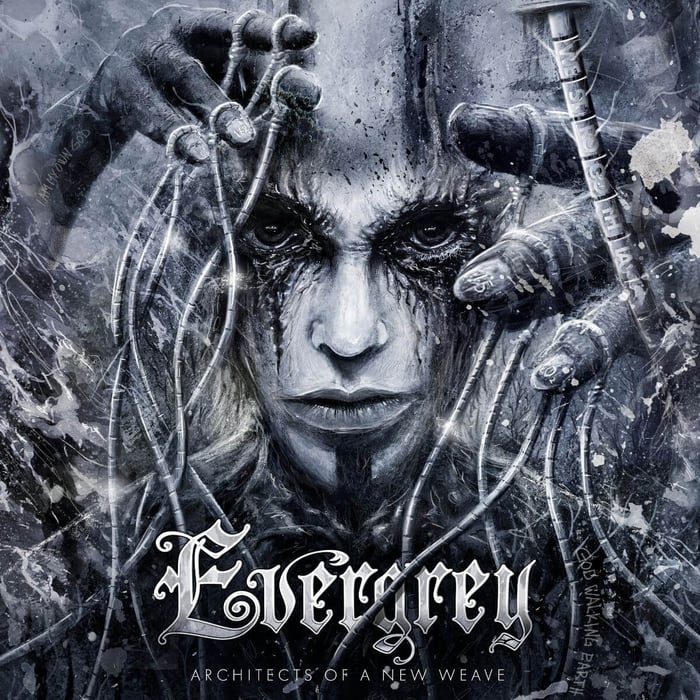
Evergrey Album: “Architects Of A New Weave” Is Dark Therapy With Riffs



Evergrey Album: “Architects Of A New Weave” Is Dark Therapy With Riffs
Evergrey album “Architects Of A New Weave” leans into gloom, groove, and big hooks—then risks killing its own momentum with a slow-burn back half.
This record isn’t trying to entertain you—it’s trying to weigh on you
Evergrey doesn’t sound like a band fighting to stay relevant. They sound like a band that already knows the trick: make progressive metal complicated only where it actually matters, then smuggle pop-level hooks through the side door.
That’s the whole game on this Evergrey album, “Architects Of A New Weave”. It carries a darker edge than you expect at first, like the band intentionally tuned their emotional temperature down and let the world’s general bleakness do the talking. Sometimes it feels genuinely epic. Other times it lands with a thud—like they’re so busy being “serious” that they forget to keep the blood moving.
And yeah, I’m saying it plainly: the highs hit hard, but there are stretches where the album stares into the middle distance a little too long.
The opener’s trick: start heavy, then act wounded
The album’s brief spoken-word intro doesn’t waste time setting a mood; it’s basically the curtain rising on a place that already feels half on fire. Then “The Shadow Self” shows up and immediately does the Evergrey thing: heavy but moody, like the riffs are wearing black dress shoes instead of combat boots.
What hits first is how the chorus is almost offensively catchy—not in a cheap way, but in that “why is this hook living in my head now?” way. The verses don’t just lead into the chorus; they tilt into it, with a vocal melody that feels engineered for maximum emotional snap. The second time around, that transition gets even slicker: the drums throw in a fill right after the vocal line, and suddenly the hook feels inevitable.
The solo is where the band’s progressive credibility actually earns its keep. It’s technical, sure, but more importantly it gets weird at the end—thanks to the drums twisting the shape of it so it feels slightly off-axis in the best possible way. Then they pull a smart little move: the final chorus isn’t the whole hook, it’s the catchiest half of it, and they let the song fade out with that single vocal melody and synths like a thought you can’t shut off.
Arguable take: this track is basically a pop song disguised as progressive metal, and that’s exactly why it works.
“The World Is On Fire” is the album’s thesis statement—and it knows it
Sticking with the brooding vibe, “The World Is On Fire” doubles down on darkness but keeps the electronics subtle, like a shadow behind the guitars rather than a spotlight. The main riff is ferociously groovy—one of those riffs that doesn’t just chug, it struts. Then the chorus swerves: softer delivery, less muscle-flexing, more controlled pressure.
Tom S. Englund’s vocal performance is the difference between “solid track” and “this is going to stick.” He sings the chorus like he’s trying not to raise his voice, which honestly makes it feel heavier.
The best moment is how the solo arrives. The earlier electronic texture comes back, then fades out like the band is literally clearing the room so the guitar can speak. The solo doesn’t just show skill—it cries, and the contrast makes it hit harder than it should. After the final chorus, that main riff returns again, and somehow it sounds even nastier than the first time, like it learned something while it was gone.
I kept waiting for the song to overdo it, to pile on drama until it collapsed—but it doesn’t. It stays tight. That restraint is kind of the flex.
Arguable take: this might be the most effective “big statement” track Evergrey has written in a while, because it doesn’t drown in its own message.
“The Script” goes cinematic—and proves they don’t need to solo every time
The transition into “The Script” feels like stepping into a darker room. This is one of the album’s most cinematic cuts: choirs alongside synths, downtuned guitars, and a main riff that sounds like it’s scored for something expensive and tragic.
The verses keep the electronic elements in play, and they match the cinematic vibe instead of fighting it. The chorus is another vocal showcase—Englund sounds ridiculous here, in the most flattering way. If anything on this Evergrey album screams “rejuvenated,” it’s the fact that he’s delivering choruses like this so deep into the band’s career.
The bridge is the key decision: synth-led, no guitar solo shoved in out of obligation. It’s a quiet flex, and it suggests the band knows when not to show off. A lot of progressive bands confuse complexity with purpose; this track doesn’t.
Arguable take: the song’s biggest “progressive” move is actually its self-control, not the technical playing.
The back half starts whispering—and I’m not sure it always earns the silence
Here’s where the album starts playing games with pacing. The eighth track, “Longing,” is set up as an intriguing swerve: no huge opening riff, just synths, vocals, and soft drumming. It’s intimate, almost cautious. The pre-chorus uses toms to build anticipation, like the song is taking a long inhale.
The first chorus stays restrained with the same instrumentation, and at first I thought, okay, we’re going for a slow-burn heartbreak thing. But then the second verse comes in more bombastic, like the song suddenly remembers it’s allowed to have muscle. And the second chorus? It’s an explosion of melody—so simple and memorable it could slide into a modern pop release without changing its clothes. That’s not an insult. It’s proof Evergrey knows hooks aren’t the enemy.
The solo section is a neat bait-and-switch: it turns into a breakdown and then becomes a guitar solo where Stephen Platt gets to show what he can do. It’s a satisfying pivot—aggression into precision—then a small bridge, then the final chorus to close it out.
But I’ll admit something: on first listen, I wasn’t sold on the opening restraint. On second listen, I got what they were doing—they want the chorus to feel like the first real “color” in the song. Still, it’s a gamble, and I can see people zoning out before the payoff.
Arguable take: “Longing” is catchier than it has any right to be, but it also tests your patience on purpose.
“Chains Of Shame” finally hits the gas again—and it’s almost a relief
After a run of slower-paced material, “Chains Of Shame” shows up as the second-to-last track and basically reminds the album how to move. It starts with a vocal intro, then the main riff kicks in led by an epic drum beat—immediately faster, immediately more forward.
The chorus keeps that drum-driven urgency, and it works because the verses deliberately pull back into a mid-paced groove, building anticipation rather than just repeating the same energy level. This is one of those structural choices that sounds simple but is easy to mess up. Here, it lands: the chorus feels like a release, not just a section marker.
The solo section goes synth-led again, which at this point feels like a band signature. You’re not “waiting for the guitar hero moment” as much as you’re waiting for the atmosphere to shape-shift. Then the final chorus arrives, turns back into the main riff, and the track ends abruptly—no dramatic fade, no extra curtain call.
Mild criticism, because it deserves one: the abrupt ending feels more like a scheduling decision than an artistic one. It’s not a dealbreaker, but it’s a tiny “huh?” moment.
Arguable take: this track proves the album is best when it’s moving, not when it’s brooding.
The closer is bizarre on purpose—and it actually seals the record shut
Ending the Evergrey album “Architects Of A New Weave” is “The Prophecy,” and it’s easily the strangest song here. It starts with an unusual keys-and-guitar combined riff—odd, slightly jagged—then the first verse arrives fully stripped back, like the song is suddenly shy about what it just introduced.
The chorus brings that bombastic opening riff back, and now it “plays around” the vocals instead of sitting under them. The second verse adds a pre-chorus where everything builds a little at a time—every instrument stacking weight without rushing—until Englund pushes the band into the next chorus.
And here’s the real closer move: that chorus takes up most of the second half of the track, like they’re insisting you sit with it. Then the song finishes by repeating the keys exactly as they were in the main riff, giving the album a genuine sense of closure. Not a cheap “final note,” but a loop tightened.
I’m not totally sure the opening riff is “cool” so much as it is committed—but commitment counts, and it makes the ending feel sealed, not just ended.
Arguable take: this closer is less about being memorable and more about locking the mood in place, and that’s a bold way to finish.
The real issue isn’t the songs—it’s the pacing choice
Here’s the contradiction at the heart of it: when this album leans into faster-paced tracks, it genuinely shines—not just in songwriting, but in how each band member gives the material a pulse. The problem is that the second half shifts focus to slower, more melancholic songs, and that choice messes with momentum. It changes the listening experience in a way that feels avoidable.
I don’t think the slower material is “bad.” I think placing so much of it in a row makes the album feel like it’s dragging a heavy coat behind it. You can call that “atmospheric.” I call it a pacing risk that doesn’t always pay.
Arguable take: the album’s emotional weight would hit harder if it didn’t keep stepping on its own forward motion.
Still: this is album number 15, and it sounds weirdly refreshed
And yet, even with the momentum dips, this is still unmistakably Evergrey—and it sounds rejuvenated in a way that’s honestly surprising this deep into a career. This is apparently album number 15 for them, and it doesn’t sound like a band repeating a formula out of habit. It sounds like a band still motivated, still inspired, still willing to tweak their shape.
Maybe “Architects Of A New Weave” doesn’t always stick the landing in the middle-to-late stretch. But it does something a lot of veteran bands can’t: it sounds like it has a point of view, not just a brand.
I land around a 7/10 on how effectively it pulls off what it’s aiming for—high highs, a few stretches that soften the impact, but still a real statement from a band that clearly isn’t done.
Release details (because timing is part of the mood)
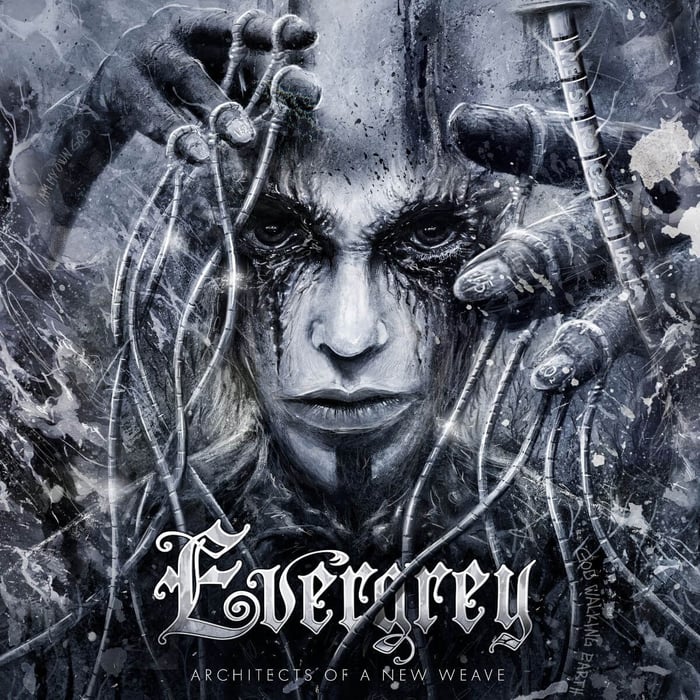
This Evergrey album, “Architects Of A New Weave,” is set for release on June 5th via Napalm Records.
If you keep up with the band socially, they’re on Facebook here: facebook.com/Evergrey
The real story of “Architects Of A New Weave” is a band choosing heaviness that isn’t just volume—sometimes it’s restraint, sometimes it’s groove, sometimes it’s a chorus that’s way too catchy for how grim the mood is.
Our verdict: This will actually hit for listeners who like progressive metal that sneaks in pop-grade hooks and cinematic gloom without apologizing. If you need nonstop riff fireworks or you panic when an album slows down to stare at its feelings, you’ll get impatient—and you’ll probably blame the band instead of your attention span.
FAQ
- Is “Architects Of A New Weave” a typical Evergrey album?
It’s recognizably Evergrey, but it leans darker and more electronic in texture, and it plays more pacing games than you might expect. - Which songs feel the most immediate on first listen?
“The Shadow Self” and “The World Is On Fire” hit quickly because the choruses land hard and the riffs move with purpose. - Does the album rely on guitar solos?
Not obsessively. Some of the smartest moments are when the band lets synth-led sections do the heavy lifting instead of forcing a solo. - What’s the biggest weakness of the album?
The momentum dip in the later stretch—too many slower, melancholic moments clustered together can blunt the impact. - How does the album end?
With “The Prophecy,” a deliberately bizarre closer that loops back to its opening keys riff to give the record a locked-in sense of closure.
If this album’s mood got under your skin, that usually means the visuals would look good on your wall too. If you want to grab a favorite album cover poster, you can browse options at our store: https://www.architeg-prints.com
 | DISCOUNTGET 30% OFF*Use code on your next order:
|
* This post may contain affiliate links, meaning we earn a commission if you make a purchase through these links, at no additional cost to you.