Fading Failing Ruin Review: Solace Makes Doom Feel Unreasonably Alive


 See more Architeg Prints stories on Google.
Fading Failing Ruin Review: Solace Makes Doom Feel Unreasonably Alive
Fading Failing Ruin hits like a 30-year grudge finally spoken out loud—Solace lean into stoner-doom heft, then sneak in hooks when you’re not looking.
This album isn’t a comeback—it's a correction
Some bands “return.” Solace don’t return so much as reassert themselves, like they’re annoyed anyone forgot what a real riff is supposed to weigh. Fading Failing Ruin arrives tied to a neat headline—30 years as a band, fifth full-length album—and yeah, that’s a milestone. But when I actually sat with the record, it didn’t feel like a victory lap. It felt like a band tightening the bolts on a machine they’ve been building for decades.
And sure, their catalog has been sporadic for a group that’s been around this long. But that gap isn’t a weakness here. It comes off like refusal: they don’t release music just to stay visible. They release it when it can still do damage.
Thirty years in, Solace still sound like they’re here to crush you
Here’s what’s obvious fast: Solace are fully committed to big riffs and stubborn grooves. Not “big” in the cartoonish way—big like a door you can’t push open. The album carries epic doom and hazy stoner drift, but it also keeps one boot planted in traditional metal. That blend matters, because it’s why the record can be both punishing and—this is the sneaky part—catchy.
I wasn’t totally sure, at first, if the album was going to lean too hard into the haze and blur itself into background sludge. On the first few minutes I kept waiting for that fog to swallow the details. It doesn’t. The riffs stay shaped. The songs keep turning.
The backstory is baked into the tone—whether they admit it or not
Solace didn’t appear out of nowhere. You can hear lineage in the way they move—like they came from a scene where doom wasn’t a costume, it was just what happened when metal slowed down and stared at you longer.
They formed from the ashes of early ’90s metal band Godspeed, and that history still leaks through the seams. Godspeed had real-world brushes with heavy-metal royalty: backing Bruce Dickinson on a cover of “Sabbath Bloody Sabbath” for the Black Sabbath tribute album Nativity In Black, and touring with Sabbath themselves alongside Cathedral. You don’t do that and come out sounding polite. Even now, Solace carry that “we’ve stood near the furnace” confidence.
And yes—those roots explain why Solace can sit in stoner/doom weight while still keeping the posture of classic metal. This album salutes the past, but it also feels like it’s trying to outgrow nostalgia. That’s the trick: it’s respectful without being sentimental.
“Spiral Will” doesn’t warm up—it detonates
The album’s mission statement is basically the first moments of “Spiral Will.” It doesn’t creep in. It erupts. That matters because it sets the rules: this record isn’t about atmosphere first. It’s about impact, and the atmosphere is just the smoke left behind.
The blend is immediate—doom’s long shadow, stoner’s thick fuzz, metal’s direct punch. And I’ll make a claim some people will hate: Solace are at their best when they don’t pretend subtlety is the point. This opening track doesn’t negotiate. It shoves.
The mid-album run is Solace flexing their “crush” vocabulary
From there, the record turns into a pretty relentless demonstration of what Solace think heavy music should accomplish. Tracks like:
- “Fettered To A Stone”
- “Beyond The Blow”
- “Every Day Is A Loaded Gun”
…hit with that “huge sounding and even bigger in execution” attitude. Not just loud—wide, like the band wants the riffs to take up the entire room and some of the hallway too.
If I’m being blunt, this is where the album risks a tiny bit of same-weapon syndrome: when you’re this good at crushing, you can start solving every problem with the same hammer. It doesn’t derail the record, but I did catch myself thinking, okay, show me a different angle. The good news is: they eventually do.
“Culling The Herd” is the clean cut through the fog
After all that heft, “Culling The Herd” stands out because it’s more streamlined and carries an urgent energy—less ceremonial, more “get out of the way.” It slices instead of stomps.
And I’ll go further: the urgency makes the surrounding songs hit harder. This track works like a palate cleanser, but it’s not gentle about it. It’s the moment where Solace prove they can tighten their grip without loosening their sound.
The two mammoth tracks are where the album tells on itself
The album is anchored by two huge tracks that basically spell out why Solace have lasted and why Fading Failing Ruin feels like more than just a solid late-career entry.
“A God Changes His Plans” drags punk/hardcore into the stoner pit
“A God Changes His Plans” reaches back toward the band’s earlier incarnation in spirit—there’s a punk/hardcore energy in the way it moves, like it’s more interested in forward motion than mood-setting. Then it drops those fearsome stoner riffs on top, as if to remind you they can do both: speed and crush.
My first impression here was honestly, this might be the album’s odd fit. The energy shift is real. But on second listen, it started to feel like the point—like Solace are saying, “We didn’t come from one box, so don’t file us into one.” It ends up making the album feel less predictable, which doom albums sometimes struggle with.
“Wraths Object (The Big Fall)” starts tender, then turns the knife
“Wraths Object (The Big Fall)” begins with a stirring, emotive instrumental that immediately evokes the ghost of Black Sabbath’s “Planet Caravan.” Not as a copy—more like a memory you didn’t ask for. But Solace don’t let it stay dreamy. There’s a tighter, more urgent tension underneath, and when the track morphs into a doom-laden behemoth, it feels less like drifting and more like falling.
This is where the band’s judgment shows. Plenty of groups can start soft and go heavy. Solace make it feel like the softness was always a trap.
By the time “Ridden” ends, the album has you trained
Fading Failing Ruin is the kind of record that makes you want to immediately loop back—not because it’s “so complex,” but because it builds a world that’s weirdly easy to live in if you like metal. When the final track, “Ridden,” comes to a close, the quiet after feels temporary, like the album expects you to press play again.
And I’ll put it plainly: this is music that offers a particular kind of peace—the peace of being pinned to the floor by something bigger than you. If that sounds appealing, you’re already halfway in.
The real point: Solace aren’t aging out—they’re doubling down
Solace come off like a band back with a vengeance, and the record makes a strong case that their power isn’t nostalgic or borrowed. Thirty years in, they sound primed, not tired—like the time between releases wasn’t absence, it was loading weight onto the bar.
I’m not going to pretend every moment surprised me; parts of the album ride a familiar stoner/doom blueprint. But the execution is so confident—and the hooks so casually placed—that the blueprint starts to feel like tradition instead of limitation.
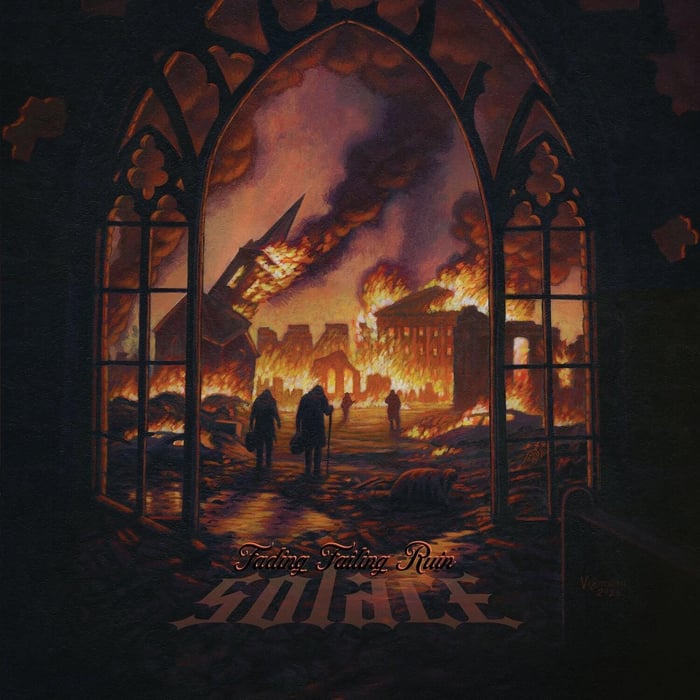
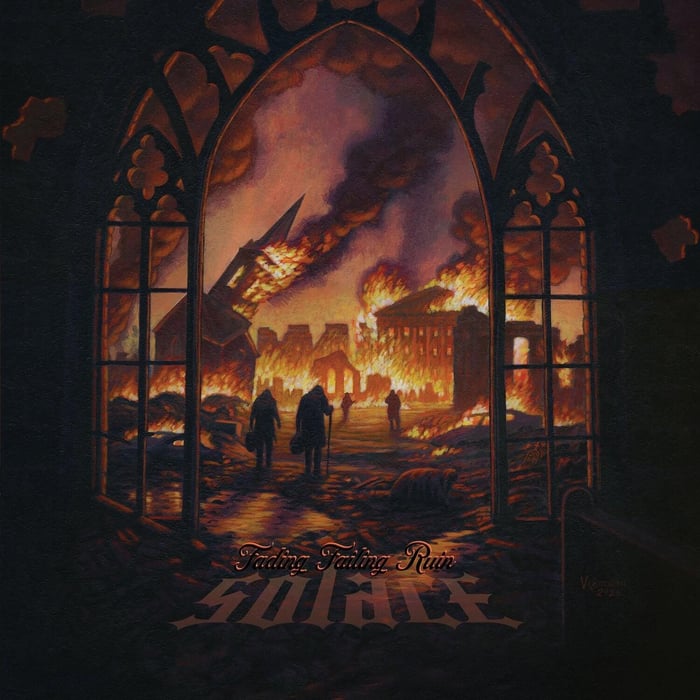
Album art
Release notes (the practical stuff that still matters)
Fading Failing Ruin is out now via Magnetic Eye Records.
If you want the usual social follow: Solace are on Facebook.
If I had to pin a number on it
I don’t love reducing an album like this to math, but if you forced me to slap a rating on Fading Failing Ruin, I’d land at 8/10—mostly because it hits its target hard, even if a few stretches lean a little too comfortably on “bigger and slower” as the default solution.
Solace made an album that doesn’t beg for your attention—it assumes it deserves it. Fading Failing Ruin takes their stoner-doom weight, threads in classic metal backbone, and lets just enough urgency leak through to keep the songs from becoming a single long exhale. It’s heavy music that remembers to be memorable.
Our verdict: People who like riffs that feel like architecture—and songs that actually finish the thought—will love this album. If you need constant novelty, or you think doom should be “chill background,” this will feel like getting hugged by a concrete mixer (and not the friendly kind).
FAQ
- Is Fading Failing Ruin more stoner or more traditional metal?
It’s stoner/doom in weight and texture, but the phrasing and punch often lean traditional metal—especially when the band goes for catchier, triumphant turns. - What track shows the album’s range best?
“Wraths Object (The Big Fall)”—it starts emotive and airy, then tightens into something tense and massive without losing the thread. - Does the album feel like a nostalgia project?
Not really. It nods to roots and history, but it plays like a present-tense statement: heavy, direct, and sure of itself. - Are there any faster or more urgent moments?
“Culling The Herd” brings a more streamlined, urgent push that cuts through the album’s thicker grooves. - If I’ve never heard Solace, where should I start on the album?
Start with “Spiral Will” if you want the immediate impact, then jump to “A God Changes His Plans” to hear the punk/hardcore edge collide with stoner heft.
If you’re the type who stares at album art while the riffs do their work, it’s worth grabbing a favorite album-cover poster for your wall—our shop’s got some good options: https://www.architeg-prints.com/
 | DISCOUNTGET 30% OFF*Use code on your next order:
|
* This post may contain affiliate links, meaning we earn a commission if you make a purchase through these links, at no additional cost to you.