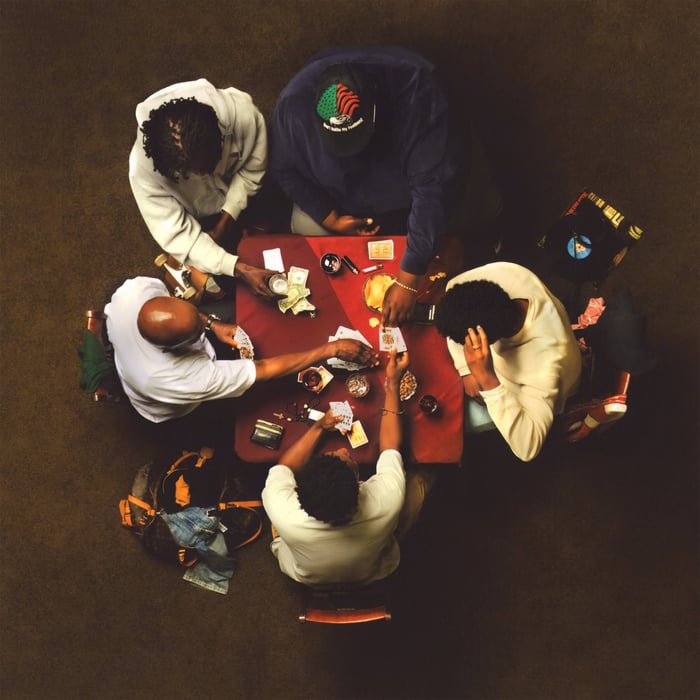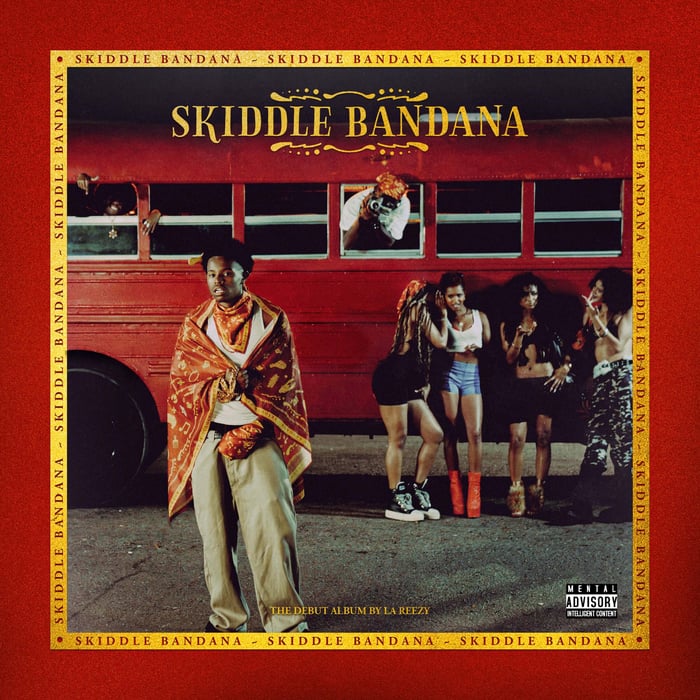
Skiddle Bandana Review: La Reezy Drives the Party Bus Into Your Feelings


 See more Architeg Prints stories on Google.
Skiddle Bandana Review: La Reezy Drives the Party Bus Into Your Feelings
Skiddle Bandana isn’t background rap—it’s a moving vehicle of family stories, grief, jokes, and politics, driven like New Orleans never stopped talking.
Step On the Bus (It’s Not Optional)
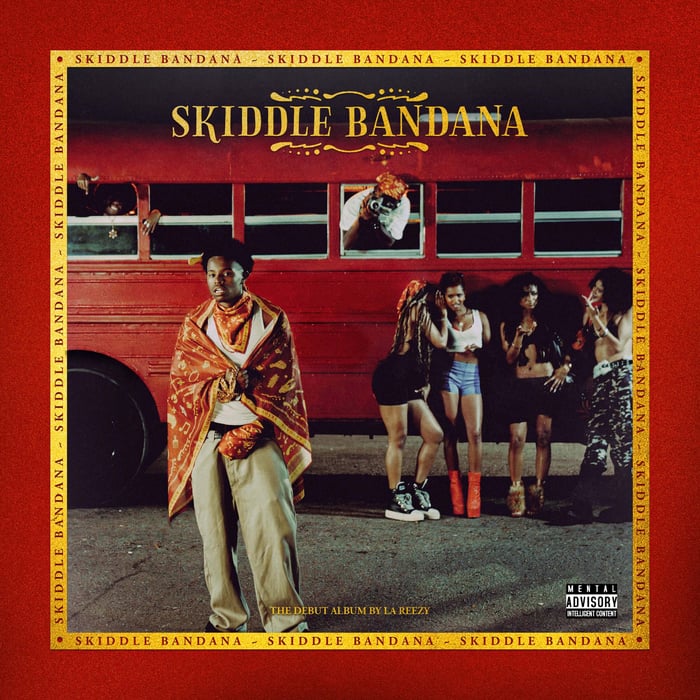
This album doesn’t “start,” it pulls up. Skiddle Bandana plays like La Reezy decided the only honest way to introduce himself is to recreate a party-bus ride—doors opening between songs, voices yelling instructions, passengers clowning around while something heavier keeps creeping in.
The framing is the point: he treats the record like a route, not a playlist. Things slide past the window and become verses. People get picked up mid-ride. Somebody’s always talking. Somebody’s always trying to make the mood lighter than it should be. And yeah, that’s a very New Orleans way to tell the truth—wrap it in noise first, so the pain doesn’t see you coming.
Arguable take: the “party bus” concept isn’t cute world-building—it’s La Reezy’s way of admitting he can’t sit still long enough to process anything unless there’s a crowd around him.
Where He’s From Shows Up Before the Beats Do
La Reezy comes from the 12th Ward, and the album keeps proving he’s not using that as a brand tag. The stories are too specific to be costume. You hear a family that keeps everything in-house because that’s how you survive: a grandmother sewing a Michael Jackson glove when he’s four, a dad cutting hair at home so the money stays in the family, a grandmother handling his locs whenever he wants.
“Family Bizzy” hits like a scrapbook that suddenly starts moving. There’s a hurricane scene where his parents and four brothers end up stacked on one air mattress until FEMA “started trippin’.” Then the smaller flexes come in—one cousin goes viral with over a million views, a ten-year-old brother pulls straight A’s—yet Reezy lands on the pettiest, most human shame: him hiding a bad grade at the bottom of his book bag next to brand-new shoes his mom bought. That detail is the whole album in miniature. Pride, guilt, love, and the ridiculous pressure to look like you’re fine.
Arguable take: the “family business” theme is stronger than the street theme—because when he talks about the block, it’s still really about the people inside his house.
He Uses Space Like He Expects You to Talk Back
On “Curly Head Boy,” he walks in almost alone—vocals as the lead instrument, minimal backing until the drums finally hit harder. When they do, he and executive co-producer Clay Dough lock into a pattern: programmed drums, heavy bass, a repetitive loop. The phrases are short and clean, like he’s leaving holes on purpose so a real-life crowd can answer him.
That’s a deliberate choice, and it’s not just “catchy.” It’s a way to make community audible. He’s writing call-and-response into the architecture.
On “Hot,” the grid tightens—more active hi-hats, a steady clap. He starts comparing a brutal 100-degree Southern day to the sage he keeps burning, then slips in a line that basically calls out fake growth: an experience can’t be “microwaveable.” That’s the kind of throwaway wisdom people say at cookouts—and then you realize you’re repeating it later.
I wasn’t sure at first if those drum loops would wear me out, because the repetition borders on stubborn. But on second listen, that’s the trick: he’s not trying to impress you with beat switches; he’s trying to trap you in the same thought until you actually hear it.
Arguable take: the minimalism isn’t a limitation—it’s a pressure tactic.
“Gold Chains” Is Where He Stops Explaining and Starts Declaring
“Gold Chains” is the album at its most locked-in. Firm claps, direct lines, and a tone that feels like he’s done asking permission. He talks Black royalty like it’s breakfast—because for him, it is. Green grapes in the morning. Hot yakamein at dinner. That’s not just food talk; it’s a refusal to let “royalty” be something imported and polished. He makes it local and normal.
Then “We Live” spreads out wider, carried by heavy bass and a title that sounds built for a whole street to yell back in unison. If there’s a moment where Skiddle Bandana clearly wants bodies around it, it’s here.
Arguable take: “Gold Chains” works because it doesn’t chase depth—it treats pride as a daily routine, which is rarer and harder to fake.
“God Forgive Me” Turns a Random Conversation Into a Confession Booth
Outside a job, on a park bench, “God Forgive Me” plays out like you’re stuck listening to someone who’s drunk and way too honest. A barber complains about charging $20 an hour to cut hair while other barbers charge too much. The narrator listens, smells his breath, hears the jokes—then catches himself judging a man who clearly needs a hug. That little self-check is the hook’s real punch.
“God forgive me / Forgive me, forgive me,”
doesn’t sound holy. It sounds irritated with himself.
Then the mic shifts to the barber, and the song gets uglier in a quiet way. The barber learned clippers at 12 because of his dad. Two years before the recording, he lost his wife to cancer. He says his psychiatrist doesn’t know anything, and nobody comes to pick him up when he’s intoxicated. And then he drops the line that lands like a slammed door:
“I talk to God every day. And that’s why you done this to me.” — La Reezy
Arguable take: this is the emotional center of the album, and it has nothing to do with Reezy sounding cool—he lets another man’s mess take over the track.
“Pretty Girl Bullshit” Refuses to Let Grief Look Pretty
“Pretty Girl Bullshit” opens on a 17-year-old girl dressed glamorous, the kind of person people call “pure spirit” and then reduce to Instagram captions. But she can’t show her brother’s death on her face. The dope she used to cope comes back laced with fentanyl. The song doesn’t dramatize it with theatrics—it just tells you that this is how the world actually moves now.
Near the end, a female voice cuts in, explaining how she cleans her eyes after crying so nobody at school asks what’s wrong. Reezy changes his writing here—shorter pockets, more start-stop phrasing—like he’s trying not to crowd her. Even the ride feels slower.
If I’m nitpicking, the title almost oversells the angle; the song’s empathy is sharper than its headline. But the content earns its spot. It’s one of the few moments where the album feels like it’s holding its breath.
Arguable take: the track works because it doesn’t “save” her—it just shows how much effort it takes to look normal.
The Love Song Is Softer Than He Wants to Admit
“How Did You Love Me” is where he goes gentle, and it’s not subtle. Maleah sings the title question back at him, and he answers with his mother’s advice: treat your lady how you’d want somebody to treat your mom. It’s such a plain sentence it almost sounds corny—until you realize that plainness is the point. He’s not writing a fantasy relationship. He’s writing a home-training relationship.
He paints a New Orleans romance like Tiana and Prince Naveen, which could’ve been a gimmick, but it lands as a local fairytale: not Disney-perfect, just familiar.
He also remembers his mother finally getting one of her rare days to herself—relaxing, cleaning, cooking, running a warm bath. That’s not a “sweet detail.” That’s him admitting how expensive peace is in his world.
Arguable take: this is a better love song than most “romantic” rap tracks because it’s actually about labor and care, not conquest.
“Melanate It” and “Aight” Argue With the Country Like It’s a Person
He says he’d freeze time on a Sunday afternoon, and then immediately shows you why he can’t. On “Melanate It,” the sun’s out, there’s a barbecue, and guns are fired—because even joy has a trigger finger nearby. His wife talks about wanting President Trump out of office, and Reezy spits the kind of line that sounds simple until you feel the defiance in it: “Brown is the crown you could never take.”
Then he jumps forward—2055, living in a castle, surrounded by people in white tees painted with watermelons. He wants to eat watermelon in full view and reclaim the image forever. That’s not random. That’s him deciding shame doesn’t get to own the symbols.
“Aight” keeps the argument going. He talks about limitation like it’s inherited “from above.” He says you teach someone to drive before you teach them how to fly—meaning survival comes first, and freedom comes later if you’re lucky. A skeptic voice pushes back, basically questioning whether he’s even watched his dad go to work. Reezy responds with a grim modern truth: Malcolm and Martin were taken, and now people take their own and get rewarded with a million-dollar sign. Then he ends with the question that frames the whole project:
Who says he can’t turn hood stuff into good stuff?
Arguable take: these political moments land because they aren’t speeches—they’re arguments he’s still actively having.
The Interlude Stops the Party to Name the Problem
The bus picks up more passengers, and then comes a broadcast. The interlude “Hold Yo Crown” straight-up names New Orleans as the murder capital of America and blames the state for funding punishment instead of long-term solutions. It’s blunt, almost intentionally unmusical—like the album is forcing the ride to pull over and listen.
Then, almost immediately, a passenger asks to dance on top of the bus because it’s his birthday. It’s ridiculous. It’s perfect. That’s how it goes: tragedy on the radio, celebration in the aisle, both happening like they don’t even contradict each other.
Before the bus pulls away, a voice tells him not to let anyone take his crown.
Arguable take: the interlude is the album admitting the party vibe is survival theater—not escapism.
“Skiddle Bandana” (The Track) Is a Court Filing With a Punchline
Mac Phipps—an older New Orleans rapper—introduces Reezy on the title track, calling him a young brother with experience “much, much like yours.” Reezy steps in like he’s walking into two places at once: prayer and court. He talks about tying his camel, praying through a prayer channel, filing a complaint in open court. Then the line that sticks like a staple:
A 14-year-old charged as a man made me hot, your honor.
The second verse moves to a Save-A-Lot grocery store. He’s coming off a 7-hour shift, somebody steals his parking spot, his energy collides with somebody else’s energy, and before the sentence is even finished, police are already present in the lot. He redirects the anger toward something absurdly normal—an empty chicken order—and snaps, “Bitch, is you shittin’ me?”
That’s the tightrope he walks: dark humor right next to death, like he’s daring you to admit you’ve laughed at the wrong time too.
Arguable take: the title track proves he’s not “promising potential”—he’s already got the instinct that separates storytellers from rappers who just list things.
What Actually Worked (And What Didn’t)
By the end, Skiddle Bandana leaves three tracks standing in my head the loudest:
- “Family Bizzy”
- “God Forgive Me”
- “Gold Chains”
Those feel like the clearest windows into what he’s doing: family as economy, empathy as discipline, pride as daily habit.
If I’m being honest, I kept waiting for one more moment where the production surprises me—one sharp left turn, one beat that fully flips the bus over. It mostly stays committed to its loops and patterns. That commitment is part of the album’s identity, but it also means a few stretches can blur if you’re half-listening. The record basically dares you to pay attention, and not everyone will.
Arguable take: the album isn’t interested in being “dynamic”—it’s interested in being true, even if that means less sonic variety.
Conclusion
Skiddle Bandana isn’t trying to show you how talented La Reezy is. It’s trying to show you how he thinks—fast, communal, defensive, funny at the worst times, tender when nobody’s looking. The party bus isn’t a metaphor for fun. It’s a metaphor for motion: keep moving, keep picking people up, keep talking, because silence is where the real stuff gets you.
Our verdict: People who like rap that sounds like real conversations—family mess, street pressure, faith questions, and sudden jokes—will ride with Skiddle Bandana easily. If you need constant beat switches, big hooks every 20 seconds, or lyrics that stay safely inspirational, this bus will feel like it missed your stop on purpose.
FAQ
- Is Skiddle Bandana a concept album or just a vibe?
It plays like a concept: the party bus ride keeps reappearing, with voices and stops that shape how the songs land. - What’s the most emotional track on Skiddle Bandana?
“God Forgive Me” gets there without trying—especially when the barber’s story takes over the song. - Does La Reezy focus more on politics or personal stories?
The personal stories lead. The politics show up like an argument at the cookout—loud, unavoidable, and connected to daily life. - Which songs should I start with if I only have 10 minutes?
Start with “Family Bizzy,” then “Gold Chains,” then “God Forgive Me.” That run explains his range without the extra context. - Is this album more about New Orleans or about La Reezy himself?
Both, but he makes the city feel like a family member—present in the language, the food references, and the contradictions.
If this album’s visuals stuck with you as much as the stories did, a poster of your favorite album cover is a pretty clean way to keep the mood on your wall. You can browse options at our store: https://www.architeg-prints.com
 | DISCOUNTGET 30% OFF*Use code on your next order:
|
* This post may contain affiliate links, meaning we earn a commission if you make a purchase through these links, at no additional cost to you.