Million Moons Album Review: Nature Soundscapes That Weirdly Punch Back


 See more Architeg Prints stories on Google.
Million Moons Album Review: Nature Soundscapes That Weirdly Punch Back
Million Moons’ You Be Good, I Love You offers a lush wilderness trip that combines breathtaking soundscapes with sharp riffs, creating a post-rock experience that reconnects listeners to nature and raw human emotion.
A record that pretends it’s about animals… then hits you with feelings
Some albums want to be your escape. Million Moons’ You Be Good, I Love You wants to be your recalibration—like it’s trying to drag your attention away from screens and back into the part of your brain that remembers weather.
This is post-rock, sure, but the band isn’t just stacking crescendos like a familiar trick. The whole thing plays like a deliberate soundscape, built to feel like “the world and its many creatures” are the main characters, not the guitars. And yet, the guitars keep refusing to be polite about it.
At the center of the album’s stated intent is guitarist/pianist/composer Edward Thompson, who frames the whole project as an attempt to pull people back toward nature and away from the sealed-off terrarium of modern life:
“Part of the problem is that urbanisation has separated many of us from the world’s natural beauty. Our goal is to help people reconnect with it through mindful reflection.”
— Edward Thompson
I buy that. Mostly. But I also think the album goes further than “mindful reflection.” It doesn’t just reconnect you—it pushes you. Sometimes gently. Sometimes with a full-band surge that feels like the ocean deciding it’s done being scenic.
“Titan Of The Deep” opens like a dive—and then it starts swinging
The first real statement is “Titan Of The Deep.” And yeah, it does exactly what the title promises: it drops you into the deep blue. The track starts in the low register—submerged, muffled, heavy with pressure—before piano and synths drift in and start building a sense of scale.
Then the band comes in and the mood changes fast. The riffs have a hard rock/classic rock bite to them, like someone snuck an arena-sized guitar line into a nature documentary. That could’ve ruined the spell, but it doesn’t. The “epic” part never bulldozes the “ethereal” part. If anything, that contrast is the point: awe isn’t always quiet.
One arguable take: the track’s biggest strength is also its risk. That riff-driven surge is thrilling, but it’s also the moment where the album shows it’s not above giving you something recognizable to hold onto. If you wanted pure ambient immersion, this opener basically says, “Nope, we’re still a band.”
And here’s where I’ll admit some uncertainty: on my first listen, I couldn’t tell if the “rock” edge was a thematic choice (nature as power, not décor) or just the band flexing because they can. On second listen, it feels intentional—like the track is insisting the ocean isn’t calming; it’s enormous.
Video: “Black Sun Rising” and the album’s not-so-gentle side
There’s a moment in this album’s world where the beauty gets a shadow, and that’s where “Black Sun Rising” earns its space—not as a peaceful interlude, but as proof the band is willing to darken the sky.
What I like here is that the album never treats “nature” as a spa day. It keeps slipping in the idea that the natural world is gorgeous and indifferent, and those are not opposites. If you came in expecting a soothing post-rock bath, the record quietly rearranges your expectations and leaves you standing in cold water.
Arguable claim: this track (and the album around it) works best when it stops trying to be “pretty” and lets a little menace show. That’s when the atmosphere feels earned instead of curated.
The emotional trick: it’s “about nature,” but it keeps sounding like people
Even with the explicit nature/animal focus, the album’s real stunt is how easily it becomes human. Not through lyrics—through pacing, tension, and the way tones tilt from comfort into dread and back again. It captures that specific kind of emotional whiplash where you’re not even sure what you’re feeling until the music changes and your chest follows.
“Last Days Together” turns distortion into tenderness
On “Last Days Together,” the band leans into distorted guitars and orchestral string textures, but the effect isn’t aggression. It’s softness with rough edges—the kind of sadness that doesn’t collapse, it just lingers.
What surprised me is how the track manages to feel melancholy and quietly joyful at the same time. That shouldn’t work. Usually, one emotion wins and the other becomes decoration. Here, they coexist. It sounds like holding it together while something ends—still functional, still grateful, still wrecked.
Arguable statement: the album’s most moving moments aren’t the huge climaxes; they’re the stretches where the band lets conflicting feelings sit in the same room without forcing a resolution.
“Echoes In The Abyss” plays games with its own title
Then there’s “Echoes In The Abyss,” which immediately does something cheeky: it starts with twinkly, gentle noises that feel light and calming—basically the opposite of what “abyss” implies. And then it pivots into something more serious with an organ entering like a warning.
It keeps shifting—soft to stern to soft again—like it can’t decide whether to soothe you or tell you the truth. If you’ve ever tried to calm yourself down while your brain keeps reloading the worst-case scenario, this track gets uncomfortably accurate.
Mild criticism, though: the back-and-forth is effective, but there were moments where I wanted one of those moods to stay longer. The track is so busy being clever about contrast that it occasionally cuts off its own momentum.
Arguable claim: “Echoes In The Abyss” is strongest when it commits to the organ-heavy gravity; the “twinkle” sections are pretty, but the heavier voice feels like the track’s actual point.
Each track is its own location—and that’s not just pretty talk
The album doesn’t behave like one continuous haze. It moves like a series of separate environments, each track placing you somewhere else. That could’ve made the record feel like a playlist of scenes, but the cohesion comes from the band’s consistent language: piano and synths as atmosphere, guitars as weather, drums as something physical moving through space.
And the clever part is you can interpret those places in two directions:
- Outward: you’re in oceans, skies, deep spaces, natural habitats.
- Inward: you’re in grief, relief, wonder, dread—the stuff people pretend they don’t have time for.
I kept waiting for the album to pick one and commit: is it environmental storytelling or emotional storytelling? But it keeps refusing the choice, and that refusal starts to feel like the thesis. The not-so-subtle reminder is that we’re not separate from the natural world—we’re just animals with calendars.
Arguable statement: the record’s “nature” theme isn’t the subject; it’s the disguise. The real subject is how modern life makes us forget we’re allowed to feel huge things.
“Floating For Eternity” closes the door softly—and leaves you in the stars
The final stretch lands on “Floating For Eternity,” and it’s the kind of title that dares you to roll your eyes. I almost did. But the track earns it by leaning into a dream-pop inflection—not turning into a pop song, but letting that starry, weightless glow seep into the arrangement.
It genuinely feels like drifting: not falling, not flying—just suspended. Looking down on the world from a distance where your problems don’t disappear, they just shrink to their actual size.
Here’s my revised first impression: at first, I thought the closer might be too on-the-nose, like the album was trying to hand me a “transcendence” sticker for completing the journey. But after sitting with it, the track reads less like a grand finale and more like a release of pressure. It doesn’t triumph. It exhales.
Arguable claim: the dream-pop tint is the album’s smartest left turn, because it frames “a heavenly experience” as something understated rather than dramatic.
Artwork and release details (yes, the packaging matters here)
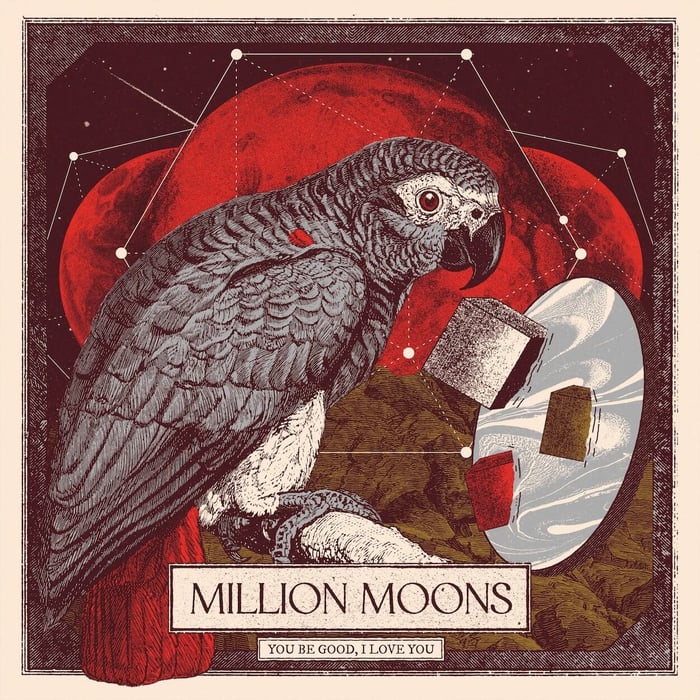
The cover art fits the album’s vibe: clean, atmospheric, and aligned with the idea of a carefully composed natural world rather than a messy snapshot. It looks like something meant to be stared at while the music plays—intentional, not random.
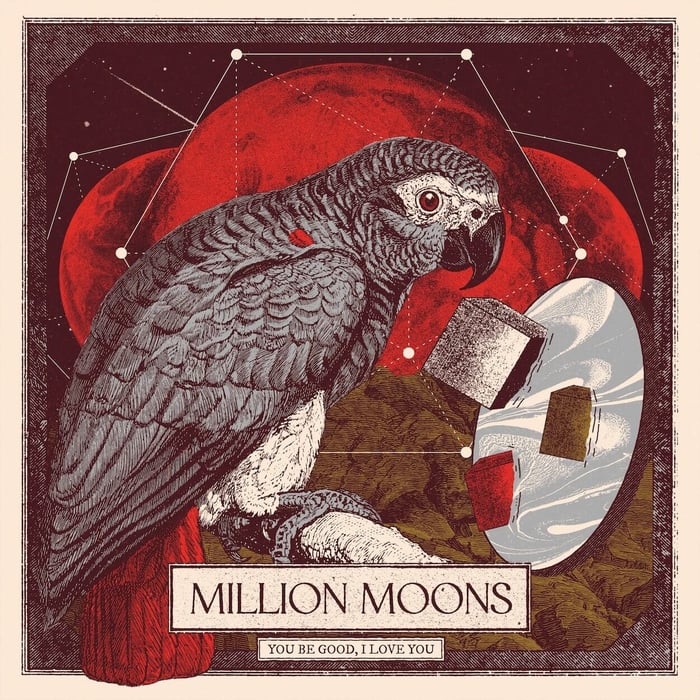
You Be Good, I Love You is out now via Ripcord Records, Dunk! Records, and A Thousand Arms Music.
And if you want to keep tabs on the band socially, they’re on Facebook.
So what’s the number, if you’re the type who needs a number?
I’m not pretending a rating is science, but I also get it—sometimes you want a shorthand.
This lands at about a 9/10 for me, not because every second is flawless, but because the album’s intent comes through clearly: it builds environments you can step into, and it doesn’t treat “beauty” as the only natural emotion worth depicting. The best parts leave you quiet for a minute afterward, which is basically the highest compliment this style can earn.
Conclusion
You Be Good, I Love You by Million Moons doesn’t just soundtrack nature—it argues with you about what nature is: not a calming background, but something immense enough to rearrange your sense of proportion. It’s a record that can feel cosmic and intimate in the same breath, and it’s bold enough to let a rock riff crash into a soundscape without apologizing.
Our verdict: This album will hit hardest for listeners who like post-rock that actually goes somewhere—people who want atmosphere, yes, but also motion, tension, and the occasional riff that makes the scenery feel dangerous. If you need vocals to tell you what to feel, or you want your “nature album” to stay politely ambient, you’ll probably get impatient and start checking your phone—which, honestly, is exactly what this record is trying to stop you from doing.
FAQ
- What is the core concept behind the Million Moons album “You Be Good, I Love You”?
It plays like an intentional reconnection to nature—soundscapes and “environment” pieces designed to pull your attention outward, then weirdly back inward. - Which track sets the tone first on “You Be Good, I Love You”?
“Titan Of The Deep” is the opener that establishes the album’s oceanic scale, then surprises you by blending in hard/classic rock riff energy. - Does the album stay calm the whole time?
No, and that’s part of what makes it work. It keeps shifting between gentle textures and heavier, more serious sections (like the organ turns in “Echoes In The Abyss”). - What’s the emotional highlight on the record?
“Last Days Together” stands out for how it holds melancholy and joy in the same space—distortion and orchestral tones used for tenderness, not brute force. - Is “Floating For Eternity” actually as dreamy as it sounds?
Yes. It leans into a dream-pop glow and feels like drifting above the world rather than conquering it—more exhale than fireworks.
If this album’s atmosphere got under your skin, consider grabbing a favorite album-cover poster for your wall—same mood, less commitment. You can browse options at our store: https://www.architeg-prints.com
 | DISCOUNTGET 30% OFF*Use code on your next order:
|
* This post may contain affiliate links, meaning we earn a commission if you make a purchase through these links, at no additional cost to you.