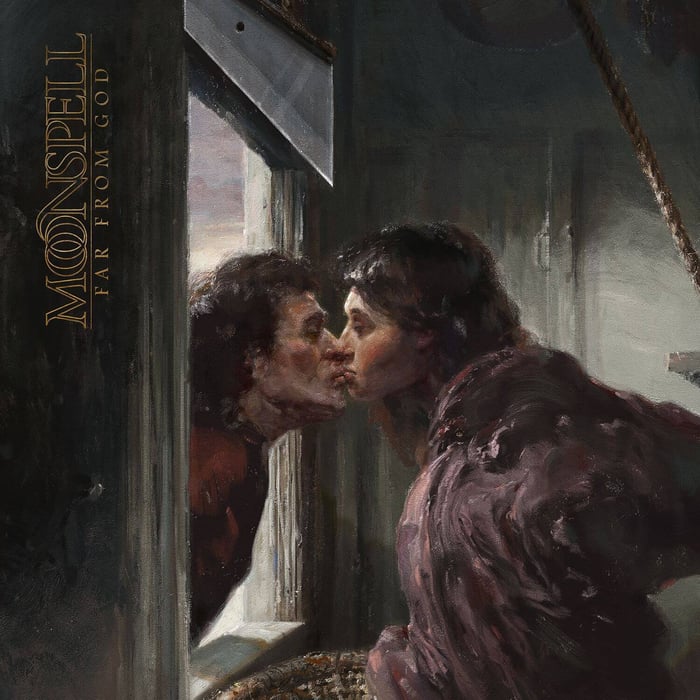
Far From God Review: Moonspell Makes Nostalgia Sound Unreasonably Alive


 See more Architeg Prints stories on Google.
Far From God Review: Moonspell Makes Nostalgia Sound Unreasonably Alive
Far From God is Moonspell tightening their goth-metal screws: stripped-back, polished, and weirdly raw. Here’s what the album is really doing.
A band this old doesn’t “move on”—it circles back
When a band survives long enough to rack up 13 albums and three-plus decades, the past stops being a memory and starts being a tool. Moonspell are clearly in that phase: the kind where anniversary tours for the early records sit right next to “new era” talk, like a vampire posing for a class reunion photo.
And yes, that context matters, because Far From God sounds like a band staring into its own history—not to worship it, but to measure itself against it. That’s a risky game. Fans don’t just remember the old albums; they’ve stapled whole emotional chapters of their lives to them. Trying to evoke that era can feel like self-inflicted punishment, because “good songs” isn’t always enough when people are chasing the ghost of how they felt in 1996.
The ‘Irreligious’ comparison is a trap—and the album knows it
There’s chatter floating around this record—whether intended or just inevitable—that Far From God is basically Moonspell’s Irreligious for the 21st century. I get why people reach for that: it’s tidy. It’s clickable. It’s comforting.
But listening to this thing, I don’t hear a band trying to recreate a museum piece. I hear a band shaving down the excess and daring you to admit they don’t need the extra decoration anymore. If anything, the “classic album” framing sets the wrong expectation: it makes people listen for matching wallpaper instead of noticing the deliberate restraint.
And I’ll be honest: on first pass, I thought, “Okay, this is going to be Moonspell doing Moonspell-by-numbers.” Then the record kept refusing to over-explain itself, and my first impression started to look kind of lazy.
MOONSPELL - Cross Your Heart (Official Video) | Napalm Records
The real flex: eight songs, no bloat, and a controlled burn
Here’s the blunt version: Far From God is eight tracks of polished, satisfying goth metal from one of the genre’s foundational bands. No padding. No “interlude” that exists to convince you the album is deep. Just songs.
What surprised me is how stripped back it feels in practice. Moonspell are still reaching for that otherworldly beauty they’ve always trafficked in, but the arrangements often feel rawer than you’d expect from a veteran band with nothing left to prove. That rawness doesn’t come from messy production—it comes from confidence. Like they decided the best way to sound powerful was to stop trying so hard to sound powerful.
That’s an arguable move, by the way. Plenty of listeners want their goth metal dressed like an aristocrat. This record sometimes shows up in a plain black shirt and lets the posture do the work.
“Cross Your Heart” is a jam session that accidentally turns into a monument
The opener, “Cross Your Heart,” lands like the moment a rehearsal room locks into a groove and nobody wants to be the first person to stop playing. The repeated guitar motif is the engine—it’s simple, it’s persistent, and somehow it never wears out its welcome. I kept waiting for it to get annoying, like a hook that’s too pleased with itself. It doesn’t. It just keeps lifting the song up.
And then there’s the contrast that Moonspell are basically addicted to: that uplift in the music pressed up against lyrics that feel like they’re staring at roadside memorials a little too long. It’s the band’s specialty—turning solemnity into something you can nod your head to without feeling like a monster. Another “solemn banger,” whether that phrase should exist or not.
Arguable take: if this track has a flaw, it’s that it makes the rest of the album’s restraint feel almost too polite at first. It sets a high bar for immediate payoff.
The title track plays Dracula straight—and that’s the point
Then “Far From God” steps in with a vampiric theme that fits Fernando Ribeiro like tailored velvet. His croon is basically the album’s main instrument: a Count Dracula-style presence that can make a plain line feel theatrical without sounding like cosplay.
“On your blood, I feed tonight”
is blunt—almost comically direct. But the performance sells it because Ribeiro doesn’t act like he’s delivering poetry; he acts like he’s stating a fact he’s slightly ashamed to enjoy. The chorus mantra—“Far from God” repeated—turns into this hypnotic loop that burrows in. I don’t even think it’s the cleverest writing on the record. It just works, which is more insulting to most songwriters than any critique.
I caught flashes of the same appeal that made Peter Steele such a gravitational vocalist—big voice, bigger shadow. And if you’re from a different generation, you might hear that modern gothic-theater snap too. Either way, Ribeiro has that gift: he can inflate simple phrases until they feel like tortured scripture.
Arguable take: the title track succeeds because it refuses to wink at you. If you need irony as a safety rail, this song will push you over the edge.
This album’s sequencing is basically a slow tightening of the screws
What Far From God gets right—quietly, and therefore more impressively—is pacing. Most of the record keeps its intensity on a leash until late in the runtime. It’s a restrained listen, almost to the point where I wondered if it was holding back too much for its own good.
Then the final stretch—“Our Freedom To Fall” and “Reconquista”—shows why that restraint exists. The punch finally lands:
- crunchier riffs that actually bite instead of posing
- more frenetic percussion that nudges the songs toward urgency
- Ribeiro letting the brooding bass-baritone turn harsher, more forceful, less “narrator” and more “participant”
It’s neat sequencing, and I’ll go further: it feels intentional in a way a lot of late-career albums don’t. Many bands stack the heavy tracks early to prove they’ve still “got it.” Moonspell wait, like they know you’re not going anywhere.
Mild criticism, though: there’s a fine line between “restrained” and “a little too comfortable,” and the middle of the record occasionally flirts with that comfort. Not boredom—more like a band lounging in a throne they built themselves.
The standout moments aren’t the big gestures—they’re the specific accents
The album’s best details aren’t the obvious gothic signifiers. It’s the stuff that tilts the atmosphere in a strange direction.
“Your Promise Of Light” brings in Middle Eastern melodic shapes that cut through the expected palette. It’s not there to scream “exotic”—it’s there to make the chorus feel like it’s leaning toward something ancient and unresolved. That’s the difference. A lesser band uses those melodies as decoration; here, it changes how the song breathes.
And “Biblical” builds into a desperate crescendo where the repeated line “our love was biblical” gets more searing each time it returns. That repetition isn’t lazy writing; it’s pressure. Each pass sounds less romantic and more doomed, like the phrase is being used to justify something that shouldn’t be justified.
Arguable take: “Biblical” is the record’s emotional peak, and it earns it not by getting louder, but by getting more cornered.
So… did Moonspell have anything to prove? I’m not convinced they did
Halfway through, I kept asking myself: why does this album even sound like it’s answering a question? Moonspell are already Portugal’s best-known metal act. Their discography is famously consistent. There’s no desperation here, no grasping for relevance.
And yet Far From God still feels like it’s reaching back—trying to recapture a kind of magic that, frankly, didn’t seem missing in the first place. Maybe that’s the real point: not “we’ve lost it,” but “we still control it.” Like they’re testing whether they can strip their approach down and still hit that same gothic nerve.
Whether these tracks sit beside Irreligious in a listener’s personal canon is going to depend on the listener, not the band. That kind of status is emotional math, not musical math. But after living with these eight songs, I wouldn’t bet against Moonspell turning at least a few of them into long-term fan favorites—because the hooks are built to last, and the drama is paced like a slow closing door.
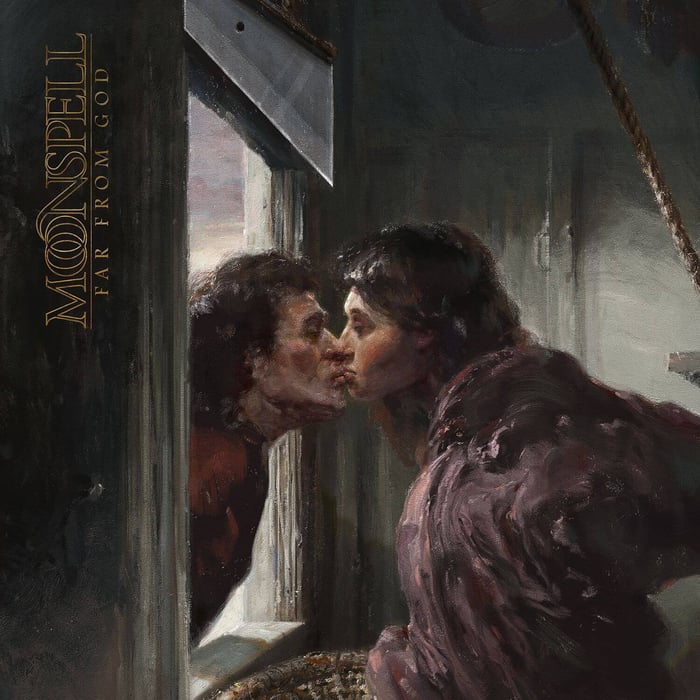
Album art
Release note (because it matters to real life)
Far From God is out now via Napalm Records.
And yes, if you cornered me and demanded a number: 8/10. Not because it’s perfect, but because it’s deliberate—and deliberateness is rare when bands start chasing their own legacy.
Conclusion
Far From God doesn’t try to resurrect Moonspell’s past; it tries to prove the band can still summon the same feeling with fewer ingredients. Sometimes that restraint risks blending a couple passages together, but the best moments—“Cross Your Heart,” the title track’s mantra, “Your Promise Of Light,” and “Biblical” tightening the emotional vice—show a band choosing control over spectacle and winning more often than not.
Our verdict: People who like goth metal that actually commits—melody-forward, dramatic, and unembarrassed—will love Far From God. If you only want the maximalist, era-defining lightning strike and you measure everything against a personal 1996 shrine, you’ll complain it’s “not the same” and somehow miss that it isn’t trying to be.
FAQ
- Is Far From God trying to sound like Moonspell’s early classics?
It nods backward, but the bigger move is stripping things down and trusting the songs to stand without extra ornament. - How heavy is this album compared to Moonspell’s other work?
It holds back for most of the runtime, then hits harder near the end with “Our Freedom To Fall” and “Reconquista.” - What’s the most immediate track on first listen?
“Cross Your Heart” lands fast—repeating motif, big mood, and it doesn’t waste time getting stuck in your head. - Does the title track lean into gothic theatrics?
Completely. The vampiric theme and the repeated “Far from God” chorus are played straight, and that commitment is why it works. - Which song feels like the emotional peak?
“Biblical,” especially as the repeated “our love was biblical” grows sharper with each return.
If you want a physical reminder of this album’s particular brand of drama, you can shop your favorite album cover poster at our store: https://www.architeg-prints.com/ — it suits the whole “beautiful gloom on the wall” lifestyle surprisingly well.
 | DISCOUNTGET 30% OFF*Use code on your next order:
|
* This post may contain affiliate links, meaning we earn a commission if you make a purchase through these links, at no additional cost to you.