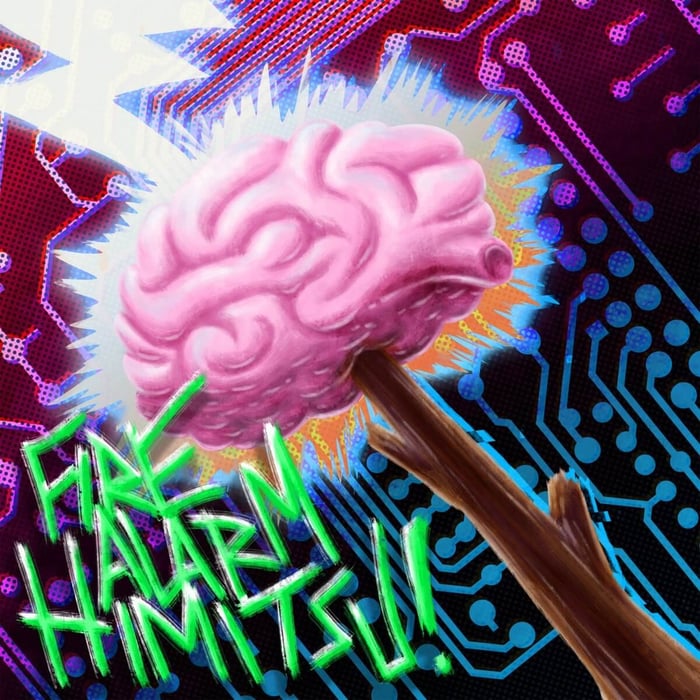
Fire Alarm Himitsu! Review: Celogen Pulls the Pin on Art-Pop Chaos


 See more Architeg Prints stories on Google.
Fire Alarm Himitsu! Review: Celogen Pulls the Pin on Art-Pop Chaos
Fire Alarm Himitsu! turns a personal crash into jittery showtunes, rude synths, and weirdly life-affirming pop. It shouldn’t work this well.
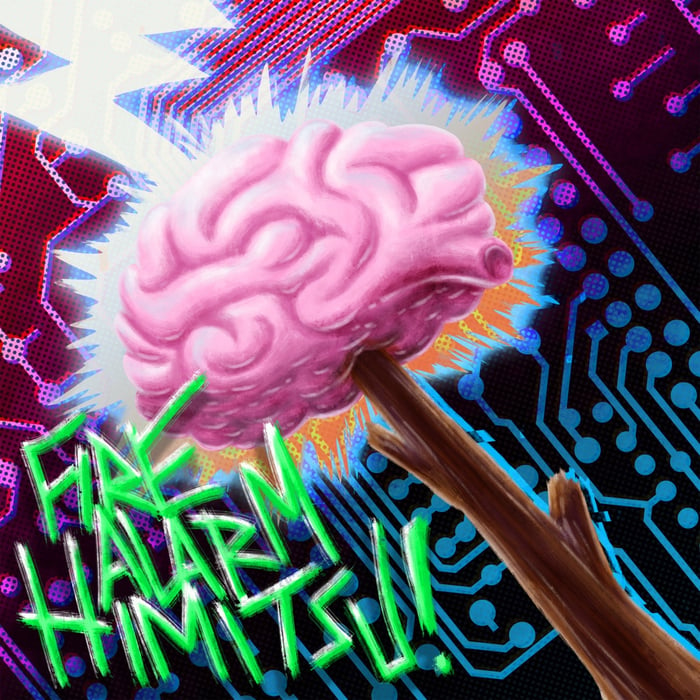
A record that starts like a joke—and then refuses to be one
Some albums sound like they were made to impress you. Fire Alarm Himitsu! sounds like it was made to keep its creator alive long enough to finish the hook.
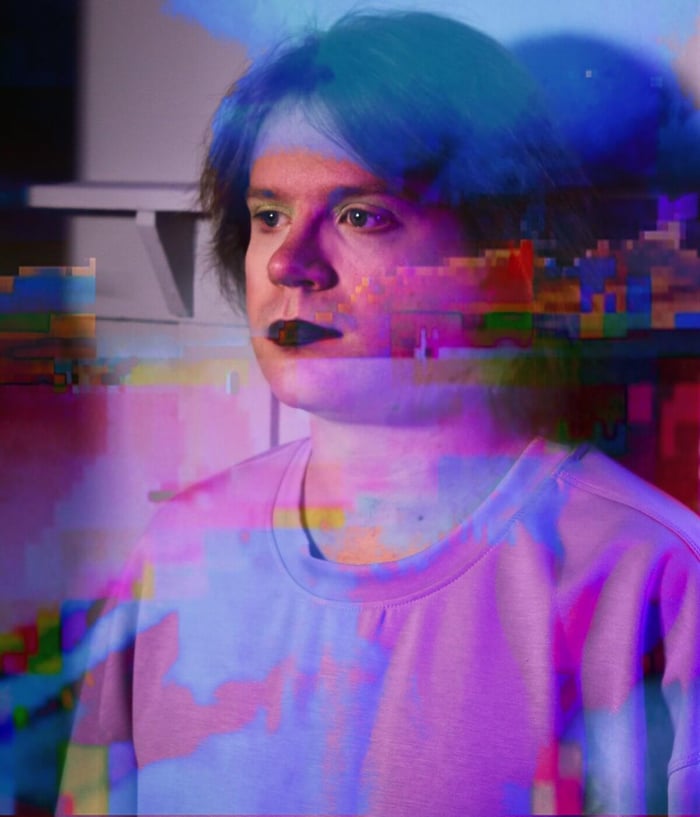
Celogen is Dominic Demierre’s solo project, and this record has that “one person alone in a room with too many ideas” voltage—except it isn’t aimless. It’s pointed. It’s a deliberate decision to take a breakdown, a year of grief, and a failed move and not turn them into tasteful sadness. Instead, Demierre spotlights the darkness until it starts to look ridiculous, like shining a flashlight under your chin and realizing the monster is… still you, but at least you can laugh.
The central trick is the album’s warped showtune brain. I kept hearing Sondheim-style theatrical turns—melodies that act, not just sing—then watching them get shoved through a sticky electronic filter that nods toward the absurd swagger of Justice and Mr. Oizo. It’s not a clean blend. It’s not supposed to be. The whole thing feels like it’s daring you to keep up.
And yeah, right away I wondered if the theatrical angle would be too precious. For the first couple minutes I thought, oh no, this might be “quirky” in the exhausting way. But the record doesn’t sit in whimsy. It uses whimsy like a crowbar.
The “bedroom auteur” flex is real—and also kind of risky
Here’s the bridge from concept to execution: Demierre plays all the instruments and handles all the programming and production from his bedroom. That self-contained approach puts him in the lineage of people who build worlds alone—Prince and Trent Reznor get invoked for a reason. Not because the music sounds like them, but because the control does. Every sound feels chosen, not stumbled into.
Over the last eight years, Celogen has apparently moved through a bunch of shapes—starting in 2018 as a triple-EP study in funk and new wave, then stretching into folk, industrial, prog rock, and house. You can hear that history here as a kind of musical restlessness: the album keeps changing costumes mid-scene. It’s “style of his own” territory, but it’s not minimalist. It’s maximal, even when it’s intimate.
Demierre’s influences hang in the air like fingerprints: classic popcraft (Brian Wilson), art-pop theatricality (Kate Bush), modern auteur fussiness (Sufjan Stevens, St. Vincent), and electronic punch (Daft Punk). The songwriting leans on two obsessions that won’t leave him alone:
- jazz harmony that bends the expected emotional resolution
- McCartney-esque melody that keeps trying to be memorable even when the lyrics are bleak
That combo is basically the album’s personality: “my brain is complicated, but I still want you to hum this.”
And here’s my mild criticism: sometimes the density feels like it’s trying to outsmart the listener. There are moments where the production choices crowd the emotional point—like too many stage lights pointed at the same actor. It doesn’t ruin the songs, but it can blur what should be a clean punchline.

“Hey Dissolver” is the first real alarm bell
This is where the record shows its hand. The first single, “Hey Dissolver,” welds an angular nursery-rhyme cadence to slippery synths and a pounding rhythm. It’s playful in shape, but it’s not cute. It’s the sound of someone packaging dread in primary colors because grayscale would be too easy.
Demierre sings alongside Victoria Silver and Sasha Bogdanov, and the subject matter goes straight for the throat: chemical warfare imagery and the inexplicable human death drive. What makes it hit isn’t shock value—it’s the way the song acts like this darkness is ordinary, like it’s sitting at the kitchen table.
The lyrics come from a weirdly specific self-dialogue: Demierre made cut-and-paste poetry out of things he wrote at eighteen. That choice matters. You can hear the tension between “young me wrote this dramatically” and “present me is trying to make meaning out of it.” It’s not nostalgia. It’s an attempt to interface with a past self and admit: it doesn’t get easier, it just gets more natural.
Midway through, Sophie Hébert shows up with verses that feel like someone stepping between you and your own worst impulse, asking for reconciliation with the destructive elemental stuff we all carry. The album’s collaboration style isn’t about polishing the material—it’s about letting other people put their hands directly on the bruise.
I can’t fully tell if Demierre wants the listener to feel comforted here or indicted. Maybe both. The song is upbeat enough to move your body, which is a little unsettling when the words are staring at violence like it’s a household object.
“The Oracle Bone” proves the album wants sincerity, not perfection
From there, the record swerves into “The Oracle Bone,” and the vibe shifts from “hooked anxiety” to “late-winter numbness with a grin.” Kue Varo adds backing vocals, and Raphaelle TBD recites an absurdist poem on her phone—on purpose, not as an accident. The amateurish texture is the point: it’s a refusal to varnish the weirdness.
There’s a line of intent baked into that choice: it had to be sincere; it couldn’t feel contrived. That’s a risky stance in art-pop, a genre that often treats contrivance like perfume. Here, sincerity is the aesthetic—meaning the messy edges stay in frame.
The lyrics lean into cyclical cruelty with dark jokes, and they land because the song doesn’t wink too hard. It just says the ugly thing plainly:
“Stop all the clocks
Halt the flow of time like bile in the kitchen sink…
Like the oracle bone touched by Indian ink.”
— Dominic Demierre (Celogen)
Over distorted drums and a lively horn section, the images keep escalating: an evil king condemning the innocent, a sibyl burned alive, a sandstorm ripping down a house packed with creation. It’s surreal, but it isn’t random—it’s the mind flipping through brutal history and private panic in the same breath.
And then it snaps into a recognition that surprised me on second listen: the song crawls toward the idea that nobody is cursed, and nobody has to give in to doubt. Not because life is fair—because resignation is a choice the album refuses to romanticize. That’s the whole Fire Alarm Himitsu! posture: you can be devastated without making devotion to devastation your personality.
“Waif (Polyphasic Sleep)” is the album’s ugliest moment—in the best way
The record’s emotional center, for me, is “Waif (Polyphasic Sleep).” It’s easily Demierre’s angriest writing, and it doesn’t hide behind metaphor the way the earlier songs sometimes do. The haunted piano melody sets the scene like a dim hallway light. Carlos Rojo adds delicate backup. Then the track detonates into an explosive synth solo that reportedly took a full day to compose—which makes sense, because it sounds like someone chiseling a scream into a melody.
This song is a direct response to watching close friends get abused and escaping a toxic living situation, and it names a familiar villain: the malignant narcissist who feeds on control and calls it “love.” The writing bites without turning cartoonish, which is harder than it sounds.
The lyrics go for a specific kind of weaponized observation—someone measuring pain like it’s a competition:
“Did you notice your sting is a relative thing
And that mine is alive while yours barely survives…”
— Dominic Demierre (Celogen)
The beat is built from Demierre sampling his own back catalogue. That’s not just a neat production move—it’s a thematic one. He’s literally making the past pound underneath the present, turning old material into an insistent engine. He wanted a chaotic-yet-catchy hook, and it works because the hook doesn’t feel “crafted.” It feels cornered.
And when his performance rises into a scream, it doesn’t sound like studio theatrics. It sounds like the moment you stop trying to be reasonable because reason hasn’t protected anyone you care about.

The album’s real mission: outward focus disguised as pop fireworks
Here’s the pivot that makes Fire Alarm Himitsu! more than an interesting collection of sounds: the record is openly about taking charge of life after devastation. That could’ve become a dour “healing journey” album—the kind that politely asks you to be proud of it.
Instead, it chooses extroversion. That’s the creative decision that matters most.
Demierre seems to be working through what it means to be devastated without worshiping misery. He doesn’t want self-pity. He wants to know what makes other people tick. How does anyone get past anything? That outward gaze turns the record into a rallying cry for love and persistence, even when the songs are swimming in despair.
I’ll admit, I wasn’t sure I bought that “extroverted” claim at first. A lot of deeply personal records say they’re for everybody, but they still feel like diaries with better synths. This one actually tries to touch the listener through pop songwriting—big melodic gestures, theatrical framing, a sense of “come stand closer.” It keeps reaching beyond the private crisis.
There’s also a blunt, almost stubborn optimism threaded through it: Demierre feels better now and wants others to feel better too. And there’s a line of belief under the noise—like you only get out of the mystery by chasing truth, not by decorating the mystery until it looks like art.
Celogen’s evolution shows up as color, not a resume
By the time the album closes its circle, the main impression isn’t “wow, genre-hopping.” It’s that Demierre has been building a vocabulary for years, and Fire Alarm Himitsu! is where he uses it to translate crisis into something colorful, vivacious, and electrified.
He even jokes (and you can hear the truth in it) that each record reveals what went wrong and right that year. But this one doesn’t just document damage—it metabolizes it. It turns personal rupture into something that wants to be sung, shared, maybe even danced to in a slightly unhinged way.
If the album has a thesis, it’s that human connection is still the prize, regardless of wanderlust or isolation or whatever fantasy of escape you’re carrying. The record keeps reaching out, even when it’s describing decay. That reaching is the point.
Listen
Conclusion
Fire Alarm Himitsu! is what happens when someone decides not to be flattened by a bad year and instead builds a crooked little musical carnival on top of it—showtunes arguing with synths, anger dressed in melody, sincerity allowed to look messy.
Our verdict: People who like art-pop with theatrical guts—and who don’t panic when a hook arrives wearing a strange costume—will actually love this album. People who need their feelings served neatly, with clean genre labels and polite production, will bail fast (and probably complain it’s “too much,” which is sort of the point).
FAQ
- What is the core vibe of Fire Alarm Himitsu!?
It feels like showtunes run through abrasive, playful electronics—bright surfaces with real damage underneath. - Does the album lean more electronic or more singer-songwriter?
Both, but the songs keep insisting on melody; the electronics act like the stage lighting and occasional trapdoor. - Is this a dark record?
Lyrically, yes. But it keeps trying to make you move, laugh, or at least not spiral—so it doesn’t sit in gloom. - Which track hits the hardest emotionally?
“Waif (Polyphasic Sleep)” goes for anger without flinching, and it earns its scream. - Is Fire Alarm Himitsu! accessible for casual listeners?
The hooks help, but the theatrical structure and dense choices might feel overwhelming if you want simple, straight-line pop.
If this album’s visuals stuck with you as much as its noise, you can shop a favorite album cover poster at our store—tastefully loud, like the record itself: https://www.architeg-prints.com/
 | DISCOUNTGET 30% OFF*Use code on your next order:
|
* This post may contain affiliate links, meaning we earn a commission if you make a purchase through these links, at no additional cost to you.