Mitski’s “Nothing’s About To” Is Anxiety With a Warm Lamp On


 See more Architeg Prints stories on Google.
Mitski’s “Nothing’s About To” Is Anxiety With a Warm Lamp On
“Nothing’s About To” turns Mitski’s raised-profile panic into sharp jokes and big, risky music—like she’s begging for quiet while turning up the amps.
Let’s not pretend this album is “just songs”
Mitski’s Nothing’s About To doesn’t sound like an artist casually making her eighth album. It sounds like someone trying to negotiate with fame the way you negotiate with a smoke alarm: you want silence, but you also know the noise is technically saving you.
Four years ago, that viral surge hit and suddenly she wasn’t merely “respected.” She was projected onto—fast. The kind of spotlight that can refill a career or flatten it into a costume. And while the bigger stages clearly gave her room to build a more conceptual, theatrical live experience (that 2024 touring scale is hard to miss in how boldly she thinks now), the emotional aftertaste on this record is still: please stop looking at me.

The opening move: romanticize escape, then sabotage it
The first track, “In A Lake,” lays out the album’s core trick: it sells you an exit ramp, then admits the ramp leads nowhere. She reaches for small-town stillness like it’s a cure, then immediately points out the practical problem—small-town life isn’t a portal, it’s a place with its own cages.
This is where I thought the album might get stuck in a single mood: yearning as a lifestyle. But the writing doesn’t let it stay pretty for long. Nothing’s About To keeps interrupting its own fantasies, like she doesn’t trust herself to enjoy them without asking what they cost.
Arguable take: the album’s “escape” themes aren’t a diary entry—they’re a defense mechanism dressed up as scenery.
Bars, anonymity, and the weird comfort of being one more body in the room
From there, she starts making a more convincing case for disappearing—not by running away, but by blending in. “I’ll Change For You” is basically her argument for the bar scene as a miracle: you get community and anonymity at the same time, which is a rare combo when the world has decided your face is a symbol.
And then “Instead of Here” flips the coin. It isn’t the romantic version of solitude. It’s the hunger for isolation that shows up when even “being perceived” feels like labor. I kept waiting for the record to offer a clean solution—some tidy emotional resolution—but it refuses. It just keeps weighing different kinds of distance.
Arguable take: the bar songs feel more honest than the “nature” songs, because the bar isn’t pretending to be pure.
The references aren’t decoration—they’re her alibi
Mitski’s always been the type to lace her work with literary and cultural references, and here the nods (from Shirley Jackson to Grey Gardens) don’t come off as “smart seasoning.” They reinforce the album’s obsession with isolation—how it can be chosen, performed, inherited, or forced.
And sure, if you skim the surface, this could sound self-involved in that “my problems are unique” way. But she’s too skilled at puncturing herself to let the album become a self-pity shrine. The tone is wry enough to slice through her own drama before it turns sticky.
Arguable take: the references are less about sounding cultured and more about outsourcing feelings she doesn’t want to confess directly.
“Dead Women” is where she stabs the balloon—and it pops perfectly
The moment that really gives away what this album is doing is “Dead Women.” It’s audacious in a quiet, nasty way: she imagines being turned into a flattering myth after she dies—friends misremembering her into sainthood, polishing the messy parts into something easier to praise.
That’s not just morbidity for aesthetic points. That’s control. If people are going to rewrite her, she’s going to do the rewrite first, with a grin. The humor is the weapon, and it lands because it’s specific—not vague “death talk,” but the social mechanics of grief-as-performance.
I’m not totally sure whether I’m supposed to laugh with her or feel accused. On second listen, I realized that discomfort is probably the point: she’s mocking the way audiences and inner circles alike can turn a person into a story.
Arguable take: “Dead Women” isn’t a sad song—it’s a preemptive rebuttal.
She doesn’t chase expectations—she swings at them
One of the clearest statements on Nothing’s About To is musical: she’s not second-guessing what a newly expanded fanbase might want. If anything, she seems to enjoy refusing the job description.
This is, without question, her most musically ambitious record so far. The tranquil Americana thread that shaped The Land Is Inhospitable And So Are We doesn’t disappear, but it gets interrupted—sometimes gently, sometimes like somebody kicked the door in.
You hear subtle reinventions too. Tracks like “Rules” wear a palpable ’70s soft rock influence—not as cosplay, but as structure. The softness becomes a stage set she can rearrange.
Arguable take: the “soft rock” moments aren’t comfort; they’re misdirection.
Then the guitars show up like an old version of her broke into the room
And when she wants to get violent—sonically, not theatrically—she does. The album periodically detonates into thrashing breakdowns that recall the rawer energy of Bury Me At Makeout Creek. Those eruptions don’t feel random. They feel like a deliberate puncture in her current image: pop-star scale interrupted by punk reflex.
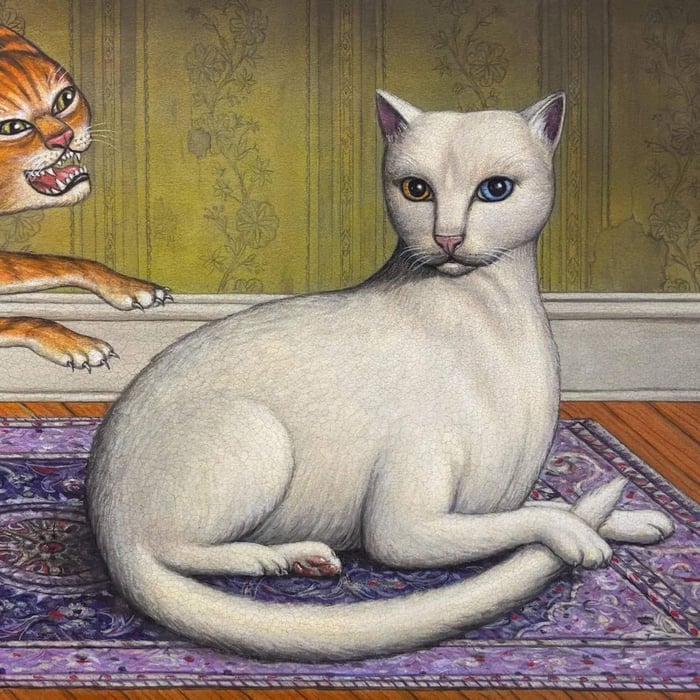
“That White Cat” is the standout for this. It’s edgy and frayed-nerve punk, and it’s thrilling because it sounds like she’s letting the older, scrappier Mitski tear a hole in the present timeline just to remind everyone she can still bite. The vibe even brushes up against the spirit of PJ Harvey’s 4-Track Demos—not as imitation, but as a similar kind of unvarnished push.
Here’s my mild gripe: the album sometimes switches modes so sharply that the transition can feel like a hard cut instead of a turn. It mostly works because the emotional logic stays intact, but there were a couple moments where I wanted one extra measure—one small bridge—to make the swerve hit cleaner.
Arguable take: the jaggedness is part of the message, but it occasionally costs the songs some momentum.
The silence outside the music makes the music feel… forensic
Mitski’s public presence is quieter now. Fewer interviews, less direct “here’s what I meant” framing, and that once-sardonic social media voice feels like a retired character. Whether you love that or hate it, the result is the same: the work has to carry the clues.
And Nothing’s About To gives you plenty of evidence. It doesn’t sound like an artist crushed by success so much as someone finally learning how to hold it without letting it hold her. The warmth is real, but it’s paired with a morbid little grin—as if she’s saying, “Yes, this is happening, and no, you don’t get to narrate it for me.”
I’ll admit: my first impression was that the title was a bluff, a cute bit of denial. After sitting with the album, it reads more like a spell she’s chanting at herself—half joke, half shield.
Arguable take: the album’s “optimism” isn’t hope; it’s strategy.
Details (the boring facts that still matter)
- Record label: Dead Oceans
- Release date: February 27, 2026
Arguable take: putting such a psychologically loaded album into such clean packaging (label/date/rollout) is part of the irony—this is chaos presented with a straight face.
Conclusion
Nothing’s About To is Mitski taking the very thing people project onto her—mystery, fragility, intensity—and turning it into a controlled burn. It wants disconnection, then admits disconnection is a fantasy, then laughs at the fantasy, then cranks the guitar until the laughter turns into noise. It’s warm, it’s sharp, and it’s brave enough to be unpleasant for a few seconds when that’s what the moment demands.
Our verdict: People who like their pop-adjacent records with teeth—and who enjoy lyrics that smirk while they bleed—will actually love this album. If you need Mitski to stay in one neat lane (only quiet, only loud, only “relatable,” only poetic), this will irritate you in the specific way a locked door irritates someone holding a key that doesn’t fit.
FAQ
- Is “Nothing’s About To” a big shift or a continuation?
It continues her focus on isolation and self-mythology, but the sound swings wider—soft rock ease one minute, punk nerve the next. - What’s the emotional center of the album?
Wanting to disappear without pretending disappearance is simple—or even possible—once people think they own a version of you. - Which track best explains what she’s doing here?
“Dead Women” feels like the thesis: she preemptively mocks the way she could be turned into a flattering story. - Does the album cater to a larger mainstream audience?
Not really. It uses bigger musical moves, but it doesn’t sound like it’s begging to be liked. - What’s the one thing that might not work for everyone?
The abrupt stylistic swerves—especially when the record jumps from calm Americana to jagged punk—can feel intentionally jarring, and not everyone enjoys that kind of whiplash.
If this album lodged in your head, it might belong on your wall too—album art hits different when it’s not trapped in a thumbnail. You can shop a favorite album cover poster at our store here: https://www.architeg-prints.com/
 | DISCOUNTGET 30% OFF*Use code on your next order:
|
* This post may contain affiliate links, meaning we earn a commission if you make a purchase through these links, at no additional cost to you.