Glass Cage Album: A Lost 1968 Psych Tape That Refuses to Stay Dead


 See more Architeg Prints stories on Google.
Glass Cage Album: A Lost 1968 Psych Tape That Refuses to Stay Dead
Glass Cage album resurrected from a thrift-store acetate: organ-soaked teen psych, lo-fi arena echo, and a mystery that accidentally became a legacy.
Some albums arrive with a press release and a plan. This one shows up like a weird little dare: an unmarked acetate sitting in a Vancouver Island thrift store, basically begging somebody nosy enough to take it home.
That somebody was Victoria promoter Marcus Pollard, and the second this story starts, it’s obvious the “album” isn’t the first thing here—the trail is. You can hear it in the way this record seems to hide its own identity while still sounding like it wants attention. That’s a contradiction, sure, but it’s also the whole charm: music that feels urgent even when nobody remembers the band’s name.
Before it was a reissue, it was five teens and a big opening night
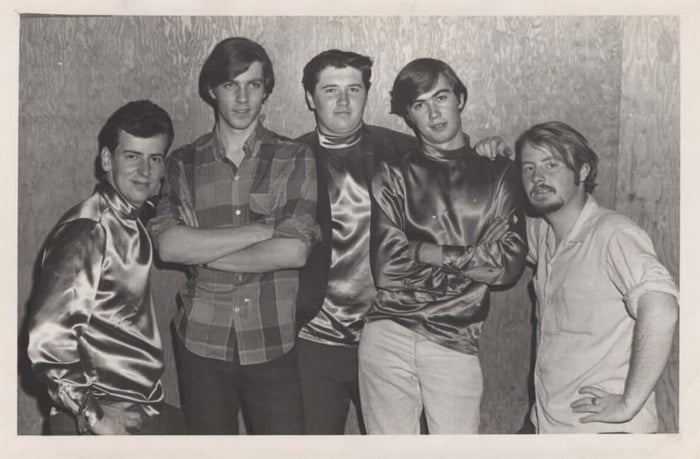
Here’s what I can tell happened just by sitting with the context and letting the tape’s vibe line up with the facts: in the summer of 1968, a bunch of Nanaimo teenagers—Norm Roth, Wayne Harbord, Clayton Millan, Terry Morrison, and Doug Hastings—played the grand opening of Fuller Lake Arena in Chemainus, B.C.
That detail matters because you can hear “arena” in the recording, even though it’s not some pristine live album. It’s the sound of a big room swallowing a young band whole, and the band pushing back anyway. The set got recorded by Jack Taylor, a local audio shop owner, using two microphones and a reel-to-reel machine. Two mics. That’s not “vintage warmth.” That’s “we’re lucky this exists at all.”
Only three acetates were cut. And then, like so many teenage bands that burn hot and fast, they changed their name to Lemon, fizzled out by 1970, and the tapes disappeared.
A lot of “lost album” stories feel inflated. This one doesn’t. This one feels like a door that got closed and stayed closed for decades.
Pollard drops the needle and gets hit with organ-heavy reality
Nearly 50 years later, Pollard finds that battered acetate in Port Alberni. No band name, no track list, no clue—just “Side One” and “Side Two.” That’s almost funny in how blunt it is. The record isn’t selling itself at all.
And then it plays.
The sound that comes out is raw, organ-heavy psychedelic rock—the kind that doesn’t politely introduce itself. It’s urgent, energetic, and, honestly, it’s way better than a random thrift-store mystery disc has any right to be. I expected “curio” energy—some cute artifact you file away as local-history trivia. Instead it lands like a real band trying to level the room.
If I’m being picky, the lo-fi edge sometimes blurs the attack of the guitars, and I kept waiting for the drums to punch through harder. But that limitation also becomes the record’s signature: you’re not hearing a performance that got cleaned up for posterity. You’re hearing a moment that barely survived.
The detective work is basically part of the tracklist
What makes this release feel almost confrontational is that it didn’t want to be found. Pollard spent two years doing the detective thing—following leads through collectors and archivists, hitting dead ends, trying to get a positive ID on a band that had basically evaporated.
Then a 2018 online post finally reached the right person: Norm Roth, the singer from Glass Cage. And just like that, the mystery snaps into place.
I’m not totally sure what part is more satisfying: the fact that the music holds up, or the fact that the search didn’t end in some anticlimactic “nobody knows.” Because plenty of these stories do. This one actually names names and reconnects the dots.
And yes, I’m calling it: the “unknown acetate” angle could’ve been a gimmick if the music was mediocre. It isn’t. The chase matters because the prize does.
A reunion with missing chairs—and a decision to treat the tape seriously
Pollard reunited Roth, Harbord, and Millan—friends who hadn’t seen each other since the ’60s. That’s the kind of detail that turns the record from “cool find” into something heavier. Not heavier-sonically. Heavier emotionally, even if the songs themselves still carry that teenage spark.
Two of the original members—Terry Morrison and Doug Hastings—had passed away. So the reunion is partial, and you feel that absence hanging around the edges of the narrative. The tape becomes a stand-in for people who aren’t here to argue about it anymore.
The other key choice: they didn’t just toss the acetates online and call it a day. With help from Jason Flower at Supreme Echo, the fragile acetate got restored by audio professionals in the U.S. That restoration matters because this kind of material can get “fixed” into lifelessness. Here, the goal seems to be preservation without sterilization—keep the grit, keep the air, keep the room.
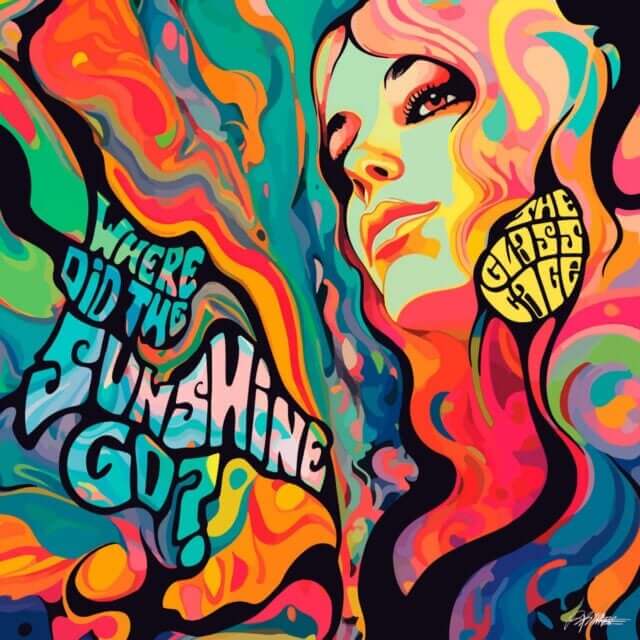
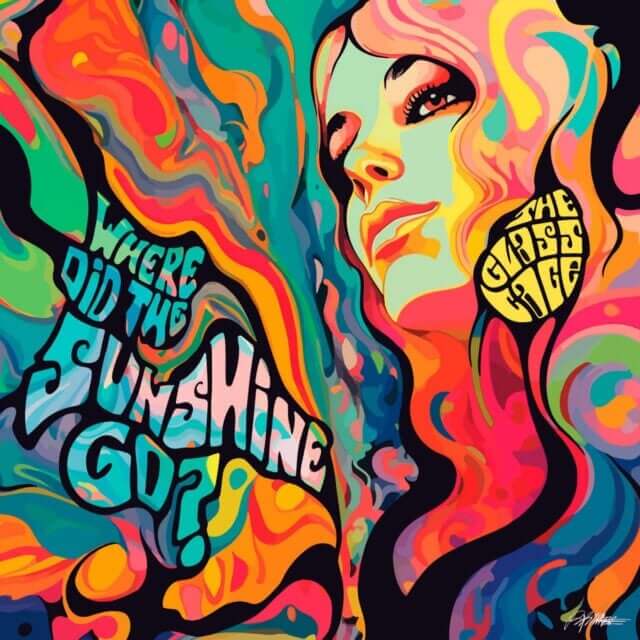
Pollard also dug into Nanaimo’s 1960s music scene to build out a detailed booklet, and Bob Masse—an iconic poster artist—was brought in for the cover. That’s not random decoration. That’s a pretty loud statement: this isn’t a novelty; it’s a piece of the culture that got misplaced.
A reasonable person could roll their eyes at the whole packaging effort—booklets, posters, the whole “legacy” framing. But I think the over-caring is the point. This project is basically trying to compensate for 50 years of nobody paying attention.
So what is this album actually doing?
Where Did The Sunshine Go? plays like a time capsule, sure—but not in the museum-way where you’re afraid to touch anything. It’s more like cracking open an old gear case and getting hit with the smell of dust, metal, and adrenaline.
The record includes:
- Six originals by Roth
- A cover of “Outside Woman Blues”
- A punchy outro jam
That lineup tells you exactly what kind of band this was: young enough to write their own stuff, smart enough to grab a known blues cut, and confident enough to end with a “let’s just play” blowout.
The sound is lo-fi but lively, packed with teenage momentum. The Farfisa swirl is the giveaway—it’s that bright, reedy organ voice that instantly paints the room in late-’60s colors. And the guitars have that gritty edge where you can tell the players are reaching for something bigger than their equipment.
Here’s my arguable take: the album’s best trick is that it pretends it’s casual while obviously trying very hard. Those aren’t relaxed performances. That’s a band playing like they’ve got something to prove at the exact moment their town is watching.
And it works—mostly.
There are moments where the rawness turns into a kind of smear, where I wanted one element (usually the vocal or the guitar) to pop forward and it just… doesn’t. But on second listen, I stopped treating that as a flaw and started hearing it as the recording’s honest center: this isn’t a studio product, it’s a document with sweat still stuck to it.
The title feels like a dare, not a question
Where Did The Sunshine Go? is a dramatic title. Almost too dramatic. The funny part is the music doesn’t wallow; it moves. That mismatch makes me think the “sunshine” isn’t about sadness—it’s about time. About how quickly a band can flare up, play a big night, and then vanish like it never happened.
If you want a neat moral, the story offers one: sometimes the past returns. But the album itself doesn’t sound like a moral. It sounds like teenagers making noise in a big room, daring it to matter.
And now the surviving members—now in their 70s—get something that feels less like nostalgia and more like overdue acknowledgment. Not a victory lap. More like finally getting their name called after the event is technically over.
Listen links (as provided)
Bandcamp embed link:
Listen on Bandcamp
Conclusion
This Glass Cage album doesn’t “return” so much as it reappears, slightly scuffed, still loud, and weirdly unimpressed with how long it took anyone to notice. It’s not perfect, and it’s not supposed to be. It’s proof that a local moment can survive on two microphones, three acetates, and one person stubborn enough to chase the truth all the way down.
Our verdict: People who like their psych rock with room-echo, Farfisa glare, and real-history fingerprints will cling to this. If you need modern fidelity, tight separation, and vocals that sit politely in the mix, you’ll get annoyed fast—and honestly, the album won’t apologize.
FAQ
- What is the core story behind the Glass Cage album?
A promoter found an unlabeled acetate in a thrift store, traced it back to a 1968 arena performance, and helped restore and release it properly. - When and where was the music recorded?
Summer 1968 at the grand opening of Fuller Lake Arena in Chemainus, B.C., captured with two microphones to reel-to-reel. - How many acetates originally existed?
Three acetates were made from the original recording. - What’s on Where Did The Sunshine Go??
Six originals written by Norm Roth, a cover of “Outside Woman Blues,” and a final jam that closes it out with a punch. - Why does the album sound lo-fi?
It comes from a fragile live acetate recording; restoration aimed to preserve the character rather than polish it into something modern.
If this whole resurrection-of-a-lost-record thing got under your skin (in a good way), a favorite album-cover poster on your wall is basically the grown-up version of keeping the tape. You can browse prints at our store: https://www.architeg-prints.com/
 | DISCOUNTGET 30% OFF*Use code on your next order:
|
* This post may contain affiliate links, meaning we earn a commission if you make a purchase through these links, at no additional cost to you.