Hen Ogledd’s Discombobulated Album: Family Chaos With Teeth (Sorry)

 See more Architeg Prints stories on Google.
Hen Ogledd’s Discombobulated Album: Family Chaos With Teeth (Sorry)
Hen Ogledd’s Discombobulated album sounds like a “group project” that actually worked—kids’ voices, field recordings, and protest heat welded into one weird pulse.
This isn’t a “band” so much as a slow-moving weather system
The first thing Discombobulated tells you—before any lyric lands, before a groove even decides what it is—is that Hen Ogledd don’t behave like a normal unit. This is music made by people who are used to being apart, used to passing half-built ideas back and forth, and then meeting up to turn the sketches into something physical. You can hear that “assembled from distances” feeling in the way the album keeps slipping between intimacy and confrontation like it can’t decide which one is more honest.
And yes, the name matters, because they chose it to matter. Hen Ogledd is a Welsh term for “The Old North,” that early medieval historical/political region covering what’s now northern England and southern Scotland. That’s not trivia on this record—it’s basically a warning label. The project carries old borders and old tensions in its bones, and it doesn’t bother pretending the past is polite.
What surprised me is how unromantic it feels. You’d expect a concept like that to drift into misty folklore. Instead, the music comes off like it’s squinting at the present and asking why we keep repeating ourselves.
They took their time becoming “real,” and that delay shows up as discipline
This group didn’t snap into existence overnight. Davies and Dawson started collaborating back in 2013, but Hen Ogledd didn’t fully lock into place until Pilkington and Bothwell were involved ahead of the 2018 debut album proper, Mogic. That long coalescing period matters because you can feel the band’s instincts are built on negotiation, not ego. The arrangements don’t show off; they argue.
I’ll admit, my first impression of Mogic (and by extension what I expected here) was that the band might be the kind of experimental project that stays clever but emotionally sideways—interesting, sure, but always a little out of reach. On second listen to Discombobulated, that assumption didn’t hold. This record isn’t trying to be distant. If anything, it’s trying to get uncomfortably close—like it’s leaning across the table mid-conversation and lowering its voice because it’s about to say something that might ruin the mood.
That’s the real “step forward” here: not polish, not accessibility, but commitment. This album commits to its own mess.
The 2024 sessions feel like a forced meetup that turned into a breakthrough
The early sessions for Discombobulated happened in early 2024, and I can practically hear the logistical friction being turned into momentum. They were “rallied” into getting in a room together by drummer Will Guthrie, which is the kind of detail that explains a lot: the album moves like people finally stopped emailing files and started reacting in real time.
Because they live in different parts of the U.K., Hen Ogledd often have to share musical sketches remotely before meeting up to hammer them into finished shapes. That remote-to-room pipeline is stamped all over this record. Some parts feel like they began as isolated little worlds; then the band comes in and stress-tests them until they either snap—or turn into something tougher.
A lot of that shaping happened with producer Sam Grant at Blank Studios in Newcastle, and whether you care about studio credits or not, you can tell this is producer-assisted clarity, not producer-imposed gloss. The sound doesn’t get “clean.” It gets legible—like someone took a chaotic bulletin board and pinned everything down without removing the weird stuff.
The guest list isn’t decoration—it’s the album’s actual argument
Here’s where Discombobulated gets brave, and also where a reasonable listener might roll their eyes: the album opens itself to an extensive cast of contributors. But it doesn’t feel like networking. It feels like an insistence that one voice isn’t enough.
You hear:
- voices of friends’ and band members’ children
- field-recorded horses and insects (courtesy of Chris Watson and David Reid)
- Guthrie’s supple drumming
- spoken-word contributions from Matana Roberts, Truly Kaput, C. Spencer Yeh, and Janne Westerlund of Circle (in Finnish)
- saxophone from Fay MacCalman
- trumpet from Nate Wooley
- flute from Davies’ daughter Elliw
If that looks like too many ingredients, that’s because it is—and they still do it on purpose. The album’s whole premise is that “coherence” can be a kind of censorship. It’s choosing a crowded room over a solitary genius myth.
I’m not 100% sure every spoken-word moment lands with equal force; there were a couple passages where I caught myself focusing on the idea of the contribution rather than the feeling of it. But I also think that slight unevenness is part of the point. This record doesn’t want to be a smooth ride. It wants you alert.
The “family” angle is real—and it’s not the safe kind
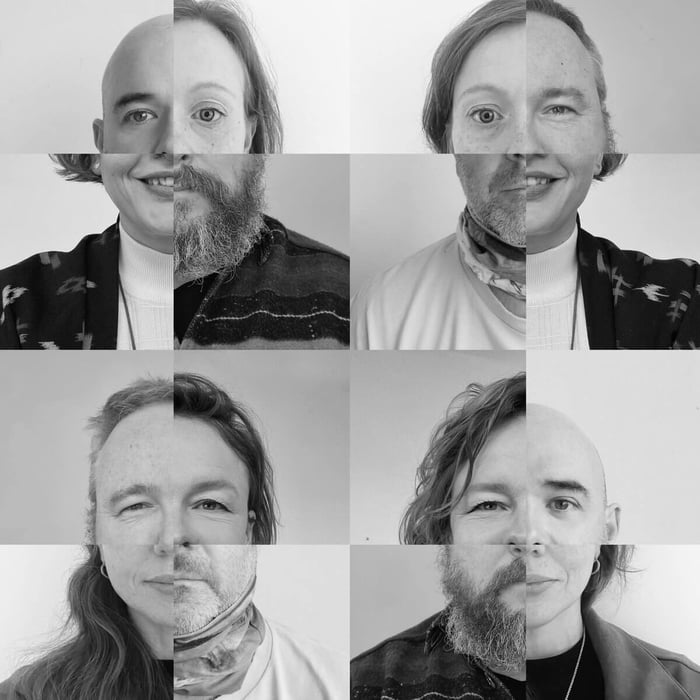
There’s a line that frames a lot of what’s happening here, and it comes from Pilkington. It’s not a PR quote. It’s basically the key to the record’s emotional wiring.
“Maybe Hen Ogledd is more like a family than a band. There’s something really special about having kids’ voices in the music.” — Pilkington
That’s sweet, sure. But if you hear “family” and assume cozy, you’re listening wrong. Discombobulated doesn’t use children’s voices to soften the edges. It uses them to raise the stakes. Because once kids are in the frame, the album stops being about personal expression and starts sounding like responsibility—like the world you’re describing is the world someone else has to grow up in.
And honestly, that’s why the record hits harder than a lot of “political” music. It doesn’t pose. It doesn’t chant. It just makes you feel the friction between tenderness and rage, sometimes in the same breath.
“Scales Will Fall” isn’t a single—it’s a flare shot into the sky
The album’s quiet radicalism isn’t hidden in the margins. It’s woven into lyrics and themes across the record, and it comes into focus sharply on the first single, “Scales Will Fall.” Bothwell leads it with an urgent vocal that doesn’t sound like a performance so much as a decision—the choice to speak plainly without sanding down the intensity.
The references cut between protest history—the women at Greenham Common and Durham Miners’ Gala—and contemporary organizing against corporate greed. And here’s the part that’s easy to miss if you’re skimming: the song doesn’t treat those references like museum exhibits. It treats them like tools you’re supposed to pick up and use.
Bothwell’s voice is one of the record’s most charismatic features because it refuses to choose between emphatic and vulnerable. It can push and then suddenly pull back, and that push-pull makes the message feel lived-in rather than sloganized.
She’s also clear about where the style is coming from: she loves hip-hop, but she’s drawing more from the spoken-word tradition. She even coins a term for what she’s doing: “Bard rap.” That phrase sounds goofy until you hear how accurate it is—like something ancient and public getting dragged into the present without asking permission.
The video for the track, directed by James Hankins, leans into that performative power. Bothwell shows up positioned as an “alternative populist leader” (a joke, but also… not entirely), wearing a blue alien power suit and provoking a gang of kids to rebel. It’s funny in a calm way, like the album is saying: yes, leadership is theater—so who’s writing the script?
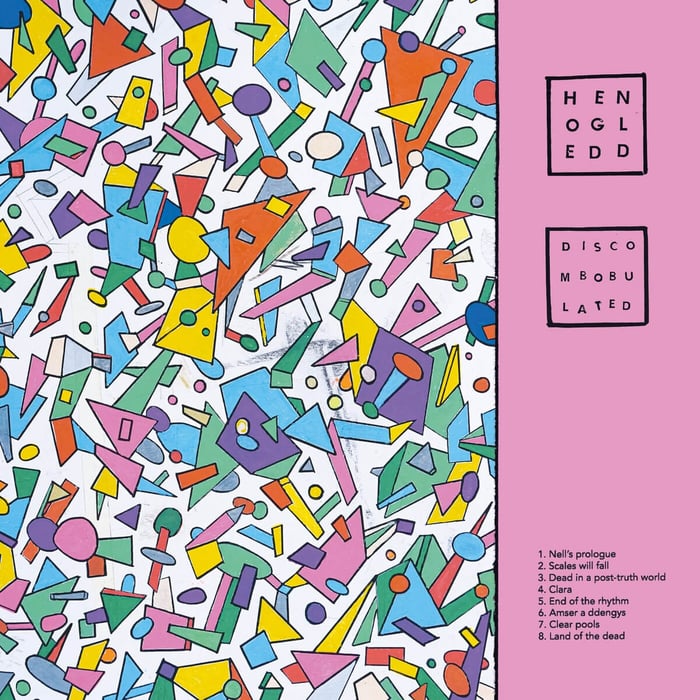
The cover art explains the album better than most liner notes ever could
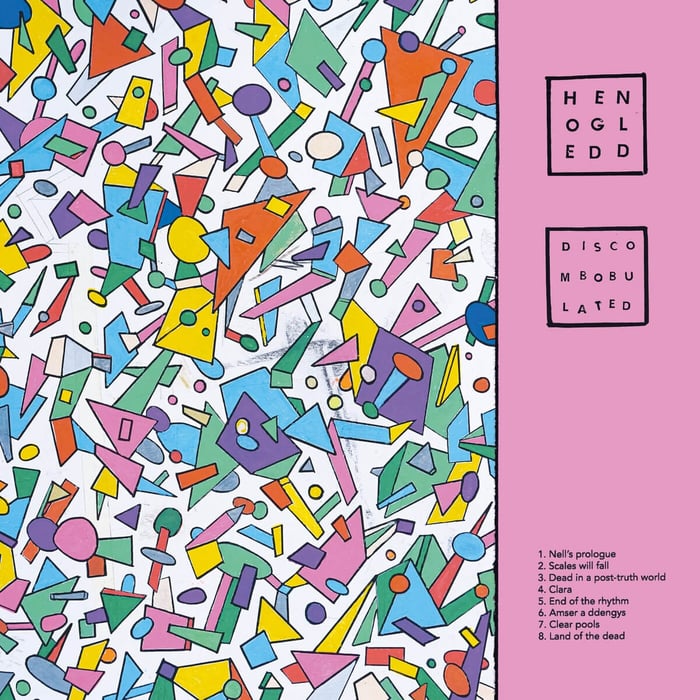
By the time the album is moving between joy and fury—between subtle and direct, between the weird and the plainly moving—the cover art lands like a quiet thesis statement.
It’s based on a painting by Dawson that got chopped into 32 pieces and mailed out to loved ones around the world as Christmas presents. That action alone tells you what the album values: not possession, but distribution; not one perfect object, but many imperfect fragments held by different people.
The artwork is named It’s Not Darkness That Falls, It’s Light, a line that riffs on Thelonious Monk’s: “It’s always night, or we wouldn’t need light.” That subtle shift in perspective is exactly what the record keeps doing musically—turning what looks like bleakness into fuel, turning confusion into a kind of collective map.
If I have one mild gripe, it’s that the album’s own title—Discombobulated—can almost undersell how intentional the sequencing feels. “Discombobulated” makes it sound like a stumble. This record feels more like a calculated stumble performed to prove a point: stability is often just denial with better posture.
Conclusion
Discombobulated album doesn’t try to comfort you. It tries to wake you up without turning into a lecture, and it pulls that off by letting a whole community leak into the sound—kids, guests, insects, brass, voices in different languages, and a drummer who apparently had to herd everyone into the same room. It’s messy in the way real commitment is messy, and it’s strangely reassuring that the album never pretends the world is simple enough for one clean genre or one clean narrative.
Our verdict: People who like their music curious, politically awake, and allergic to tidy endings will actually love this. If you need every track to behave, if you flinch at spoken-word, or if “kids’ voices” automatically reads as precious—this album will irritate you fast, and honestly, it won’t apologize.
FAQ
- What is the Discombobulated album trying to do?
It stitches together protest memory, present-day anger, and family/community voices to make “the personal” sound public—and unavoidable. - Is Hen Ogledd more experimental or more song-based here?
It leans experimental in texture and structure, but it still aims for direct impact—especially when Bothwell’s voice takes charge. - Why are there children’s voices on the record?
They don’t function like cute garnish; they sharpen the record’s sense of stakes, like the music is thinking about who inherits the mess. - What’s “Bard rap” in the context of this album?
It’s Bothwell pulling from spoken-word tradition rather than straight hip-hop imitation—more incantation and address than verse-and-hook cosplay. - Does the big contributor list make the album feel crowded?
Sometimes, yes—and that crowding feels intentional, like the album refuses the neatness of a single-author worldview.
If this record put you in the mood to hang music on a wall like a statement (not just decor), you can always shop your favorite album cover poster at our store.
 | DISCOUNTGET 30% OFF*Use code on your next order:
|
* This post may contain affiliate links, meaning we earn a commission if you make a purchase through these links, at no additional cost to you.