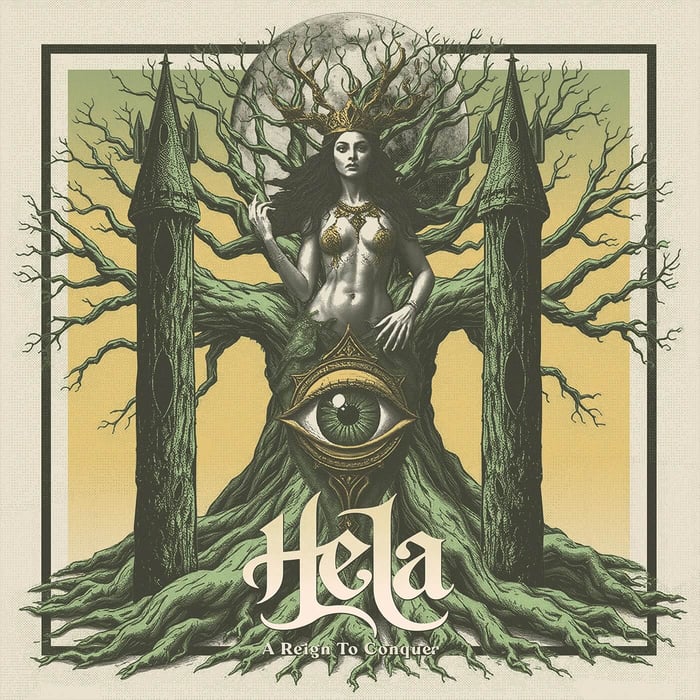
Reign to Conquer Review: Hela’s Doom Glow-Up (Too Polished?)


 See more Architeg Prints stories on Google.
Reign to Conquer Review: Hela’s Doom Glow-Up (Too Polished?)
Reign to Conquer turns Hela’s melodic doom into a sleek, hook-heavy machine—mesmerizing, predictable, and oddly hard to resist.
This album isn’t trying to reinvent doom—it's trying to win you over
Hela’s Reign to Conquer doesn’t walk into the room asking permission. It shows up already lit perfectly, already mid-chorus, already confident you’re going to hum the hook later. And honestly? It’s mostly right.
This is melodic doom that wants to feel huge without getting messy, and that’s a choice—one the band sticks to so hard it becomes the album’s whole personality.
A decade in, Hela sound like they’ve decided what they are
Hela have been at it since 2012, and this feels like the work of a band that’s stopped experimenting in public. With three albums behind them and this being the fourth, they’ve tightened their identity into something pretty specific: melodic doom that leans heavy when it needs credibility, then leans pretty when it wants you to stay.
The “deeply engaging” part is real. They know how to build mesmerizing melodic moments, and they also know when to drop a heavier-edged riff so the whole thing doesn’t float away like perfume.
But they’re not chasing chaos here. They’re chasing control.
“Vessel To Nowhere” gives away the playbook immediately
The album opens with “Vessel To Nowhere”, and it basically hands you the blueprint in the first few minutes: spoken-word intro, then the doomy atmospheric riff slides in like a curtain opening.
From there, Hela start stacking what they’re best at:
- interlinking melodies that braid together instead of competing
- hooks that feel pre-approved for repeat listens
- deep, brooding rhythms holding everything down
- vocals that sit on top like a crown instead of blending into the mix
And the vocals really are the standout—dazzling, commanding, and somehow still not steamrolling the instruments. That balance is harder than it sounds. A lot of bands either bury the singer in reverb or turn them into a superhero. Hela pick a third option: the voice leads, but the band stays legible.
Here’s the catch, though: I kept waiting for the album to pull a trick it never really tries. The first track delivers so much of what the record offers that the rest can feel like variations on a solved equation. The songwriting is solid—no argument. But new ground isn’t the point, and at first that threw me.
On my first listen, I took that as a problem. On second pass, I realized it’s more like a statement: Hela aren’t exploring. They’re doubling down.
This is “formula doom,” and they execute it like professionals
There’s a definite formula here—clear rises, clear drops, dynamic shifts that show up right when your body expects them. The tempo changes can be a little predictable, like the album is politely tapping your shoulder to say, “Okay, here comes the heavy part,” and then “Okay, now here’s the chorus meant to save you.”
That predictability doesn’t ruin the experience, but it does flatten the sense of danger. Doom can feel like a slow-moving weather system. This sometimes feels like weather you scheduled.
Still, if the goal is quality melodic doom that’s immediately playable, Hela fulfill it expertly. It’s the difference between a wild forest and a well-designed park. The park can be gorgeous. It just doesn’t pretend to be untamed.
“Crystal Bridge” is where the album starts acting alive
The midpoint is where Reign to Conquer genuinely hits its best stride, and “Crystal Bridge” is the track that proves it. Everything snaps into focus: the band sounds like they’re firing on all cylinders, not just performing the plan.
It’s an anthemic powerhouse—soaring vocal lines, riffs that lock into your memory fast, and that satisfying sense that the chorus was built to be replayed. If someone asked what Hela are “good at,” this track is the cleanest answer.
What makes it work is the contradiction: it’s laced with radio-friendly rhythms and a chorus that’s undeniably designed to catch, but there’s still an underlying melancholia running through it. That melancholia is doing the heavy lifting, because it keeps the band tethered to doom’s emotional gravity. Without it, this could drift into generic hard-rock uplift.
And I’m going to say the slightly annoying truth: the hooks are so effective here that they make some of the earlier “slow build” choices feel less essential in retrospect. The chorus is stronger than the tension-building that leads to it, and that’s a risky imbalance for doom—but Hela get away with it because the melodies are that sticky.
The production is immaculate… and that might bother the right people
There’s a very neat production across the whole record. Every instrument has its own space. Nothing feels accidentally buried. You can point at almost any moment and identify what’s happening: guitar line, bass weight, vocal lead, rhythmic push—all separated cleanly.
And yes, I can already hear the argument from the back of the room: too polished. Some listeners will swear the mix is so shiny it becomes intrusive, like the album is dressed for a formal event when it should’ve shown up in a storm-soaked hoodie.
I’m a little torn, honestly. Part of me misses the grit—doom can benefit from a bit of grime in the corners. But it’s also impossible to deny the upside: the production values are excellent, and they make the album more accessible without turning it into plastic.
Hela’s choice here feels intentional: they want these songs to read clearly, and they want the emotional cues to land on time.
“Nomad” and “Emerald Mirror” show why clarity matters
On tracks like “Nomad” and “Emerald Mirror,” the final mix feels like it’s doing exactly what it should: carrying details of the songwriting instead of smudging them together.
This is where the “polished” approach earns its keep. Hela write excellent melodies and heavyweight riffs, and the mix lets you hear both without forcing you to pick a side. The riffs hit with heft, but the melodic contour stays intact—no mud, no guesswork.
And if you want a direct doorway into the album’s vibe, the video for “Emerald Mirror” sits right here:
Reign to Conquer is seductive because it’s simple on purpose
By the time the album is finishing up, the main takeaway isn’t complexity. It’s conviction.
Reign to Conquer has melodic charm and dark heaviness, and it uses that combination like a lever: one moment you’re pinned under something intensely heavy, and the next you’re being pulled upward by an unexpectedly uplifting chorus.
That’s the band’s real trick—they can pivot from doom weight to melodic lift without sounding like they switched genres entirely. It comes off like they’ve grown into their sound rather than still searching for it.
If I have one lingering doubt, it’s whether the album’s “sumptuous, intoxicating” appeal is partly because it refuses to challenge its own structure. The songwriting works. The performances land. But the surprises are limited, and at times I wanted one track to misbehave—just a little—so the album could feel less pre-decided.
Still, I can’t pretend I didn’t enjoy it. I ended up liking it more than I expected precisely because the band commits so hard to what they do well.
Artwork
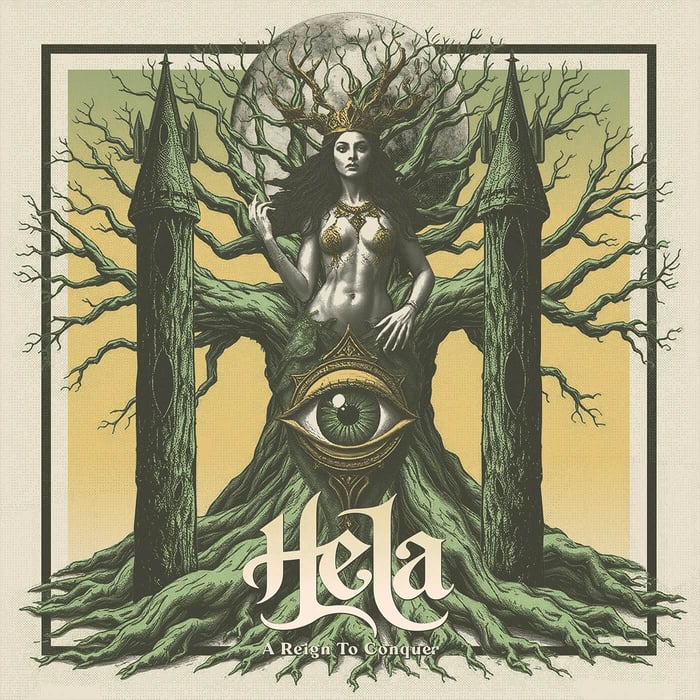
Release details (and where I’d place it)
A Reign to Conquer is set for release on February 27 via Ardua Music.
And if you’re the type who needs numbers to translate feelings into something tidy: I’d personally land around 7/10—not because it’s lacking skill, but because it plays its cards so openly that the replay value depends on how much you enjoy the exact formula it’s perfecting.
Conclusion
Hela made a melodic doom record that’s built like a cathedral with excellent lighting: towering, emotional, and a little too clean to pretend it’s dangerous. Reign to Conquer doesn’t revolutionize anything—it seduces you with craft, polish, and choruses that know exactly what they’re doing.
Our verdict: People who like melodic doom with clear vocals, big hooks, and production that doesn’t smear the details will actually love this album—and probably defend its polish like it’s a moral stance. If you want doom to feel unpredictable, rough-edged, or genuinely unruly, you’ll hear Reign to Conquer as “too solved,” like a storm that checked the forecast first.
FAQ
- What is the core sound of Reign to Conquer?
Melodic doom with heavy riffs, brooding rhythm, and prominent vocals that lead without drowning the band. - What’s the album’s standout moment?
The midpoint—especially “Crystal Bridge”—where the songwriting, hooks, and melancholic undertone all hit at once. - Is the production raw or polished?
Polished and spacious. You can clearly pick out each instrument, which some listeners will love and others will call too glossy. - Does the album take big stylistic risks?
Not really. It’s confident and effective, but the dynamic and tempo shifts can feel predictable if you’re craving surprises. - Which tracks best represent the album’s approach?
“Vessel To Nowhere” for the full blueprint up front, and “Nomad” / “Emerald Mirror” for how the mix highlights the songwriting.
If you’re still stuck on the album’s atmosphere, a good cover print hits the same way a chorus does—fast, visual, and oddly permanent. If you want one for your wall, you can shop favorite album cover poster at our store: https://www.architeg-prints.com
 | DISCOUNTGET 30% OFF*Use code on your next order:
|
* This post may contain affiliate links, meaning we earn a commission if you make a purchase through these links, at no additional cost to you.