With No Due Respect Review: Foggieraw Turns Poetry Into a Problem


 See more Architeg Prints stories on Google.
With No Due Respect Review: Foggieraw Turns Poetry Into a Problem
Foggieraw’s With No Due Respect stretches his viral “poems” into 17 tracks—and you can hear exactly where charm wins and where the edit button went missing.
The weirdest kind of come-up: soft piano, sharp nerve
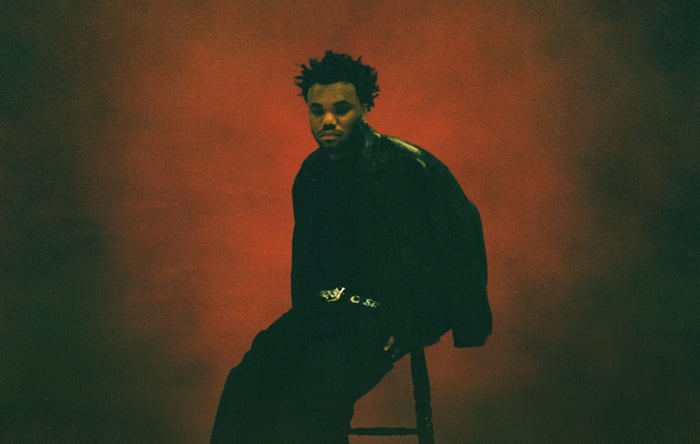
Most rappers who catch fire on short-form video do it by yelling louder than the algorithm. Foggieraw did the opposite: he walked in wearing a diner apron and read like he was halfway between a sermon and a text you regret sending.
The early clips had that “wait, what did he just say?” factor—poetry over Alicia Keys-style piano chords, relationship questions phrased like traps, and the kind of intimacy that usually gets edited out before anyone hits upload. It wasn’t a skit. It wasn’t tough-guy theater. It was a guy putting his pride on a leash and dragging it through public.
And yeah, when that kind of clip pulls millions of views, the pitch becomes obvious: he’s not selling menace, he’s selling nerve.
From ninety-second clips to a real album: the stretch is the story
Here’s what matters about With No Due Respect: it’s the first time he’s forced to live with his own ideas longer than a minute.
You can hear the background in the way he treats music like a room, not a beat. The piano and saxophone years show up in how he leaves space and then fills it with little melodic turns—like he still thinks in instruments even when he’s rapping. The freestyling energy is there too: lines arrive with that “I just thought of this” spark, which is both the appeal and, later, part of the problem.
Before this album, he basically built a following by dropping sixty-to-ninety-second “poems” straight to socials—no big formal release ritual, just a consistent stream of charisma, outfits, girls, God, and gut-check punchlines. Now there’s label money behind him, a real feature list, and the challenge becomes unavoidable: can the same approach survive when the camera isn’t cutting you off?
Sometimes yes. Sometimes… I’m not totally sure he wants it to.
The album’s actual obsession: women, faith, and the panic between them
Seventeen tracks is a lot of runway, and he uses most of it chasing the same three ghosts:
- a woman he wants
- a woman he lost
- a God he keeps trying to keep on speakerphone while all that happens
That might sound narrow, but it’s the engine. The fixation keeps changing shape, which is why the album doesn’t feel stuck even when it repeats itself.
“Psalm and Islam” lays out the conflict with blunt clarity: he’s Christian, she’s Muslim, and neither of them gets to pretend it’s just a cute difference in holiday plans. Gwen Bunn and Dave James lift the chorus underneath like a stained-glass glow, but the writing stays anxious. The questions get pointed in the second half—what religion would the baby be, what happens if she doesn’t want her hair natural, what if she wants out of church—and he doesn’t frame them like intellectual debate. He frames them like a relationship turning into a family argument before the relationship even has time to become one.
The bridge hits because it sounds like someone admitting the quiet part out loud: values shift, and it’s scary, and he wants her anyway. That’s the kind of emotional move Foggieraw keeps making—he walks right up to conviction, then shows you the crack in it.
“Faith Lies” sits in a similar neighborhood, but it’s more of a catalog of impossible standards. She wants a thug with a degree who can also pastor. He wants a woman who’s somehow modest and acrobatic. It’s funny, but it’s also him showing you how both sides of “preferences” can turn into a cage.
A reasonable listener could say he’s romanticizing the conflict. I’d argue he’s doing something uglier: he’s admitting he likes the tension, because tension gives him something to write about.
His humor isn’t a gimmick—it’s self-defense
A lot of rappers “do jokes” like they’re auditioning for a clip to go viral. Foggieraw’s humor plays different. It’s not setup-and-punchline for applause; it’s the kind of laugh you use when the alternative is saying, plainly, “I’m hurt.”
“Bitchertation” is basically built like a stand-up set. It opens with a rope joke (“It’s yours”), then ricochets into political one-liners about Democrats and Republicans, a quick nod to Rapsody being loved across generations, and then—because this is him—he’s suddenly shouting out the altar mid-thought. He even tosses in a bit about his daughter wanting green hair and vintage Polo splicing, like he’s changing channels inside the same verse. Then he ends with a curtain-call kind of sign-off: ladies and gentlemen, honor and privilege… but not for me. That closer lands because it’s cocky and wounded at the same time.
“Unisex” does another kind of comedy: he runs into Pharrell on a date, asks for a picture, calls him his favorite poet—then swerves into a bridge about getting old together, creaky joints, and God pointing fingers. The tonal whiplash is the point. He refuses to sit still in one emotion long enough for it to harden.
At first, I thought the constant pivoting was just him showing off range. On second listen, it felt more like a tactic: if he keeps moving, you can’t pin him down and make him admit what’s actually going on.
“Psalm 62” still stings—now it stings for better reasons
“Psalm 62” earned its place years ago, back when it was more like a viral charm spell—Alicia Keys flavor, clean hook, smooth sincerity. But inside With No Due Respect, surrounded by sixteen other songs that keep circling women, devotion, jealousy, and confusion, it picks up weight.
By the time it arrives, you’ve already heard him play the same emotional roulette across track after track. So when the second half drops and he starts asking whether he’s just the test dummy she used to learn how to love, and whether she’s posting a new man just to jab him, the bravado finally cracks.
We said we’d see other people but bitch, you did it?
You wasn’t supposed to go do it!
The best part is the backpedal—he swings into insult, then immediately corrects himself, like you’re hearing him lose an argument with his own pride in real time. It’s not “toxic” as a branding exercise. It’s messy in a way that sounds unedited. And on this album, unedited is either the magic trick or the trap door.
Features: some are perfect fits, one is basically a fancy lamp
The guest list splits into two types: prestige names and genuinely smart pairings.
“Stay Awhile” with Ari Lennox is a clean example of a feature that actually lives inside the song. She slides into the pocket without wrestling him for attention, and when she sings about patience running out against his obligation-heavy schedule, it doesn’t sound like a guest verse pasted in—it sounds like the other person in the argument finally got the mic.
“Disrespectfully Decline” with Larry June works for the opposite reason: they don’t need chemistry, they need parallel swagger. Foggie’s brushing off people who steal his style; June’s in his own world talking cigar smoke, egg white omelets, and stitched-up Porsches. They don’t really “interact,” but that’s fine—the whole track is two lanes of the same refusal to be bothered.
“Grow Up” with John Legend is the biggest name here, and to me it’s the loosest fit. Legend keeps singing “Is it too late to grow up?” like the song is about maturity, while Foggie’s verses bounce around—ASCAP jokes about a girl’s body, “forbidden fruit” phrasing, even a Mr. Miyagi punchline. It’s not that the hook is bad. It’s that the song doesn’t answer its own hook. The feature ends up feeling like an expensive frame around a picture that won’t sit still.
Then there’s “Mo Money Than Ur Dad” with KARRAHBOOO, which surprised me by working immediately. She comes in like a tight sprint, flipping lines about moving product without spatulas and brothers doing four years like it’s a bachelor degree. The contrast helps: her precision makes his looseness sound more intentional.
If you think features automatically “upgrade” a record, this album will argue with you. Some guests sharpen his angles. One of them makes the song feel like it’s wearing a suit it didn’t tailor.
Where the album starts to sag: when freestyle muscle replaces album craft
Here’s the part where the quantity starts thinning the impact.
“Cadillac” has a strong back half about a woman named Jada who only seems interested now that he’s an entertainer. That’s a real human sting—being wanted for the version of yourself that’s easiest to show off. But the first verse sets up a different scenario, and neither idea gets developed past a handful of bars. It’s like he had two good openings and refused to pick one.
“Thinking With My Heart” does something similar: it starts by name-dropping seven women in Atlanta like it’s gearing up for a player anthem, then suddenly shifts into a second section that’s tender and detailed, like a confession with childhood fingerprints on it. The whiplash could’ve been brilliant if it felt designed. Here it feels undecided.
And some punchlines hit like sudden elbows—“Look at me sideways, is this Paul Wall?” and “Your booty not that fat, but it’s real”—the kind of lines that make you laugh because they’re rude in a strangely specific way. But when he stacks wordplay just because he can, you can hear the difference between “writing a song” and “winning a freestyle moment.” The latter is exciting. The former is what makes an album replayable.
I don’t think he’s lazy. I think he’s so used to the quick-hit format that editing feels like betrayal.
“Huey and Riley”: the one track that stops smiling
The sharpest turn on With No Due Respect is “Huey and Riley,” named after the brothers from The Boondocks who represent two different kinds of danger: radical and reckless.
It starts almost tender: Foggie and his brother against the world, raised by a mother’s softness and a father’s hard lack of compassion. The verse climbs through comparisons—Lil Wayne dropping Tha Carter, Young Thug dropping Barter—as examples of going harder when the season turns ugly.
Then the second half slips into violence, the kind that isn’t cinematic, just close: someone might get shot buying Jordans at PG Plaza, people wearing a shiesty. The jokes shut off. The writing stands upright without needing a wink.
It ends with a line that’s deliberately unclear: he tells his wifey he can’t give her his money because he’s sending it to his old girl, and you’re left wondering whether “old girl” means his mother or someone else entirely. That ambiguity isn’t cute. It’s heavy. It’s the one time on the album where the fog clears and you realize he’s been hiding seriousness inside charm the whole time.
If someone told me this is the only track where the album fully becomes what it wants to be, I wouldn’t fight them.
So what is this album really doing? Selling charm while testing depth
With No Due Respect feels like a whole career compressed into one sitting: the piano kid, the sax kid, the freestyler, the viral poet, the guy who raps about sex and scripture like they’re roommates. It’s crowded, occasionally half-finished, and stubbornly specific—which is why it works even when it’s a mess.
My first impression was that the album’s sprawl was just part of the fun, like flipping through a sketchbook. After living with it longer, I started hearing the cost: the best ideas are so good they make the unfinished ones feel even more unfinished.
Still, when the writing connects—especially on “Huey and Riley,” “Psalm and Islam,” and “Psalm 62”—it doesn’t sound like anyone else. The big question hanging over this record isn’t whether he has “it.” He obviously does. The question is whether the next album lets the depth catch up to the charm… or whether he’s addicted to staying in motion.
Conclusion
Foggieraw made With No Due Respect like someone who built a house out of short poems and then decided, mid-build, to knock out a wall just to see who was listening. It doesn’t always hold together—but when it locks in, it tells the truth louder than the punchlines.
Our verdict: People who like their rap emotional but allergic to polish will actually love this album—especially if you enjoy jokes that sound like defense mechanisms. If you need tight concepts, clean editing, and songs that pick a lane and stay there, this record will test your patience and then grin about it.
FAQ
- Is With No Due Respect more rap album or spoken-word project?
It’s a rap album with spoken-word instincts—verses move like “poems,” but the songs still hinge on hooks, features, and replay moments. - Which tracks best represent the core of With No Due Respect?
“Huey and Riley,” “Psalm and Islam,” and “Psalm 62” feel like the clearest statements—where humor, faith, and vulnerability actually collide. - Do the features help or distract?
Mostly help. Ari Lennox and Larry June fit naturally. One major hook feels slightly disconnected from what the verses are doing. - What’s the main weakness of the album?
Editing. A few songs sound like two drafts stitched together, and some wordplay feels like he’s flexing instead of finishing the thought. - Will fans of his short-form viral clips be satisfied?
Yes, but they’ll also hear the growing pains: stretching that format into full songs exposes which ideas can breathe and which ones were built for quick impact.
If you’re the type who judges an album by its cover as much as its chorus, it might be worth grabbing a poster of your favorite sleeve and letting it stare at you while you replay the messy parts. You can find prints at our store: https://www.architeg-prints.com/
 | DISCOUNTGET 30% OFF*Use code on your next order:
|
* This post may contain affiliate links, meaning we earn a commission if you make a purchase through these links, at no additional cost to you.