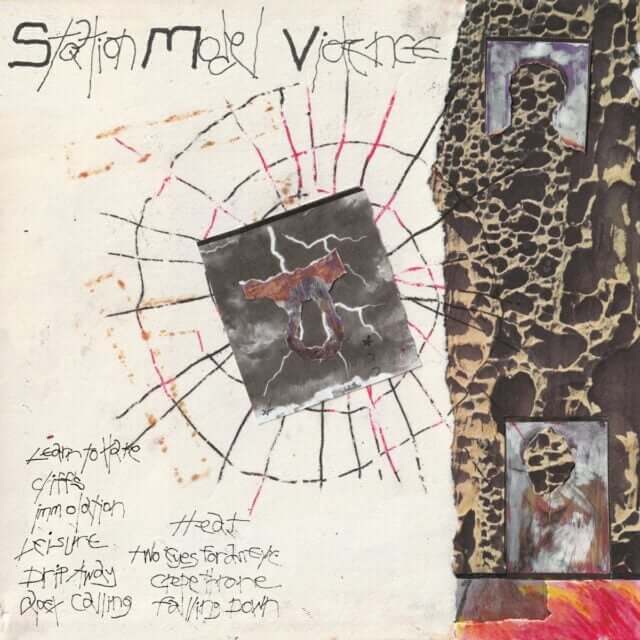
Station Model Violence Album: The “New Band” That Sounds Like Escaping a Room


 See more Architeg Prints stories on Google.
Station Model Violence Album: The “New Band” That Sounds Like Escaping a Room
Station Model Violence transforms lockdown-induced stasis into raw momentum, blending urgency, chaos, and the desire to reclaim voice and movement in a dense, personal punk-adjacent record.
A record that doesn’t knock— it barges in
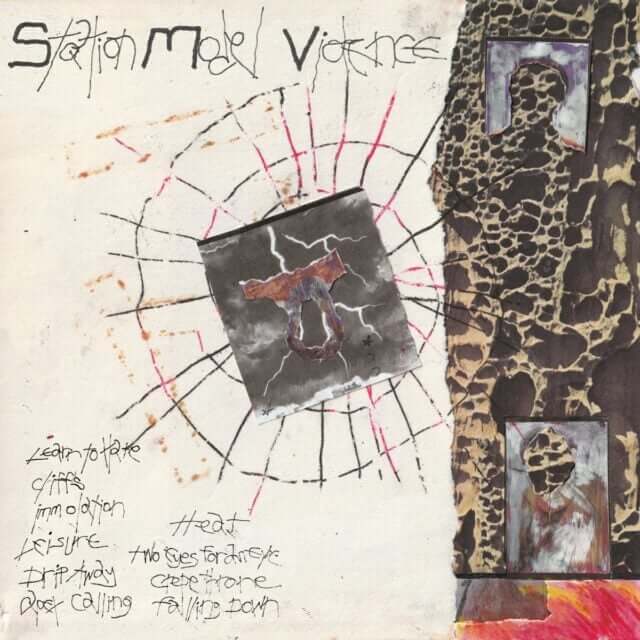
Some albums feel like a plan. This one feels like an urgent decision made while the door’s still swinging. Station Model Violence isn’t trying to impress you with poise; it’s trying to prove the artist can move again.
The real subject: stasis, and how to claw out of it
Here’s what I hear underneath the whole thing: the lingering sickness of not going anywhere, not playing, not being in circulation. The story baked into Station Model Violence starts with a move to Sydney at the end of 2022—right after a long stretch of Melbourne lockdown that began in the immediate wake of a Total Control tour of Japan at the end of 2019. And the detail that matters isn’t geography; it’s deprivation. Two years of being pinned down turns into the longest time in 20 years without overseas travel or playing music.
And that’s the first creative decision I can practically feel in the speakers: the album sounds like someone refusing to let “settled” become “stuck.” The intent comes off blunt—obliterate the stasis before it becomes permanent. A reasonable listener could argue that’s me projecting, but the whole record carries that specific tension: not “I’m reinventing myself,” more like “I need to start running or I’m going to calcify.”
Why this doesn’t behave like a continuation of old bands
The album’s backstory pretty much explains why it doesn’t feel like a neat extension of earlier projects. With living interstate, Total Control and Straightjacket Nation sound hard to gather momentum around. I don’t hear a person trying to preserve a legacy here; I hear someone refusing to be managed by logistics.
And honestly, I respect that kind of impatience. Some artists treat downtime like a monastery. This feels like the opposite: lockdown gets into the veins, and the only antidote is noise, people, rehearsal rooms, and a reason to sing again.
That’s a key phrase—sing again. This isn’t just “start a band.” It’s the specific craving for voice and front-person electricity. If the album sometimes feels like it’s pushing at the edges of itself, I think that’s because it’s built around the act of returning to the mic, not around perfect songs.
The Iceage invite and the instant rejection of “solo”
Next pivot: Low Life asks for a solo show with Iceage at the Opera House. And instead of taking the obvious route—do the solo thing, be tasteful, be brave—there’s basically a refusal. No ambition for solo performance, no songs ready. The solution isn’t minimalism; it’s immediate community.
So a band gets formed: KX Aminal, with Greta, Michael, and Micky from Den, plus Josh from Diat. Even if you don’t know any of those names, the point lands: this wasn’t built in isolation. It was built by grabbing people with compatible nervous systems.
And I think that decision leaks into the sound of Station Model Violence—it doesn’t present itself as a private diary. It plays like a roomful of bodies trying to lock into the same lurching rhythm.
“Smells like Kwisis”: the album’s weird little North Star
Here’s the most telling moment in the whole narrative, and it’s so stupid it’s perfect: while writing KX Aminal songs, Josh, Greta, and the singer are “drunk on fine chablis,” playing a guitar line that sounds very much like Crisis. Josh looks over and mumbles: “It smells like Kwisis.”
That phrase—mispronounced, half-joked, weirdly sincere—reads like the mission statement. Later, Buz acknowledges it’s something he’d always want to hear while writing with a band. And from there it’s basically fate: write songs together that smell like “Kwisis.”
If you want my arguable take: this album isn’t chasing originality as much as it’s chasing a specific chemical reaction—the feeling of a certain lineage (Crisis as reference, not imitation) hitting the bloodstream again. Some listeners will call that nostalgia. I think it’s more like choosing a dialect so you can finally speak.
When KX Aminal freezes, the itch comes back louder
KX Aminal goes into stasis, and then—predictably—the itch returns. That repetition matters. This whole project is structured around restlessness that won’t behave.
Buz enters as a practical catalyst: he’s written a few demos that don’t work as R.M.F.C. songs, and he asks for a listen to see if vocals could fit. Over the winter of 2024, there are visits to Buz’s home studio, recording vocal ideas over those demos.
That’s when Station Model Violence starts to feel inevitable. Not in a romantic way—more like the band assembles because there’s leftover voltage that has to go somewhere.
I’ll admit, at first I thought that kind of patchwork origin—unused demos, absorbed songs, shifting lineups—might produce a Franken-record. On second listen, I hear the opposite: the seams are part of the point. The album keeps reminding you it was built out of necessity, not aesthetics.
Mushrooms, a winter evening, and “Learn To Hate”
The story gives one sharp snapshot: a demo for “Learn To Hate” recorded after eating mushrooms on a fabulous winter evening.
You can take that as a cute anecdote, but I don’t think it’s decorative. It signals a willingness to let the process be unguarded. And you can hear that kind of looseness—or maybe recklessness—in how the album comes on. It doesn’t sound like it’s trying to be respectable. It sounds like it’s trying to be true in the moment, even if the moment is chemically enhanced and slightly feral.
I’m not totally sure whether that makes the album more focused or just more intense. There are times the energy feels like it’s driving the car and the song is just hanging on. But the urgency is the point; sanding it down would ruin the evidence.
A one-off show becomes the hinge
After those recordings, a lineup forms for a one-off show in late 2024: Micky, Yuta (The Lewers), and Georgia (G2g). The show is also the final Idiota Civilisaaaztatatanini show, looping back with Josh—described as a “spiritual aminal and guide.”
That’s not throwaway mythology. It frames the project as a continuation of a personal circuit of people, ideas, and private language. The album isn’t trying to be universal; it’s trying to be specific enough that it becomes believable.
If you’re the kind of listener who needs clean branding—one band, one identity, one neat arc—this record is going to annoy you. It’s a scrapbook with amplifiers.
The lineup shifts, and the album starts absorbing its past
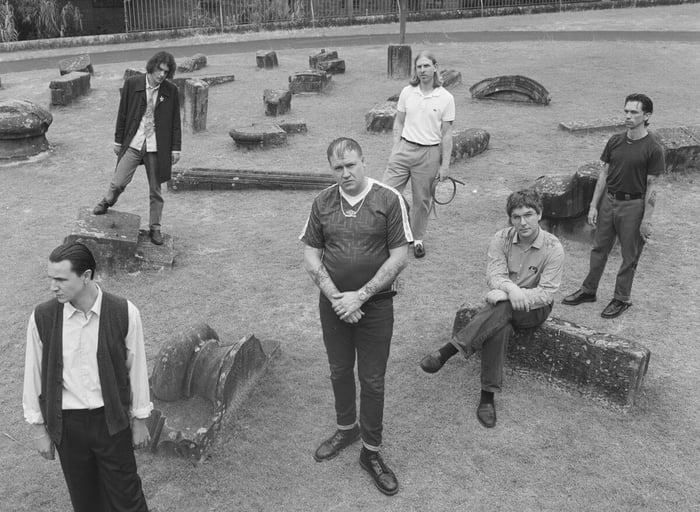
After that show, Yuta and Georgia leave. Michael, Alan, and Kuceli (Gaud) join. And here’s the move that shapes the album’s internal logic: since Micky, Michael, Kuceli, and the singer played in KX Aminal—and never got to record those songs—some of those KX songs get absorbed into Station Model Violence.
That’s the record telling you what it’s doing: it’s not wiping the slate clean. It’s refusing to waste good tension. It combines:
- KX Aminal songs (rescued from their unrecorded state)
- Buz’s demos (the ones that didn’t fit R.M.F.C.)
- a couple of brand-new songs written together
Then they play a couple of shows, and record an LP with Mikey in Melbourne and Micky in Sydney at the start of 2025.
This is where my mild criticism shows up: you can feel how dense the whole thing is—sometimes to its own detriment. The density can read like maximal intent, but occasionally it just feels like too many good ideas refusing to take turns. Still, I’d rather hear that than a record that behaves itself.
“An incredibly dense beast,” and the patience it demands
The album gets mixed over the course of the year because they created an “incredibly dense beast,” and a lot of credit goes to Mikey Young for patience and persistence.
That sentence changes how I hear the record. It explains why the sound feels packed—like the mix is wrestling with the number of moving parts and refusing to flatten them into wallpaper. Some listeners want space; this album often chooses pressure.
And then the closing image returns: coconuts and the drill and pastoral psychedelicism — and the smell of Kwisis. It’s a ridiculous collage, but it’s also a clue. The album wants contrast—soft/hard, rural/industrial, practical/surreal—without turning into art-school theatre.
Where to hear it (and why the media matters)
The album’s ecosystem isn’t just “songs.” It’s demos, scenes, lineups, and documents. If you follow that breadcrumb trail, the project makes more sense as a living thing instead of a product.
Conclusion
Station Model Violence sounds like someone treating stagnation as an emergency—building a band the way you kick open a stuck window, pulling in demos, old songs, new songs, and whatever human chemistry still sparks. It’s not tidy, and it’s not supposed to be.
Our verdict: People who like their punk-adjacent records crowded, personal, and a little feral will actually like Station Model Violence—especially if you enjoy hearing the process breathing inside the finished thing. If you need clean arcs, polished minimalism, or a band that picks one lineup and sticks to it, this album will feel like being dragged to a party where everyone keeps changing rooms.
FAQ
- What is Station Model Violence trying to do thematically?
It’s trying to purge the locked-down stasis—turning the frustration of not playing or traveling into momentum and voice. - Why does the album feel so dense?
Because it’s built from overlapping sources—absorbed KX Aminal songs, Buz’s unused demos, and new material—then mixed over a long stretch to wrangle it all. - What’s the deal with “smells like Kwisis”?
It’s a private slogan that becomes a creative compass: write songs that carry the same charge as a guitar line reminiscent of Crisis, without overexplaining it. - Is there a key track mentioned from the sessions?
Yes—“Learn To Hate,” first released as a demo recorded after eating mushrooms on a winter evening. - Does the lineup stay stable through the story?
Not really. After a late-2024 one-off show lineup, Yuta and Georgia leave; Michael, Alan, and Kuceli join, and the project reshapes around that.
If this album’s imagery is stuck in your head—coconuts, drills, pastoral weirdness—getting a favorite album cover poster printed kind of fits the ritual. If you want one for your wall, you can browse options at https://www.architeg-prints.com.
 | DISCOUNTGET 30% OFF*Use code on your next order:
|
* This post may contain affiliate links, meaning we earn a commission if you make a purchase through these links, at no additional cost to you.