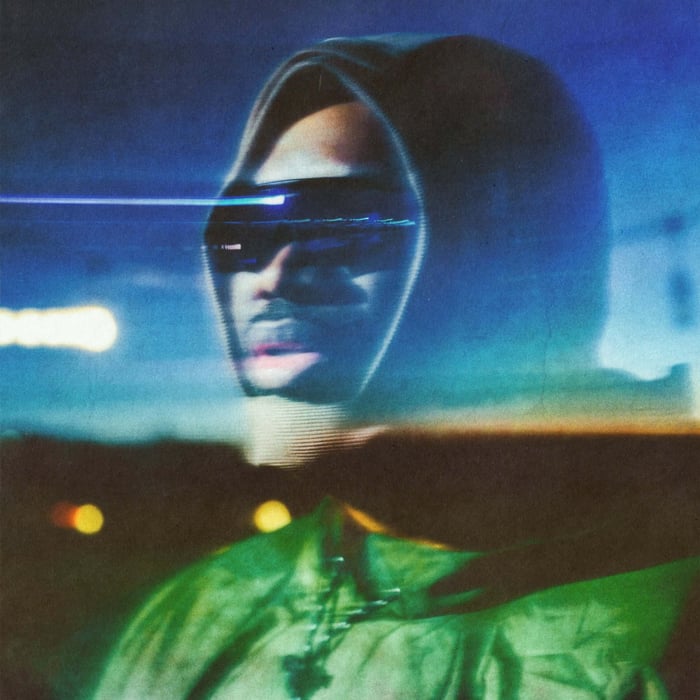
Fox BD’s Distribution Deals: A $200 Rap Album That Won’t Sit Still

 See more Architeg Prints stories on Google.
Fox BD’s Distribution Deals: A $200 Rap Album That Won’t Sit Still
Fox BD turns Distribution Deals into a survival flex—funny, ugly, and weirdly intimate, like a group chat that accidentally became an album.
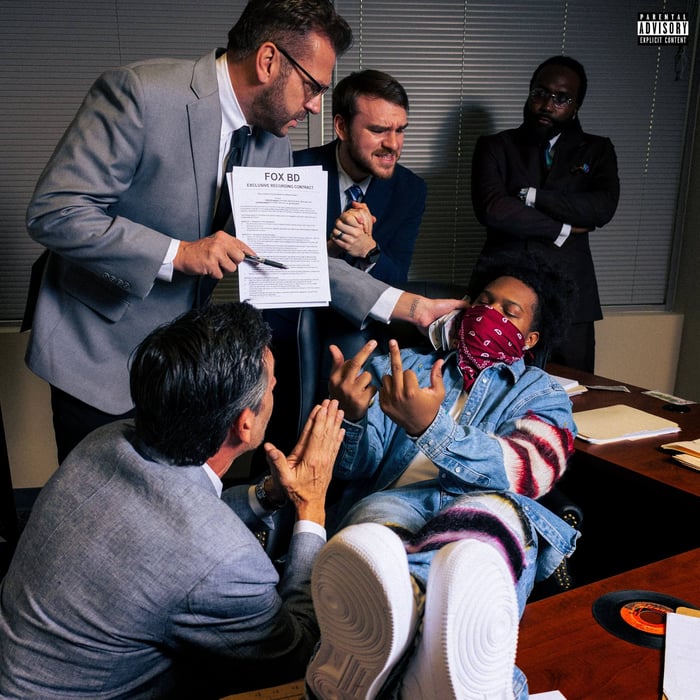
This isn’t “music industry talk.” This is a control issue.
I put on Finessin Distribution Deals expecting the usual street-rap brag parade—money, threats, designer nouns. It does have all that. But what it’s actually doing is stranger: it’s Fox BD building a world where he’s never alone, never unchallenged, and never stuck being “from” only one place.
And honestly, at first I thought the album was just loud on purpose. On second listen, it feels loud because Fox can’t afford silence.
Fox BD’s real flex is being un-categorizable
Right away, Fox BD comes off like he’s allergic to being boxed in. He’s tied to West Memphis, but he’s also moving like he’s got a second brain operating out of Atlanta’s Bouldercrest. The record keeps pushing that double-location identity until you realize the point: if you label him as only an Arkansan, you’re missing the whole hustle.
He even seems to take it personally when anyone tries to simplify the geography. Not in a “fun fact” way—in a “don’t reduce my leverage” way.
And then he starts stacking bodies around him, not literally (well… we’ll get there), but socially: he’s got the Foxes, a crew he describes as massive—thousands deep by his own admission. Half outside, half locked up. That detail lands like a responsibility, not a boast. The album keeps implying he’s got people waiting on him to keep the lights on, keep them fed, keep them “alive,” whatever that means on a given track.
That’s the first big tell: Fox doesn’t want to sound solo. He wants company on wax because company is the whole point.
He turns the album into a room full of voices—and that’s the strategy
The most consistent production choice here isn’t a specific drum pattern or regional bounce. It’s Fox doubling himself, constantly—like he’s hosting his own heckler in the ad-libs.
That self-heckling does two things:
- It makes the songs feel crowded, like there are always witnesses.
- It keeps Fox from drifting into clean “rapper mythology.” Somebody’s always interrupting him.
On “Keyboard Gangstas,” he literally calls Cam onto “the one-twos,” and it plays like Fox is rolling his eyes at a specific type of online tough guy—the “computer-ass” ones who posture from a safe distance. There’s also this quick little pause where he checks in with Juice—asking if the track is his “on paper.” It’s such a small moment, but it tells you the vibe: this isn’t a neatly packaged album experience. It’s Fox running his operation out loud.
I’m not totally sure whether that chaos is carefully designed or just Fox refusing to edit himself. But either way, it works because the mess feels like the message.
“I’m Adapted” is where the album admits it enjoys being mean
A lot of street records threaten violence. Fox BD does something slightly different: he enjoys humiliating people while he’s threatening them, like cruelty is part of the entertainment budget.
On “I’m Adapted,” he goes at people who post a dead friend for attention. Then he swings at the whole GoFundMe ecosystem—mothers raising money for sons who spent their lives flaunting money. The second Fox in the ad-libs even questions how any of that makes sense, and then Fox basically tells that voice to shut up.
That’s the album in miniature: one part conscience, one part punchline, and Fox choosing the punchline because it keeps him untouchable.
There’s also a scene baked into the record that feels like Fox showing off how he directs conflict like it’s a film shoot: a studio argument about a crashed rental. Somebody’s yelling, “You wanna crash mine? You wanna crash like I’ll crash, gang,” and Fox is described in a Burberry puffer in hundred-degree heat—muscle shirt and jorts underneath—Glock in hand, chain loose on some old-school energy “like Tunechi in ’08.”
That image is ridiculous in the way Fox clearly intends: overdressed for the weather, underdressed for decency, fully dressed for war. The album keeps doing that—making you laugh, then making you notice you laughed.
If I’ve got a mild gripe, it’s this: sometimes the jokes land so hard they flatten the song around them. A few moments feel built to go viral in conversation more than they feel built to replay as music.
“20k Purse” treats kidnapping like a bit—and that’s the point
“20k Purse” is Fox leaning into cruelty-as-comedy with zero shame. He’s spending twenty thousand on a designer bag “like Uzi,” like dropping that comparison is supposed to make the flex feel casual. Then he logs an Amber Alert… for a guy his crew captured.
That’s the kind of line that doesn’t ask you to approve of him. It asks you to accept that he’s narrating from a place where morality is just another thing people use to posture.
And then he swerves into something petty and oddly controlling: a woman asks him to pick her next hairstyle and he chooses the pixie cut. It’s such a small, sideways moment of power—like even romance is a place where Fox wants the final say.
A reasonable listener could argue it’s all just shock-rap exaggeration. I don’t think so. It plays like Fox is showing you how easy it is for him to treat other people’s lives as props—because that’s how he stays calm.
“Livin Room” is domestic life, if domestic life had fentanyl and rules
On “Livin Room,” Fox outfits an entire apartment like he’s furnishing a showroom for chaos: a “five-star woman” lounging around five hundred fentanyl pills and twenty choppas.
And then—this is where Fox is sneakily funny—he sets a bureaucratic rule in the middle of all that: nobody gets to call someone a rat without paperwork.
That’s the contradiction the album loves. The environment is lawless, but Fox keeps inventing micro-laws, like he’s building a private justice system in real time. It’s not about being fair. It’s about being the one who decides what “counts.”
He also flips occupations mid-verse in a way that’s both grotesque and revealing: from a nail technician making his trigger fingers presentable to using a .308 on somebody—“bow-legging” a man who walked in straight. Same verse, same breath.
Then he “comes clean” about botching a bikini shave with Nair, like confession is just another flex: I can do violence and I can ruin intimacy, and I’m still laughing.
And in the middle of all that, he tosses out what he wants for Christmas: a purple cup.
Not peace. Not freedom. Not a clean slate. A cup. Purple.
“Pharmacy R Us” is the album’s most honest love song, and it’s about lean
The most genuine romance on the album isn’t aimed at a person. It’s aimed at drank.
On “Pharmacy R Us,” Fox says it straight: “Thank God for introducing me to lean, I’m proposing to her.” It’s funny until you realize he’s not really joking. He talks like lean is the only relationship that doesn’t argue back—until it does.
Because the love affair is already breaking down:
- the doctor is terminating refills
- his mom catches him mid-conversation with his “muppet” (that detail is bizarre enough that I paused the track the first time—partly laughing, partly wondering if I heard it right)
Then Unc FaceTimes in from the bath with a recipe, like the family tree has a whole branch dedicated to chemical tradition.
Fox also frames the ritual with weirdly specific discipline: pours go in by four, and he cites Drakeo The Ruler as the example. Babyface Ray shows up just to get charged for the clean drank. The Jeffersons flex is “completely intact,” like Fox is making sure you understand this isn’t sloppy addiction—it’s curated, it’s status, it’s lifestyle.
That’s the album’s trick: it dresses dependence up as professionalism.
“Seals Dekline,” “G6,” and “Baffled” turn addiction into logistics
On “Seals Dekline,” Fox and Lil Yachty split more drank, and the whole conversation turns into a little committee meeting about it—there’s even a request to have Bieber “elaborate,” which is such an oddly placed name-drop that it feels like Fox enjoying the absurdity of celebrity floating through street reality.
He also wishes he’d warned Granny to stockpile Actavis before a ban. That line lands as comedy, sure, but it’s also Fox telling you how long this has been in the family bloodstream.
“G6” pairs his lean addiction with a woman’s Xanax addiction, like he’s making a couples’ portrait out of mutual sedation. Sexyy Red pops in to note someone else taking it and looking fancy doing it—again, the album keeps insisting that the aesthetic matters as much as the damage.
Then “Baffled” drops the moment that actually sounds tired instead of triumphant: “I’m gettin’ fed up, I’m tired of purple shit sittin’ in my lungs.”
He sandwiches that admission between flex objects—gator boots, a five-grand mink carpet—and then lists what he treats as investments: clothes, drugs, and bump stocks.
That’s not just a bar. That’s Fox’s budget spreadsheet. It’s him telling you exactly what he thinks will keep paying him back.
I’m not fully certain if the exhaustion line is a real warning flare or just another dramatic texture in the song. But it’s the first time the album’s “haha” slips and you see the cost underneath.
“Goal Post” drags West Memphis into the room and refuses to clean it up
“Goal Post” is where West Memphis hits hardest, because Fox stops sounding like he’s performing and starts sounding like he’s remembering.
“You ever seen a dead body sittin’ in yo’ living room, mind yo’ business, just walk past it
Next morning, had to go to school, brush it off my shoulders, act normal like nothing happened.”
He tags that memory with one word: confusion. And that’s exactly what it feels like—confusion as a coping mechanism, confusion as a blanket you throw over horror so you can keep moving.
YTB Fatt shows up in the story too—caught up in 2016, skipping a million-dollar meeting. Fox responds with his own method: bows and show, plus a funeral he didn’t attend. He admits it bluntly: he fell out with someone before they died, didn’t show up, just sent condolences. And then the guy behind him adds, “Still love you though.”
That ad-lib is the whole emotional thesis of this record: love exists here, but it shows up late, sideways, and half-muttered.
The album begins and ends like a reunion—except the hugs are paranoid
The family-reunion framing starts on “Bakk to Square 1,” where Fox toasts the people who lined up with him. He asks for Lil’ Mo to be free—someone he says he last saw four years ago, heading to jail.
Then the album closes with “Hear Me Out, Just One Time,” where Fox talks about who got brave after he took them in. He also pays respect to a partner whose heart went numb from street losses.
That’s Fox’s version of sentimentality: no violins, no big speech. Just a quick acknowledgment that somebody’s emotional circuitry got fried—and they still showed up.
A lot of rappers try to sound loyal. Fox sounds like loyalty is a job, and everybody’s already behind on their shifts.
The $200 price tag isn’t a gimmick—it’s the final verse
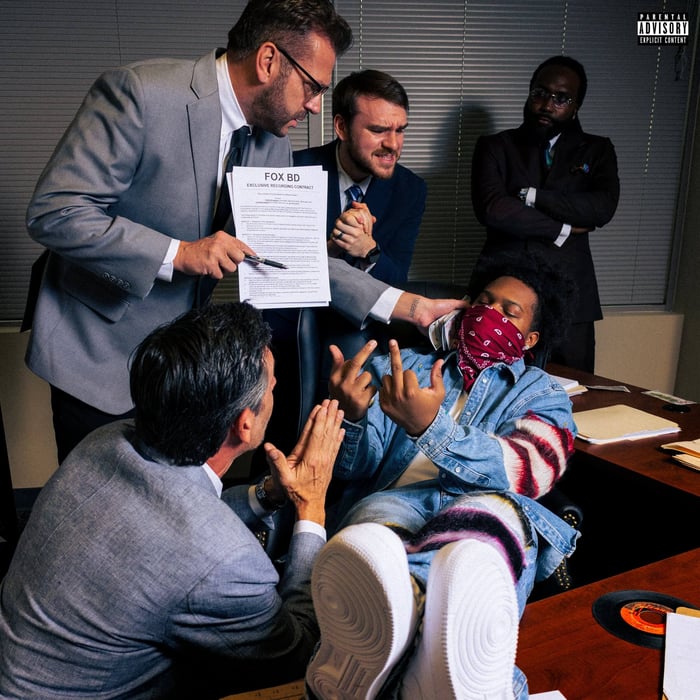
Here’s the part that makes the title Finessin Distribution Deals feel literal: at this moment, the album costs $200.
Payment options are spelled out like a menu—CashApp, Apple Pay, or Chime. And the “pitch” is basically just: “Lmaooooooo.” That’s not marketing copy; it’s Fox telling you he doesn’t need to persuade you. If you get it, you pay. If you don’t, you weren’t invited.
The hook about petty paper spirals into justification, and Fox puts a number on how cheap other people’s futures look to him: “For what you signed for your publishing, I spent that on drank.”
Then there’s this camera moment where he refuses to answer—just sits there, avoiding any fines—like that famous “I’m just here so I don’t get fined” energy. Fox is playing distributor and talent at once, and he’s letting you know the rules:
- he sets the price
- he watches the money notifications
- nobody eats until he does
That’s what the album is “actually doing.” It’s not asking to be reviewed. It’s charging admission and calling that the review.
Conclusion
Finessin Distribution Deals plays like Fox BD built a moving car and recorded the album inside it—people yelling from the back seat, jokes turning into threats, love songs written to chemicals, and West Memphis memories that still smell like shock. I came in thinking it would be pure flex music. I left thinking it was a control manual dressed up as entertainment, with just enough honesty to make the laughter feel a little unsafe.
Our verdict: If you like rap that feels like a crowded room where somebody’s always interrupting—and you don’t need your artists to be “likable” to be interesting—this album will hit. If you want clean morals, tidy storytelling, or hooks that politely ask for your replay, you’ll hate this and probably complain about the price like Fox personally took your lunch money.
FAQ
- What’s the core idea behind “Distribution Deals” on this album?
Fox BD treats Distribution Deals like power: setting prices, controlling access, and making the business part inseparable from the music. - Which tracks feel like the album’s center of gravity?
“I’m Adapted,” “Pharmacy R Us,” and “Goal Post” are where the album’s personality sharpens—mean, intimate, and haunted. - Is the album more funny or more dark?
Both, and that’s the problem (or the appeal). The humor is often just darkness wearing a nicer outfit. - Does Fox BD sound conflicted about anything here?
Yes—especially around lean. “Baffled” slips in real fatigue, even if Fox tries to bury it under flexes. - Why does the album feel so crowded with voices and ad-libs?
It sounds intentional: Fox wants witnesses. The constant doubling makes even solo lines feel like a group decision.
If this album’s imagery stuck with you—the Burberry-in-heat absurdity, the purple-cup romance, the living-room paranoia—an album-cover poster isn’t a bad way to keep that mood on the wall. You can shop prints at our store: https://www.architeg-prints.com/
 | DISCOUNTGET 30% OFF*Use code on your next order:
|
* This post may contain affiliate links, meaning we earn a commission if you make a purchase through these links, at no additional cost to you.