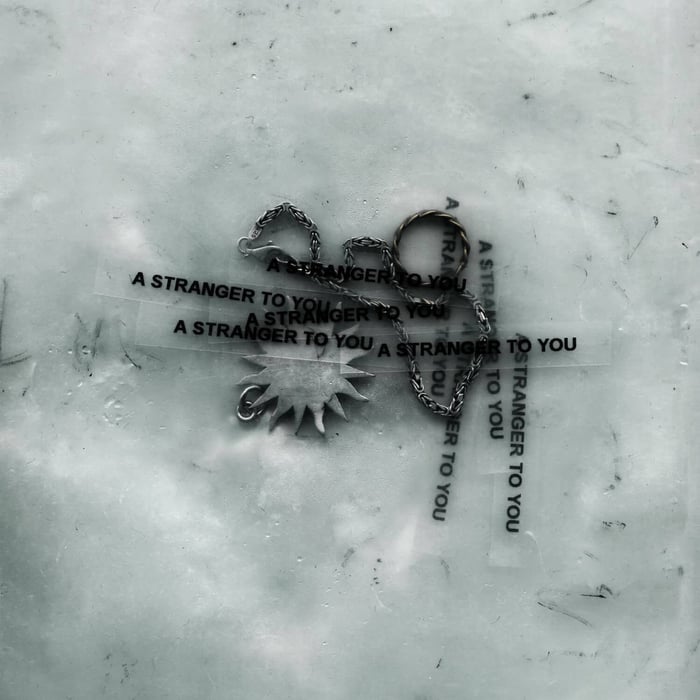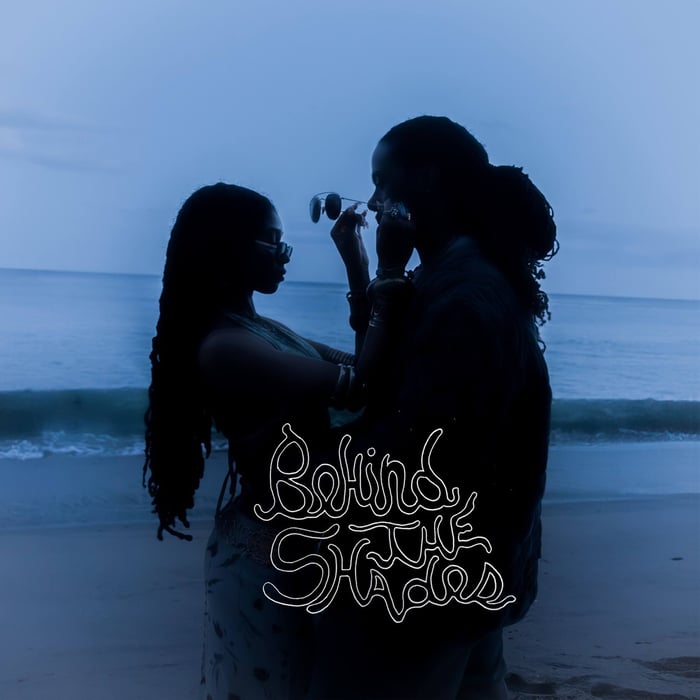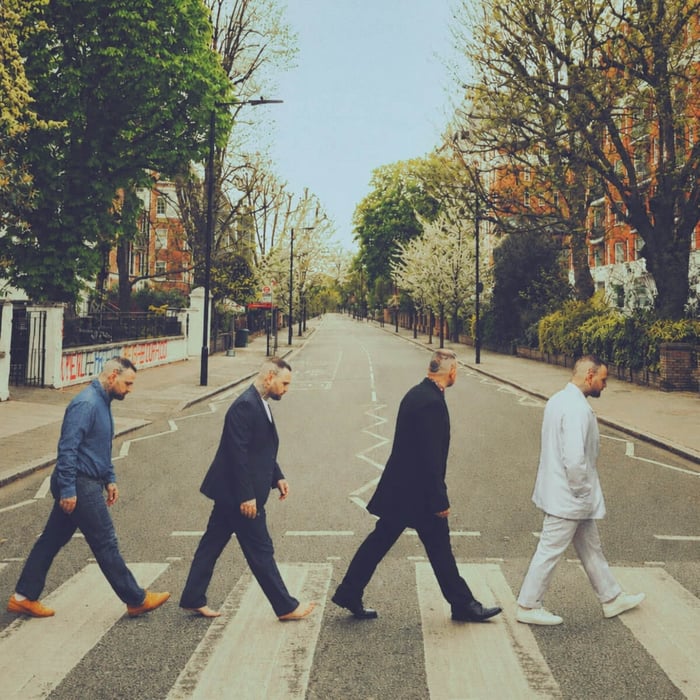
SOON MY DOUBLES: Andrew’s Grief Rap That Pretends It’s a Flex


 See more Architeg Prints stories on Google.
SOON MY DOUBLES: Andrew’s Grief Rap That Pretends It’s a Flex
SOON MY DOUBLES is a soul-sample confessional where andrew turns hand-me-down memories into punchlines, routines, and a quiet argument with death.
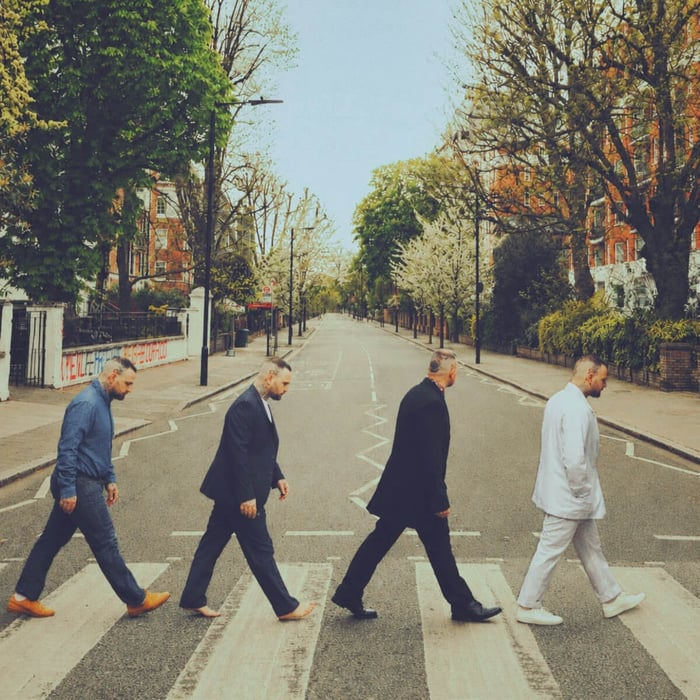
This album isn’t showing off—it’s trying to keep the room from going silent
You can call it rap, you can call it producer-nerd sample craft, but what I heard was a guy building a working life raft out of whatever was already lying around. SOON MY DOUBLES doesn’t sound like “new era” anything. It sounds like somebody making sure the past still has a pulse.
And yeah, it has stunts. But most of them are emotional: staying functional, staying funny, staying here.
The origin story is basically: flea markets, Beatles tapes, and a dad who kept music on
The album carries this very specific weight: Saturday flea markets, a father who wouldn’t shut up about The Beatles (in the way only a true believer can), and a kid getting duplicate tapes like they’re family currency. That “here, take the extra” energy ends up being the record’s whole method.
andrew’s not just rapping—he’s producing everything himself, sticking mostly to soul samples and his own material, like he’s refusing to borrow anyone’s tools. The release date lands on his father Carm’s birthday, and the dedication hangs over the whole thing. It’s not sentimental in a greeting-card way. It’s more like: this is what happens when the person who kept the music playing is gone, and the silence becomes your problem.
Also: the record coming out through U Don’t Deserve This Beautiful Art (run by Darko the Super out of the UK) matters in a practical way—this album feels like it’s living in that DIY, transatlantic, “we’ll make it work from wherever we are” reality. Sleepingdogs—his duo with Jesse the Tree from Providence—sits in the background too, like a second voice in the room even when it’s not literally on the track.
An arguable take: the album’s real loyalty isn’t to hip-hop tradition—it’s to the habit of collecting, like the emotional version of stacking tapes in a shoebox.
“SOON”: the “hand-me-down” mindset turns into a whole philosophy
“SOON” is where the thesis shows up without a PowerPoint. The dial is set backward on purpose: movies from the ’90s, music from the ’60s, sports heroes like Kenny Lofton and Ken Griffey, like he’s choosing references that still smell like carpeted living rooms and tube TVs.
What hit me is how he treats “attention” like a moral duty. Even the dumb little daily choices get framed like character tests—playing a new round of Go Fish every day, keeping the bread mold instead of tossing the loaf. That’s gross, sure, but it’s also the point: he’s not posturing as a guy with pristine habits. He’s posturing as a guy who refuses to waste what’s left.
And even when he gets cocky, it comes with a funeral tone. One line basically says the old him is dead and he’s pouring out liquor for it. That’s not bragging—that’s a man trying to make ego sound like closure.
Arguable take: “SOON” isn’t nostalgia; it’s a control tactic. If he can keep the timeline predictable, maybe grief stops improvising.
“WILL”: lifting weights vs. lifting a burger, and why that’s the point
On “WILL,” he weighs days like they’re not all worth the same. Some days he lifts weights, some days he lifts a burger—simple, funny, and a little brutal. It’s the kind of line that lands because it refuses inspiration-poster energy. It’s not “grindset.” It’s “I’m trying.”
Then the perspective shifts: he becomes this humble, practical “server” type, scanning the water for a life preserver. He “zags” when people say “zag,” and the whole song lives in this jerry-rig world—chewing gum, rubber bands, whatever gets you through the hour. Betting on himself doesn’t sound heroic here. It sounds like the only remaining option.
I’ll admit I wasn’t sure, at first, if this track was going to feel too tossed-off—like one of those clever verses that never turns into a song. On second listen, the looseness reads more like intention: life doesn’t resolve cleanly, so why should the bars?
Arguable take: “WILL” is more honest than most “self-improvement” rap because it doesn’t pretend consistency is the goal.
“DOUBLES” and “PULL”: the album stops flexing and starts diagnosing
“DOUBLES” is where the record basically admits: everybody contains everything. There’s a Tolstoy quote hovering over it—about every person carrying the germs of every human quality—and andrew takes that personally, not academically. He’s not using philosophy as seasoning. He’s using it like a mirror.
The way he talks about living gets uncomfortable fast: living because he hated his people, and then facing the emptiness of them being gone. Trying to live a life that lets other people decide what his life is, then admitting the plan failed. That kind of confession usually comes dressed up as “growth.” Here it lands more like a report from inside the mess.
Then “PULL” clamps down: he describes his brain in a vice grip, and you can hear the implication—this isn’t a mood, it’s a condition. He rewrites himself in pieces, remembering periods of being drunk and indulgent, calling himself a “fat glutton” without softening it. He credits death—at least the pressure of it—with forcing change. But then he undercuts that too: he quit, he still “ain’t shit,” he’s “always loose leaf.” That’s such a good self-description it almost feels rude to repeat it.
One mild criticism: sometimes the self-laceration stacks up so fast it starts to blur. I wanted one extra breath—one more moment where a detail sits instead of being replaced by the next confession.
Arguable take: the album’s “doubles” concept isn’t about clones or swagger—it’s about the split between the person you perform and the person you can’t edit.
Jesse the Tree on “MY”: a verse that treats every bar like it’s dying
Jesse the Tree shows up on “MY” sounding like someone watching their own words float away. He’s convinced every bar is about to die and drift downriver, and he mourns his life like it’s already in the rearview. He even ties the decline to Reagan’s win—history as a long downhill slide.
The part that surprised me is the self-portrait angle: ugly and charming, repulsive and beautiful at once. He doesn’t pick a lane. He forces you to hold both. That’s the kind of writing that makes a feature verse feel like a second storyline instead of a guest appearance.
Arguable take: Jesse doesn’t “complement” andrew here—he complicates him, which is more useful.
Darko the Super on “MY”: unstable, funny, and governed by one rule
Then Darko the Super arrives from a more chaotic emotional zip code. He says Tupac is alive in there, Sex Packets is in his player, and he’ll sign an autograph for a crack whore—images that sound outrageous until you realize what he’s actually doing: turning instability into a coping style.
“Sometimes you gotta laugh to keep from crying / Running from your past to keep from dying.” — Darko the Super
That line doesn’t feel like “wisdom.” It feels like instructions written on a bathroom mirror at 2 a.m.
andrew comes in after, “armored as an armadillo,” talking Parent Trap money doubling this time. The flex is purposely cartoonish—like he’s reminding you that even bravado is a costume he can put on and take off.
Arguable take: Darko’s chaos makes the song feel truer, not messier—because real coping is rarely tasteful.
“ALL”: the six-foot-hole chorus and the grocery-store dread that follows you home
“ALL” kicks off a process—like the album flips from reflection into preparation. The line about a “six-foot hole” isn’t thrown away; it’s basically the track’s north star. He’s planning to leave the “Drew-niverse,” and the details get painfully domestic: counting needles on the way to the grocery store, noticing the house is too cold, butter never soft, mom getting old.
That’s the stuff that makes death feel real. Not the dramatic stuff—the butter.
The chorus uses a sampled voice that manages to sound hopeful and threatening in the same breath: he’ll be around, but he doesn’t plan to be around. That contradiction is the album’s core motor. Staying, leaving, staying, leaving.
Brian Ennals’ verse lands like a grim little movie scene: dying in a crack house, drunk but still accurate, thinking about hiring a friend to save them from drugs and trauma, and watching it all lead to needles anyway. Then he lands on the cruel math: life asks very little, death demands a lot. It’s one of those lines that feels obvious only after someone says it out loud.
I thought this track was going to be the album’s emotional peak. Later songs made me rethink that—“ALL” is more like the moment the floor stops feeling stable.
Arguable take: “ALL” is the album’s most devastating song because it refuses drama and sticks to the refrigerator-light kind of despair.
“OF”: work breaks, DOOM, onion tears, and saying the quiet part loud
There’s a strange everyday comedy running through this album, and “OF” leans into it. On a work break—on a day off, which is its own form of modern nonsense—he listens to MF DOOM’s “Hoe Cakes.” He does stuff at work, signs out by “making Wu sign,” and there’s this frazzled overshare about drinking so much he can’t tolerate hair in ears anymore, and even his nose feels like an indignity. It’s gross, human, and specific—exactly why it lands.
He also shouts, “Free Palestine, Israel genocidal.” It’s blunt, dropped into the stream like he’s refusing to keep his politics in a separate drawer.
The crying gets blamed on a potent onion, which is either a joke, denial, or both. Then the kitchen obsession takes over: dessert after lunch, cooking dinner at work just to go home and cook again. He pets a black cat because, honestly, bad luck already moved in—might as well give it a chair.
And the decision at the end—“it is OK”—doesn’t sound triumphant. It sounds like a man placing one foot on the ground to see if it holds.
Arguable take: “OF” is the album’s real flex—not confidence, but functioning.
“STUNTS”: the only advice worth anything is to rest
“STUNTS” contains the album’s most practical commandment: rest when you’re tired, even if there’s work to be done. It’s delivered like advice he doesn’t fully follow, which makes it more believable.
He mentions a heart monitor while watching a speedometer—miles, kilometers, distance as a measure of survival. Missed calls come in from people forgetting he’s in the British time zone, which sounds minor until you hear what it implies: dislocation, living out of sync, being slightly unreachable by default.
And he’s already drafted his epitaph: the tombstone will say he did too much, and that’ll be true. It’s funny in the way a smoke alarm is funny.
Arguable take: “STUNTS” isn’t about risk—it’s about the quieter stunt of not collapsing.
“MY (Pt. II)”: insomnia as a lifestyle, Allen the AI, and a pen that never rests
Sleep doesn’t show up for “MY (Pt. II).” He’s up at 3:11, energy not even in the yellow yet—like his body skipped the warning lights. He can’t hold back, doesn’t wander, recognizes only his answer. That single-mindedness feels less like inspiration and more like compulsion.
Then there’s Allen, his AI—framed as stakes without the exhausting overhead: no conference calls, no talking about “practices.” He clips coupons, turns old bread into croutons, cooks udon at any hour. The mundane details do the heavy lifting again: this is what a life looks like when your brain won’t power down.
One wish slips through the insomnia: “Calm forever, fuck cancer.” It’s not polished. It’s not meant to be.
There’s no schedule, no date/time/place certainty—everything ends when death and taxes finish the job. And at the end of it, he’s awake with a pen in his hand. Not because it’s romantic. Because that’s the only way he knows how to be here.
I’m not totally sure whether the Allen/AI mention is meant as a serious tool, a metaphor, or a shrugging “this exists now.” But the ambiguity works—because insomnia doesn’t come with clean explanations either.
Arguable take: the album’s final stretch makes creativity sound less like a gift and more like a symptom you learn to live with.
Favorite moments and what actually sticks
If I’m being honest, this record doesn’t “hook” you the way a slick rap album does. It wears on you, then it wins you over anyway. The tracks that keep pulling me back are the ones where the writing turns domestic details into existential ones:
- “MY” (the features make it feel like three different coping mechanisms arguing in one room)
- “WILL” (because it makes inconsistency sound like reality, not failure)
- “ALL” (because the butter-not-soft detail is more haunting than any graveyard metaphor)
- “STUNTS” (because “rest” is the most rebellious word in the whole album)
And yeah—I land near “great” on its overall effect. Not because it’s flawless, but because it commits to its strange little mission and doesn’t blink.
Arguable take: the album’s “best” songs are the ones that stop trying to be impressive and start being accurate.
Conclusion
SOON MY DOUBLES feels like andrew turning hand-me-down tapes into hand-me-down survival tips—soul samples, grief, routines, jokes, and blunt admissions stacked into something that can keep playing even when people can’t.
Our verdict: This album will hit listeners who like soul-sample rap that talks like an unfiltered diary and doesn’t apologize for being messy. If you want clean catharsis, big choruses, or “confidence” that stays confident, you’ll get annoyed—and you’ll probably call it rambling right before one specific line wrecks your whole day.
FAQ
- What does “SOON MY DOUBLES” mean in plain terms?
It plays like a split-self idea: the version of you that performs life vs. the version that’s privately unraveling, both taking turns on the mic. - Is this album more about grief or bragging?
Grief. The bragging shows up like armor—something he puts on because walking around unarmored would be worse. - Does the production matter as much as the lyrics?
Yes. The soul-sample approach isn’t decoration; it reinforces the “hand-me-down” worldview—old sounds carrying new damage. - Which track should I start with if I’m unsure?
Start with “ALL.” If the grocery-store dread and the chorus contradiction don’t grab you, the album’s probably not your kind of heavy. - Are the guest verses essential or optional?
Essential. Jesse the Tree and Darko the Super don’t “feature”—they tilt the meaning of “MY” into something wider and stranger.
If this record put you in a mood and you want something physical from that feeling, a poster of your favorite album cover is a nice way to let the obsession live somewhere other than your browser tabs. You can browse prints at https://www.architeg-prints.com.
 | DISCOUNTGET 30% OFF*Use code on your next order:
|
* This post may contain affiliate links, meaning we earn a commission if you make a purchase through these links, at no additional cost to you.