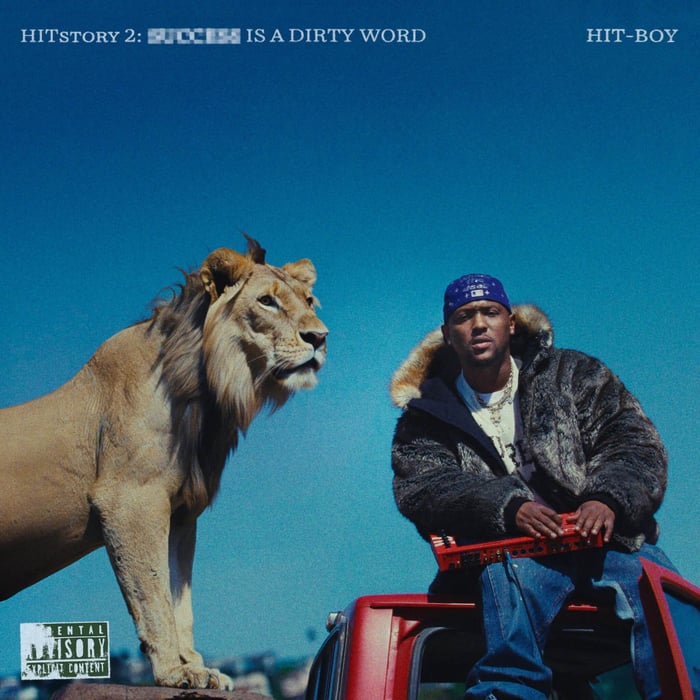
Hit-Boy’s Success Dirty Word: Therapy-Rap in Designer Sneakers

 See more Architeg Prints stories on Google.
Hit-Boy’s Success Dirty Word: Therapy-Rap in Designer Sneakers
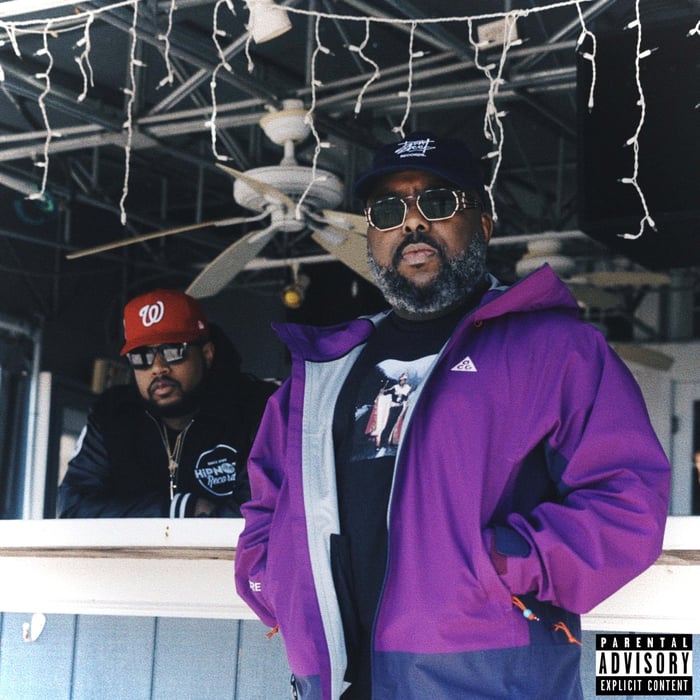
Hit-Boy turns Success Dirty Word into a confessional flex—plaque shine, spirit cracks, and a sneaky fear that winning doesn’t mean being loved.
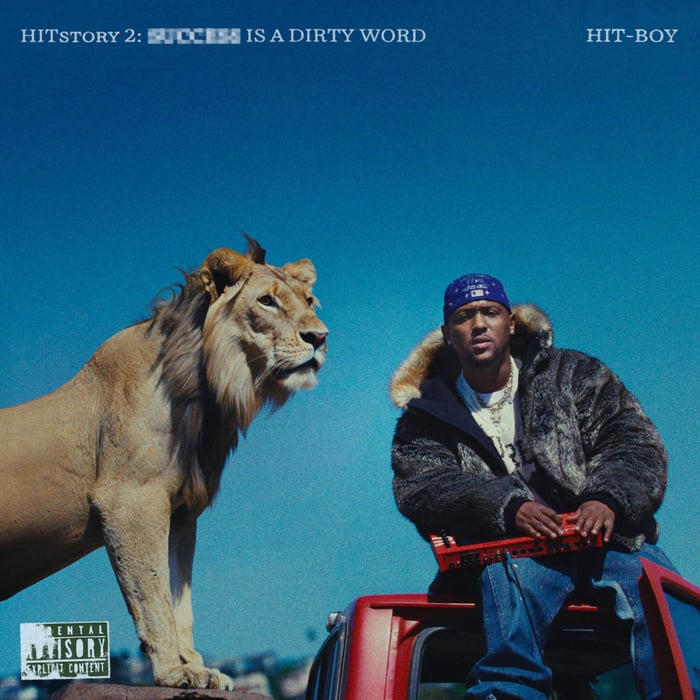
This album isn’t bragging. It’s keeping score.
At first I thought HITstory 2: Success Is a Dirty Word was just another producer-turned-rapper victory lap—clean mixes, expensive fonts, guest list doing the heavy lifting. But the longer it runs, the more it sounds like Hit-Boy is documenting a specific kind of rot: the moment “I made it” stops feeling like a sentence and starts feeling like a spreadsheet.
The title isn’t subtle, and neither is the way the album opens: he pulls dialogue from a 1975 episode of Good Times, where James Evans gets cornered by a rich guy who can’t stop sneering at where the Evans family lives. James finally snaps and says success shouldn’t be treated like something shameful.
“Now, I busted my butt a lot of years to get out of here, and I made it. Now, you make it sound like success is a dirty word, brother.” — James Evans (Good Times, 1975)
Hit-Boy uses that like a mission statement, but it also lands like a warning label. Because the album spends a lot of time proving that success isn’t “dirty”—it’s lonely. And maybe corrosive. I’m not entirely sure he even wants to be talked out of that.
The title track: where the flex finally admits it’s scared
That Success Dirty Word title track is the center of gravity. He puts himself in therapy, and he doesn’t play it for comedy. His mood depends on whether he’s counting streams or leaning on real friendships—like happiness is an app that keeps crashing unless numbers refresh.
He raps, I turned my heart into a rollout, I turned my pain into a pitch deck, how the fuck I sold out? and the delivery is the point: flat, unimpressed, almost allergic to melodrama. No vocal acrobatics, no begging you to feel it. Which is exactly why it hits. It’s a guy trying to speak clinically about his own bruises, like if he says it too passionately it’ll become real.
The album keeps circling the same ugly contrast:
- plaques on the wall, cracks in the spirit
- the group chat full of yes-men, the actual friends going quiet
- family saying they’re proud… while barely looking at him in the house
You can disagree with me, but I think he chose that drained tone on purpose—because sounding excited would make the whole thing feel like a lie.
“Clash!” and the art of talking mess as a coping mechanism
From there, the record breaks into flex mode, and it’s not random. It’s defensive. He makes threats in the orbit of “Clash!,” then drops a line that’s funny until you notice how hungry it sounds: I treat the bank like it’s Hometown Buffet, my pockets so bloated. That’s not poetry; that’s stress-eating with money.
Then comes a producer brag that actually feels specific instead of generic rap-god noise: he says his computer can’t even hold all the hits he’s made. It’s absurd, and it’s also the kind of thing only a real builder would say—someone whose hard drive is basically a trophy case.
He frames his whole story like work ethic mythology:
- he’s “working like pgLang,” cooking with a squad
- the initial money for all this came from waiting tables
Even when he’s reflecting, he keeps slipping back into “I did it myself” posture, like vulnerability is a room he’ll enter only if he can stand by the door.
“Talk Nice to Me” and the burden nobody wants
The bridge from flexing to philosophy shows up on “Talk Nice to Me,” which plays like an instruction record—Hit-Boy watching people chase power like it’s a shiny object, while ignoring the weight that comes with it. He asks, You want to be the king? Nigga, do you want the burden? and I get why that line matters to him: he’s arguing that most people don’t actually want responsibility, they want the costume.
It’s an arguable take, sure. Plenty of hungry artists want the burden. But on this album, Hit-Boy is talking about a specific type: the ones who want the throne photo but not the throne job. The record’s whole mood is “everyone wants results, nobody wants consequences.”
“Franchise Boy” and the nostalgia flex that isn’t really nostalgia
“Franchise Boy” is him planting a flag: he’s the franchise boy in a white tee, nodding to Dem Franchize Boyz’ “White Tee.” He also reminds you he once programmed on a Triton—one of those details that’s half brag, half receipt. It’s him saying: I didn’t just arrive in the streaming era; I was there when the tools were heavier, slower, and less forgiving.
What surprised me is how little he romanticizes it. It’s not “back when music was real.” It’s more like: I learned to grind in a way that permanently rewired my brain, and now I can’t turn it off.
The guests aren’t decoration—they’re oxygen
Here’s where the album makes a smart move: the features don’t feel like clout vending. They feel like vents cut into a sealed room.
Quavo shows up on “Do It” and basically carries it with melodic ad-libs Hit-Boy wouldn’t touch. That contrast matters. Hit-Boy’s vocal approach is controlled and tight; Quavo floats all over the edges, and suddenly the song can breathe. If you don’t like Quavo’s style, you’ll call it messy. I think it’s the point: the mess is the relief.
Jazze Phizzle hosts “S&V” with a slurred, “playing to the room” delivery—less concerned with perfect rhyme than vibe control. That’s another intentional rupture in Hit-Boy’s world of structure.
Then “Friday” lands with Dom Kennedy sliding in pure Cali-relaxed mode, dropping the album’s hardest line almost like he didn’t mean to: he says he doesn’t trust a soul since his daddy died. That’s the kind of grief that doesn’t announce itself with violins; it just changes your posture.
“Doin’ a Look”: the album’s real bruise shows
The song that feels the most profound is “Doin’ a Look.” Ty Dolla $ign croons the chorus with that smooth ache—like warmth that’s learned how to survive. Hit-Boy slips in a line about men who lost their lives in Rialto apartments, and Ab-Soul closes by pouring Louis XIII on the pavement for the dead.
That’s not just “storytelling.” That’s ritual. And I’ll go further: this is the moment where the album stops being a diary and becomes a memorial. You could argue it’s indulgent to make luxury imagery part of mourning—but honestly, that contradiction is the point of the whole record. Wealth is in the room even when grief is speaking.
When the luxury talk gets a little too easy
Not everything here bites as hard as it wants to. “High Speed Chase,” built on bombastic bass, is pure luxury and bad-bitch posturing—and it feels like a layup for a guy who can do more than layups.
It’s not a bad song. It just feels like Hit-Boy briefly choosing the simplest thrill available. Maybe he needed that breather. Or maybe he didn’t trust the audience to sit with the heavier stuff for too long. I kept waiting for the track to twist or confess something, and it mostly just cruises.
“Love Story” slows things down and tries to be the closest thing here to a relationship track, but it kind of sidesteps its own premise. The takeaway is basically: girls don’t want love, they want a love story. He works in silence; the Lambo engine does the emotional labor.
That line of thinking is… convenient. It’s also a little revealing. It sounds like someone explaining why intimacy keeps not working, without admitting they might be part of the problem.
Neither “High Speed Chase” nor “Love Story” touches the title track’s nerve.
“National TV” and the pain he can’t out-produce
“National TV” is where Hit-Boy’s guarded delivery turns into something almost plainspoken. He raps: I showed my daddy the world, and he went back to jail. Then he strips it down further: That shit fucked me up for a minute, it hurt my feelings.
No metaphor. No cool angle. Just that blunt, childish phrase—hurt my feelings—which is exactly why it lands. It’s the sound of someone who’s tired of performing toughness.
He also frames life like a scripted series he’s somehow barred from, and a voice cuts in: barred from what, you’re on national TV. That’s the whole illness in one exchange: being visibly successful and still feeling locked out of your own life.
“New Money”: Harlem, Fontana, and damage you can’t count
The same ache resurfaces on “New Money.” He places his grandfather in Harlem and himself in Fontana, and in the middle of the braggadocio he lets something humble slip through: he’s taking on too much damage, and he prays through it.
It’s an arguable choice to bury the humility inside a harder song, but I think he does it because sincerity still scares him. He can say anything if it’s moving fast enough.
He also throws in a line about not letting anyone treat him like Alpo in the city where he first made beats—another detail that feels like a personal boundary, not just a reference.
“Stitched Lip” to the closer: the producer brain won’t shut up
“Stitched Lip” brings in that early-morning discipline: he wakes up to program himself while everyone else is being programmed. Chase N. Cashe rides with him again, tying back to their starting-off point in Atlanta. It’s a quiet reminder that even with all this elevation, Hit-Boy still thinks in terms of builds, not moments.
Then the producer-rapper split becomes text:
- on “American Pie,” he boasts he produced his own beat
- he immediately pairs it with publishing talk—having his own publishing like MJ and Prince
It’s a flex, yes, but it’s also him clutching ownership like a life raft. The subtext is: if I own it, it can’t be taken. That’s not arrogance; that’s anxiety with a lawyer.
And then the closer, “Watch It Come True” with James Fauntleroy, is where the vulnerability shows up at maximum concentration. He talks about sleepless nights crafting drum patterns, his father Big Hit coughing blood, seven years alone fighting generational curses. The line that sticks is simple and heavy: I’m signed to myself, I came from off the corner.
If you think self-signing is just an industry flex, this song argues it’s also a survival tactic.
“Can’t Ignore It”: the rooms get nicer, the feeling doesn’t
By the time “Can’t Ignore It” hits, he’s rapping from places that sound sterile with wealth: JP Morgan conference rooms, top-tier hotel rockstar suites so isolated you don’t even notice the room next door. He’s already acquired what he said he wanted.
And that’s the album’s ugliest reveal: all he does is win now, and it’s not enough.
Not because he’s ungrateful—because the cost finally has a voice. The songs that stick aren’t the ones where he lists the spoils. They’re the ones where you hear what the spoils replaced.
The tracks I keep going back to (for better or worse)
I’m not pretending these are “the best” objectively—this is just where the album tells on itself most clearly:
- “Success Is a Dirty Word” — the therapy session that doesn’t end in healing
- “National TV” — the plainspoken gut-punch about his dad
- “New Money” — the prayer tucked inside the swagger
Conclusion
Hit-Boy made Success Dirty Word sound like a man auditing his own life: the numbers add up, the spirit doesn’t. The album’s most convincing moments aren’t the glossy ones—they’re the lines he delivers like he’s trying not to flinch.
Our verdict: This album will actually hit people who love craft and can tolerate emotional honesty hiding inside flex rap. If you only want bangers with zero aftertaste, you’ll get annoyed when the songs keep staring at the ceiling like they can’t sleep—because that’s literally what he’s doing.
FAQ
- Is “Success Dirty Word” more rapper Hit-Boy or producer Hit-Boy?
It’s both, but the producer brain runs the show—structure, pacing, and features are arranged like pressure valves. - What’s the album’s most personal moment?
“National TV,” when he talks about showing his dad the world and still watching him go back to jail, then admits it hurt his feelings. - Does the guest list feel natural or forced?
Natural. Quavo, Dom Kennedy, Ty Dolla $ign, Ab-Soul, Jazze Phizzle, and James Fauntleroy all change the air in the room instead of just showing up. - Any weaker stretch?
“High Speed Chase” feels like he settles for luxury-posture when he’s capable of more complicated writing. - What should I listen for on a second play?
How often he talks about ownership, isolation, and “programming” himself—those aren’t throwaway lines, they’re the album’s real thesis.
If this record put an image in your head—plaque shine, hotel hush, a drum pattern built at 3 a.m.—you can always grab a favorite album-cover-style poster for your wall at our store. It fits the vibe without asking you to explain it to guests.
 | DISCOUNTGET 30% OFF*Use code on your next order:
|
* This post may contain affiliate links, meaning we earn a commission if you make a purchase through these links, at no additional cost to you.