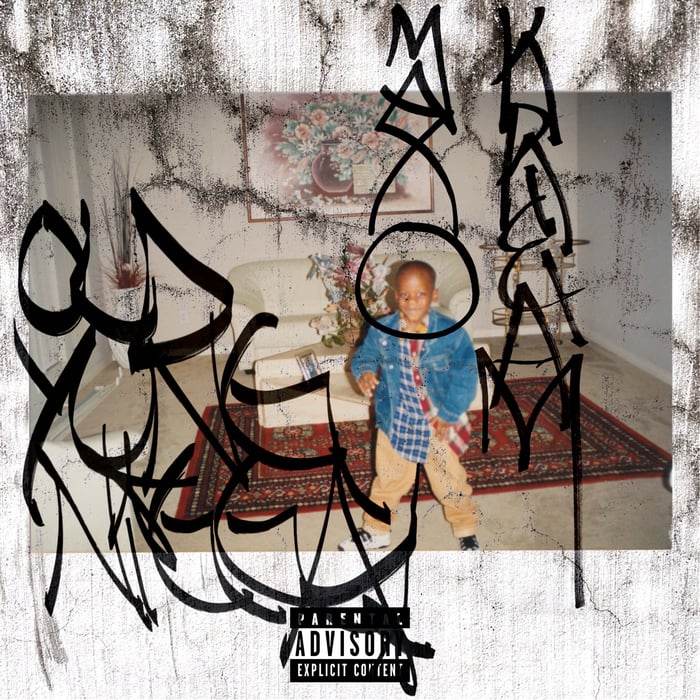
Ibeyi Offering Album Review: a “homecoming” that ditches the drums


 See more Architeg Prints stories on Google.
Ibeyi Offering Album Review: a “homecoming” that ditches the drums
Ibeyi Offering is what happens when the twins cut the band setup loose and dare you to stare straight at their voices.

The first twist isn’t lyrical—it’s missing furniture
I kept waiting for the familiar anchors: the drum kit, the piano, that lived-in, handmade feeling that used to frame Ibeyi’s songs like a room you could walk around in. And then it hits you: the furniture’s gone.
There’s real time between Spell 31 and Offering—four years that sound like a decision instead of a delay. The record feels like it was built after stepping away from major-label gravity and turning back toward Cuba, shooting new material in the city where their father worked as a percussionist. It’s presented like a return, a “find ourselves again” move. But the bigger homecoming is sonic: they come back to the one thing nobody can take from them—two voices that blend so tightly you stop hearing “two” at all.
And here’s the part that changes the whole vibe: they hand the narrative and the beats to a team of producers they haven’t used before. That’s not a trivia fact on this album; it’s the plot. The drums and piano that used to act as a filter between you and the twins are absent, and the result is almost confrontational. If you came here for instrumental personality, you might feel slightly abandoned. If you came here for vocal intimacy, congratulations—you’re trapped.
Arguable take: stripping away those instruments doesn’t “modernize” them; it deliberately makes the listener do more emotional work.
“Olokun” opens the record like a prayer you’re not allowed to interrupt
The album starts with “Olokun,” and it doesn’t ease you in—it drops you to the base of an oceanic abyss and asks you to breathe anyway. A group chant repeats, “Sawa te late o lokú,” calling out to the water’s iricha. It isn’t decorative spirituality; it feels heavy in the body, like the sound is pressing down somewhere under the chest.
There’s a middle section that turns dense enough to feel like pressure, then the track slips into a kind of abrupt bareness—like the ritual circle suddenly got quiet and everyone looked at you. The move is stark on purpose. It’s devotional, sure, but it also reads like a warning: this album is going to treat faith and fear like siblings.
I’ll admit, on first listen I wondered if “Olokun” was going to be too austere, too “serious art record” for its own good. But by the time the rest of the album starts throwing synth teeth, that opener feels less like an intro and more like a floor plan.
Arguable take: “Olokun” isn’t there to be beautiful—it’s there to set a spiritual temperature the pop tracks can’t fully escape.
“Moshpit” is the moment the record turns around and bites
Then “Moshpit” comes in with electronics that gnash instead of shimmer. Distortion drags across their layered harmonies while they drop a line that’s basically existential whiplash:
“I’m a god, then I’m nothing / I’m a void, incompleted.”The rhythm doesn’t bounce; it stutters. It’s not trying to be club-friendly as much as it’s trying to sound like a nervous system.
This is where the producer handoff becomes obvious. The beats are shaped like modern pop and electronic R&B—streamlined, clean in the arrangement even when the textures are dirty. You can hear the intent: pull the songs toward familiar forms, then let the twins’ voices pull back like a tide.
And that push-pull mostly works. Mostly. There are moments where the sleekness flattens the wildness a little too neatly, like somebody ironed a shirt that was supposed to stay wrinkled. That’s my mild gripe: the record occasionally sounds like it’s restraining itself for clarity.
Arguable take: “Moshpit” is heavier emotionally than it is sonically, and that mismatch is the whole point.
The collaborators don’t replace Ibeyi’s identity—they stress-test it
“Aset” is where the record’s producer ecosystem flexes in a way you can feel in your spine. Haitian producer Michaël Brun anchors the track when the synth layers start getting thick. The rhythm stays heavy, but it doesn’t collapse under its own design—the bodies in the mix feel steady even as the song goes more electronic.
The broader pattern across Offering is that collaborators come in and streamline the songs toward contemporary pop/electronic R&B shapes. That could’ve erased Ibeyi, honestly. Instead, their voices keep yanking the songs back into something stranger and more human, like the production is a fast car and the vocals are the driver refusing to speed.
I’m not totally sure every track needed that level of polish, though. Part of me misses the earlier sense that the music was built from their hands first, then dressed up later—here it’s often dressed first, and the intimacy arrives through voice alone.
Arguable take: the album’s “modern” sound isn’t a makeover; it’s a deliberate way to make the lyrics land harder because there’s less instrumental distraction.
Two cosmologies show up, and neither is treated like a costume
The spiritual language here isn’t tossed in for mood. Two cosmologies coexist across the album, and the lyrics draw hard lines around how they’re approached.
Lucumí energy turns up immediately—“Olokun” as invocation, and then the title track honors Olokun as “the spirit of the ocean.” Meanwhile Elegguá—the opener of roads—is addressed in lament on “Baba,” where the chorus goes
“AH Elegguá Baba Elegguá.”It’s repetitive in a way that feels purposeful, like repetition is the mechanism, not the effect.
As “Baba” keeps looping its refrain, it morphs into a refusal:
“I won’t listen anymore / Trust them anymore.”And then it snaps into a clear statement that sounds like a door closing:
“I’m who I was looking for.”That line doesn’t feel like empowerment-slogan writing; it feels like somebody finally got tired.
Arguable take: “Baba” isn’t a spiritual song with relationship themes—it’s a relationship song using spiritual language to make the betrayal feel bigger than two people.
“Aset” turns myth into breakup math, and it’s weirdly tender
On “Aset,” the record looks to Egypt and narrates a myth like it’s a personal confession. The twins say:
“I am Osiris Rising / I kept stealing their knowledge / Now I know divination / As I throw all the shells in.”The shell divination detail matters—it’s not just aesthetic; it’s how the song frames rebirth as something you do, not something that happens to you.
Then it resolves in Spanish with
“Esto es amor eterno.”Eternal love. Big phrase. Dangerous phrase. And yet the track makes it believable because it welds devotion to deity and devotion to lover into the same heat. The ritual language creates space for tenderness even when the surrounding album is full of fracture.
This is one of the record’s strongest tricks: it lets sacred imagery soften the breakup narrative without pretending the breakup didn’t happen.
Arguable take: “Aset” is the emotional center because it refuses to choose between spiritual devotion and romantic devotion—it insists they’re entangled.
The title track says the quiet part out loud: “I don’t make spells anymore”
“Offerings” is where the writing stops hiding behind coded language. Earlier Ibeyi work built intricate stories inside oblique phrasing—here the lines spill out, one by one, like the point is to stop being clever and start being truthful.
They say it straight:
“don’t make spells anymore / Now I make offerings.”That’s not just a lyric; it’s a mission statement. Even the vulnerability gets handed over like a physical object:
“I guess my heart is an offering,”offered to the same person who fractured it.
And the fear is blunt enough to be uncomfortable:
“Fear of change / I’m scared of living, Can you replace this heartbeat that no longer beats?”That’s the sound of someone bargaining with the unknown. It doesn’t try to look strong. It tries to be real.
By the final line of the album, the whole wound is summed up without poetry armor:
“I lived, I broke my heart / I gave it to the gods, baby.”It’s the kind of ending that doesn’t wrap things up—it just names what happened.
Arguable take: the album’s “directness” isn’t simplification; it’s Ibeyi choosing exposure over mystique.
Two love songs, three languages, and one problem: fame
The record’s two love songs arrive with totally different emotional weather, even though they share a multilingual approach—French, English, Spanish moving around like the relationship itself.
“La tendresse d’un mot” leans into French (and that Frenchie intimacy), and it’s anchored by Sofiane Pamart on piano. The commitment is quiet but stubborn:
“Si tu changes, je resterai la même,”staying the same while the partner changes. The refrain keeps returning to
“N’oublie jamais que je reste”—don’t forget that I remain.
Then there’s the strain of visibility:
“Loin des lights du star système”(“far from the star system’s lights”). That line lands like an exhausted compromise. The song doesn’t glamorize fame; it treats it like a cold draft under the door.
If I’m nitpicking, this is one place where I wanted the song to push further musically—Pamart’s piano is tasteful, maybe too tasteful. It behaves. And part of me wanted it to misbehave.
Arguable take: “La tendresse d’un mot” isn’t romantic because it’s sweet—it’s romantic because it admits how hard it is to stay steady.
“Good Life” makes gratitude sound like a lump in your throat
“Good Life” flips into Spanish and chooses gratitude over drama—without pretending gratitude feels clean. The bass pulls away until the sisters’ voices are almost the only thing left, which is a gutsy move on a record with so many electronic textures.
They sing:
“Cuando una lagrima me sube / Agradesco todo lo que tuve”(“When a tear rises / I am grateful for all I had”). And then the line that makes the whole song click:
“Encontrar en lo triste algo dulce”(“finding something sweet in what’s sad”).
The moment that gets me is when the refrain’s harmonies build from line-for-line responses into something crystalline and ethereal. It doesn’t feel like a chorus dropping—it feels like two people agreeing to stop fighting reality.
Arguable take: “Good Life” is the album’s most powerful flex because it gets lighter without getting vague.
“The Process” goes dark, then refuses the easy escape
“The Process” digs into the darker side of the Spanish-language writing. The imagery is sharp—like blades clashing over opened hearts:
“Corto los corazones / Pico el acero / Machete en el cielo.”It’s violent, yes, but it doesn’t read like shock value. It reads like the inner world finally admitting what it looks like.
And then the song resolves into a decision that feels like someone gripping the sink and staying upright:
“I won’t numb the process.”That’s the whole thesis of the record, honestly—no anesthesia, no shortcuts.
I’m not 100% sure every listener will want to sit with that. Some people put music on to avoid their brains; this song is basically asking your brain to file paperwork.
Arguable take: “The Process” isn’t the darkest track because of the lyrics—it’s the darkest because it rejects numbness as a coping strategy.
When trust rots, the album doesn’t pretend it can perfume the room
“I Know You Loved Me” is where faith dissolves in real time. The refrain says it plainly:
“I’m running out of faith trying to hold what fragments my heart.”Love shrinks into something almost dismissive:
“This is just the river, this is not the sea.”That’s such a cutting downgrade—like the relationship used to be an ocean, and now it’s a stream you can step over.
The line
“You were the first to hurt me bad and call it love”is delivered with casual frankness, which somehow makes it worse. The track stays embedded in low-end hurt; it doesn’t climb out. If you want catharsis, it refuses to provide it. It just keeps the bruise visible.
Then “Hurry Hurry” shows up and tries to reconcile. The declaration
“I’m more in love with you than then”feels like someone talking themselves into hope. The bridge reaches for the ultimate aspiration—domestic permanence as salvation:
- “Make me your wife”
- “Love in my eyes”
- “I’ll make you smile”
- “Immortalize”
- “So that our love will never die”
Unlike the surrounding songs, “Hurry HURRY” collapses the multilingual, experimental landscape into a single, insistent longing. The lyrics are plain. Almost startlingly plain. And somehow that simplicity reads like intent rather than laziness—as if the song is saying, “No metaphors. Answer me.”
Arguable take: “Hurry Hurry” is compelling because it’s less poetic; it sounds like the album dropping its mask for five minutes.
The oldest sound on the record is still the real headline
Under all the electronic textures, the oldest sound here is also the deepest: two sisters speaking into one line. You hear it in the “Olokun” chant, where the voices intertwine until you can barely separate them—from “Sawa te late o lok” at the start to “I was lucky” at the quiet halt.
Producers rotate in and out. Sounds shift. But the joined voices are the one instrument they never surrender. When “Baba” locks into its Elegguá call, the bottom feels deep and sure, and that vocal blend becomes the album’s truest percussion—steady, unavoidable, intimate.
I thought I’d miss the drum kit and piano more than I did. On second listen, I realized the absence is the point: Offering wants the voices to be the only constant, the thing you can’t outsource.
Arguable take: the record’s “core” isn’t culture, genre, or production—it’s the refusal to separate those two voices into separate people.
Standout moments (the ones I actually replayed)
Some tracks feel like the album’s backbone rather than just entries in a sequence:
- “Aset” — because the myth and the heartbreak share the same oxygen.
- “Offerings” — because it stops hiding and starts bleeding in sentences.
- “Good Life” — because gratitude is harder than anger, and they prove it.
I’d still call the album great in the plain, non-star-rating sense: it’s effective at what it’s trying to do—strip away the old tools, keep the old soul, and make the listener sit closer than is comfortable.
Arguable take: these favorites aren’t “best songs”—they’re the songs where the album’s intent is least negotiable.
Offering doesn’t want to impress you with craft; it wants to corner you with honesty. It swaps instrumental personality for vocal exposure, then uses spiritual language and multilingual intimacy to turn breakup pain into something that looks uncomfortably like prayer. Not every polished production choice thrills me, and a couple moments feel almost too streamlined for the emotions they’re carrying—but the record’s core trick works: it makes vulnerability feel like a ritual, not a diary entry.
Our verdict: People who like pop-leaning electronic R&B with real spiritual weight—and who don’t need drums and piano to feel “authentic”—will get hooked. People who want the older, more instrument-forward Ibeyi setup (or anyone allergic to devotional framing in love songs) will probably roll their eyes and go looking for a snare drum.
FAQ
- Is Ibeyi Offering more pop than their earlier work?
It leans more into modern pop/electronic R&B shapes, but the vocals keep pulling it back into something stranger and more intimate. - What’s the biggest sound change on the album?
The drum kit and piano that used to anchor their sound are gone, and a new team of producers drives the beats and pacing. - Which track best represents the album’s spiritual side?
“Olokun” sets the devotional tone immediately, and “Baba” makes the Elegguá call feel like a personal reckoning. - Where should I start if I only have time for a few songs?
Start with “Aset,” “Offerings,” and “Good Life”—they show the myth, the heartbreak, and the gratitude angles without needing extra context. - Does the album resolve its breakup themes?
It names the wound more than it heals it. The closing line—“I lived, I broke my heart / I gave it to the gods, baby”—is resolution in the sense of acceptance, not closure.
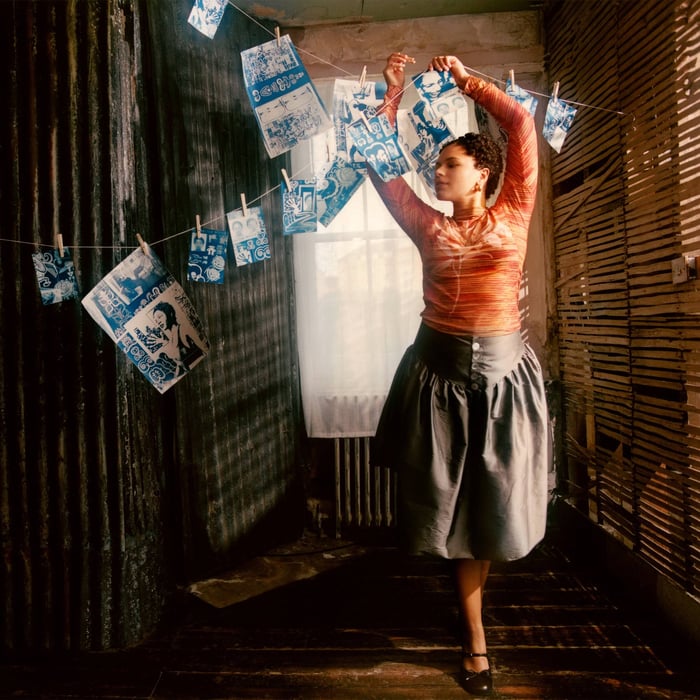
If this album’s cover (and the mood it implies) sticks in your head, it’s the kind of image that actually works on a wall. You can shop your favorite album cover poster at our store: https://www.architeg-prints.com
 | DISCOUNTGET 30% OFF*Use code on your next order:
|
* This post may contain affiliate links, meaning we earn a commission if you make a purchase through these links, at no additional cost to you.